
38 KiB
CORE FRAMEWORK SECTION 7: RESELLERS
Table of Contents
- Document Structure Rules
- Shared Files Folder
- Section Overview
- Evolution of Resellers and Retail
- Research
- Reseller Sales
- Reseller Interface, Broker and Category Management
- Sales Operations/Customer Service
- Merchandising
- Account Marketing
- Forecasting and Analysis
- Other Processes
- Reseller Addendums
- Graphical layout of all components to the reseller sales department in a CPG company
- Miscellaneous Items
Document Structure Rules
See https://docs.google.com/document/d/109vex84XpU5FE-hYg4oFfU_NNXWqsuJxrtkdBVpzZtA/edit?usp=sharing
Shared Files Folder
Any files referenced will be in the shared folder: https://drive.google.com/drive/folders/0B23QMv-jQxTtY215c0pDcHdFZXc?resourcekey=0-fH3i1G05ZHgQOypRn6q79Q
Section Overview
Sales is responsible for securing and managing distribution of the company’s products through resellers, retailers and distributors (which I refer to generally as resellers, unless I specify which one). For selling on 3rd party marketplaces, like Amazon, see Section 6. The way to win with resellers is to get your product (section 3) and your marketing (section 6) and your finances (section 4) working properly with direct-to-consumer sales. When you can show that your product sells and you can earn a solid net income doing that, then you are ready for resellers. When you can get your marketing to pay for itself (section 4 and section 6), then you can afford consistent marketing, which is what resellers want, and it will be easier to get into these channels and grow. 👈👈
Evolution of Resellers and Retail
Start here for an overview of the current retail landscape: https://edsoehnel.com/the-evolving-consumer-product-retail-landscape-and-how-consumer-goods-startups-can-best-take-advantage/
Research
See Section 3, sub-section Industry, Market Conditions, Competitor & Retail Research. Use the research to answer the following questions:.
A product includes a product line that would be differentiated by flavors/colors (product extension). You ultimately want a product that will increase the category sales for a reseller/category buyer. This is what they look for. Offering a product with a small evolutionary improvement may not be enough to make a difference in the consumer’s mind. And, a category buyer won’t go through the work of offering you shelf space and resetting their planogram. Think about how your product can help the buyer improve sales in their category Based on the research done in Section 3, arrive at at least 2 product lines with at least 2 product extensions per line that you can compare and contrast to determine the order in which each line would come to market. Identify your third and fourth possible product lines to introduce in the future. Compare and contrast that result from your current best performing product lines and extensions. Do they match up? If not, why so? You want to present at least 2 products within a line to a retailer. Identify where the products will be shelved. What is the category and subcategory and where on shelf (high/mid/low)? Be careful that you are not trying to place your product in a category with high movement where there is significant marketing and promotion by competitors, where you may not have the financial resources to follow suit. Be careful that your product is not so different that the category buyer or the consumer will not know how to categorize it, thus they may resist purchasing. If it’s different, it might require sampling to induce trial, which gets expensive. If you can obtain data about what consumers are already doing in the store in your category and subcategory (called shopper data), that can help you in your retail product sales and placement strategy. This data is typically very expensive but you might be able to find it either through a category buyer, a broker or if the data is made available to you through attendance at a tradeshow or conference. How will it be packaged: size, format, quantity, and with what packaging differentiators to help it stand out on shelf? How will it be promoted in store (in-store signage, promotion, sampling, other)? What’s the unique strategy that allows a reseller to effectively sell your product? This combines store placement, shelf placement, packaging characteristics, in-store promotion and coop marketing. You want to help a reseller sell your product, so outline a strategy that accomplishes this. If it’s untested, what other data/rational can you use to help support the strategy you propose? What would be the expected movement per week? This is required for forecasting opening orders and ongoing sales. Prioritize an initial list of resellers that you intend to pursue. Note that the channel and/or resellers you pursue will weigh heavily into your packaging, promotion and SRP, such that you will be developing variations of each (packaging/promotion/SRP,) depending on the channel and/or reseller.
Pricing, Tradespend and Reseller ROI
You have to consider tradespend when building your financial models. It is brutally expensive with onerous terms to sell into offline retail, especially, so you have to go in with eyes wide open and all expenses forecasted. 👈👈
You should have already determined your suggested retail price from work one in Section 4 and Section 6 (pricing from financial and marketplace contexts, respectively). Use the SRP Pricing model in Section 4 to determine SRP and cost to the reseller, taking into consideration the margin and tradespend requirements by that channel.
The reseller margin is its own line item in the SRP Pricing model (See Calculated and Expected Margin rows) and also in the P&L’s (see Wholesale Revenue row), while tradespend expenses are layered into the various other line items in the P&L based on the expense category in which the fall under (For example: marketing co-op expenses would fall into the marketing expenses line items).
To really get a handle on tradespend, start with the Retail Terms Sheet And Setup Checklist to help define your preferred terms. You won’t get your preferred terms with retailers, but when you define them using this checklist, it helps you determine what is more important to you and what is less important. See: https://docs.google.com/spreadsheets/d/1YqiOIEf_EpVQcwfLuO4dTiSvzBPkWVZK6aS2Y3cRK0c/edit?usp=sharing
Use these models to then determine tradespend burdens and retailer ROI and do this by each reseller, before you layer these specific costs into your P&L: See this for a simplified model: https://docs.google.com/spreadsheets/d/1baU5scjaZ4hXeZKHUxOzdES3rIrAPcuQzTbNPWF6f0o/edit?usp=sharing See this for a complex and preferred model to use (this model I have used for the drug store category, which is the worst and most complex retail channel for tradespend that I have come across): https://docs.google.com/spreadsheets/d/18Q4GvOrwiGqFhd9Z4qypgC0V0EJPFYVhyInWSDJjw88/edit?usp=sharing
Channel margins and sales
| There are many channels to sell a CPG or consumer product. Getting the pricing for CPG right so that it works across all channels and minimizes channel conflict is usually a challenge. Here is an example of main retail channels to help inform our discussion below:  See: https://docs.google.com/spreadsheets/d/1mvQRQpL4zIbnteXdmc8mZcW3kz1q0pzIno1epI9P_Q0/edit?usp=sharing Retail/Unit
Retail/Unit is the real price to the consumer on a per unit basis. So, the specialty channel represents the highest price per unit, whereas the club channel offers the lowest price per unit.
Cost/Unit
Cost/Unit is the amount the brand sells the product per unit to the retailer. Please note that in general, a vendor will charge a cost/unit to a mass or club retailer for less per unit than in other channels. As a rule, the cost would be 5-15% less than in other channels. The rationale behind this is that mass and club move such significant volume that it is an unwritten understanding that these retailers should receive cost breaks not found in other channels.
Retailer Margin
Retailer Margin is the amount of markup between the what the retailer paid for the product from the brand and what the consumer purchases it for.
While the Retailer Margin listed here can be used as a general rule of thumb across these channels to help determine pricing, it is important to do research on competitor product pricing across every channel to get a good sense for the pricing of a specific product in each channel.
These margins above fit the food category. In the outdoor/sports segment for general merchandise, there are fewer channels - outdoor/sports retailers, mass and club. The retailer margins are generally 50-55%, 35-45% and 14%, respectively. Further, in the outdoor/sports channel, softline products (clothing) generally run 50%, while hardline products (equipment except electronics) run 35%.
However, it is important to note that retailer margins can be different for each product in the same category. In my experience, it will largely depend upon the product's ability to move off-shelf consistently (high turn rate), which really comes down to marketing.
If you don't have any marketing, then how can you expect your product to move without customer awareness? The retailer will take that into consideration in adjusting the margins they apply, as well as additional fees, such as slotting, new store allowance, marketing coop, etc.
Items/Carton
Items/Carton Configuration is the minimum number of units in a carton which the consumer can purchase. Notice in this example, that the carton configuration is different across channels.
For example, specialty will sell the product in cartons containing 8 units. Drug and grocery will get the same carton, but break it open and sell each individual unit. Mass will have their own carton of 4 units, while club has their own carton of 16 units.
However, it gets further complicated because in club, you will want a different size pack for at least Costco and Sam's, because otherwise the two will get into a price war on the same product and you, as the manufacturer, will end up with a problem because both retailers will not be happy about being in a price war to move your product.
As you can see, the number of SKU's that a manufacturer has to manage for the different channels can easily proliferate. Just consider this example,which is a single product in a single flavor/size. Consider product line extension into new flavors, or new products with their own flavors. That means a lot of packaging variations and inventory to support each product, each flavor and within each channel or retailer.
Price
Price row is the actual price the consumer pays for the product at retail.
Distributor pricing
I have only used distributors in the food category, so as a general rule of thumb, I use the 20/30 rule: the margin difference between the wholesale price and the retail price is 50%, and the distributor takes 20% while the retailer takes 30%. This is just a rule of thumb and may be different by channel and distributor. | |
Use the SRP pricing model in the context of the above example; Section 4, Step 6: Finalize SRP Pricing Model
See: https://edsoehnel.com/one-method-for-determining-channel-margins-when-you-are-not-able-to-talk-with-industry-insiders/ ✅ and the model associated with it: https://docs.google.com/spreadsheets/d/1WRsjSqXyVxYfRTzP1k3qoneMceOyJ-FCw5gGCQD-oW0/edit?usp=sharing ✅
Reseller Sales
How to get into retail/resellers and grow
Resellers want products they can sell. Products sell through marketing. You have to demonstrate that you have marketing that will move product off the shelf. It is not just saying you are marketing, but showing that the marketing is working
In absence of marketing, what might be enough to get you into resellers? A highly unique product that fills a hole in the category; A WOW product that people love and your packaging is enough to sell it; Word of mouth marketing that is incredibly strong; A strong brand presence already on shelf that already sells.
Without the above, you need to spend money to market and show it is working. How do you afford to spend on marketing to move product off shelf and attract a retailer? You get your marketing to pay for itself (so you can spend a lot), which is covered in Section 6. That is the secret to getting into resellers and growing quickly. Category buyers like to see marketing spend and see that it is working. When you can show that, they will show interest, and if are spending a lot on a weekly basis ($10K or more), they might be tripping over themselves to let you in.
The key things to sell and grow in resellers: Show the buyers your weekly marketing spend and the dollar amount by channel and that your spend is consistent across weeks and months; Show your ROI/ROAS (Section 4) so they can see that your spend pays for itself, which means your marketing is effective, which you can use in retail (marketing copy, headlines, taglines); Show you have the operations and production setup to handle their orders; Show that you have available cash flow to fund retail (and their tradespend requirements); Show you are a solid brand here for the long-haul with more products (if not in market, then ready to go or in development); Show that you are Intelligent about the category and how your brand will help the buyer grow sales and foot traffic to their category (through your research covered below); Get solid sales data with current resellers and use it to sell into new ones.
The sales process
To sell into resellers, here are the steps to take:
Identify the resellers you want to target. If you are starting out small, start an Internet search for smaller ones where you might be able to sell your product. A really great way to locate local offline retailers is to look at your competitor’s website or at other companies that might sell products to the channels you want to target, as they often have lists of where they sell.
Prioritize your list for who you will target first and why. Create buckets, such as phase 1 that might have 20 resellers or locations, phase 2 with another 20, and so on. Your phase 1 resellers are the ones you want to get in now, maybe because you are a startup and they are small single-owner (Mom/Pop) locations where you can get in to get traction.
Visit those offline retailers so that you can study your category at that retailer. For online resellers, thoroughly research their website. For any reseller, you need to know your competitors so that you can position your product to the category buyer and give a convincing case why they should bring you in. You don’t have to visit every single mom/pop retailer, just a few so you get a sense for what they sell and how to position your product. For large single-location retailers, such as a local organic grocery store or a multi-chain retailer, you must research their categories very carefully to position your product and sales presentation properly.
Create a sale presentation and sales package: See this format which has worked well for me: https://docs.google.com/presentation/d/1kCIgd3D9Puuxr3jEjWrHAfq35PPziKM2FROSP63I3WU/edit?usp=sharing
See this post about working with distributors specifically: https://edsoehnel.com/items-to-consider-in-setting-up-a-relationship-between-a-cpg-manufacturer-and-distributor/
Setup a mailing process for sending sales packages and samples. For this, make sure you have a lot of samples to send out. Get your mail packaging pre-setup so that you can quickly and efficiently assemble a new package for retail prospects. Make it look professional. Have bubble wrap and stuffing set aside. Setup accounts at FedEx or UPS for next day, 2-day or ground delivery and a USPS priority mail account for sending 2 day (which is generally the cheapest way to send, although not as reliable if it has to get there within a certain time frame). Do all this online. From the online accounts, you can create labels, pay for them, print them and a fix to your packaging and then drop them off. Sending samples can get costly, so try to do it as cheap as possible while still having your package look professional. Try to avoid sending anything other than USPS, due to costs. Create tracking numbers so that you can confirm delivery of shipments.
Start selling by calling the resellers or visiting their websites to find out their process for new product review, including when they do this. This information will determine when you actually present to a retailer. If you want to use brokers, you would contact them in place of the retailer (see below for more about brokers). Use high impact tradeshow formats, like ERCM Marketgate.
For more about actually contacting and selling to resellers, see this post: https://edsoehnel.com/strategies-and-tactics-for-selling-to-retail-category-buyers/
When you do land a reseller, use an account setup list to know the right information to get from the reseller. Also use this same list to define the process for setting up the retailer internally between the appropriate functions in your company. See here for examples: https://docs.google.com/spreadsheets/d/1TYJ0u3N4iJv0gJGYd-V5spF2L4NuSJimTF7T4oV1aFY/edit?usp=sharing
See this format for a master account summary for all resellers: https://docs.google.com/spreadsheets/d/1kk32Tt5ZY6tXdsBmVuEtTigbrrfh03TfMtBE1A_W4R8/edit?usp=sharing
The actual sales process really varies from here, based on each reseller and their own processes for product review. I cannot stress that for each reseller, do an ROI of year’s 1, 2 and 3. See the Tradespend section above for those models to use. Costs in year 1 for new vendors are typically more expensive than ongoing years. A negative ROI in year 1 does not mean you do not go into that reseller. It just helps you understand what to expect for cash flow and net income planning purposes.
Reseller Interface, Broker and Category Management
Sales interfaces directly with resellers in selling its products and it can utilize outside brokers to help manage retail relationships. For a small company, utilizing brokers is an efficient way to expand a company’s retail footprint quickly and to manage each retailer and their individual requirements for selling products.
For more on brokers, including finding, hiring and managing, see post: https://edsoehnel.com/retail-cpg-brokers-when-to-hire-how-to-find-and-manage-and-when-to-fire/ ✅
Reseller Reviews
Annual reviews with reseller accounts can encompass up to all of the following listed below, but may not. If you want to be a strong category player, be prepared, as best as possible, to address all of these. Many of these require category data that is only accessible through the retail data providers: Spinsscan for natural/organic; Nielsen and IRI for conventional channels; 1010data service covers the top 100 mass online resellers. Good brokers can be a great source of information, mostly anecdotal, but still valuable nonetheless. In reality, I think only the mid-to-large CPG firms will absolutely do all of this and do it well because it takes manpower, which most smaller CPG firms cannot afford. Just do the best you can. Over time, as you gain expertise and develop a feel for what is going on in the categories of your major accounts, it will get easier. Review the category performance for the reseller and the market as a whole, including specific brand and item performance, not just for your products, but those of competitors and others in the category. Do pricing, promotion and location analysis of all products in the category; identify ways in which your products and others can be improved in these areas. Conduct deeper analysis to highlight category and market trends, especially relative to the retailer. Educate the category buyer about category and market trends relative to your brand and products and other brands and products. Make recommendations to help the buyer grow their category and bring in new customers. Include not just how your products fit, but also others. Be balanced in your approach and discussion between your products and others. Discuss your own promotion commitment and schedule and how you can differentiate your brand and increase sales. Resellers want higher turns and in general, that is what you want as well (unless it means dropping your price to achieve those returns, which might be good for you or it may not; it depends. This gets back to developing a solid SRP from the start.
Sales Operations/Customer Service
Sales ops is the nerve center of an entire CPG company, as it touches every part and coordinates all the activities that happen in a CPG company to sell product to resellers. Its importance cannot be understated. Setup new resellers; Manage the relationship with the resellers operations and PO ordering; Watch for PO’s and check against terms negotiated; Work with logistics to plan PO shipping and with manufacturing to plan production; Work with logistics to ensure that ships get there in the allotted receiving window; Follow-up with brokers and resellers weekly as needed to minimize shelf stock-outs (empty shelf with sold-out product); Get feedback from sales about market, category and consumer data relative to retail and convey to marketing and product development; Work with sales personnel to plan and execute on merchandising/demos; Work with sales personnel and marketing to plan and execute on account marketing; Work with sales personnel, marketing, R&D, manufacturing and logistics to plan and execute product launches; Gather historical sales data and manage the sales forecast.
Create a sales operations calendar to help manage these activities against other major activities and for resource planning (staff time, especially). See Section 2 for calendars.
New reseller setup SOP
To bring on new resellers, here is a detailed checklist: https://docs.google.com/document/d/1SmaUj8x3XT39K4Dxqhfaxb10cqvBpZMlge9oH0BZr30/edit?usp=sharing ⛔
Post-reseller account setup SOP
To setup a new reseller, here is a detailed checklist: https://docs.google.com/document/d/1gLH_b-YE5kv_POinIwkSSPhh_8bHYGLCbOJeMXmy59k/edit?usp=sharing
Purchase order receiving and fulfillment SOP
This is a detailed checklist for receiving PO’s and fulfilling them, including the department that completes the task: https://docs.google.com/document/d/1ycXhv4tZ4Vwj3COu0t9L8LYG3WddiiGasJMVnfTArrg/edit?usp=sharing
Merchandising
Maximizing sales in the retail store happens through packaging, maintaining ample inventory on shelf, using in-store advertising and product placement at appropriate in-store locations.
Packaging
Read this post for packaging: https://edsoehnel.com/the-importance-of-packaging-for-a-cpg-product/ ✅
Minimize Stock-Outs
You want retailers to maintain product stock at all times on shelf. Most will order ahead of time to prevent this, but if you are a new brand or new product or you have upcoming promotions scheduled, it’s easy without sales history to experience greater demand that strips the shelf. There is no way to manage this except through sales history and experience. As you sell, you will understand movement and can work with the retailer to better plan inventory. Even without history, try to anticipate demand through your category’s sales pattern, with its peaks and valleys. For example, BBQ sauce sells well in the summer, especially around holidays like Memorial Day, July 4th and Labor day. And, be aggressive in letting the retailer know that they need to stock up. Keep in mind that inventory is not just what’s in your warehouse and what’s on shelf. Think about the retailer distribution centers and what is on trucks in transit. It takes time to load this entire chain with inventory so that when shelf stock runs low, there is more product already in the supply chain to replenish it. But on the flip side, retailers continue to get closer to just-in-time product availability to maximize their cash flow, which means more and smaller PO’s for product and more and smaller shipments. This shifts the burden onto vendors who have to ship more (higher costs) and devote more man hours to manage the supply chain more diligently due to more shipments.
| In-store Advertising The available methods that I know of for in-store advertising methods and strategies for a CPG company, which vary by retailer, are as follows: Packaging (see here for all about packaging); Point-of-purchase: shelf tags, posters, flyers; Shippers, displays, stand-alone end-caps, and shelf displays; In-store looping videos; Price promotions: coupons displayed at shelf, in a retailer’s newspaper/flyer (BOGO’s – buy-one-get-one; TPR – temporary price reduction, like a 3 for 5 or 8 for 10); Sampling and demos; More shelf space for more product or more SKU’s. What works best?
You won’t know what works best until you try it and compare the data. The data benchmarks I always use are current sales on a weekly basis (but make sure it’s not around events/holidays that might spike or depress sales for your category…examples are BBQ sauces and memorial day and July 4th), then comparing to my sales during the in-store advertising method used, and then watching sales carefully for the next 6 weeks to determine how fast sales dropped down after the use of the advertising and ultimately, and most important, did I get a new baseline lift to my weekly sales. That is, baseline was 100, it’s now 110.
Quick drops and drops that return to baseline indicate that you might not be growing your customer base at same store locations with the same product mix. That is not necessarily bad, because as you add stores and hopefully more SKU’s in each store, you still grow as a company, but you do have to ask why you cannot increase your customer base with your existing products, especially as a young company or new product. Taste, not enough flavors offered, pricing/value, competitors, packaging, etc. etc….those all impact products in growing their customer base. Or, maybe you are gaining new customers but losing old ones. Different story if you have been established, in full distribution and around awhile because then it’s harder to grow existing products because you’ve reached saturation.
That is a benefit to online/direct sales from your website in that you can determine your re-purchase rate and timing. A low repurchase rate is not necessarily bad, but ultimately, if you can, you want to build long-term customer loyalty. You can also survey those customers because they purchased from you, which is invaluable in getting product feedback.
Sampling
In my opinion, it works better for new products that are out of a customer’s comfort zone for purchasing. For example, we are use to purchasing hot cocoa in a mix, but what if it was in a cup that you throw into a microwave, heat up, shake, and open and you are ready to go? That is a different enough format that might require sampling to get a customer comfortable with this new vehicle for making hot cocoa. I don’t know if this product exists, just throwing out an example.Also, Sampling is very expensive and for small companies, I generally don’t recommend it. But, you won’t know till you test it. Try to do the selling of your product through your packaging, not sampling. See also: https://docs.google.com/document/d/1J3wYrmLF7AtSWlVTz71euSKmkB-v0dOyaLCSANYeyBI/edit?usp=sharing See this spreadsheet model for analyzing sampling results: https://drive.google.com/file/d/0B23QMv-jQxTtRkczdVV5ZFkzVTg/view?usp=sharing See also “Deciding the best way to sample your product” in shared tools folder Price Promotions
They don’t work as well as they use to for increasing baseline sales. What they really do is give you more sales now at the expense of sales later. Studies indicate that a large percent (2/3, maybe more) of consumers expect many products to go on sale in the future and will wait till then to purchase. Retailers may adopt an everyday low price strategy (EDLP), or a high-low price strategy, where they price high for new or in-demand products and low for old or low-demand products.
I like to use price promos strategically: to promote my brand and get exposure to more people, for example, a memorial day promo for BBQ sauce, but no more than 4 times per year. See about tying the use of your promotions with an end-cap (see below); to boost sales in the short-term, either because I need the cash, I am getting a deal on raw materials, or for some other strategic reason that will help further the value of my company; to support a retailer, because it’s in my best interest to work with that retailer so I can continue to sell through them. However, as much as possible, limit the retailer from running price promos, if you can negotiate that upfront. Shippers, displays, stand-alone end-caps, and shelf displays
These are generally great vehicles to use. They increase your footprint in the store aside from where you are in your regular shelf location.
Other
In my experience, you are always testing current in-store advertising against old ones. You never stop testing and trying new things. If you are doing sampling and have good data and try something else that works better, you start using that, and maybe test sampling again in the future. | |
Location
What are the store categories where your product can reside and list whether it is store perimeter or center aisle or not applicable? Be creative; consider this list where stores sell products: aisle shelf - see this post for a list of traditional grocery categories: https://edsoehnel.com/retail-cpg-grocery-categories/ ✅ endcaps; stand-alone displays/shippers; check stand area; in-store cafe area; sell your product as an ingredient to be used by store prepared foods; sell your product as an ingredient to be used in the store’s cooking classes; sell your product as an ingredient to be used in other products (such as a marinade for a packaged meat product sold in store). If you can be in multiple locations that is best, but realize that you may need to deal with multiple category buyers, which may also mean that in essence they end up competing for your buyer, which ends up hurting you. Your best bet is to work with one buyer, in most cases.
Account Marketing
Specific marketing campaigns are developed with a reseller to sell product, such as price promotions and special packaging/flavors/sizes for the retailer.
The specific accounts you work with on marketing generally happens with your largest and most lucrative accounts, because this work can be time consuming and you want to devote your time to those accounts that drive the most in sales. If you are just starting out in and are only selling in single-location, mom-and-pop stores, obviously they are your best accounts, so spend the time with them to sell your product. You are also learning what works so that you have a convincing marketing plan to present when you meet with larger retailers. As part of account marketing, you are also working with your production and logistics to ensure that there is enough product on shelf, in the retailer DCs (distribution centers) and even in transit to adequately support demand for whatever specific marketing campaign you are running.
Special Packaging
It’s best to reserve this for your largest retailers who bring you the most volume. Creating new SKU’s with special packaging and/or unique flavors is expensive and time consuming. There are two reasons why you would want to create a new SKU for a particular retailer: 1. They sell a sizeable volume for you and it’s in your best interest to work with that retailer; 2. You want to minimize sales conflict among the same retailers in a channel who aggressively compete with each other. For example, if you sell to both Costco and Sam’s Club, you would want to create different SKU’s for each one, otherwise both would engage in a price war to sell your product and you end up the loser because they would want lower pricing from you to support this price war. One way to work with a retailer, while minimizing your SKU proliferation, is to agree to introduce a new flavor or a new product line with your best retailer before you roll out to all your other retailers.
Forecasting and Analysis
Collect assumptions throughout the month in a master assumptions list in Evernote/OneNote or group note management system. Then, once per month, usually around the 20th, update the forecast, approve with management, then send out production forecasts to supply chain. Only update the forecast once per month, unless there is significant and material assumptions that came in that require a re-work, management approval and supply chain update.
Other Processes
Setup a weekly meeting with sales, sales ops and logistics to ensure PO’s are processed according to schedule and communicate any issues. Collect reseller sales data weekly or as often as reported. Put on a schedule when that data is expected to be available so you can get it. Make forecast adjustments at regular and planned times during the course of the month according to when new data comes in. Try not to mess with the forecast other than during these regular and planned times when you have the data you need and can devote the time and attention to do it correctly. Plan regular review of product launch project plans with all other appropriate staff (usually sales, sales ops, marketing, product development, production, and logistics). Schedule broker and reseller meetings/reviews, either periodically that is planned ahead of time or based on account-specific marketing or product launches. For the most important accounts, schedule weekly or bi-monthly broker calls as needed to discuss all issues related to an account and communicate new developments about products, marketing, etc. to the broker.
For specific sales strategies, the best book I have read and use is The Science of Selling
Reseller Addendums
Costco See https://docs.google.com/document/d/1vxBrrBXucE6QWN3OXsEeLoutvFrSsNc5mwE8X5Bq1Hs/edit?usp=sharing
Graphical layout of all components to the reseller sales department in a CPG company
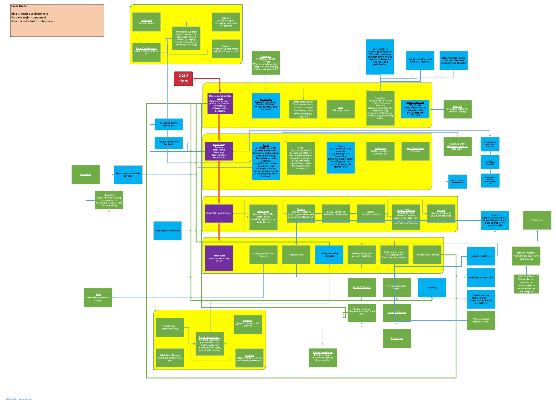 https://www.lucidchart.com/documents/view/8d1fa585-f23d-4546-9972-eae3bf1de707
Miscellaneous Items
See: https://edsoehnel.com/ballpark-guide-relative-sales-items-retail-channel/