added
 eddiesoehnel committed
No files matched your search
@@ -0,0 +1,291 @@
|
||||
# **CORE FRAMEWORK** **SECTION 1: STRATEGY**
|
||||
|
||||
## Table of Contents
|
||||
|
||||
- [**Document Structure Rules**](#document-structure-rules)
|
||||
- [**Shared Files Folder**](#shared-files-folder)
|
||||
- [**Determine your interests, passions and talents**](#determine-your-interests-passions-and-talents)
|
||||
- [**Where do you have leverage**](#where-do-you-have-leverage)
|
||||
- [**Determine your business idea**](#determine-your-business-idea)
|
||||
- [**Develop your backstory**](#develop-your-backstory)
|
||||
- [**Determine your vision, mission (values), culture**](#determine-your-vision-mission-values-culture)
|
||||
- [**Broadly define your customer personas**](#broadly-define-your-customer-personas)
|
||||
- [**A Product vs Brand Company**](#a-product-vs-brand-company)
|
||||
- [**Construct your brand pillars**](#construct-your-brand-pillars)
|
||||
- [**Ways to standout**](#ways-to-standout)
|
||||
- [**Determine viability of your business idea**](#determine-viability-of-your-business-idea)
|
||||
- [**What is the product category does not exist?**](#what-is-the-product-category-does-not-exist)
|
||||
- [**Revenue Model**](#revenue-model)
|
||||
- [**Characteristics for a great product (or business idea)**](#characteristics-for-a-great-product-or-business-idea)
|
||||
- [**Timing**](#timing)
|
||||
- [**Lasting Competitive Advantage**](#lasting-competitive-advantage)
|
||||
- [**Growth Strategies**](#growth-strategies)
|
||||
- [**Your orientation**](#your-orientation)
|
||||
- [**Marketplace methods**](#marketplace-methods)
|
||||
- [**Additional growth strategies**](#additional-growth-strategies)
|
||||
- [**Stakeholder Matrix**](#stakeholder-matrix)
|
||||
- [**Why is this a good business opportunity for ME?**](#why-is-this-a-good-business-opportunity-for-me)
|
||||
- [**Goals**](#goals)
|
||||
- [**Scorecard**](#scorecard)
|
||||
- [**Decision Making, Problem Solving, Risk Analysis, Managing Distractions**](#decision-making-problem-solving-risk-analysis-managing-distractions)
|
||||
- [**Putting it all together and final thoughts on strategy**](#putting-it-all-together-and-final-thoughts-on-strategy)
|
||||
- [**Key Strategic Pitfalls**](#key-strategic-pitfalls)
|
||||
|
||||
# **Document Structure Rules**
|
||||
|
||||
See [https\://docs.google.com/document/d/109vex84XpU5FE-hYg4oFfU\_NNXWqsuJxrtkdBVpzZtA/edit?usp=sharing](https://docs.google.com/document/d/109vex84XpU5FE-hYg4oFfU_NNXWqsuJxrtkdBVpzZtA/edit?usp=sharing)
|
||||
|
||||
# **Shared Files Folder**
|
||||
|
||||
Any files referenced will be in the shared folder: [https\://drive.google.com/drive/folders/0B23QMv-jQxTtY215c0pDcHdFZXc?resourcekey=0-fH3i1G05ZHgQOypRn6q79Q\&usp=sharing](https://drive.google.com/drive/folders/0B23QMv-jQxTtY215c0pDcHdFZXc?resourcekey=0-fH3i1G05ZHgQOypRn6q79Q&usp=sharing)
|
||||
|
||||
# **Determine your interests, passions and talents**
|
||||
|
||||
Starting and growing a business can be all-consuming and it is important that you enjoy it. Otherwise, you are more likely to burn out. Joy in your business springs from your deepest interests, passions and talents. Interests are wanting to know or learn about something \- they are more intellectual in nature. Passion is what is in your heart and what you feel \- they are more emotional. Talents are innate (existing from birth) and what you are good at.
|
||||
|
||||
It is critical to spend the time and effort on finding out what these are. Questions to help get you started: What engages your mind? What are your strengths and weaknesses? What can bog you down on a daily or weekly basis from forward progress? What do you look forward to doing every day? What do you dread doing? What do you do that you lose total track of time? What comes easy to you? What is your leverage? One way to define leverage is where you can push with less effort than others and get more results What do you “get” quicker than others What turns you off or shuts you down? What makes your pulse race and your eyebrow arch? What industries, categories and products do you love and why? See this [https\://edsoehnel.com/personality-discovery-template/](../supporting-docs/strategy/Personality%20discovery%20template.md) for a template. Mine is [here](https://docs.google.com/document/d/1aXR_sy2RtKD80DWXy2IqF9xqGOQDpDN1FvRQT7-FUJw/edit?usp=sharing) if you want an example.
|
||||
|
||||
Resources that might help you answer these questions: [http\://edsoehnel.com/is-your-startup-the-right-match-for-your-interests-passions-and-talents/](../supporting-docs/strategy/Is%20your%20startup%20the%20right%20match%20for%20your%20interests%2C%20passions%20and%20talents.md)
|
||||
|
||||
The best business idea for you springs from your interest, passions and talents because you will more readily see problems that require solutions, which you can create into a business, and you will have more of that deep drive to get it done.
|
||||
|
||||
Interests and passions can evolve over time, but talents are the same. Seek opportunities where you can actively use your talents so they get stronger and better the more you use them. Try to stay away from working on weaknesses and delegate those, unless they are the weak link in whatever you need to accomplish and have no choice to delegate (which is often the case for startups, where founders have to be jack of all trades). Interests and passions are influenced by experiences, good and bad, which is why they can evolve.
|
||||
|
||||
See [https\://edsoehnel.com/a-simple-and-elegant-way-to-figuring-out-how-to-succeed-in-a-business/](../supporting-docs/strategy/A%20simple%20and%20elegant%20way%20to%20figuring%20out%20how%20to%20succeed%20in%20a%20business.md)
|
||||
|
||||
# **Where do you have leverage**
|
||||
|
||||
This is a question in the section on Interests, Passions and Talent, but I am pulling out here because there is internal leverage, which I define as you have a talent that allows you to push and get more with less effort than others (covered above). But external leverage is to list resources you already have that give you leverage. They can be knowledge, experience, contacts/network, money, etc..
|
||||
|
||||
# **Determine your business idea**
|
||||
|
||||
What is your business idea, including the category and general products? See more here about leverage and composability: [https\://eddiesoehnel.com/composable-and-leverage-both-mean-the-same-and-important-to-consider-in-anything-i-do-heres-why-and-how-to-make-this-thought-discussion-practical-for-everyday-use-to-increase-wealth/](../supporting-docs/strategy/Composable%20and%20leverage%20%E2%80%93%20both%20mean%20the%20same%20and%20important%20to%20consider%20in%20anything%20I%20do.%20%20Here%E2%80%99s%20why%2C%20and%20how%20to%20make%20this%20thought%20discussio%20%282%29.md)
|
||||
|
||||
x
|
||||
|
||||
# **Develop your backstory**
|
||||
|
||||
A backstory is a technique I learned from Russell Brunson in his book, DotCom Secrets. Get it on Amazon here: [http\://amzn.to/2gmNpVf](http://amzn.to/2gmNpVf) A backstory is one of the many elements of Russell’s Attractive Character approach for marketing and sales. I think it is important to think about your backstory now because it might help you achieve more fit and alignment between you and what you intend to sell. But realize that you don’t have to have a backstory, but I think as an early-stage startup, it can really help.
|
||||
|
||||
A backstory helps your customers identify with you and what you are trying to sell. If you can relate what your product did for you, then customers who are in the same place you were before you created and used your product, will be able to identify that they too can get to where you are now through your product. The backstory helps customers see where you came from and makes you and your product more real to them. It hooks them. By following you \- ie...buying your product...they presumably will be able to follow you and get to where you are now. For example, backstories are used heavily in health products, whether it be weightloss, supplements, fitness or other health related products. Go find an ad for virtually any product in the health space and good chances it will be connected to someone’s backstory. A backstory does not have to be you; it can be someone else’s backstory that you use, but I think it is better if it is you. In all honesty, you should be using the products you sell and they should be providing you with the same benefits you will want to advertise. A backstory helps connect you, the person, to your customers. Consumers want authentic products made by real people. If they see that through your backstory, then they are more likely to identify with you and your company and trust in you. A backstory should answer why you are doing what you are doing.
|
||||
|
||||
Develop your backstory. What brought about your product/business idea? How has it helped you? Detail what you were before your product/business idea, and now after. How have you improved and benefited?
|
||||
|
||||
.
|
||||
|
||||
# **Determine your vision, mission (values), culture**
|
||||
|
||||
Sketch out your 5 year vision, your mission/values and what kind of culture you want in your company
|
||||
|
||||
An explanation for how these elements work together: [http\://edsoehnel.com/vision-mission-values-culture-goals-and-strategy/](../supporting-docs/strategy/Vision%2C%20mission%20%28values%29%2C%20culture%2C%20goals%20and%20strategy.md) See also: [https\://edsoehnel.com/elements-of-a-company-vision/](../supporting-docs/strategy/Elements%20of%20a%20Company%20Vision.md)
|
||||
|
||||
These should align with your interest, passions and talents.
|
||||
|
||||
Create a list of companies that you admire which you can research further to model in your startup
|
||||
|
||||
# **Broadly define your customer personas**
|
||||
|
||||
You’re best customer may be a lot like you, especially if your business becomes an extension of your interests, passions and talents. 👈👈
|
||||
|
||||
A persona uses a collection of demographic factors (age, income, gender, location) and psychographic factors ( habits, hobbies, spending habits, values, desires, goals, needs, motivations) to identify your Ideal customer who you want to take a specific action. A persona puts a face and personality to your ideal customer, which makes it easier to think about their needs and problems and how you can create your business and products that appeal to that persona. That specific action is to buy and use your product, and you define that use in terms of benefits and outcomes.
|
||||
|
||||
Define your ideal customer by creating a rough persona. Keep it simple and do only basic research if you need to.
|
||||
|
||||
# **A Product vs Brand Company**
|
||||
|
||||
Most companies start out with a product idea that is better than alternatives. The goal over time is to move towards a brand out of the product idea because products can be copied or usually get improved upon so they lose their competitive advantage. The brand is what will keep customers coming back. Some startups can start with brand \- think of a celebrity or influencer \- and use the brand to launch products. But this is not the normal route. Another way to visual what is my company: see this graphic [![][image1]](https://lucid.app/lucidchart/651b0b45-3909-4496-9923-312e3f44d7d0/edit?page=0&v=769&s=612)
|
||||
|
||||
# **Construct your brand pillars**
|
||||
|
||||
A brand is the sum of all facets, features and characteristics of a company (or individual), both good and bad, which are a result of the company’s interactions with suppliers, manufacturers, service providers, distributors, resellers, employees, customers, the general public, owners/investors – basically, every stakeholder to the company. I also like this that defines a brand: ![][image2] Brand development and management can get complex and consume resources that most startups and small companies cannot afford, but it does not have to be resource intensive. One of the best ways I have found to develop and manage a brand is through brand pillars. Brand pillars are like a unique recipe to a company that is made up of a set of ingredients. While the ingredients might be common, it’s their combination that makes the recipe unique. The key here is to develop a recipe that no other company can successfully replicate, so that the recipe stays unique and differentiated in the marketplace, and ensure it can be defended. The last word defend – is crucial, because an enduring brand is one that the company can successfully protect in the marketplace against competitors.
|
||||
|
||||
For example, one food company I worked with developed the following brand pillars: Manage quality through direct sourcing of product. The company purchases product directly from farmers, bypassing intermediaries. This gives the company an edge in ensuring the product it purchases meets standards for quality and freshness. Free of allergens. The company’s products are free from common allergens found in many competitor products and produced in its own facilities so it can guarantee purity. Produced in the USA. Many competitors produce overseas. The company believes it can more effectively manage quality control through domestic production and further believes that made in the U.S.A. is an important marketing differentiator. These brand pillars serve the company at several different levels. They guide the company in its internal sourcing and production practices and the types of products it brings to market, and the company can use these brand pillars in its marketing to help differentiate itself from the competition. The company’s research indicates that these brand pillars form a unique recipe that no competitor can currently match. While it’s possible that may change, the company believes that it can successfully build enough brand equity before that happens to sustain its business. Brand pillars serve to guide you in your everyday actions and when you follow those brand pillars, you end up developing the brand that you want.
|
||||
|
||||
Here is my worksheet for developing brand pillars. Do your best to answer the questions in it, even though you may not have the operating history yet to complete them. You can always come back to this worksheet to further develop your brand pillars later, but do your best now to identify them. [https\://edsoehnel.com/brand-development/](../supporting-docs/strategy/Brand%20Development%20and%20Management%20Made%20Practicable.md)
|
||||
|
||||
## **Ways to standout**
|
||||
|
||||
Polarization You can’t please everyone and have a company and products that are everything to everyone, so take a stand for what you believe in and you will more readily attract those people that believe in the same. 👈👈 Bring the things you care about into the open. Being neutral and you attract no one. If you polarize, you have those that get you and those that do not. But those that get you may become great customers with high lifetime value who give you word- of-mouth marketing. A startup has to capture attention, and taking a stand is one way to potentially do that. Don’t be afraid of being controversial, but not in a disrespecting way.
|
||||
|
||||
What do you stand for that you can build into your brand pillars?
|
||||
|
||||
Unique persona How can you use your unique persona to help your business stand out? Look at personalities in different industries with large social followings to see how they do it. Each one of us is unique. Don’t try to copy what everyone else is doing to fit into social norms. Embrace your uniqueness and let to shine. This could become the foundation for capturing customer attention, where you infuse your unique personality into your business. How have your past experiences shaped your persona into what it is now? Your backstory can help you develop a unique persona that attracts people to you and your business. Your unique persona can also include your style for how you come across to others.
|
||||
|
||||
When I say the name “Steve Jobs”, what are the first few words that might come to mind. Besides “Apple”, how about blue jeans and black turtleneck? That was Steve’s signature look, and helped define his style and unique persona.
|
||||
|
||||
I think a unique style and persona is not forced, but something that comes naturally to you which others are attracted to.
|
||||
|
||||
What is your unique style and persona and how can you use it to help your business stand out?
|
||||
|
||||
# **Determine viability of your business idea**
|
||||
|
||||
The process for qualifying an idea is generally hard because your first iteration may likely not be the final and best idea. Your business idea should naturally evolve as you think about it and do research. Ever remember someone telling you to look for the good in people or a situation…you know, “the glass is half-full” thinking? Well, when considering a business idea, don’t do it that way. You need to do the opposite. I like to start from the perspective that my idea is a bad one and I am going to do some research to prove that. If I start with that mindset, it helps keep me from falling in love with the idea, where I will be much more prone to discount information that qualifies it as a bad idea. 👈👈 This critical attitude forces me to look at all the negatives and check them off my list. If the negatives are not proving out, then I am more likely to have a good idea.
|
||||
|
||||
**A great way to develop an idea for a business is to figure out a product that solves a problem you are having. Odds are, if you have a problem, so do other people.** 👈👈
|
||||
|
||||
Use the following questions to help determine the viability of your idea: Primary questions: What pain, need, problem, unmet demand or customer delight does your idea provide? What keeps them up at night? Identify the specific needs that correspond to a good market opportunity. For example, you probably don’t want to enter a market where customers are extremely happy with how well the existing products meet their needs. When you develop a new product or improve an existing product, you want to address customer needs that aren’t adequately met: their “underserved” needs. Are there gaps in existing offerings where you can deliver solutions around desires consumers did not even know they had? What is your “WOW” factor. How would consumers be impressed such that you give them a feeling of “WOW” and make a memorable impression on them? How can you surprise them in unexpected but delightful ways that they do not see coming? Customers are going to judge your product in relation to the alternatives, so the relative degree to which your product meets their needs in a clearly differentiated and impactful way depends on the competitive landscape. Do your potential customers know they have a need, problem, unmet demand and do they care? Seriously…do they care? Enough to spend money on it? Can you solve it quickly?
|
||||
|
||||
See Section 3: Product Development for more about WOW
|
||||
|
||||
Dissect your idea further with the following: Scene or situation: focus on the moment of frustration with the customer. What is going on? What is the user about to attempt? Desired outcome: what is the user trying to accomplish? Why is this important? Attempted approach: without your new product, how does the user go about the task? Interfering factors: what goes wrong? How and why does it go wrong? Economic Consequences: so what? What is the impact of the user failing to accomplish the task productively?
|
||||
|
||||
## **What is the product category does not exist?**
|
||||
|
||||
Don't talk about your product; instead talk about what's in their heads. It's probably frustration and that's pretty powerful. Categories don't just pop out of the air, you're always replacing something. The category may be new, but the need is not. So one quick way to hijack people's attention is to find the current battle alternative and position against it. If you want attention, it's helpful to be against something but it can also backfire. Choose your enemy carefully. The thing you're against has to be something people won't feel bad opposing and avoid naming specific companies instead consider one of these options. David versus Goliath: examples are big banks or insurance conglomerates. Achilles heel: if incumbents have an annoying feature, or trick you can vilify like hidden fees, long contracts and minutes expiring.
|
||||
|
||||
***Help With Coming Up With Business Idea** This approach copied directly from tweet deck [here](https://twitter.com/SahilBloom). This approach leverages one of my favorite business frameworks: Clayton Christensen’s Model of Disruptive Innovation. In simple terms, it says that innovators can win market share by serving a segment of the market that is over or underserved by the big incumbent’s offering. Basically, upstarts can win market share by serving one sub-segment of a big market extremely well. Provide the exact level of product/service needed and use it as a wedge to expand. Ok, now let’s get tactical. Here’s how you can use the framework to generate business ideas: Step 1: Identify a Big Market Start broad and pick a market. You should generally try to pick a market you know something about—though operating in it, investing in it, researching it, etc. Make sure it’s a big. Examples: Banking, Insurance, HR Management. Ideal markets are both big and inefficient. As a simple rule of thumb, if you’ve experienced stress in your interactions with a market, it’s a fair assumption that it’s inefficient. Financial services (banking, insurance, etc.) is a great example of a big, inefficient market. Step 2: Identify an Underserved Niche. Sketch out the components of the value chain within the market.I find it helpful to actually sketch it out—it makes it easier to visualize and find openings.Research the sub-segments and identify niches and communities within the market. Reddit is a great tool for identifying fervent micro-communities. It’s a legitimate treasure trove of ideas. Twitter is another useful tool for this research. The goal of this research is to pick a niche that is over or underserved by the incumbent offerings. A few examples to bring this to life: Business banking is a big market. Startups are a niche that is underserved by standard banking products. Business legal and tax is a big market. Creators are a niche that is underserved by standard business legal and tax management. Step 3: Talk to 100 People in Niche Go talk to as many people as possible within that niche. Find them on LinkedIn, Twitter, etc. Ask questions:What are your pain points? What causes stress? What do you wish you had? Log responses—tag key identifiers to consolidate. Step 4: Compile Data & Assess. After logging the responses from all of your calls, zoom out and assess the results. With a large enough N, common themes will appear. What are the biggest stressors for your niche? What are the pain points that incumbents aren’t solving? The stressors and pain points that rise to the top are your business ideas. Let the data guide you to water. This general approach has worked for tons of unicorns and high-flying startups. If it worked for them, it can work for you.*
|
||||
|
||||
## **Revenue Model**
|
||||
|
||||
In this subsection, you also want to think about how your idea will make money. What is your revenue-model? Much of how you end up making money can flow from the strategic elements in this section and creating alignment between them and how you make money. With a consumer product, it is generally easy because you create a product and you sell it. That is your revenue model. But there are many more nuances to this that, such as: Does your product have a service component that earns revenue? Is there a subscription component? Is there a product insurance component to charge? Are you partnering with an IP owner? Are you the IP owner? Are you a reseller of other products that compliment your product, so you are a reseller in addition to being the manufacturer?
|
||||
|
||||
**In a perfect world, what is the absolute best outcome or dream that your product/service delivers for the customer? Can you engineer backwards based on that outcome and pull together the right resources to achieve it?** 👈👈
|
||||
|
||||
How does your idea take advantage of trends? See Trends tools: [https\://edsoehnel.com/tools-for-discovering-and-analyzing-trends/](../supporting-docs/strategy/Tools%20for%20discovering%20and%20analyzing%20trends.md)
|
||||
|
||||
See:: [https\://edsoehnel.com/qualifty-an-idea-for-a-cpg-or-consumer-product-business/](../supporting-docs/strategy/Qualify%20an%20idea%20for%20a%20CPG%20or%20consumer%20product%20business.md) See: [https\://edsoehnel.com/questions-to-ask-yourself-to-help-you-innovate-in-your-company/](../supporting-docs/strategy/Questions%20to%20ask%20yourself%20to%20help%20you%20innovate%20in%20your%20company.md)
|
||||
|
||||
# **Characteristics for a great product (or business idea)**
|
||||
|
||||
In my experience, a great startup business idea is one with at least 1 or more of these characteristics:
|
||||
|
||||
| **Intellectual Property**
|
||||
You have some sort of defensible intellectual property, like a process, a patent, data, expertise or a product.
|
||||
|
||||
By defensible, I mean you can defend it from competitors copying, reverse engineering or getting around it.
|
||||
|
||||
And, your IP creates a significant enough differentiation to your target customers that they want to buy your product and not direct or substitute competitors. They are captive to you and only you. **To me, having a product or service (or process, patent, data, expertise) that people are willing to pay you for, which is defensible in that you cannot be copied or disrupted (from Clayton Christensen), is a big factor in business success.** 👈👈 | |
|
||||
|
||||
Do you have IP that you can defend?
|
||||
|
||||
| **Unique Distribution Channel** You have a way to market and distribute your product that no other or few competitors can take advantage of.
|
||||
|
||||
The best example is your own subscriber list, whether its email, Youtube, podcast, or other social channels. | |
|
||||
|
||||
Do you have a unique distribution channel?
|
||||
|
||||
| **“WOW” Product** This is what I advocate to all companies.
|
||||
|
||||
Develop a product with such great product-market fit that consumers think…”WOW”. | |
|
||||
|
||||
See Section 3: Product Development for more about WOW
|
||||
|
||||
## **Timing**
|
||||
|
||||
Bill Gross analyzed 100 of his companies he funded and discovered that the one factor that had the most influence on success was timing. Is the idea way too early and the world's not ready for it? Is it early, as in, you're in advance and you have to educate the world? Is it just right? Or is it too late, and there's already too many competitors? I think understanding timing of your business idea is done through the existence of buyers; see Section 3: Product Development, and trends; See Future Planning document. Narrative market fit (timing) and product market fit NMF just needs a story whose time has come, no fundamentals required. PMF has to earn every inch through raw utility, value to users. The best assets have both.
|
||||
|
||||
This section is also a blog post: [https\://edsoehnel.com/the-3-things-and-only-things-that-make-for-a-great-business-idea/](../supporting-docs/strategy/My%20take%20on%203%20characteristics%20that%20make%20for%20a%20great%20startup%20business%20idea.md)
|
||||
|
||||
See “The Art of Discovering Breakthrough”, another look at how to achieve uniqueness and competitive advantage: Products: [https\://docs.google.com/document/d/1QcCQJAgcS9Y2RV1ZESbuMAwFb5iAPzqjHfilmPXoJhE/edit?usp=sharing](https://docs.google.com/document/d/1QcCQJAgcS9Y2RV1ZESbuMAwFb5iAPzqjHfilmPXoJhE/edit?usp=sharing)
|
||||
|
||||
# **Lasting Competitive Advantage**
|
||||
|
||||
Branding and distribution are the only real ways to achieve lasting competitive advantage. And to get that you need to do create positive experiences for customers that tie them to the brand. See experience marketing here: [https\://docs.google.com/presentation/d/1\_Ogd2U3qDk4yG-ppCCCWh1e40C3c9022rUdf0VE0isw/edit?usp=sharing](https://docs.google.com/presentation/d/1_Ogd2U3qDk4yG-ppCCCWh1e40C3c9022rUdf0VE0isw/edit?usp=sharing)
|
||||
|
||||
# **Growth Strategies**
|
||||
|
||||
## **Your orientation**
|
||||
|
||||
Are you product centric, marketing centric, or sales centric? Product centric means you are more of a product developer who is focused on developing unique and superior products. You spend your thoughts, time, energy and resources more on thinking about and developing products with features and benefits that you hope will sell themselves. You seek to build the marketing into your product Marketing centric means you are more of a marketer who is focused on using marketing to capture your target market’s attention and communicate the superiority of your product over competitors. You spend your thoughts, time, energy and resources more on marketing your product. Sales centric means you are more of a salesperson who is focused on selling your product to other resellers (retailers, distributors, affiliates, influencers, drop shippers, etc), who in turn will sell for you. You spend your thoughts, time, energy and resource more on one-on-one selling. As a startup founder, you have to be all three, but you can emphasize certain ones that fit your talents more than others. If you are purely one over the other two, then you might need to earlier rather than later add partners or external resources who can compensate for you in those areas that you spend no thoughts, time, energy or resources on. Which area you emphasize can also change as you grow.
|
||||
|
||||
Are you product centric, marketing centric, or sales centric? Knowing that will dictate how you might want to grow your opportunity.
|
||||
|
||||
## **Marketplace methods**
|
||||
|
||||
Explanations for this diagram follow. [![][image3]](https://lucid.app/documents/edit/f6323240-4218-4d70-b18e-1bca23590b95/0?callback=close&name=docs&callback_type=back&v=8643&s=548)
|
||||
|
||||
Predominant marketing influencing factors The three predominant marketing influencing factors are direct marketing (product centric), brand marketing (reputation centric), and grass roots (identity centric). Direct (product) marketing is you appeal directly to individual customers through advertising that has calls to action to purchase your product. **In this method, you have to demonstrate the superiority of your product to get them to act**. 👈👈 The customer may not know you so you have to sell them on your product. This method tends to be cheaper to use to generate sales and has immediate response so you know if it is working or not, but relies on a truly superior product that captures attention. Brand (reputation) marketing is you appeal indirectly to individual customers through advertising that emphasizes maximum impressions so that as your customers see your ads more and more, they will remember to purchase your product when they have a need. **In this method, you are relying more on your reputation from previous products or advertising to get your consumers to purchase**. This method tends to be more expensive to use to generate sales and also takes time before it works, so you do not know if it is working until time has passed to see if sales are generated. Grassroots (Identity) marketing is when you appeal directly to individual customers through advertising that emphasizes creating a connection with your customers based on what you stand for or what you are trying to do. **In this method, customers identify with who you are and what you stand for, which causes them to want to support you by buying your products.** This method tends to be more expensive to use to generate sales and also takes time before it works, so you do not know if it is working until time has passed to see if sales are generated.
|
||||
|
||||
**The Lean & Agile Framework emphasizes direct marketing in the earlier stages of growth because it is cheaper to use, more profitable and carries less risk.** 👈👈
|
||||
|
||||
Sales models Here is a list of general high-level consumer product sales models to choose from. *Legacy growth models* Mainline retail distribution: develop, produce and sell a product through traditional brick and mortar retailers. Direct response analog: develop, produce and sell a product through traditional direct response (TV, radio and print infomercials) with call center order fulfillment and direct to consumer shipping. Grassroots retail distributors: develop, produce and sell a product through traditional small distributors to smaller retailers in fragmented channels. *1st generation growth models* E-commerce: develop, produce and sell a product through your online website/store. Direct digital marketing: develop, produce and sell a product through online advertising. Amazon: develop, produce and sell a product through Amazon’s marketplace. Online resellers & marketplaces: develop, produce and sell a product through other online marketplaces. *2nd generation growth models* Affiliates: develop, produce and sell a product through online affiliates. Affiliates promote your product for you to their audience (website visitor, newsletter subscriber and social followers) Social grassroots online: develop, produce and sell a product through social (getting likes, follows, etc). Dropshippers: develop, produce and sell a product through dropshippers. Dropshippers are like affiliates, but instead, they setup their own storefronts and send the order to you for you to fulfill. *3rd generation growth models* Same-day delivery; develop, produce and sell a product through Amazon marketplace for same-day delivery. Funnels: develop, produce and sell a product through sales funnel approaches. Funnels are a particular type of e-commerce cart that leads buyers through the sales and e-commerce process with value-added offers designed to ascend the buyer up a value chain. Influencers: develop, produce and sell a product through influencers with email lists, social followers, or other mass appeal. This is similar to affiliates but influencers are more like celebrities or popular personalities that people follow for entertainment purposes, whereas affiliates tend to get followings due to some sort of utility they offer. *4th generation growth models* New growth models that appear to be emerging.
|
||||
|
||||
**The Lean & Agile Framework emphasizes direct marketing selling direct-to-consumer via shipping through more progressive methods listed that are cheaper to successfully execute, take less time to successfully execute, have lower risk of failure, with less headcount and overhead to operate, and offer higher profit margins over legacy models.** 👈👈 This is not to say that the more brand and grassroots centric approaches are not important; they may be, but later in a company’s stage of growth when there is proof of concept, recurring sales and cash flow to support these more expensive methods. The Lean & Agile Framework is designed to let a company operate using any of the methods listed, except for future methods that are as yet to be developed. In this case, the Framework tries to anticipate what needs to be built into the company now to effectively operate and compete in environments that will have those future methods. The above is a post: [https\://edsoehnel.com/consumer-product-growth-strategies/](../supporting-docs/strategy/Consumer%20product%20growth%20strategies.md)
|
||||
|
||||
**Virtually any product can now be shipped and is being shipped. There is no longer any reason why a startup has to go straight to retail on launch, considering that direct-to-consumer offers much higher profit margins. Consider retail later once there is traction and cash flow to afford retail.** 👈👈
|
||||
|
||||
What sales models might you start with and why and which ones might you adopt later and why? Just list some general reasons based on what you know about your idea and your category. You can refine this later as you learn more. Based on which models you select and their timing, what kinds of resources will you need to execute them (monetary and expertise).
|
||||
|
||||
## **Additional growth strategies**
|
||||
|
||||
Revolutionary products that create clear points of differentiation
|
||||
|
||||
vs.
|
||||
|
||||
Evolutionary products with subtle points of differentiation
|
||||
|
||||
High margin, high quality and possibly less volume
|
||||
|
||||
vs.
|
||||
|
||||
Low margin, lower quality and greater volume
|
||||
|
||||
Niche product plays
|
||||
|
||||
vs.
|
||||
|
||||
Mass market product plays
|
||||
|
||||
Required spend (ex: food)
|
||||
|
||||
vs.
|
||||
|
||||
Discretionary spend (ex: entertainment)
|
||||
|
||||
The lean & agile framework is focused on helping startups achieve sales and staying power. As a result, it emphasizes and teaches growth strategies in the left column. The assumption is that most consumer product startups do not have a lot of cash, so this framework seeks to generate growth based on that assumption. If a company has cash to invest in growth, then it has more flexibility in the kinds of growth strategies to utilize. As the company grows, it can adopt strategies that are more evolutionary product, less margin, volume driven in more mass market categories. This framework is designed to accommodate that. Required vs discretionary spend is harder to pinpoint because what one customer thinks of as required, another thinks of as discretionary. Having a lot of cash to invest in an opportunity is very dangerous. It just allows you to dig a bigger hole, faster that you can’t climb out of and in my personal experience, increases the potential for failure. I argue that you are better off with limited cash to start. Once you get traction, sales and growth and have worked out the kinks in your operation, then that is the time to consider investing for lots of growth. Test thoroughly before you invest\! 👈👈
|
||||
|
||||
# **Stakeholder Matrix**
|
||||
|
||||
See [https\://docs.google.com/document/d/1qzYPuzYkfY2cY8Q3naGuXT9bmZjxZXDKr8nUOjLaJkY/edit?usp=sharing](https://docs.google.com/document/d/1qzYPuzYkfY2cY8Q3naGuXT9bmZjxZXDKr8nUOjLaJkY/edit?usp=sharing)
|
||||
|
||||
# **Why is this a good business opportunity for ME?**
|
||||
|
||||
After running through all the above exercises, step back and answer this question from the perspective of not just your professional goals, but also your personal goals and needs. What does it fulfill for you personally? Why are you doing this? What will you have to sacrifice to start your own company? Are you prepared to do that? There are always sacrifices and tradeoffs to anything we do in life.
|
||||
|
||||
# **Goals**
|
||||
|
||||
Once you have developed big picture items listed above, set goals. Goals are designed to help get you closer to your vision. When you break down your vision into smaller chunks \- or goals \- they are easier to think about and accomplish rather than trying to tackle a big vision or objective. You are more likely to succeed when you break things down into smaller goals. You can set as many goals as you want, but don’t overwhelm yourself; try to set goals and timing for completion around some core elements, like product development, product launch, marketing and sales, revenue and net income. You could then further break these goals down into quarterly goals. Do the best you can with the information you have.
|
||||
|
||||
Dream, Plan, Evaluate and Ship Here’s another way think about setting goals: Dream in years Plan in months Evaluate in weeks Ship daily Prototype for 1X Build for 10X Engineer for 100X What is required to cut the timeline in half? What needs to be done to double the impact?
|
||||
|
||||
As you get further into the framework in Section 2: Systems, and Section 3: Product Development, you will get more information so that you can come back to this section to refine your goals and timelines.
|
||||
|
||||
An explanation for how goals works with vision, mission/values, culture and strategy: [http\://edsoehnel.com/vision-mission-values-culture-goals-and-strategy/](../supporting-docs/strategy/Vision%2C%20mission%20%28values%29%2C%20culture%2C%20goals%20and%20strategy.md)
|
||||
|
||||
[SMART](https://en.wikipedia.org/wiki/SMART_criteria) is a common framework for defining goals. A SMART goal is: Specific – Target a specific task, area or metric for improvement. Measurable – Includes a clear quantifiable measurement of success. Assignable – Includes who will own the goals. Realistic – The goal should not be impossible. Time-specific – There should be a clear deadline or timeline.
|
||||
|
||||
# **Scorecard**
|
||||
|
||||
Get use to measuring and tracking. The framework uses a lot of measuring and tracking. It is well-know that whatever gets measured, tracked and reported is more likely to improve. 👈👈 One way to measure and track that is useful in this section is via a scorecard. 👈👈 Score yourself along the following areas on a scale from 1 (none) 10 (a lot):
|
||||
|
||||
Business: Cash to fund your business and growth Non-cash resources to help grow your business (people, free legal help, space to work, etc) Knowledge and expertise to know how to grow your business Personal: Family or other personal responsibilities
|
||||
|
||||
Think about what your North Star metric is for the business. Define it and quantify now, as it can align your entire business to that metric. See section 2 for discussion about this metric.
|
||||
|
||||
You can add as many other areas as you want based on your own situation. These are a few general ones to get you started. The goal with this scorecard is to find out where you are now relative to what you need to build your business, which feeds back into your goals.
|
||||
|
||||
# **Decision Making, Problem Solving, Risk Analysis, Managing Distractions**
|
||||
|
||||
See: [https\://edsoehnel.com/toolset-for-analyzing-risk-solving-problems-making-decisions-and-managing-distractions/](../supporting-docs/strategy/Toolset%20for%20analyzing%20risk%2C%20solving%20problems%2C%20making%20decisions%20and%20managing%20distractions.md)
|
||||
|
||||
# **Putting it all together and final thoughts on strategy**
|
||||
|
||||
You have to have flow in this entire Strategy section. Who you are and what is deep down inside you should manifest into your business, your products, your actions, your operations and your brand. 👈👈 When this is aligned, it becomes easier to do it because your company is an extension of you. 👈👈 You are not compartmentalizing or putting up false fronts or trying to be someone else and creating something that is not you. 👈👈 If you do not have alignment, eventually you will lose. Maybe your company is successful, but you might lose your happiness or you might lose your purpose. And life is too short to try and make your money then go do what you really want to do or what your purpose is. You will have more happiness and I argue, much greater impact on this world when your company is just an extension of who you are. 👈👈 With alignment, it will make it much easier to bring and sustain passion for your biz, especially during the tough times. See “Emotional\_journey\_of\_anything\_great” 2018👈👈 With alignment, you will be empowered, which is where you are at peace with what you want to do and you will have much less fear and trepidation, and much more confidence, grit and resolve. When you believe 100% in what you are doing without any doubt, that translates into very powerful forward motion and hard work becomes a lot easier and fun. 👈👈 Misalignment should make you question why you are doing what you are doing. You may still want to or need to move forward without alignment, but knowing that will help you anticipate the difficulties associated with misalignment. 👈👈 James Clear wrote: “Find a game where the probabilities favor you and keep taking shots.” The game where probabilities favor you is one where your interests, passions and talents collide. This section should help you better understand yourself, your strengths and weaknesses, what distracts you and trips you up from moving forward, where you are at (the Scorecard) and what you need to build your business. 👈👈 This section should help you define your broad growth strategy. 👈👈
|
||||
|
||||
**When I ask people who are successful what is the one thing that they owe to their success, most say it comes down to this: try a lot of things, fail at most, but through all those failures, you find a few that succeed.** 👈👈 See [https\://edsoehnel.com/the-secret-to-business-success/](../supporting-docs/strategy/The%20secret%20to%20business%20success.md)
|
||||
|
||||
**Do your best to complete this Section 1\. You may find (at least for me) that as you especially work through Sections 2, 3 and 4 of the framework, you will get more details and intelligence into your business and may need to revisit this section 1 to make adjustments or major changes.** 👈👈
|
||||
|
||||
**How this section works with the other parts of the framework is that you set an overall growth strategy (balanced with risk analysis), which guides your work in your systems, products, product development, marketing and sales (all tactics), which all feeds into your budgets and forecasts.** 👈👈 **If you do not like what your budgets and forecasts are telling you, then you will at least have to go back to adjust tactics, and may have to go further back to change or refine your strategy, which trickles back down into your systems, products, product development, marketing and sales.** 👈👈 **It is a dynamic and iterative loop that is constantly in motion.** 👈👈
|
||||
|
||||
When starting out with a business idea, I use the Framework headers in one document as a g guide and start dumping information into the appropriate section. See the document here: [https\://docs.google.com/document/d/1N70yL5rduFuKIWjNI0iAbnn0sujyF5CdRf0twy3vNyw/edit?usp=sharing](https://docs.google.com/document/d/1N70yL5rduFuKIWjNI0iAbnn0sujyF5CdRf0twy3vNyw/edit?usp=sharing)
|
||||
|
||||
# **Key Strategic Pitfalls**
|
||||
|
||||
Looking back at all my past ventures, I have distilled down three very key things that either caused my past businesses to fail or not reach their full potential. They are as follows: Timing Either too early, or too late, but timing risk can be minimized via the next; Runway Not enough runway to help maximize potential, which can result from not enough cash/investment, spending too much too early or spending on the wrong things, or unrealistic expectations about when success should occur. Play the long game, always. That is where people win. Even if timing is too early (the market is not there yet), or too late (market mature with lots of competition), having enough runway and companies can usually pivot accordingly to get it right . Personality misalignments, greed, fear and ego Personality We covered it above. Make sure anyone who is involved in the business has the right personality mix and skill set for their job. Greed Gets in the way where people get too greedy and look out for themselves more than the business. Minimize this risk through incentives that help motivate the right behavior. Fear Can play a role where people do not act out of fear when they should act. Minimize this risk through incentives that help motivate the right behavior. Ego Social standing and rejection. People are afraid of making mistakes and being wrong in the context of how it will make them look towards others. It can be fear of failure, but deeper than that, it is fear of rejection because of that failure. As a result, they strongly trend towards making decisions to protect their reputation, position, status/social standing. Irrelevance. People feel pride in gaining knowledge, experience, and senior positions, but when the market changes and their knowledge and experience is not worth what it used to be, or does not provide the value it used to, they are afraid of being cast aside or having to step aside. People have great fear of this and will go to great lengths to protect themselves from becoming irrelevant. Again, its fear of rejection. Identity and beliefs. Often people’s work, experience and life history coalesces to form a certain identity. If that identity is threatened, they will go to great lengths to protect it. That is why facts and data can stare people straight in the face yet people will discount them because they do not fit with their identity and/or beliefs. As a result, they make decisions to protect themselves, their identity and beliefs, but which hurt the company. The risks associated with protecting social standing, irrelevance, identity and beliefs can be minimized by creating the proper incentives that will motivate the right behavior that gets people acting in the best interests of the company and not themselves. But people also have to take personal responsibility to always be learning new things and keeping up with what the market needs. Companies can help here through incentives that motivate people to keep learning and progressing forward.
|
||||
|
||||
[image1]: assets/images/1_strategy-image1.png
|
||||
|
||||
[image2]: assets/images/1_strategy-image2.png
|
||||
|
||||
[image3]: assets/images/1_strategy-image3.png
|
||||
@@ -0,0 +1,204 @@
|
||||
# **CORE FRAMEWORK** **SECTION 2: SYSTEMS**
|
||||
|
||||
## Table of Contents
|
||||
|
||||
- [**Document Structure Rules**](#document-structure-rules)
|
||||
- [**Shared Files Folder**](#shared-files-folder)
|
||||
- [**Section Overview**](#section-overview)
|
||||
- [**How I use systems**](#how-i-use-systems)
|
||||
- [**Productivity**](#productivity)
|
||||
- [ **Marketing**](#-marketing)
|
||||
- [Main website Infrastructure platforms](#main-website-infrastructure-platforms)
|
||||
- [Other marketing system notes](#other-marketing-system-notes)
|
||||
- [**Sales**](#sales)
|
||||
- [**Customer Service**](#customer-service)
|
||||
- [**Finance/Accounting**](#financeaccounting)
|
||||
- [**Contractors & HR**](#contractors--hr)
|
||||
- [**Insurance**](#insurance)
|
||||
- [**Regulatory**](#regulatory)
|
||||
- [**Legal**](#legal)
|
||||
- [**Misc**](#misc)
|
||||
|
||||
# **Document Structure Rules**
|
||||
|
||||
See [https\://docs.google.com/document/d/109vex84XpU5FE-hYg4oFfU\_NNXWqsuJxrtkdBVpzZtA/edit?usp=sharing](https://docs.google.com/document/d/109vex84XpU5FE-hYg4oFfU_NNXWqsuJxrtkdBVpzZtA/edit?usp=sharing)
|
||||
|
||||
# **Shared Files Folder**
|
||||
|
||||
Any files referenced will be in the shared folder: [https\://drive.google.com/drive/folders/0B23QMv-jQxTtY215c0pDcHdFZXc?resourcekey=0-fH3i1G05ZHgQOypRn6q79Q\&usp=sharing](https://drive.google.com/drive/folders/0B23QMv-jQxTtY215c0pDcHdFZXc?resourcekey=0-fH3i1G05ZHgQOypRn6q79Q&usp=sharing)
|
||||
|
||||
# **Section Overview**
|
||||
|
||||
This section is more of a reference section to the technology I use. You do not have to use every single piece of technology, but pick and choose what you need and when you need it and slowly add capabilities as you grow.
|
||||
|
||||
**Data and information is power...it is everything in business success.** 👈👈 This section is not just about technology, but using the technology to get you the data you need to make decisions **At the root is data, but what it leads to is improving and maximizing productivity. What is productivity? It is improvements in technology, coupled with new methods of production, distribution, and organization that lead to doing more while needing less. 👈👈 As already stated in section 1, It is well-know that whatever gets measured, tracked and reported is more likely to improve**. 👈👈
|
||||
|
||||
In the context of data, goals for my technology are as follows: It has to allow me to collect, manage and analyze a lot of data and information quickly and efficiently; It has to allow me to act on that data and information quickly and efficiently; It has to be highly plug and play, reliable, cost-effective for a small startup, customizable and scalable. Success is all about trying things and trying a lot of things quickly to see what works. So, the goal is to use the right technology that allows me to try new things quickly and on a constant basis. I spend a lot of time on learning and implementing technology systems. Besides giving me power to be lean and agile, it is important to stay current on technology because the pace of advancements is constantly making things better. **All of the technology I use is mobile-enabled, which is important to get things done when I am not on a laptop.** 👈👈
|
||||
|
||||
You will want a data science strategy for your business, regardless of size. Read here to get started: [https\://edsoehnel.com/data-science-strategy-for-cpg-and-consumer-product-companies-what-is-it-why-all-companies-including-startups-need-it-and-how-to-develop-one/](../supporting-docs/systems/Data%20science%20strategy%20for%20CPG%20and%20consumer%20product%20companies%20what%20is%20it%2C%20why%20all%20companies%20%28including%20startups%29%20need%20it%20and%20how%20to%20develop%20one.md)
|
||||
|
||||
The first step in thinking about your systems is to map out your data flows in the context of your end goals and the different components of the business. This will help you understand what data you need and which systems to implement that capture and analyze it. For example, my end goal is to retain and continue to sell to past customers. So the end point of my data in the process of acquiring, selling and reselling to a customer is a database with customer data, purchase transaction logs and any activity logs for them (like email open rates, customer service calls, etc.) from which I use to help me mine for segmentation and cohort analysis and creating targeted marketing campaigns. So the data flow starts way back to where I would start the process for acquiring them through marketing (for example, views and CTR of ads), and everything in between to where they end up in my database.
|
||||
|
||||
I categorize my technology systems into the following categories: Productivity Supply Chain Production Logistics/Shipping Warehouse/Inventory Marketing Sales Database Customer Service Finance Contractors & HR Insurance Regulatory Legal Other
|
||||
|
||||
# **How I use systems**
|
||||
|
||||
## **Productivity**
|
||||
|
||||
Here are key systems and how I use them on a daily and weekly basis. For tools in spreadsheet files, try to combine tabs into one file.
|
||||
|
||||
Business organizer This file is a Lucidchart Diagram. The overview tab is like a business plan, but more dynamic and visual, and strategic as much as it is tactical. It helps keep all the moving pieces of the business in view so I do not forget things. I also have additional tabs in this file to help organize items that work best in a visual format. Start from the bottom and move up. The bottom blocks underneath the red bar represent the key elements on which the business is built upon. You need to have these elements in place first, starting from the bottom and moving up. The block above between the red horizontal bars is covered in Section 6, because it is all about marketing and sales. Above the top red horizontal bar are two final blocks to think about that impact the business. I use this diagram to help me keep track of all major pieces in the business. If I change any area in this diagram, then I think about how those changes will affect all the other pieces, if at all, and then make adjustments in that area of the business that is represented in this diagram. See the diagram here: [https\://edsoehnel.com/template-for-a-graphic-based-business-plan/](../supporting-docs/systems/Template%20for%20a%20graphic-based%20business%20plan.md)
|
||||
|
||||
Growth Plan & Timeline From the Business Organizer, I then develop high level goals and timing for those goals. Keep it general. Specific goals are broken down and set each quarter or maybe as far as 1-year out. I organize the same way I organize my Lean & Agile Framework: Strategy, Systems, Product Development, Finance, Production & Logistics, Marketing, Resellers, Support. I add another category called Desired Metrics
|
||||
|
||||
There should be congruity in your growth strategy and your finances (Section 4). You set the growth strategy and then model it out financially. If the finances do not map to what you want, then you come back here to readjust your strategy, then go back to adjust the finances. Keep iterating until you arrive at a growth strategy and financial picture you want.
|
||||
|
||||
Set up a Gantt chart around the timing and execution of your goals. See this format: [https\://docs.google.com/spreadsheets/d/1FrIxg-PcZ0ihZLbFE57nPYvHV41JHdEyLX8g7eby4Mk/edit?usp=sharing](https://docs.google.com/spreadsheets/d/1FrIxg-PcZ0ihZLbFE57nPYvHV41JHdEyLX8g7eby4Mk/edit?usp=sharing)
|
||||
|
||||
Calendars I use two: A calendar in a horizontal format I can see on one screen that maps out the next 12-months with rows being key operational areas. I organize the same way I organize my Lean & Agile Framework: Strategy, Systems, Product Development, Finance, Production & Logistics, Marketing, Resellers, Support. A calendar in a vertical format. This lets me do more detailed planning. Put in major items to the right under the blue rows for the relevant month and also add in specific items on dates when they are due or put them into ranges of days or weeks. You can also include monthly and weekly recurring items when they are due on those days in the vertical format calendar, or use a recurring task list, which is what I normally do (see below). This vertical format calendar may be good in context of working with a group of people where there are many different tasks by person/function, but may be redundant if you are a 1 person company. Just use the horizontal calendar above. See a template here: [https\://docs.google.com/spreadsheets/d/19ywUffJf1V4ZZA8NYPUZFCURrTvBuAToIh0PNHCpsfs/edit?usp=sharing](https://docs.google.com/spreadsheets/d/19ywUffJf1V4ZZA8NYPUZFCURrTvBuAToIh0PNHCpsfs/edit?usp=sharing) Google Calendar is indispensable for me. See “26 incredibly useful Google Calendar tips” 2019
|
||||
|
||||
Review and update these weekly and bring forward any specific tasks related to it into my Task lists and then my daily list (see below).
|
||||
|
||||
You could hide past months to keep a record of what occurred and build in new months as you go. I like to see 12-months moving forward.
|
||||
|
||||
Task Lists Google Sheets or Excel work. Excel is better for grouping rows.
|
||||
|
||||
Include all tasks related to the business. I organize task into the same groupings for how I organize my Lean & Agile Framework: Strategy, Systems, Product Development, Finance, Production & Logistics, Marketing, Resellers, Support.
|
||||
|
||||
I keep two lists \- one is the more immediate task list (say next 3 months), and another to the right of it is items that are due out longer than 3 months.
|
||||
|
||||
Review this weekly. Task items for that week get moved into my Evernote daily file (see below).
|
||||
|
||||
I also keep a list of all my SOP’s (Standard Operating Procedures) and key documents in my Task list so that I can keep them top of mind and access them quickly as needed
|
||||
|
||||
I have a separate recurring tasks sheet for recurring items that occur monthly, quarterly or yearly or based on a specific event/occurrence.
|
||||
|
||||
I like to use Google Sheets (and by extension, google browser based office files) because I can link to these other documents and files very easily. Here is my format for my main task list and my recurring task list: [https\://docs.google.com/spreadsheets/d/1Z9ERCQOED7biaPT1Vt6YHYcWABHdlbJrXeAl17zg8q8/edit?usp=sharing](https://docs.google.com/spreadsheets/d/1Z9ERCQOED7biaPT1Vt6YHYcWABHdlbJrXeAl17zg8q8/edit?usp=sharing)
|
||||
|
||||
Activity Log This is optional, but something I have to do with the various businesses and projects I am always working on. In the same file as my Task List (its own separate tab), I keep an activity log with a column for date and one for notes. It is really simple and high level and I add to it at the end of the day for any business/project I worked on that day.
|
||||
|
||||
Appointment Calendar Google Calendar is Ideal for sharing and creating many different calendars. I limit to appointments and try to keep task items out and instead, use the Long-Range Calendar. This keeps the calendar cleaner, as it can fill up with appointments and adding tasks would make it overly cluttered. I have different work and personal calendars so that I can see everything in one view.
|
||||
|
||||
Daily Task List Use Evernote and create a single note as the weekly task list broken down by day. Move anything in for that week into this note. Google Doc vs Evernote: I use Evernote for a lot of notes because it is fast to move from one note to the other (using the desktop application). With gDocs, you have to open each document in a browser tab, which adds time and browser cache data. I hyperlink notes within Evernote for even faster navigation. It is faster to delete notes and move them around in Evernote folders.
|
||||
|
||||
Projects Project plans are very specific to each project. Here is a very basic one I use for my pet products business for a new product project plan,that has been tailored to my specific needs: [https\://docs.google.com/document/d/1g9rcdnzJyEd5RMlw0l-5N-a6ie3FlqG-9vromR-ES6I/edit?usp=sharing](https://docs.google.com/document/d/1g9rcdnzJyEd5RMlw0l-5N-a6ie3FlqG-9vromR-ES6I/edit?usp=sharing) For tools: Google sheets is my goto
|
||||
|
||||
Communication Email: Gmail...fast, searchable and efficient. See email SOP here: [https\://docs.google.com/document/d/1im-pLLscPRPKjjqxcSg0H8ZJnEaLsoQZppobQfth8IA/edit?usp=sharing](https://docs.google.com/document/d/1im-pLLscPRPKjjqxcSg0H8ZJnEaLsoQZppobQfth8IA/edit?usp=sharing) Slack: use for chat to keep email use down. There are many integrations to Slack to improve productivity, including: New google sheet row \= slack notification \- useful if web forms go to a google sheet (like customer service request); Facebook page posts \= slack notification \- useful for customer service requests or routing facebook page posts to right CS person; Twitter mentions \= slack notification for customer service routing; Google drive file add to folder \- slack notification; Instagram tags \= slack notification; When google calendar event begins \= update slack status; New gmail mail notification in slack (containing subject, snippet, sends and link in email); New mailchimp subscriber \= slack notification to route to right person to handle this; Evernote notes \= slack notification \- to route to right person to handle. Google/Zoom/Microsoft: calls, chat Skype: calls, chat Screenleap: screen sharing Google voice: voicemail and messaging
|
||||
|
||||
Knowledge Management Use Google Drive for all files. Use Evernote for all notes Onenote is another alternative to Evernote. Setup folder structure in Google Drive and Evernote/Onenote according to the framework sections. See image example here for Google Drive folder structure: ![][image1]
|
||||
|
||||
Ideas and Brainstorming Use Evernote notes to capture them and put links to them in the task list or if they are not ready to become a task, put a link to them in the Catch All Document. This keeps them from getting lost in the knowledge base.
|
||||
|
||||
Other daily/weekly tools Roam Research: notes tool using markdown with a very useful interlinking system that mimics networked vs linear thought \- this is my personal log and I live in it the most. Roboform: password manager for access to all online systems. Google docs/sheets: useful for document and spreadsheet tools ideal for sharing with others Excel: for models and spreadsheet tools that require more power and capabilities than Google sheets, which is the majority of my spreadsheets. Website Changelog: record any website changes or development so you have a history of what you did and why. Keep copies of old pages/code in Evernote. See: [https\://edsoehnel.com/the-best-productivity-tool-i-use/](../supporting-docs/strategy/The%20best%20productivity%20tool%20I%20use.md)
|
||||
|
||||
Dashboards (For KPIs and Metrics) Dashboards compile key performance indicators (KPIs) and metrics for easy and quick viewing, See this post for common KPIs for a consumer product company: [https\://edsoehnel.com/top-kpis-cpg-companies/](../supporting-docs/finance/What%20are%20the%20top%20KPIs%20for%20CPG%20companies.md) KPis give you a window into the health of the business. There is often too much data, so you want to consolidate the KPIs you collect and report into the very key ones that are the best indicators of the health of your company. KPIs traditionally look at historically data. If you can develop KPIs that help forecast the future based on what is occurring now, then you have more power to respond appropriately. This is hard to do and will be different for every business. For example, I like cancel/return rates because they can tell you if there is something wrong with your product or service, new competitors are stealing marketshare, or you are selling to the wrong customer. Higher than normal or than the industry average in these metrics can foreshadow problems in these areas I like weeks of inventory on hand that the retail account has because it can creep up and before you know it, the retailer has too much inventory and they are slashing sales PO’s. If this number starts to climb, you can dig into why that is the case before you get surprised with fewer orders I like returning customer vs new customer ratio. You want to retain customers, so if that ratio drops, then that means your marketing has to replace customers you are losing with new ones, so your marketing gets less efficient, and eventually you will run out of new customers. A few dashboard tools: Google Data Studio Lucidchart Cyfe Klipfolio Meteoric: dashboard for Woocommerce Geckoboard CodingisForLosers.com: dive into this website to learn more how to build your own dashboards using google sheets and other tools. Databox If you take a look at some of the above named dashboards or others, you will get ideas for data you might want to track based on the integrations they support.
|
||||
|
||||
Add recurring tasks to update the dashboards as needed (do this in the task lists).
|
||||
|
||||
*North Star Metric* It is possible to narrow down all metrics to one single critical metric called the Star Metric. To uncover it you must understand the value your most loyal customers get from using your product. Find out what the value is and how it can be quantified. I think the best place to start is focused on the final best outcome your product provides to the customer and if that outcome can be quantified. For example, if the product is a weight loss supplement, then the outcome could be pounds lost while taking the supplement. If the customer experiences pounds lost, then that may lead to repurchase, which you can track via repurchase rates, which leads to high customer lifetime value, which you can track (assuming you sell direct and have implemented system as described in this section). High customer lifetime value means you have more efficient marketing because you are not spending to acquire a customer for every one you lose, which leads to higher profitability (see section 4 for more about finances). So, in this example, if you can track how many pounds your customers lose from using your product, that could be The North Star metric. If you can track on a weekly basis, then that can serve to align the entire business to keep this number up, because that leads to repeat purchasing...more efficient marketing...more profits. If you cannot readily quantify or track the final outcome, move backwards from there to track earlier metrics in this process. Repeat purchase rate may be a common metric for any consumer product company. Or, high customer lifetime value is another related one.
|
||||
|
||||
What I do: See this spreadsheet for KPI/metric goals that I might track. You will want to fine tune this list to meet your specific needs in the context of your specific business. Goals are important so you do not lose sight of why you are collecting the data that you collect. There is so much data that you have to narrow down exactly what is important to your business and I find that listing goals at the top of the sheet helps keep me aligned. I like to have one spreadsheet that lists all the KPI’s and metrics I care about for my business, even though the data will likely reside elsewhere (spreadsheets, google analytics, other system dashboards, etc). This way, when I sit down on Monday’s of each week to review last week’s data, or each month to review the prior month’s data, I have one list that I work off of. [https\://docs.google.com/spreadsheets/d/1SHPFiQz7l8KQWiDnwjZeT2JSkLWrmZJza3ntgeXUR-A/edit?usp=sharing](https://docs.google.com/spreadsheets/d/1SHPFiQz7l8KQWiDnwjZeT2JSkLWrmZJza3ntgeXUR-A/edit?usp=sharing) **Metrics and KPI’s are very important, because It is well-know that whatever gets measured, tracked and reported is more likely to improve.** 👈👈
|
||||
|
||||
Other tools Built With: website platform identifier CloudHQ: gmail, evernote, google drive, google calendar, google contacts backup Calendly: auto-scheduler Colorzilla: color identifier Editplus: text editor Full Page Screencapture: screen capture tool Funnel Scripts, Script Engage: automated copywriting tools Google docs to Gmail drafts Google forms: forms Google photos: photo manager Irfanview: image editor Office 365: Microsoft office Otter.ai: voice-to-text translation Toggle Switch Recent Last Tabs
|
||||
|
||||
Supply Chain See this document on my Operations Database, which defines the exact fields and tables and structure I built to run my operations: [https\://edsoehnel.com/database-architecture-for-operations-covering-accounting-inventory-facilities-and-human-resources/](../supporting-docs/systems/Database%20architecture%20for%20operations%2C%20covering%20accounting%2C%20inventory%2C%20facilities%20and%20human%20resources.md)
|
||||
|
||||
Production Excel/Google Sheets is used predominantly to manage production with online relational database. See this post for details and the spreadsheet download: [https\://edsoehnel.com/creating-and-using-a-production-log-for-producing-a-consumer-product/](../supporting-docs/production-logistics/Creating%20and%20using%20a%20production%20log%20for%20producing%20a%20consumer%20product.md)
|
||||
|
||||
Logistics/Shipping-Warehouse/Inventory/Other Operations Amazon FBA: Warehousing and direct-to-consumer logistics and shipping customer service; ideal for startups and small companies. Other tools: Stitch Labs, EcomDash, TradeGecko : inventory dashboard centralizing different systems and warehouse providers. I have not used any of these. [http\://www\.retailtower.com/](http://www.retailtower.com/) \- possible future system that integrates with multiple shopping marketplaces There are many many providers in this operational area.
|
||||
|
||||
See this document on my Operations Database, which defines the exact fields and tables and structure I built to run my operations: [https\://edsoehnel.com/database-architecture-for-operations-covering-accounting-inventory-facilities-and-human-resources/](../supporting-docs/systems/Database%20architecture%20for%20operations%2C%20covering%20accounting%2C%20inventory%2C%20facilities%20and%20human%20resources.md)
|
||||
|
||||
## **Marketing**
|
||||
|
||||
### Main website Infrastructure platforms
|
||||
|
||||
*Godaddy* Be sure to setup email forwarders in Workspace Control Center
|
||||
|
||||
*Cloudflare* Point Godaddy nameservers to Cloudflare and setup all caching and security in cloudflare for the domain. Point the domain to WP Engine. Do additional setup using Cloudflare tutorials.
|
||||
|
||||
*WP Engine* Ideal hosting environment for Wordpress. Fast, reliable and scalable. More expensive than shared or VPS hosting, but worth every penny. Setup hosting using WP Engine tutorials.
|
||||
|
||||
*Wordpress* Website platform that is easy to manage via a dashboard, well supported worldwide with very cost-effective developers, stays current as open source platform, widely used, customizable, scalable, and can be configured and managed without developer assistance. Many plugins exists to enhance functionality. See SOP for website development/changes here: [https\://edsoehnel.com/standard-operating-procedures-for-website-development-and-website-changes/](../supporting-docs/systems/Standard%20operating%20procedures%20for%20website%20development%20and%20website%20changes.md)
|
||||
|
||||
*Wordpress Plugins* Avada Theme: theme manager 404 To Start: 404 page manager Ad Inserter: blog post ads Affiliate WP: affiliate manager and also used to track marketing campaigns Akismet: spam comments Blubrry PowerPress Convert Plug: popup manager Enable Media Replace: replace media filed without having to relink to new media Followup Emails: email list manager Google Analytics: plugin for GA Gravity Forms: forms manager Mailchimp: form to subscribe to MC email list Signature: form to add customer signature Zapier: send form data to Zapier Hotjar: heatmaps and page recordings iFrame: to embed iFrame code Jetpack: wordpress tools plugin Layer slider: slider Login redirect: login redirect Hubspot/Lead In: visitor tracking Mouseflow: mouse movement tracking NS FBA/WP FBA: Woocommerce to Amazon FBA conduit PHP Compatibility Checker: check for PHP 7.0 Pixel Your Site Pretty Link: link shortener Return to Shop Link: link redirect Say What: alter strings without editing wordpress or plugin code Sendgrid: transactional email provider Slider Revolution: slider manager Slimstat: user tracking SmashBallon: Instagram Feed and Facebook Feed plugins Woocommerce: ecommerce cart Wordlift: advanced SEO for blog posts WP Live Chat Support: live chat WP SEO HTML Sitemap: auto sitemap generator WP Optimize: database optimizer Yoast SEO: SEO
|
||||
|
||||
*Video Hosting Platforms* Wistia, Vimeo, Youtube
|
||||
|
||||
*Woocommerce* Ecommerce platform built for Wordpress that is easy to manage via a dashboard, well supported worldwide with very cost-effective developers, stays current, widely used, customizable, scalable, and can be configured and managed without developer assistance. Many plugins exists to enhance functionality.
|
||||
|
||||
*Woocommerce Add-ons* These have shown to be good, reliable and well supported plugins Amazon Payments Bulk Discount Chain Products Dynamic Pricing Facebook For Woocommerce Woocommerce Memberships Paypal: card processing Stripe: card processing WooCommerce Google Analytics Integration plugin (instructions to setup properly here: [https\://om4.com.au/google-analytics-ecommerce-tracking-woocommerce/](https://om4.com.au/google-analytics-ecommerce-tracking-woocommerce/) ) Zapier Integration
|
||||
|
||||
*Website Customizations* See here for more about my e-commerce cart and how I customized it to be a funnel with a rules/logic engine. You can copy the code and have your developer install it if you wish to use it: [https\://edsoehnel.com/consumer-product-e-commerce-sales-funnel-for-wordpress-and-woocommerce-with-rules-logic-engine/](../supporting-docs/systems/Consumer%20product%20e-commerce%20sales%20funnel%20for%20wordpress%20and%20woocommerce%20with%20a%20ruleslogic%20engine.md)
|
||||
|
||||
*Marketing Database* See here for more about my marketing database: [https\://edsoehnel.com/consumer-product-marketing-database-architecture/](../supporting-docs/systems/Consumer%20product%20marketing%20database%20architecture.md) For even more cheaper alternatives, use Microsoft Access or ones like Fieldbook that do not require coding to use. You might even be able to use a spreadsheet with the VLookup function to mash up data, although that might be too labor intensive.
|
||||
|
||||
*Other Website* Uptime Robot: site uptime checker (also handled by Jetpack for Wordpress)
|
||||
|
||||
*Email list infrastructure* Mailchimp: handles all email list management, including autoresponders and hooks into woocommerce for ecommerce emails. Use this for all marketing emails. See my Mailchimp SOP: [https\://docs.google.com/document/d/13R2P3y1Jv8MhQvAmqq3Lw\_AZLL-OjuYK47xdotcPSjI/edit?usp=sharing](https://docs.google.com/document/d/13R2P3y1Jv8MhQvAmqq3Lw_AZLL-OjuYK47xdotcPSjI/edit?usp=sharing) Follow-up Emails plugin via Sendgrid: transactional email provider. Use this for any specific transactional emails, like purchase confirmation, product review requests. Purchase receipt emails are already sent via the native email function in Wordpress.
|
||||
|
||||
*Social media tools* Meet Edgar: social media scheduling and content manager Hootsuite: social media posting manager and scheduler
|
||||
|
||||
*Web analytics tools* Google analytics Google webmaster tools Hotjar: heatmaps and page recordings Mouseflow: mouse movement tracking Hubspot/Lead In: visitor tracking Mixpanel: good for tracking specific events See “A step by step Growth Hacking guide to track your full customer journey” 2018
|
||||
|
||||
*Misc Website Tools* Marketing automation: a big category covering a lot of providers, but mostly related to email, which Mailchimp does. See my Website Development/Changes SOP: [https\://edsoehnel.com/standard-operating-procedures-for-website-development-and-website-changes/](../supporting-docs/systems/Standard%20operating%20procedures%20for%20website%20development%20and%20website%20changes.md)
|
||||
|
||||
### Other marketing system notes
|
||||
|
||||
*E-Commerce System Observations/Notes* Woocommerce: Best to use out of the box for quick deployment. No additional theme/look/feel customization as it adopts existing Wordpress design. Drawback is that it can conflict with other plugins and create problems, or to enhance functionality, it requires additional plugins, many 3rd party ones that can create conflicts. Able to customize it with programing and hooks into external database via Zapier or APIs, which is why it is my choice. Clickfunnels: Best to use for landing page and funnels, but not ideal for true multi-product e-commerce. Probably the cheapest solution to modify the entire cart flow with custom scripts and coding, but over time, the monthly subscription rate will add up and end up being more expensive. Shopify: More cost out of the box to customize. It might not be as customizable as WooCommerce. I have not used it so do not know it. BigCommerce, Magento: these packages offer ability to personalize shopping experience by visitor. I have not used it so do not know any other details.
|
||||
|
||||
*Additional Needs* Semi-customized popup to known individuals: Hubspot/LeadIn says they are working on this. Cart abandon retargeting: see Carts.guru, or other plugins. Plenty of choices. A/B Split testing plugin \- many on the market. Way for consumers to set up alerts if product out of stock or based on price changes. Personalization: High end systems for my infrastructure include: FunnelEnvy, Sailthru, Qubit, Lytics, SmarterHQ \- enterprise level that offer significant personalization capabilities, but prohibitively expensive for small companies. They are good to keep an eye on because what they do will eventually trickle down to more cost-effective systems that I use.
|
||||
|
||||
*Other misc tools* Online infographic tools: Adioma & Infogram Simple ML \- Google sheets add on using machine learning for prediction Otter.ai \- speech to text ChatpGPT \- generative AI Q\&A platform Stable Diffusion \- generative AI image generator
|
||||
|
||||
## **Sales**
|
||||
|
||||
Marketing database and Excel/Google Sheets is used predominantly. See Resellers section
|
||||
|
||||
Webinar Jam: webinars
|
||||
|
||||
Knack: online database to customize and create your own CRM management system, which is what I have done.
|
||||
|
||||
Sales pipeline management: Streak for Gmail
|
||||
|
||||
Documentation of the CRM Database that I built for my own needs (my eyes only) [https\://docs.google.com/document/d/1\_xvNSuOtS0Eo9CsCgzWzCf8IQPdm4X5\_ZWnqPtmN86c/edit\#heading=h.b8gdtd977zej](https://docs.google.com/document/d/1_xvNSuOtS0Eo9CsCgzWzCf8IQPdm4X5_ZWnqPtmN86c/edit#heading=h.b8gdtd977zej)
|
||||
|
||||
## **Customer Service**
|
||||
|
||||
Amazon FBA: Warehousing and direct-to-consumer logistics and shipping and customer service
|
||||
|
||||
TrackStreet and Mapp Trap: Both will aggregate data from different sites and marketplaces to tell you exactly what people are charging across the ‘net’, so you can better enforce minimum allowable pricing (MAP). Conversational AI \- voice interfaces/bots for customer services, online sales \- called virtual assistant technology
|
||||
|
||||
## **Finance/Accounting**
|
||||
|
||||
Online relational database and Microsoft Excel: see Section 4 for accounting and finance frameworks and models that I use.
|
||||
|
||||
Xero and Freshbooks integrate with Woocommerce. Netsuite: ideal system for \$5 mm \+ annual revenue, but expensive, so you want to be on a path to \$50 mm annual revenue to make it cost-effective. Taxjar: tracking sales taxes across any locality in which you sell so you stay compliant
|
||||
|
||||
I created my own accounting system using Knack due to limitations I was seeing in existing packages. See Section 4
|
||||
|
||||
## **Contractors & HR**
|
||||
|
||||
Keep headcount and employment costs low: hire freelance people that are exceptional and like what they do Gusto: SAAS HR management system Crowdspring: creative services outsourcing Upwork developer outsourcing Fiverr: digital services outsourcing Less Doing: task outsourcing HeroX: crowdsource your problems/challenges Gigster: developer outsourcing Freelancer: developer outsourcing TaskRabbit: task outsourcing
|
||||
|
||||
See this document on my Operations Database, which defines the exact fields and tables and structure I built to run my operations, including what I do for Contractors and HR: [https\://edsoehnel.com/database-architecture-for-operations-covering-accounting-inventory-facilities-and-human-resources/](../supporting-docs/systems/Database%20architecture%20for%20operations%2C%20covering%20accounting%2C%20inventory%2C%20facilities%20and%20human%20resources.md)
|
||||
|
||||
## **Insurance**
|
||||
|
||||
None in use at this time. My master insurance document here (my eyes only) [https\://docs.google.com/document/d/1vTlnnP3Y9u-azuvBGbaNyInlFWJA-jjBwqSvIbTKjbc/edit\#heading=h.rsesaz131drd](https://docs.google.com/document/d/1vTlnnP3Y9u-azuvBGbaNyInlFWJA-jjBwqSvIbTKjbc/edit#heading=h.rsesaz131drd) ⛔
|
||||
|
||||
## **Regulatory**
|
||||
|
||||
For UPC/GTIN numbers for products: [http\://GS1.com](http://gs1.com)
|
||||
|
||||
## **Legal**
|
||||
|
||||
None in use at this time.
|
||||
|
||||
## **Misc**
|
||||
|
||||
Data Science Knowledgebase (my eyes only); [https\://docs.google.com/document/d/11OcJssHacbNtJRujpo9RWJEUdApK2o3E8C08VQv5BJY/edit?folder=1RyPWFuYjZUOR5HEt4c5VC8DATdpGIPNZ\#](https://docs.google.com/document/d/11OcJssHacbNtJRujpo9RWJEUdApK2o3E8C08VQv5BJY/edit?folder=1RyPWFuYjZUOR5HEt4c5VC8DATdpGIPNZ#)
|
||||
|
||||
Great resource on tools that D2C companies use: [https\://www\.1800d2c.com/](https://www.1800d2c.com/)
|
||||
|
||||
[image1]: assets/images/2_systems-image1.png
|
||||
@@ -0,0 +1,319 @@
|
||||
# **CORE FRAMEWORK** **SECTION 3: PRODUCT DEVELOPMENT**
|
||||
|
||||
## Table of Contents
|
||||
|
||||
- [**Document Structure Rules**](#document-structure-rules)
|
||||
- [**Shared Files Folder**](#shared-files-folder)
|
||||
- [**Section Overview**](#section-overview)
|
||||
- [**Rapid Prototyping**](#rapid-prototyping)
|
||||
- [**What is “WOW”**](#what-is-wow)
|
||||
- [**How To Create WOW Products**](#how-to-create-wow-products)
|
||||
- [**Customer Research**](#customer-research)
|
||||
- [**Validate The Existence of Buyers**](#validate-the-existence-of-buyers)
|
||||
- [**Passive Consumer Voice Mining**](#passive-consumer-voice-mining)
|
||||
- [**Customer Data Collection**](#customer-data-collection)
|
||||
- [**Neuromarketing**](#neuromarketing)
|
||||
- [**Names, Keywords & Search Phrases** ](#names-keywords--search-phrases-)
|
||||
- [**Surveys**](#surveys)
|
||||
- [**Industry, Market Conditions, Competitor & Retail Research**](#industry-market-conditions-competitor--retail-research)
|
||||
- [**Industry Research & Market Conditions Research**](#industry-research--market-conditions-research)
|
||||
- [**Competitor Research**](#competitor-research)
|
||||
- [**Retail Research**](#retail-research)
|
||||
- [**Competitive Advantages**](#competitive-advantages)
|
||||
- [**Refine Customer Personas**](#refine-customer-personas)
|
||||
- [**Brand Positioning**](#brand-positioning)
|
||||
- [**Product Positioning**](#product-positioning)
|
||||
- [**Sales Objections**](#sales-objections)
|
||||
- [**Value Propositions and Marketing**](#value-propositions-and-marketing)
|
||||
- [**Document Risks**](#document-risks)
|
||||
- [**Constraints**](#constraints)
|
||||
- [**Other product items**](#other-product-items)
|
||||
- [**Packaging**](#packaging)
|
||||
|
||||
# **Document Structure Rules**
|
||||
|
||||
See [https\://docs.google.com/document/d/109vex84XpU5FE-hYg4oFfU\_NNXWqsuJxrtkdBVpzZtA/edit?usp=sharing](https://docs.google.com/document/d/109vex84XpU5FE-hYg4oFfU_NNXWqsuJxrtkdBVpzZtA/edit?usp=sharing)
|
||||
|
||||
# **Shared Files Folder**
|
||||
|
||||
Any files referenced will be in the shared folder: [https\://drive.google.com/drive/folders/0B23QMv-jQxTtY215c0pDcHdFZXc?resourcekey=0-fH3i1G05ZHgQOypRn6q79Q](https://drive.google.com/drive/folders/0B23QMv-jQxTtY215c0pDcHdFZXc?resourcekey=0-fH3i1G05ZHgQOypRn6q79Q)
|
||||
|
||||
# **Section Overview**
|
||||
|
||||
This section is designed to help develop a product for market. Work through it in the sequence it is laid out, but as you learn more, you will likely want to come back to refine earlier work done in this document, and keep doing this until you have the product you want to bring to market. As you work through this document, your market research may also cause you to go back and do more R\&D work on your product.
|
||||
|
||||
# **Rapid Prototyping**
|
||||
|
||||
The process for making a physical product market ready is historically typically time consuming and expensive. Instead, try to develop a rapid-prototyping process that allows you to do R\&D quickly, make small production runs with generic and in-house produced packaging graphics, and use an existing direct-to-consumer sales channel to get a product into market quickly for testing. The more you can test and do so quickly, the more you will learn what works and what does not. You want a test before invest philosophy about your entire business. Rapid-prototyping fits with this philosophy. The tools and processes in this section are designed to fit a rapid-prototyping model.
|
||||
|
||||
# **What is “WOW”**
|
||||
|
||||
You have to develop “WOW” products that get your customer’s attention. If there is only 1 secret you take away from anything I say, this is it. 👈👈 Your primary products that you will actively market have to be WOW. Unless you have gobs of cash to spend to grab attention, it is very hard in a cluttered marketplace (with product and marketing) to capture attention. This entire Section 3 is designed to help you get to WOW. But, getting WOW products is really really hard and you may have to spend a lot of time in product development, or going to market, then coming back for more product development, before you get to WOW.
|
||||
|
||||
WOW products can help get you referrals and word of mouth marketing, which are the cheapest forms of marketing. See Section 4 and Section 6
|
||||
|
||||
WOW starts with the questions in Section 1: subsection, Determine viability of your business idea.
|
||||
|
||||
Here are resources I have collected over the years to help further define WOW
|
||||
|
||||
What is WOW (VIA Social Triggers)? ![][image1] From “Secrets to Virality” in Section 3 shared tools folder.
|
||||
|
||||
What is WOW (classic direct response marketing elements for blockbuster products)? Does your product result in instant gratification? The answer to this question is gauged within the context of time. In live television, you have very little time to tell a story before you need a response to come in. If it takes six months before you see the result of the product or service, the “instant gratification” becomes a harder proposition to sell. Does the product appeal to an impulse? Is there a sense of urgency to the desire the product creates for the buyer to have it right now? Does it solve a problem? Entrepreneurs can really relate to this particular question, he notes. What is the problem it solves? Are you trying to solve a problem that doesn’t exist. People don’t care what you’re doing. They just don’t think the problem is big enough for them to start paying for your solution. Are you splitting hairs on improvements/benefits/outcomes that your target market just does not care about? Does it solve a problem in expected ways? Does the product create an emotional need? Can you help the viewer to make an emotional connection to the need it fulfills? Is it easy to use and understand? This question speaks to the importance of developing your marketing message. Too many people have a general message about their product that spills “all over the map,” Does it make one’s life easier? If you offer the product and it’s way outside the viewer’s comfort zone, it’s a factor you will have to consider. An ideal offering has a proposition that makes lives more convenient, not more complex. Does it appeal to the masses? Mass appeal is a virtue in television selling as the selling programs are inherently designed, in most cases, to appeal to the consumer market at large. Does it appeal to a niche? An ideal home sale product has a message that appeals to the masses. If your product does not, it’s a “niche” product. There’s nothing wrong with a niche product—and you may even be able to sell it successfully on television–as long as you identify your niche accurately and are able to clearly communicate what it is.
|
||||
|
||||
What is WOW? (Via Michael Hyatt) Surprise. A wow experience always exceeds our expectations. It creates delight, amazement, wonder, or awe. For Christmas one year, one of my friends bought me a copy of the illustrated edition of 1776 by David McCullough.3 Honestly, it blew my socks off. I have never seen a more beautiful book. As the advertising copy says, “Packed with striking replicas of letters, maps, and portraits, this updated version of David McCullough’s 2005 best seller provides readers with unedited firsthand accounts of America’s initial steps toward sovereignty.” This product definitely created a wow experience. Anticipation. Anticipating a wow experience is almost as good as the experience itself. As you think about it, you begin to live it in advance. For example, as I am writing this, Gail and I are planning a trip to the beach. We are beginning to think about it daily. I am making a mental list of the things I want to do. I can almost feel the breeze blowing in from the ocean. With each new day, the anticipation builds. Resonance. A wow experience touches the heart. It resonates at a deep level. It sometimes causes goose bumps or even tears. I remember watching my two granddaughters play on the beach for the first time. They were joy personified as they chased the waves and the waves chased them. I thought to myself, Oh, to be that young\! Transcendence. A wow experience connects you to something transcendent. In that moment, you experience purpose, meaning, or even God. Years ago when I was an artist manager, one of my clients sat down at a piano to play some new songs for my business partner and me. As she began to sing, I was caught up in the music. I knew her talent was coming directly from some other place. I was overwhelmed at the beauty. Clarity. A wow experience creates a moment when you see things with more clarity than ever before. You suddenly “get it” in a new way. Not long ago, I was reading Chasing Daylight by Eugene O’Kelly.4 The story was so powerful I could not put it down. I read it in one long airplane ride to the West Coast. In those few hours, I had more clarity about life than I had had in a long time. Presence. A wow experience creates timelessness. You aren’t thinking about the past. You’re not even thinking about the future. Instead, you are fully present in what is happening now. One such perfect moment happened when I enjoyed an evening on the porch with my daughter, Mary, and her husband, Chris. We spent several hours talking and enjoying a bottle of wine together. It seemed like time stood still. Universality. A true wow experience is nearly universal. Almost everyone will experience it in a similar way. This is why Cirque du Soleil and the Grand Canyon are so popular. They are so compelling that they appeal to people of all ages and ethnicities. Evangelism. A wow experience has to be shared. You can’t contain it. You immediately begin thinking of all the people you wish were with you. After the experience, you recommend it unconditionally. You become an unpaid evangelist. I have done this with all the books I recommend to my friends and on my blog. And as you might know, “Apple evangelists” are a phenomenon of their own. Longevity. The shine never wears off a wow experience. You can experience it again and again without growing tired of it. It endures. In 1973 I attended a Crosby, Stills, Nash & Young concert at Texas Stadium in Dallas, Texas. I was on the field, about ten yards from the stage. It was incredible. In 2000, for my birthday, Gail bought tickets to the CSN\&Y concert in Nashville. Twenty-seven years later, they still blew me away. Privilege. A wow experience makes you proud in a good way. You’re glad to be associated with it. You feel privileged, as if you are in an elite group, but at the same time humbled that you have had the experience. “Sandra” had a wow experience following her cochlear implant surgery. She had become profoundly deaf by the time she had the implants. On Activation Day, she was able to hear her granddaughter’s first words to her: “Can you hear me, Grandma?” Within months her hearing was clear, and “the magic began. I heard grandchildren’s voices for the first time, and my children, family and friends sounded just as I remembered. Does life get any better than this?”5 Clearly Sandra feels both privileged and humbled.
|
||||
|
||||
Goal with WOW is capturing attention. Gary Vaynerchuck asks: ‘Where is attention underpriced?” If WOW is lacking in your category \- consumers don’t expect it \- can you create WOW to really stand out?
|
||||
|
||||
Can you add gamification to your product to make it more WOW?
|
||||
|
||||
**WOW products can be a combination of things, like value in the product itself+reduction in friction to getting or using that product+removing risk (money back guarantees).** 👈👈 Can you develop a combination in your offering that in sum \= WOW? It can include or just be exceptional customer service (like Zappos). It can be what you stand for that so captures people’s hearts that they will buy anything you sell. Maybe you have such engaging content and stories that draw people to you. This is how influencers gain social media followings so that when they promote a product, their followers buy it.
|
||||
|
||||
When you know the motivation why people buy a product, or where or in what context or situation they are most likely to use your product, you will have a better idea how to connect with them, which may help you communicate WOW
|
||||
|
||||
**I think of WOW products as revolutionary that makes big jumps in providing value to the consumer. Versus evolutionary products that have small improvements which may not be noticeable or consumers may not care enough to notice.** 👈👈
|
||||
|
||||
Coupling WOW with scarcity can dramatically increase the value of your product.
|
||||
|
||||
A WOW product is relative to the target market. If you want to capture the mass market, then you need a WOW product that appeals to the broad population base. This is really hard. **But it could be easier to develop WOW that might only appeal to narrow niche markets.** 👈👈 **Niche down and keep niching down till your WOW product captures the attention of a very tight market niche.** 👈👈 This is where you want to start. Capture this market and do so profitably and then maybe you can think about going to capturing broader or more mass markets.
|
||||
|
||||
Ask yourself this: **Would my customer miss me if they could not buy my product? Seriously...would they miss me? Would they even think of me? Would they just go buy another competing or substitute product and not think twice?** 👈👈 You’re goal in your product is to create something that customers would truly miss and be bummed about if they could not buy it. Your goal in marketing is the same: you’re customers would truly miss you and be bummed if they never got another email from you, or saw one of your ads, or saw that fantastic packaging that you product is in. When you look at it from this perspective, it becomes clear that you need to do things to stand out, to the point where you make such an impact on people’s lives that they would miss you if you suddenly were gone. . The best and easiest is to create a WOW product with the marketing built in, and then move out from there to create WOW marketing. If you cannot get a WOW product, then you are left with WOW marketing, which can truly work, but is hard and can be expensive, so better to focus on the product.
|
||||
|
||||
WOW comes from innovation. Think of how you can innovate across different areas of your company to create WOW. See the stacks below. The product column is a product, from inception in R\&D all the way to post use. Can you innovate in just one area that will get to WOW? The company column is the broad areas of a company to deliver a product; think where you can innovate in each of these that get you to WOW. See [https\://eddiesoehnel.com/questions-to-ask-yourself-to-help-you-innovate-in-your-company/](../supporting-docs/strategy/Questions%20to%20ask%20yourself%20to%20help%20you%20innovate%20in%20your%20company.md) [![][image2]](https://www.lucidchart.com/documents/edit/362bc44c-1674-4baf-ada9-8b07e14b697e/0?callback=close&name=docs&callback_type=back&v=752&s=612) See this graphic in a new tab: [https\://www\.lucidchart.com/documents/view/362bc44c-1674-4baf-ada9-8b07e14b697e](https://www.lucidchart.com/documents/view/362bc44c-1674-4baf-ada9-8b07e14b697e)
|
||||
|
||||
A great product is vital to a high-growth strategy. But you might need to go further. Can you build something around your product that is so incredible it turns customers into champions?
|
||||
|
||||
See: Standing out and capturing attention in your marketing: [http\://edsoehnel.com/standing-capturing-attention/](../supporting-docs/product-development/Standing%20out%20and%20capturing%20attention%20in%20your%20marketing.md)
|
||||
|
||||
See: What is a moonshot: [https\://edsoehnel.com/what-is-a-moonshot/](../supporting-docs/strategy/What%20is%20a%20moonshot.md)
|
||||
|
||||
# **How To Create WOW Products**
|
||||
|
||||
Creating WOW products is really hard. I suggest starting from the standpoint of what outcome does the consumer want and also in context that consumers really do not know what they want and you cannot really ask them. Read these two posts first: [https\://eddiesoehnel.com/ditch-customer-surveys-instead/](../supporting-docs/product-development/Why%20you%20should%20ditch%20customer%20surveys%20and%20what%20to%20do%20instead%20to%20get%20product%20feedback.md) [https\://eddiesoehnel.com/format-for-consumer-product-feedback-surveys/](../supporting-docs/marketing/Format%20for%20consumer%20product%20feedback%20surveys%20and%20how%20it%20can%20correct%20for%20problems%20with%20getting%20accurate%20and%20reliable%20data.md) Focusing on the outcome may be a way to help get at creating a WOW product that consumers really want. The outcome is an end result. How you get to the end result can be the product. For example, if a consumer has a blank wall they want to decorate, that is the end result. The product could be any of the following: a painting, a mural, wallpaper, paint, flat screen TV, etc. The product could be any one of those items, or it could be an earlier product to get to one of these products, like a drill to drill a hole to hang a painting. The product may be the solution but consumers do not necessarily care about the solution, then just want the outcome. Focus on the outcome first and how you help a consumer get there through WOW. A layer to add to this is emotion and experience. People’s decisions are influenced more by emotion rather than facts and figures. So the goal is to consider the outcome that your product facilitates in the context of an experience that is positive.
|
||||
|
||||
# **Customer Research**
|
||||
|
||||
## **Validate The Existence of Buyers**
|
||||
|
||||
Is there demand for your product? Validate through existing direct or substitute competition. See Industry & Competitive Research in this section Qualified competitors should have at least 100 reviews on Amazon or other e-commerce site.
|
||||
|
||||
For informational products, to find top sellers to validate against, see “The Hardman Writing Stylus Kindle Sales Rank”.
|
||||
|
||||
## **Passive Consumer Voice Mining**
|
||||
|
||||
Where are your potential customers hanging out online (start with your potential customers identified in the buyer personas in section 1)?
|
||||
|
||||
**Do passive consumer voice mining instead of surveys:** 👈👈 Start with the list you made where your customers hang out online, and/or use this list: Amazon product reviews: but be careful of paid reviews \- don’t use them [http\://www\.webpagefx.com/seo-tools/faqfox/](http://www.webpagefx.com/seo-tools/faqfox/) \- questions viewers are asking online so you understand what people want Google search for “product/topic groups” Reddit: Use Reddit Enhancement Suite Chrome Plugin to assist in research Facebook Groups: see [http\://sociograph.io/landing.html](http://sociograph.io/landing.html) Quora Yahoo Groups Buzzsumo – top content on your product category Alltop: top blogs on your content category Moz Content Search: top websites on search terms that might lead to content on your product category SocialMention: what is being said across social networks Open Site Explorer: backlinks to popular content that might lead to content on your product category Mozrank: link popularity score that might lead to content on your product category Twitter keyword search Monitor popular bloggers in your niche Google Trends (for how to use Google Trends \- [https\://www\.youtube.com/watch?v=wJxwrsBloho](https://www.youtube.com/watch?v=wJxwrsBloho)), Twitter Trending, Google+ What’s Hot Hubspot Blog Topic Generator: ideas for blog content that appeals to consumers, and turned around to be used in product marketing Trends tools: [https\://edsoehnel.com/tools-for-discovering-and-analyzing-trends/](../supporting-docs/strategy/Tools%20for%20discovering%20and%20analyzing%20trends.md) Record what target customers are saying relative to your product category. Record features and benefits, but also take raw sentiments and emotion. identify memorable phrases – what people want, what they are mad about, what they are happy about. emotion is what sells, so record the emotions of what people are saying. What words are happy customers using? Your most frustrated customers? Be meticulous in taking notes, as all copy from this research will be useful later But surveys can be useful using this format: [https\://edsoehnel.com/format-for-consumer-product-feedback-surveys/](../supporting-docs/marketing/Format%20for%20consumer%20product%20feedback%20surveys%20and%20how%20it%20can%20correct%20for%20problems%20with%20getting%20accurate%20and%20reliable%20data.md)
|
||||
|
||||
See example of passive consumer voice mining with Amazon: “How A 4-Step-Amazon-Hack Helped Me Convert Visitors Into Paying Customers Faster”
|
||||
|
||||
## **Customer Data Collection**
|
||||
|
||||
I am referencing this section here as part of research to acquiring customers, but all information regarding this section is housed in the database file referenced in Section 2
|
||||
|
||||
# **Neuromarketing**
|
||||
|
||||
Find out what consumers really think about your product. See companies Affectiva, Neuro-Insight
|
||||
|
||||
# **Names, Keywords & Search Phrases**
|
||||
|
||||
Product names and associated keywords are an important part of Section 6: marketing, but work on them now because they are relevant to completing this section.
|
||||
|
||||
Perform keyword searches so you know what drives findability in your product/category, and build that into the marketing of your product. Use the resources copied below.
|
||||
|
||||
Also consult the list of research tools in the Competitor section to help identify keywords tied to your product.
|
||||
|
||||
You want to identify long-tail keywords/phrases that are searched much less, but also have much less competition. Unless you have a lot of cash to invest in the business, start in niche markets using long-tail keywords/phrases because the people that use those long-tail keywords may be more likely to purchase because they are being specific in what they are looking for.
|
||||
|
||||
If you can ID good long-tail keywords/phrases and use that effectively in your marketing (product names, tag lines, product descriptions, your ads, your website copy, etc), then you might be able to own your particular niche, or at least hopefully be a significant seller in your niche. As you grow and get bigger, you can broaden into more competitive markets with more general keywords to identify your product. if you wish. Read this important article in particular about long-tail keywords and grouping them into topics: See “Rethinking Long Tail Keywords\_ how to get TONS of traffic from 'unpopular' search queries”
|
||||
|
||||
See “A better approach to keyword research for content marketing” See “How to Rank in Google\_ The Beginner's Ultimate Guide \- Niche Pursuits” See “Keyword Research\_ The Complete Beginner's Guide” See “How To Rank \#1 for High-Volume Keyword in 90 Days \_ PR Outreach and Cold Email Strategies” See [https\://ahrefs.com/blog/long-tail-keywords-research/](https://ahrefs.com/blog/long-tail-keywords-research/) See “SEO Copywriting Technique: Don't Stuff Keywords, use Latent Semantic Indexing (LSI) keywords” [http\://lsigraph.com/](http://lsigraph.com/) See “How to Write the Perfect Blog Post Title (+2,900 Buzzwords\!)” See “23 Places to Find the Best Keywords In Your Niche” See “How To Get a Nearly Unfair Advantage with Competitive Data – PPC” Exact and partial keyword domain names are no longer good SEO and are being punished.
|
||||
|
||||
See Competitor Research for keyword research sources
|
||||
|
||||
Alongside with brainstorming and searching for company/product names, perform searches for existing intellectual property conflicts (wordmark, copyrights, URLs already taken). See specific instructions here: [https\://edsoehnel.com/filing-for-a-federal-wordmark-for-a-cpg/](../supporting-docs/product-development/Securing%20a%20name%20and%20filing%20for%20a%20federal%20wordmark%20for%20a%20CPG%20or%20consumer%20product%20startup.md) ✅
|
||||
|
||||
# **Surveys**
|
||||
|
||||
I am not a fan of traditional consumer surveys for reasons listed here: Why you should ditch customer surveys and what to do instead to get product feedback [https\://edsoehnel.com/ditch-customer-surveys-instead/](../supporting-docs/product-development/Why%20you%20should%20ditch%20customer%20surveys%20and%20what%20to%20do%20instead%20to%20get%20product%20feedback.md) 👈👈
|
||||
|
||||
See” Everything You Need To Know About Designing Valuable Customer Surveys” 2015
|
||||
|
||||
# **Industry, Market Conditions, Competitor & Retail Research**
|
||||
|
||||
## **Industry Research & Market Conditions Research**
|
||||
|
||||
How is the market/industry organized in terms of vendors, distributors/retailers/institutional buyers, resellers, regulators; how do they interact and do business?
|
||||
|
||||
What are the distribution structures in which you must conform? How does that hinder you? Does that create any advantages or opportunities?
|
||||
|
||||
Five forces analysis: The Threat of New Entrants: How easy is it for new companies to pursue this market? What barriers to entry exist? The Threat of Substitutes: What switching costs exist to keep customers with one vendor? How differentiated are the existing products in the market? How can you keep your customer’s captive? The Bargaining Power of Suppliers: How much leverage do the suppliers to an industry have? how concentrated are they? This can be labor or components of the product the startup must source from third parties. The Bargaining Power of Buyers: How much leverage do buyers have in an industry? How concentrated is the demand? The Intensity of Competition: the greater the threat of new entrants, the greater the threat of substitutes the greater the bargaining power of suppliers and the greater the bargaining power of buyers, the more intense the competition.
|
||||
|
||||
List out the minimum requirements needed to succeed in this category.
|
||||
|
||||
What are the major categories and subcategories of products? What is the SRP price range for your product and the wholesale cost range?
|
||||
|
||||
What are the regulatory issues and impacts?
|
||||
|
||||
What are the consumer trends driving this industry? How are they changing? Trends tools: [https\://edsoehnel.com/tools-for-discovering-and-analyzing-trends/](../supporting-docs/strategy/Tools%20for%20discovering%20and%20analyzing%20trends.md)
|
||||
|
||||
What are the resource (environmental, economic, etc) constraints (or even excesses) driving this industry? What is the nature of supply, demand, logistics, impacts of weather, etc. that is changing the industry/category?
|
||||
|
||||
Where is current growth taking place – which segments in the industry and by which competitors? Where is contraction taking place?
|
||||
|
||||
Where will the industry be in 3-5 years?
|
||||
|
||||
Any successes and failures in this industry you can analyze from which to learn?
|
||||
|
||||
## **Competitor Research**
|
||||
|
||||
List the major competitors (direct and substitute)?
|
||||
|
||||
List their products, with main features and benefits and pricing
|
||||
|
||||
Their size, market capitalization, revenue, COGS, and marketing, sales and distribution structures. For publicly traded concerns, look at their financial documents for forward guidance on what they expect for their business growth and marketplace growth, and any other general guidance they may publish. Look at their performance last 5-years – growth rates/decline rates in revenue, gross margin, and EBIT. One way to organize them:
|
||||
|
||||
See “A New Way to Look at Competitors”
|
||||
|
||||
Which ones are succeeding well with their products? You can get a sense through using the research tools below. Pay close attention to these, as you want to see if you can copy elements of their products and model their marketing. Do a full audit of their product/site, copying exactly, and going through their purchase process and purchasing the product. Audit the following items in particular: How are they advertising? Demographics/target customer Offers Landing Pages Traffic Sources (See below) Ad copy Value propositions Top messages Call to actions
|
||||
|
||||
Completely document their funnel and sales process.
|
||||
|
||||
Find any affiliate information from them if they offer an affiliate program
|
||||
|
||||
In a table, compare competitors with value proposition and features/benefits/outcomes provided Benefit: what value will my user / customer get out of using this Feature: what part of my product lets the user / customer get that value Outcome: what’s the end result the user wants to achieve with the product/service). Use a table with row axis identifying the feature, then direct benefits of using, then higher-level benefits/outcome of using – this may help get at whether a feature is just a feature, a benefit or outcome or some combination.
|
||||
|
||||
In a table, compare the competitors top messages in a column with competitors on the row axis. Add up the number of times the top message is repeated on the landing page so you get a sense for the most commonly used messages and what may be baseline that customers expect.
|
||||
|
||||
Do the same as above in a table for calls to action.
|
||||
|
||||
Capture packaging information: size, package shape/format, key differentiators on package, marketing statements, keywords, etc.
|
||||
|
||||
For pricing, capture at a granular level: for supplements, SRP/Day, SRP/Serving, SRP/Pill, Days/Supply, Units/Bottle; for food, ounces, SRP, price/SRP, servings, SRP/serving, Days/Supply, Units/Package; etc.
|
||||
|
||||
Market and Competitor research tools as follows: Google Keyword tool: keyword research [https\://Spyfu.com](https://spyfu.com) keyword research [https\://WooRank.com](https://woorank.com) keyword research [https\://WhatRunsWhere.com](https://whatrunswhere.com) ad research [https\://AdEspresso.com](https://adespresso.co) ad research [https\://Ahrefs.com](https://ahrefs.com) keyword research [https\://Follow.net](https://follow.net) ad research [https\://MixRank.com](https://mixrank.com) ad research [https\://Alexa.com](https://alexa.com) traffic research [https\://Clickbank.com](https://clickbank.com) see what affiliate offers are working. Here, you get a sense for how much they are making, which allows to model successful campaigns/products [https\://SimilarWeb.com](https://similarweb.com) competitor traffic sources, counts, and ads. [https\://Moat.com](https://moat.com) ad research [https\://Quantcast.com](https://quantcast.com) audience measurement Amazon \- see Movers and Shakers, Most Wished For, Best Sellers for keyword ideas [https\://ispionage.com/](https://ispionage.com/) competitor PPC strategies [https\://zuumsocial.com/](http://zuumsocial.com/) competitor research [https\://SEMRush.com](https://semrush.com) keyword research and competitor research [https\://Similarsites.com](https://similarsites.com) to see websites that might be visited by similar groups of people (your target market) so you can identify those sites where you might want to advertise. Crowdfunding sites: [https\://Kickstarter.com](https://kickstarter.com), [https\://Indigogo.com](https://indigogo.com), and others Additional sources: [https\://blog.kissmetrics.com/25-sneaky-online-tools/](https://blog.kissmetrics.com/25-sneaky-online-tools/) if you know the name of the registered company that owns the website you can find estimates of annual revenue by consulting either manta.com or referenceUSA.com. You will need to have a valid library card to access referenceUSA.com but both resources are free and provide a wealth of market research / competitive intelligence information for free. [https\://shopping.thinkwithgoogle.com/](https://shopping.thinkwithgoogle.com/) shopping trends [https\://ubersuggest.io/](https://ubersuggest.io/) keyword research [http\://lsigraph.com/](http://lsigraph.com/) keyword research [http\://crunchbase.com](http://crunchbase.com) competitor research [http\://app.scientificseller.com/\#/](http://app.scientificseller.com/#/) Amazon keyword searches [https\://competitors.app/](https://competitors.app/) monitor competitors marketing moves [https\://www\.thinkwithgoogle.com/](https://www.thinkwithgoogle.com/) [Facebook Ad Library](https://www.facebook.com/ads/library/?active_status=all&ad_type=all&country=BR&impression_search_field=has_impressions_lifetime)
|
||||
|
||||
## **Retail Research**
|
||||
|
||||
Only do this research if you plan to go to retail with your product.
|
||||
|
||||
What is the retailer name you are visiting and their channel (see Section 7).
|
||||
|
||||
What is the store type? Is it upscale, mid-tier or discount?
|
||||
|
||||
What is the store location and demographics of surrounding area?
|
||||
|
||||
Match your retail visits with the channel, retailers, and demographic focus of your product
|
||||
|
||||
Setup your own retail shelf in your office to compare/contrast with competitors packaging against your intended packaging. Purchase all competitor packaging by retail channel to setup in your office.
|
||||
|
||||
What are the store categories where your product can reside and list whether it is store perimeter or center aisle or not applicable? Be creative; consider this list where stores sell products: (a) aisle shelf, endcaps, stand-alone displays, check stand area, in-store cafe area, sell your product as an ingredient to be used by store prepared foods, sell your product as an ingredient to be used in the store’s cooking classes, sell your product as an ingredient to be used in other products (such as a marinade for a packaged meat product sold in store) (see Section 7).
|
||||
|
||||
What are adjacent product categories?
|
||||
|
||||
What is the average movement of products in category (units/week/store)? Obtain through brokers and category buyers. (see Section 7).
|
||||
|
||||
What’s the movement like at this store? Make simple observations by counting current inventory on shelf of competitors. Is there dust on the packaging? Could indicate slow movement. How many items can be put on shelf – will give idea for opening order size by store. To properly gauge movement, visit this store multiple times over the course of a week over several weeks. Do the same with other stores in other channels. Do this and you will learn more about the category and what consumers are really purchasing.
|
||||
|
||||
What is the signage available in store to help promote your product? (poster, shelf-tags, flyers, other?) (see Section 7).
|
||||
|
||||
What are all the available sub-categories in each category where the product would be shelved and what is the sub-category where the product would be shelved?
|
||||
|
||||
What is the average movement of products in each sub-category (units/week/store)? Obtain through brokers and category buyers
|
||||
|
||||
What are the category review and shelf/planogram reset dates? You will need to know when to present to buyers and when to expect placement on shelf.
|
||||
|
||||
Capture packaging information: size, package shape/format, key differentiators on package, marketing statements, keywords, etc.
|
||||
|
||||
Obtain Nielsen/IRI/Spinsscan category movement data, if possible (may be costly to purchase). Another source of retail/shopper data includes Dunnhumby.
|
||||
|
||||
What is shelf size (depth and height)?
|
||||
|
||||
Promotion:
|
||||
|
||||
What are the promotional periods available for the product (holidays, events-March Madness, Superbowl, etc.)?
|
||||
|
||||
What are the current promotional types used in this category and how often (BOGO, 3-for-5, etc.)?
|
||||
|
||||
Does there appear to be over-promotion in category?
|
||||
|
||||
Can you promote on same playing field as competitors? That is, if a competitor offers a buy 1 get 1 free, do you have the financial capabilities to match that (and fund the cash flow needed to send the retailer more inventory to support the sale).
|
||||
|
||||
What is the marketing that competitors do and can you market in same playing field as competitors?
|
||||
|
||||
While observing what is on shelf already is important, you want to obtain more industry intelligence to understand what consumers are really asking for and how they use the products in the category. Ask independent specialty store owners who focus on selling products in your category, brokers who focus on the category and passive voice research online to determine what people are searching for in your category. If possible, speak with category managers at high end/specialty retailers, but it’s often very difficult to speak with them unless you are a vendor. You want to look beyond the things that are making noise right now in order to understand bigger patterns going on with your category.
|
||||
|
||||
From the research done to this point in this section, assemble the following.
|
||||
|
||||
# **Competitive Advantages**
|
||||
|
||||
What are your competitive advantages? What will allow you to compete and win? Why are you better and how can you sustain those advantages? 👈👈
|
||||
|
||||
How can you get and maintain captive customers? There are 4-ways I can think of: You are a natural monopoly. Think utility company You have proprietary technology, processes or patents to protect your position You partner with the industry leader to promote and distribute your products You are the lowest-cost provider.
|
||||
|
||||
This is a blog post: [http\://edsoehnel.com/survive-and-thrive-with-captive-customers/](../supporting-docs/product-development/Survive%20and%20thrive%20with%20captive%20customers.md) ✅ When is competing on price ok: [http\://edsoehnel.com/when-is-competing-on-price-ok/](http://edsoehnel.com/when-is-competing-on-price-ok/) ✅
|
||||
|
||||
Do you plan to patent your product? Are you infringing on someone else’s patent with your idea? Perform a basic patent search (USPTO has resources on their website to teach you how). Do you think you can patent your product for competitive advantage that cannot be easily circumvented? Brainstorm all the ways in which your product can fulfill the outcome desired by the consumer. Can you include all those ways in a patent application? Pay attention to product shape, size, material, appearance, feel…does any of that change how the outcome your product provides and if so, can you include it in a patent application?
|
||||
|
||||
**What existing assets (physical/tangible, skills, intellectual property, contacts, partner companies, other relationships, geographic, data, brand/awareness) do you have that can be leveraged for competitive advantage?** 👈👈
|
||||
|
||||
What can you do that is really hard? Something hard to do is a competitive advantage, especially if it is valued by your customers
|
||||
|
||||
See “The Art of Discovering Breakthrough”, another look at how to achieve uniqueness and competitive advantage: [https\://docs.google.com/document/d/1QcCQJAgcS9Y2RV1ZESbuMAwFb5iAPzqjHfilmPXoJhE/edit?usp=sharing](https://docs.google.com/document/d/1QcCQJAgcS9Y2RV1ZESbuMAwFb5iAPzqjHfilmPXoJhE/edit?usp=sharing)
|
||||
|
||||
# **Refine Customer Personas**
|
||||
|
||||
From the initial customer persona development in Section 1, do more work to expand on them here.
|
||||
|
||||
Who are your dream customers? Demographics (who): gender, age, location, social/relationship/familial/marital status, income level. Psychographics (why they buy): habits, hobbies, spending habits, values, desires, goals, needs, motivations. How do your buyers make purchase decisions in this category? What causes them to switch brands? What is important to them in context of your product category? Define the specific action of buying your product or service in terms of benefits and outcomes they desire.
|
||||
|
||||
Improve customer personas with random affinities research: Use Facebook ad creation dashboard, identify precise interests and see suggested likes and interests On Amazon, see what other products customers bought to the direct competitor you are looking at Google suggest (from search box) can help identify search terms and lead to affinities
|
||||
|
||||
More: See “8 Tools That Will Help You Get Inside Your Readers’ Heads”. See “How To Create Customer Personas With Actual Real Life Data” See “How to Use Psychographics in Your Marketing: A Beginner's Guide” See “How to Create Audience Personas on a Budget Using Facebook Insights” See “How Data-Driven Marketers Are Using Psychographics”
|
||||
|
||||
# **Brand Positioning**
|
||||
|
||||
Put together your high level brand positioning, and your product positioning and marketing flows from there. I have used different resources over the years but I think the book, [Building A Story Brand](https://amzn.to/2nsqRXD), seems to be the best model I like..
|
||||
|
||||
# **Product Positioning**
|
||||
|
||||
Document your product positioning on one document. This is your master document from which value propositions and copywriting draws from. Don’t worry about developing marketing statements (value propositions, headlines, taglines, etc). Just get your concepts on paper
|
||||
|
||||
Product positioning documents all features, benefits and outcomes that the product delivers. Document these Customers do not care about your product, but how it will impact their lives. Outcomes are most important to understand Positioning determines how people think of your products relative to other similar products. You position your brand against the weaknesses of your competitors’ brands. You need to figure out how your product will be differentiated from competitive products. How will your product outperform others? What’s unique with your product that will delight customers? This is the essence of product positioning and product strategy
|
||||
|
||||
What is the WOW on your product and why?
|
||||
|
||||
See page 55 of Copy Hacker’s “Where Stellar Messages Comes From” for additional guidance
|
||||
|
||||
How is your product different from the competition and what are the substitute products that consumers would purchase instead of your product and why?
|
||||
|
||||
What if you discovered that due to a tax implemented by invisible interstellar aliens, you would have to increase the price of what you sell by 10%? What would you add to your offering so that people would still choose you despite the fact that all of your competition hadn't raised their price? What sort of service, guarantee, design or other free prize bonus would you add to maintain your market share? And now, having survived that, what if you discovered that you had to reduce your costs by 10%? What would you take out of your product or service so that you could still profitably sell your product even though it must cost you 10% less to make? Of course, the interesting thing is what happens if you do both at the same time, when there are no aliens slowing down your growth, increasing your costs or hindering your sales
|
||||
|
||||
# **Sales Objections**
|
||||
|
||||
Document sales objections: See page 60 of Copy Hacker’s “Where Stellar Messages Comes From” for more guidance
|
||||
|
||||
# **Value Propositions and Marketing**
|
||||
|
||||
Logically, once we have done the above research, we can use this information to help develop our marketing around a product. But, we will leave that to Section 6\. We still want to work through the remaining backend elements below to fully get our hands around the product and all of its details.
|
||||
|
||||
# **Document Risks**
|
||||
|
||||
What are risks to working with this product, category and industry? How do you mitigate those risks?
|
||||
|
||||
# **Constraints**
|
||||
|
||||
What are constraints to working with this product, category and industry? How do you mitigate those constraints? See risk analysis document here: [https\://edsoehnel.com/toolset-for-analyzing-risk-solving-problems-making-decisions-and-managing-distractions/](../supporting-docs/strategy/Toolset%20for%20analyzing%20risk%2C%20solving%20problems%2C%20making%20decisions%20and%20managing%20distractions.md)
|
||||
|
||||
# **Other product items**
|
||||
|
||||
## **Packaging**
|
||||
|
||||
Get UPC/GTIN numbers for products. I use [http\://GS1.com](https://gs1.com) Make sure that the product name (covered in Section 6\) is what you want before you take it live in GS1, as you cannot change it after. To change, you would have to create a new product listing and assign a new UPC. Make the name descriptive with the size in the name. Update the UPC/GTIN to the specifications file, which is the master internal file for app product specs (and can also be used externally, which is what I do). Triple check that the specs and UPC/GTIN numbers match to the product. 👈👈
|
||||
|
||||
Develop specifications: See my specifications file format here: [https\://edsoehnel.com/template-for-product-price-and-specifications-list/](../supporting-docs/product-development/Template%20for%20product%20price%20and%20specifications%20list.md)
|
||||
|
||||
Obtain any regulatory certifications/approvals as needed (depends on product and category). Usually, you develop packaging (Section 6: Marketing) first, but I am putting this piece in this section.
|
||||
|
||||
[image1]: assets/images/3_product_development-image1.png
|
||||
|
||||
[image2]: assets/images/3_product_development-image2.png
|
||||
@@ -0,0 +1,43 @@
|
||||
# **CORE FRAMEWORK** **SECTION 3: PRODUCT GROUPINGS**
|
||||
|
||||
|
||||
|
||||
## Table of Contents
|
||||
|
||||
- [**Document Structure Rules**](#document-structure-rules)
|
||||
- [**Shared Files Folder**](#shared-files-folder)
|
||||
- [**Product Groupings**](#product-groupings)
|
||||
- [**Product Stack: Value Ladders and Sales Funnels**](#product-stack--value-ladders-and-sales-funnels)
|
||||
- [**Traditional Retail Approach**](#traditional-retail-approach)
|
||||
|
||||
# **Document Structure Rules**
|
||||
|
||||
See [https\://docs.google.com/document/d/109vex84XpU5FE-hYg4oFfU\_NNXWqsuJxrtkdBVpzZtA/edit?usp=sharing](https://docs.google.com/document/d/109vex84XpU5FE-hYg4oFfU_NNXWqsuJxrtkdBVpzZtA/edit?usp=sharing)
|
||||
|
||||
# **Shared Files Folder**
|
||||
|
||||
Any files referenced will be in the shared folder: [https\://drive.google.com/drive/folders/0B23QMv-jQxTtY215c0pDcHdFZXc?resourcekey=0-fH3i1G05ZHgQOypRn6q79Q\&usp=sharing](https://drive.google.com/drive/folders/0B23QMv-jQxTtY215c0pDcHdFZXc?resourcekey=0-fH3i1G05ZHgQOypRn6q79Q&usp=sharing)
|
||||
|
||||
# **Product Groupings**
|
||||
|
||||
In this document, list out all your products at a high level. Then, take one that you want to bring to market and work through the Product Development document. What you learn as you work through the Product Development document may cause you to come back and refine your product groupings.
|
||||
|
||||
There are several different ways to organize product ideas and group them.
|
||||
|
||||
## **Product Stack: Value Ladders and Sales Funnels**
|
||||
|
||||
I**f you want to start online selling direct-to-consumer, then consider the value ladders and sales funnels approach, which I refer to as a product stack. This is a more progressive approach to online sales. You can still use this approach if you want to eventually go to retail with products.** 👈👈 Think of the end outcome or solution that you want to deliver. Then, design products to move people towards that end outcome or solution. Here is the process: Acquisition: you design products to acquire customers. These are traditionally lower priced products (or even free products) designed to bring customers into your universe without a big commitment from them. Ascension. you design products to ascend your customers along to more valuable and expensive products towards that end outcome or solution. Monetization: you design products so they buy more often that satisfies that end outcome or solution.
|
||||
|
||||
For example, I have a food line for my dog products company. I acquire customers through free content about dog food and through free or low priced digital products that I offer. The first is a digital product about how to choose healthy dog food, but I built this digital product so people can see how bad commercial dog food really is, and use my products to compare so they see how good my products are. I ascend them along to buy my treats, and then introduce them to an online training about raw dog food. But that can be a lot of work which very few people want to do, and since I created the video training after my production process for raw dog food, people are seeing my operation and how much we focus on quality. I monetize by converting some to buy my raw dog food, which is my end goal because it is a repeat purchase product with high revenue and high margins from the same customer (another way to define is subscription revenue). That is ultimately what I want...high subscription revenue from existing customers which leads to profitability and stability.
|
||||
|
||||
There is a rule of thumb that says that 20% of your buyers would have purchased more from you, and 20% of that group would have purchased even more, and 20% of that group would have purchased even more. So, the logic is that you always want to offer your customers more that will ascend them to more valuable and expensive products that help satisfy their needs.
|
||||
|
||||
See “Customer Value Optimization\_ How to Build an Unstoppable Business” 2016
|
||||
|
||||
See “8\_Best\_Types\_of\_Lead\_Magnets” 2016
|
||||
|
||||
## **Traditional Retail Approach**
|
||||
|
||||
There are primary products you create and actively market. These are products that define your company and brand. There are line extensions off of the primary products \- like more flavors or variations. These might not necessarily add more revenue because consumers purchase either one or the other, not both. You can still market these online but if you can, develop more products around the product stack approach because you want to get your revenue per customer up and you do that by offering products around an outcome or solution and you work on acquiring, ascending and monetizing customers
|
||||
|
||||
Come up with your list of products using both approaches, if you can.
|
||||
@@ -0,0 +1,235 @@
|
||||
# **CORE FRAMEWORK** **SECTION 4: FINANCE**
|
||||
|
||||
## Table of Contents
|
||||
|
||||
- [**Document Structure Rules**](#document-structure-rules)
|
||||
- [**Shared Files Folder**](#shared-files-folder)
|
||||
- [**Section Overview**](#section-overview)
|
||||
- [**Money Flow**](#money-flow)
|
||||
- [**Profit and Loss Statement Structure**](#profit-and-loss-statement-structure)
|
||||
- [**The million dollar question: how much to spend on marketing & sales**](#the-million-dollar-question-how-much-to-spend-on-marketing--sales)
|
||||
- [**How to get marketing to pay for itself (so you can spend a lot on it)**](#how-to-get-marketing-to-pay-for-itself-so-you-can-spend-a-lot-on-it)
|
||||
- [**What is marketing efficiency and why do you want it?**](#what-is-marketing-efficiency-and-why-do-you-want-it)
|
||||
- [**Step 1: Have Systems in Place to Capture the Data You Need**](#step-1--have-systems-in-place-to-capture-the-data-you-need)
|
||||
- [**Step 2: Have A Good Accounting General Ledger**](#step-2--have-a-good-accounting-general-ledger)
|
||||
- [**Separate investment costs**](#separate-investment-costs)
|
||||
- [**Step 3: Determine Cost of Goods Sold (COGS) For the Product(s)**](#step-3-determine-cost-of-goods-sold-cogs-for-the-products)
|
||||
- [**Step 4: Create P\&L Models For Simulation**](#step-4-create-pl-models-for-simulation)
|
||||
- [**Step 5: The Traffic and Funnel Model**](#step-5-the-traffic-and-funnel-model)
|
||||
- [**Step 6: Finalize SRP Pricing Model**](#step-6-finalize-srp-pricing-model)
|
||||
- [**Step 7: Build The Sales Forecast Model**](#step-7-build-the-sales-forecast-model)
|
||||
- [**Top rows**](#top-rows)
|
||||
- [**Inventory forecasting model**](#inventory-forecasting-model)
|
||||
- [**Step 8: Create Actual and Forecast P\&L Models**](#step-8-create-actual-and-forecast-pl-models)
|
||||
- [**Cash Flow Statements & Balance Sheets**](#cash-flow-statements--balance-sheets)
|
||||
- [**Sales Taxes**](#sales-taxes)
|
||||
- [**Other Taxes**](#other-taxes)
|
||||
- [**Fundraising**](#fundraising)
|
||||
- [**Bringing This Section Together**](#bringing-this-section-together)
|
||||
- [**How I use my models**](#how-i-use-my-models)
|
||||
- [**Don’t fly blind**](#dont-fly-blind)
|
||||
- [**Think big, but start small, test, test and test**](#think-big-but-start-small-test-test-and-test)
|
||||
- [**How much to spend on marketing**](#how-much-to-spend-on-marketing)
|
||||
- [**Why sell direct-to-consumer and not use resellers**](#why-sell-direct-to-consumer-and-not-use-resellers)
|
||||
- [**Pricing after you have acquired a customer**](#pricing-after-you-have-acquired-a-customer)
|
||||
- [**How to increase revenue**](#how-to-increase-revenue)
|
||||
- [**A case for using resellers before direct-to-consumer**](#a-case-for-using-resellers-before-direct-to-consumer)
|
||||
|
||||
# **Document Structure Rules**
|
||||
|
||||
See [https\://docs.google.com/document/d/109vex84XpU5FE-hYg4oFfU\_NNXWqsuJxrtkdBVpzZtA/edit?usp=sharing](https://docs.google.com/document/d/109vex84XpU5FE-hYg4oFfU_NNXWqsuJxrtkdBVpzZtA/edit?usp=sharing)
|
||||
|
||||
# **Shared Files Folder**
|
||||
|
||||
Any files referenced will be in the shared folder: [https\://drive.google.com/drive/folders/0B23QMv-jQxTtY215c0pDcHdFZXc?resourcekey=0-fH3i1G05ZHgQOypRn6q79Q](https://drive.google.com/drive/folders/0B23QMv-jQxTtY215c0pDcHdFZXc?resourcekey=0-fH3i1G05ZHgQOypRn6q79Q)
|
||||
|
||||
# **Section Overview**
|
||||
|
||||
When you peel everything else away, the ultimate goal in any company is to acquire AND retain customers where costs to acquire and retain are less than expenses, which leads to profits.
|
||||
|
||||
The goal for this section is to lay out best practices in accounting and finance that will tell the business what activities are most successful for acquiring and retaining customers, so the business can do more of that, and where they are less successful (or not at all), and stop doing that.
|
||||
|
||||
# **Money Flow**
|
||||
|
||||
To begin this section, let’s review the flow of money and key financial metrics that underpin the use of direct marketing to sell products. You can think of selling to resellers using this same flow, except you will not have to collect and review all the same metrics as you do when selling direct-to-consumer. I organize my financial models and way of thinking based on this flow.
|
||||
|
||||
[![][image1]](https://www.lucidchart.com/documents/edit/ac5ebb3b-d97b-490e-a04e-5db3b884ef11/0?callback=close&name=docs&callback_type=back&v=9113&s=356) See a larger screen version here: [https\://www\.lucidchart.com/documents/view/ac5ebb3b-d97b-490e-a04e-5db3b884ef11](https://www.lucidchart.com/documents/view/ac5ebb3b-d97b-490e-a04e-5db3b884ef11) This is also a post with a link to a spreadsheet:: [https\://eddiesoehnel.com/flow-money-consumer-product-company/](../supporting-docs/finance/The%20Flow%20of%20Money%20in%20a%20Consumer%20Product%20Company%20%28infographic%29.md)
|
||||
|
||||
The goal with understanding the flow of money is to understand where the flow breaks down so you can fix that. For example if your click through rate is low, then something is wrong with your ad, your offer and/or your targeting. If cart abandons are high, then something may be wrong with your funnel. If returns are high, then something may be wrong with your product. Ultimately, the ROI is the key metric that is dependent on everything further up the flow. You can still have pieces in the flow that are off, but others may make up for it to deliver a solid ROI.
|
||||
|
||||
# **Profit and Loss Statement Structure**
|
||||
|
||||
The main P\&L buckets are:: Gross Revenue/Sales/SRP: Total topline sales. For a single product, SRP is suggested retail price, or the final price the consumer pays for that product. You increase your top line revenue with exceptional, or “WOW products and the research done in section 3\. Returns: (minus) Product returns. Cancels/Declines: (minus) product order cancellations and credit card declines. Shipping Revenue: (plus) Revenue from shipping. Adjusted Gross Sales: Total of above. COGS: (minus) Cost of goods sold. Marketing & Sales: (minus) marketing and sales expenses Operations: (minus) all other operating costs Net Operating Income: Adjusted gross sales minus COGS minus Marketing miinus Operations Net Income/earnings before interest and taxes Investment costs: one-time cost to invest/build the business (not to be confused with operations costs)
|
||||
|
||||
The P\&L’s in this section have the most common revenue and expense line items I have used to group expenses. Label them however you want, but it is very important to make sure you separate costs into COGS, Marketing & Sales, and Operations, and create additional buckets for specific costs within those main sections. See the Accounting Model for more guidance here.
|
||||
|
||||
## **The million dollar question: how much to spend on marketing & sales**
|
||||
|
||||
Here is some important discussion around Marketing & Sales with the P\&L and running your entire business. All of the expense line items in a P\&l (see the model above for reference) can be determined with high accuracy (whether from actual results or forecasted results). Some of the expense line items can be expressed as a percentage of total revenue, while other expense line items in Operations are fixed costs that are incurred whether you sell anything or not. But either way, they can be determined with high accuracy. But, what about Marketing & Sales? Some expense line items in this bucket are known variables that can be determined with high accuracy. But, the challenge lies in media spend, because you do not know what that number should be based on a given revenue number. A common rule of thumb is that marketing spend should be 15-20% of revenue, but this is not helpful because it is arbitrary. You want to base your media spend on the ability to acquire and retain customers at a cost that leaves you with profit, or another way of saying you want your marketing & sales costs to be efficient and effective. But, how do you know what that should be? 👈👈 This section will teach you how to figure that out, but first let’s get into a discussion about marketing efficiency. 👈👈
|
||||
|
||||
# **How to get marketing to pay for itself (so you can spend a lot on it)**
|
||||
|
||||
When you are profitably acquiring and retaining customers based on a given marketing spend, the question is less “can I afford the marketing”, but “how much can I spend now that I know the marketing works, because I know I will get my money back?” This is covered in Section 6 under the same title.
|
||||
|
||||
# **What is marketing efficiency and why do you want it?**
|
||||
|
||||
As mentioned at the start of this section, the ultimate goal in any company is to acquire AND retain customers where costs to acquire and retain are less than expenses, which leads to profits. Marketing & sales’ job is to acquire customers and play a big role in retaining them. But you want your marketing & sales to be efficient. Efficiency comes down to these core elements: 👈👈
|
||||
|
||||
Marketing & Sales Arbitrage. Are you able to purchase your marketing & sales at a price lower than your costs so you can acquire customers and earn a profit? Marketing & sales is always simple arbitrage. Some channels or time periods the arbitrage does not work because the marketing & sales vehicle becomes too expensive. A possible example is a Super Bowl TV ad. For many companies that do TV advertising, that ad is too expensive, so the arbitrage breaks down. Or, sometimes the marketing is cheap, but it still does not work because you cannot acquire customers for less than the cost.
|
||||
|
||||
Marketing & Sales Context. Are your ads targeting the right people with the right offer when they are receptive to seeing your offers? We will get into this more in Section 6: Marketing
|
||||
|
||||
Product. Do you have a product that meets or exceeds expectations so that it sells itself without you having to pound your chest about how great your product is? This is about creating WOW products, already discussed in Section 3\. When the product is WOW, it sells itself through repeat purchases and referrals. That is one of the most efficient marketing & sales methods, as you will see later in this section.
|
||||
|
||||
Copy and Pricing. Are you using the optimal marketing language and sales tactics and is your product priced appropriately?
|
||||
|
||||
Conversion Rate Optimization (CRO). Is your website optimized such that it is maximizing the potential for sales?
|
||||
|
||||
Customer Service. Do you have such helpful and responsive customer service such that your customers want to keep purchasing from you because they know you have their back?
|
||||
|
||||
So, what is not efficiency in these areas and how do you know when you are not efficient? Here are some examples: Your marketing is so expensive that you are not able to bring in enough to pay for your operations. In this case your CPC and CPO is very high. Your marketing ads are poor, so your click throughs are horribly low. Your marketing is bringing in customers, but they are not purchasing, so something is wrong with your copy, pricing or CRO. Your returns are high, which may mean something is wrong with your product or your marketing copy is not aligning with your product benefits, so customers are underwhelmed. Your customer service is terrible, which may lead to customer’s not repurchasing.
|
||||
|
||||
How efficiently your marketing & sales is performing comes down to optimizing ever part of your business in these 5-areas. It is simple conceptually to get your head around, but very hard in practice to optimize all the little elements that go into these 5-areas. **And, your financial analysis, if your are capturing the right data and analyzing it properly, as is taught in this section, will tell you where your company is remiss in these areas so you can fix them.** 👈👈
|
||||
|
||||
# **Step 1: Have Systems in Place to Capture the Data You Need**
|
||||
|
||||
This subsection is a short summary of the data you will need to make the models and analysis in this section robust and useful for you.
|
||||
|
||||
Where do you get data for the various models I use? Impressions/Clicks: from ad platforms. Purchase Starts/Completes/Abandons: from ecommerce/transaction system system. Upsell/Cross-sell/Downsell takes: from ecommerce/transaction system. CPC/CPO: from ad platforms and ecommerce system. Revenue/AOV/Cancels/Declines/Returns: from accounting and ecommerce/transaction system. ROAS: from accounting. COGS: from accounting. Marketing & Sales cost: from accounting and ad platform. Operations costs: from accounting. ROI/ROIMI: from accounting. Investment costs: from accounting.
|
||||
|
||||
**Setup your systems right to begin with as detailed in Section 2 and capturing this data becomes much easier.** 👈👈
|
||||
|
||||
# **Step 2: Have A Good Accounting General Ledger**
|
||||
|
||||
You need to keep accurate log of expenses and categorize them properly so you will know what is working and what is not working in your company. 👈👈
|
||||
|
||||
**As mentioned in Section 1, it is well-know that whatever gets measured, tracked and reported is more likely to improve.** 👈👈
|
||||
|
||||
You can get pretty far with just using excel or preferably Google Sheets (because it is online and real time and more reliable in terms of sharing). Spreadsheets get more cumbersome and lose efficiency in terms of real-time reporting as complexity increases (complexity being that you want to track more revenue sources and expense line items by product and by channel). Once you are at a stage of growth where you know you have a real company (versus one you are just testing to see if it has legs), you're best bet is to move to a cloud accounting system as quickly as possible
|
||||
|
||||
See this document about my Operations Database, which defines the exact fields and tables and structure I built to run my operations, including my own accounting system: [https\://docs.google.com/document/d/1PhMmQFaG84f5WiMQipu2MhdlppKKrPcn7BgbxipovQA/edit?usp=sharing](https://docs.google.com/document/d/1PhMmQFaG84f5WiMQipu2MhdlppKKrPcn7BgbxipovQA/edit?usp=sharing) I use to capture and track all my accounting in a spreadsheet. See the model I used and how I categorize my finances into buckets, with data validation to ensure they are categorized properly. I use pivot tables to total up specific line items. The categories match what I use in models in this section, but you can change the names to fit your needs. This model is much more cumbersome and far less powerful that the database I currently use, but it is a start if you are early in your company and would rather build a database later (or use some other solution for your accounting). See the model here. Be sure to read the overview tab and cell comments and notes: [https\://docs.google.com/spreadsheets/d/1l7TIzmsao4-TbhggqeH0JOioQ5sC8HF35I9td9AlPV4/edit?usp=sharing](https://docs.google.com/spreadsheets/d/1l7TIzmsao4-TbhggqeH0JOioQ5sC8HF35I9td9AlPV4/edit?usp=sharing)
|
||||
|
||||
## **Separate investment costs**
|
||||
|
||||
See this post on why it is important to classify and separate investment costs from all others in the P\&L: [https\://edsoehnel.com/separate-investment-costs-from-your-operating-costs-in-the-profit-and-loss-statement/](../supporting-docs/finance/Separate%20investment%20costs%20from%20your%20operating%20costs%20in%20the%20profit%20and%20loss%20statement.md)
|
||||
|
||||
# **Step 3: Determine Cost of Goods Sold (COGS) For the Product(s)**
|
||||
|
||||
COGS is the first main expense bucket and is critical to capture all costs and do so as accurately as possible.
|
||||
|
||||
COGS is all landed costs: all costs of sourcing, transporting, producing and packaging the product up until the point where it is sitting in your warehouse ready to ship direct-to-consumer or to retail. Account for all costs in the following buckets: Raw ingredient costs Logistics costs to transport raw ingredients Manufacturing/assembly costs Logistics costs to transport assembled products to the warehouse Product packaging, including cases and inners
|
||||
|
||||
Important questions to consider: What is COGS at startup and at volume? What factors go into reducing COGS? What factors go into increases in COGS? How do you expect COGS to behave in the next 5 years? How much risk does your business bear due to fluctuating COGS (because it is hard to raise SRP)? How can you control COGS so it does not become a weak link in your business from fluctuating raw ingredient/material prices? Can you become more vertically integrated by owning your supply chain so that you have more control? Rules of thumb: Try to get your COGS below 40% from the start. That may be difficult at startup or small volume depending up your category. Higher and that starts to severely limit your ability to spend on marketing and make it harder to earn a decent profit. Additional important questions: Can you raise your prices? If not, why not? Are you targeting the wrong customer? Do you need to go back to product development to either get COGS down or develop a different product that warrants higher prices? If you are a small company with limited cash and operate in a category where volume get COGS down, then are you in the right category? You may need to think about an entirely different category to be in for your business.
|
||||
|
||||
See: [http\://edsoehnel.com/how-cogs-impacts-a-cpg-company-selling-to-retail/](../supporting-docs/finance/How%20cost%20of%20goods%20sold%20%28COGS%29%20impacts%20a%20CPG%20company%20selling%20to%20retail.md)
|
||||
|
||||
# **Step 4: Create P\&L Models For Simulation**
|
||||
|
||||
The P\&L models I use for simulation are the same format I use for actual and forecast P\&L models.
|
||||
|
||||
Simulation P\&L models are designed to simulate sales by channel, by product, if you sell by product, or it could be a product line or product category. It is up to you how detailed you want to get. If I am paying to advertise a product or product line, then I simulate it by the sales channel I intend to use.
|
||||
|
||||
Create P\&L models with highly accurate cost numbers, either from actual results if you are already selling, or forecasted results, which can still be obtained with high accuracy if you do your research.
|
||||
|
||||
Because you have fixed costs in the business, the best way to get a handle on accurate percentages by key ratios (marketing, operations and net income) is to build a simulation P\&L for a year assuming all fixed costs to operate the business. Then, build in variable costs and sales so that net income is \$0 (breakeven). From here, use your key ratios (percentages in marketing and operations) for simulation purposes in steps 5 and 6\. However, doing it this way and the simulation at breakeven will still give you a higher operating ratio that is still not representative of the business because you want to earn a profit. So, you setup a simulation where you set a target net income that you want, then use the key ratios that the model tells you for simulation purposes in steps 5 and 6\. **Ultimately, the purpose of the business is to return a net income. So, what net income do you want, at a minimum? Your simulation will drive off of that number and tell you all the fixed and variable costs and key ratios to use for forecasting.** 👈👈
|
||||
|
||||
Don’t build a sales forecast yet (later in this section); just build your P\&L models with fixed and variable expenses and any equations or rules built in based on revenue range so you can run simulations. I have real life examples from an actual product I have done in this example model. See the model here. Be sure to read the cell comments and notes: [https\://docs.google.com/spreadsheets/d/0B23QMv-jQxTtdDBTOXNGR0dOUkk/edit?usp=sharing\&ouid=113284824893630591242\&resourcekey=0-VeMHICKnfcMDSDdl7OVb6A\&rtpof=true\&sd=true](https://docs.google.com/spreadsheets/d/0B23QMv-jQxTtdDBTOXNGR0dOUkk/edit?usp=sharing&ouid=113284824893630591242&resourcekey=0-VeMHICKnfcMDSDdl7OVb6A&rtpof=true&sd=true)
|
||||
|
||||
# **Step 5: The Traffic and Funnel Model**
|
||||
|
||||
This model departs from specific product and channel sales and looks more broadly at my entire funnel flow, from advertising all the way through to repeat purchase sales off of my website. If I have multiple products to sell and using a sales funnel to offer upsells, cross-sells and downsells, then this helps me get a handle on this behavior, how it maps to my data and my average order value (AOV). This model runs through WOM (word of mouth) advertising and shows you how powerful it can be. 👈👈 This model runs through average customer value (ACV), or customer lifetime value (CLTV) as a way to determine how much you can spend to acquire a customer.
|
||||
|
||||
See the model here. Be sure to read the cell comments and notes: [https\://docs.google.com/spreadsheets/d/0B23QMv-jQxTtRUY4TXk2ZUxPdGc/edit?usp=sharing\&ouid=113284824893630591242\&resourcekey=0-JNZd7ZG1-y0kK4Aa1tpxcw\&rtpof=true\&sd=true](https://docs.google.com/spreadsheets/d/0B23QMv-jQxTtRUY4TXk2ZUxPdGc/edit?usp=sharing&ouid=113284824893630591242&resourcekey=0-JNZd7ZG1-y0kK4Aa1tpxcw&rtpof=true&sd=true)
|
||||
|
||||
# **Step 6: Finalize SRP Pricing Model**
|
||||
|
||||
|
||||
|
||||
Thus far, we have kept the revenue numbers broad. But now we drill down to finalizing suggested retail price (SRP) by product. This Section 4 looks at pricing from a financial context (as do my P\&L’s, revenue, ratios and profitability work). Section 6 looks at pricing from a marketing standpoint. I always determine my pricing from a marketing standpoint first and then work on the financial side. If I cannot make the financial side work, then I have to go back to figure out how I can tweak my product features, benefits and outcomes (Section 3\) to get to a price that satisfies my financial picture.
|
||||
|
||||
From the data in the Simulation P\&L, map out SRP by product and the key ratios across all channels in the model in this sub-section. **This model is important to use in order to eliminate channel conflict and arrive at an SRP that meets profitability goals.** 👈👈 **This model is especially important for retail channels, but it also very useful for running scenarios on special offers sold direct to consumer.** 👈👈 See the model here. Be sure to read the cell comments and notes: [https\://docs.google.com/spreadsheets/d/0B23QMv-jQxTtRjhxZk9lcjdlaTA/edit?usp=sharing\&ouid=113284824893630591242\&resourcekey=0-eBnuTB5AjYECo1aqs6CGzQ\&rtpof=true\&sd=true](https://docs.google.com/spreadsheets/d/0B23QMv-jQxTtRjhxZk9lcjdlaTA/edit?usp=sharing&ouid=113284824893630591242&resourcekey=0-eBnuTB5AjYECo1aqs6CGzQ&rtpof=true&sd=true)
|
||||
|
||||
# **Step 7: Build The Sales Forecast Model**
|
||||
|
||||
This is the main model used to forecast product sales and ships to resellers.
|
||||
|
||||
Past data is actual (pulled from the Accounting General Ledger above) and future is forecast. Each sheet in this model its own sales channel, as I have done in previous models in this section. Before you click to see the model, there are two main elements going on in each sheet.
|
||||
|
||||
## **Top rows**
|
||||
|
||||
The top rows contain a fairly straightforward forecast layout by month for the current year. Scroll across to the right and you will see more data columns that I have found helpful to have for data collection and forecasting Past columns are actual data, while future columns are forecast. This way, you have a record of what you did present in the same sheet for forecasting purposes. This model has 1 full year of columns. For additional years, you copy the existing columns and paste them into new blank columns to the right. As your product SKU inventory increases, you add more rows. Since each sheet is its own sales channel, I find it helpful to at least forecast returns for that specific channel, because it can change by channel. If you feel you also need to forecast cancels/declines by channel, then add that as a row.
|
||||
|
||||
## **Inventory forecasting model**
|
||||
|
||||
The bottom set of rows is the Inventory Forecasting model. In practice, you do your forecasting work in this section, and that data should feed up into your top rows. If you do not sell in retail or ship inventory to resellers, but just sell direct to consumer, you do not need to use this section. Just drop in your forecast in the top rows. Sales, especially with retail, is not what you sell at the point of sale, but what you ship to the retailer. So, you want to forecast retail shipments, accounting for how many weeks of inventory on hand a retailer carries and currently has of your product, along with promotions that may require more inventory. 👈👈 These calculations roll up into your forecast because sales is what you ship out, not what you sell in retail. You forecast retail point of sale in the inventory forecasting model because that affects what the retailer has on hand for inventory, but that is not what you use to forecast your sales. This model may be a bit confusing to start, but study it and add data starting at the top and go down. There is a lot of data here that can be helpful. At the bottom are calculations for reclamation should product not sell and the retailer enforces the guaranteed sale clause. For each product, you copy the inventory forecasting model into a new set of rows below. Yes, these sheets gets huge when you have many products and many years to forecast, but that is what I have found I need to do to have a robust forecast model.
|
||||
|
||||
See the model here. Be sure to read the cell comments and notes: [https\://docs.google.com/spreadsheets/d/0B23QMv-jQxTtWEdMZ2xXRVkxTUk/edit?usp=sharing\&ouid=113284824893630591242\&resourcekey=0-vGwofBUS-O6blPSweUXn0A\&rtpof=true\&sd=true](https://docs.google.com/spreadsheets/d/0B23QMv-jQxTtWEdMZ2xXRVkxTUk/edit?usp=sharing&ouid=113284824893630591242&resourcekey=0-vGwofBUS-O6blPSweUXn0A&rtpof=true&sd=true)
|
||||
|
||||
# **Step 8: Create Actual and Forecast P\&L Models**
|
||||
|
||||
Create detailed P\&L’s for the business. The Sales Forecast Model data feeds into this document. Past numbers are actual, and future are forecast. You update the Sales Forecast and P\&L monthly with past month’s actual and then adjust your forecast moving forward in both documents based on the past data.
|
||||
|
||||
Create P\&L’s for each channel you sell into and then consolidate them into P\&Ls or however you want; for example, if you sell in the grocery channel, you can aggregate all P\&L’s for each grocery retailer into a grocery channel P\&L. Then, you consolidate those into one P\&L for the whole company.
|
||||
|
||||
Use the Simulation P\&L as the P\&L format for this section.
|
||||
|
||||
# **Cash Flow Statements & Balance Sheets**
|
||||
|
||||
I do not use any special versions of a cash flow statement or balance sheet. If you use these statements, then use a standard format or your own specific one tailored to your needs.
|
||||
|
||||
# **Sales Taxes**
|
||||
|
||||
Collect sales taxes for the jurisdictions in which you sell. Use software like TaxJar to help you do this when many localities are involved. If you use Amazon FBA, see discussion about this in the Amazon SOP: [https\://docs.google.com/document/d/1hlN2DQBkPTR4SreBYmjEDk8gNcj93WaupO0YXr4X0ZY/edit?usp=sharing](https://docs.google.com/document/d/1hlN2DQBkPTR4SreBYmjEDk8gNcj93WaupO0YXr4X0ZY/edit?usp=sharing)
|
||||
|
||||
# **Other Taxes**
|
||||
|
||||
It is way beyond the scope of this training to offer tax advice. You will have to use your own accountant or tax attorney for any tax related strategies and questions.
|
||||
|
||||
# **Fundraising**
|
||||
|
||||
See my notes on fundraising here: [https\://edsoehnel.com/startup-fundraising-tips-on-your-fundraising-pitch-deck/](../supporting-docs/finance/Startup%20fundraising%20my%20thoughts%20on%20the%20process%20and%20tips%20on%20your%20fundraising%20pitch%20deck.md) ✅
|
||||
|
||||
See my Standard Ownership/Fundraising Capitalization Model. Use this to try and plan your funding rounds so you can see the valuation, who gets what, and very important, what the valuation multiples are one exit for an investor. This schedule has to make some sense, so you almost start with the end in mind and work backwards to plan your rounds and valuation at each round. [https\://docs.google.com/spreadsheets/d/1ntJrOrx4p5zd2db1jdGfGygllFsRO4n8tnmZ3xpgs9E/edit?usp=sharing](https://docs.google.com/spreadsheets/d/1ntJrOrx4p5zd2db1jdGfGygllFsRO4n8tnmZ3xpgs9E/edit?usp=sharing)
|
||||
|
||||
# **Bringing This Section Together**
|
||||
|
||||
## **How I use my models**
|
||||
|
||||
As you can see from the titles, I label the subsection titles with Step 1, Sep 2, etc. When I am looking to bring a new product to market, I use this step by step process to help get my head around the financials for this product. I get as much detail as I can about specific costs (Steps 2 & 3\) and build my Simulation P\&L (Step 4), but I keep revenue numbers general so that I can understand my revenue, net income, cost structure and potential marketing costs by sales channel. The Traffic and Funnel Model (Step 5\) is also general but lets me look at my sales in terms of a funnel with upsells/cross-sells/downsells, repeat purchases and average customer value/customer lifetime value. From here, I go specific with fine-tuning the SRP (Step 6\) through competitive data, as it relates to channel conflict and it tells me if I can make money based on the cost ratios I already developed in the Simulation P\&L (Step 4). On first pass, these steps often lead to financial results that are not desireable, so I go back and tweak, including, for example: Maybe COGS is too high, so I need to figure out how to lower it Maybe SRP is too low so I need to figure out how to raise it (adding features, benefits, outcomes to my product to increase its value, which may mean going back to product development on it) Maybe my marketing & sales and/or operations costs are too high so I need to figure out how to lower them. There is a lot of back and forth and iterations on the financials until I get very comfortable with what the data is telling me That leads to building my sales forecast and forecasted P\&L (Steps 7 & 8).
|
||||
|
||||
This section helps answer a great many questions, but to keep it simple, it really boils down to knowing answers to the following key questions: What are my net income/EBIT goals? Based on my cost buckets, what is the revenue needed to attain that net income/EBIT? How many orders/products sold/customers do I need to attain my net income/EBIT/revenue goals? What are the maximum marketing costs by sales channel that I can afford to spend and can I achieve my net income/EBIT goals based on that? How much can I spend to acquire a customer and how much can I spend to retain a customer? And, can I attain my net income/EBIT goals within those acquisition/retention limits?
|
||||
|
||||
Once I am operational, I collect my results and input them into my models and make adjustments to my operations and forecasts as needed. As explained in the Money Flow section earlier, the goal when operational is to find out what specific areas of my business are broken based on the numbers and fix them.
|
||||
|
||||
## **Don’t fly blind**
|
||||
|
||||
It is really important to model actual and forecast P\&L by sales channel and by product or product category that you intend to market. To know what is working in your marketing, you need to use P\&L’s at this level of detail.
|
||||
|
||||
## **Think big, but start small, test, test and test**
|
||||
|
||||
It’s OK to think big and plan for big, but start small and test relentlessly at a small scale until you know what works. Plan for lots of small failures that won’t kill you, but help you towards your success. When you know what works, then, you can build your company and scale. Most companies try to build without knowing what works. The proverbial “attaching the wings while you’re racing down the runway” is a bad way to grow. 👈👈
|
||||
|
||||
## **How much to spend on marketing**
|
||||
|
||||
You can set your marketing spend based on either goal: Breakeven. Here, you spend as much as you can on marketing to acquire customers such that your entire business is breaking even. In this method, you are maximizing your spend to acquire customers. Max profitability. Here, you spend an amount on acquisition and retention marketing that will allow you to earn the maximum profit. Why this discrepancy between breakeven marketing spend and max profitability marketing spend? Because as you spend more in marketing, at some point, you start to see diminishing returns (each dollar spent does not yield the same in profit). So the more you spend, the more customers you acquire, but it takes more dollars to do so, till a point where it becomes unprofitable.
|
||||
|
||||
## **Why sell direct-to-consumer and not use resellers**
|
||||
|
||||
A key principle of selling direct is acquiring the customer for future repurchases. When you spend on marketing to acquire a customer, any subsequent purchases that customer makes is boosting the efficiency of your marketing because you do not need to acquire them, but retain them through cheaper methods (email, transactional emails, offering them incentives to repurchase, like discounts, sending them snail mail and retargeting them in their online activity). That is why you want to prioritize using sales channels to acquire that customer directly where you have a way to contact them, like through email, through snail mail address or retargeting. If you use sales channels where you do not acquire them, then you are not only giving up revenue on that purchase to pay for the sale, but for all subsequent sales. Example include using marketplaces, like Amazon, or resellers or retailers. Sure, they might purchase through these sales channels and then come back to purchase from your directly in the future, but you cannot count on that. In addition, reliance on other channels to sell for you opens you up to far more risk that you cannot control with something happening in that channel that can impact you negatively. You need to diversify into channels as well as owning your customer.
|
||||
|
||||
## **Pricing after you have acquired a customer**
|
||||
|
||||
Once you spend on marketing to acquire a customer, it should be cheaper to retain that customer because you have their contact information to remarket to them. And, assuming they had a good experience purchasing and using your products, you should have an easier time to motivate them to purchase again. This is where your marketing becomes efficient because you spend much less to get those subsequent sales. Think about giving up some of that savings in marketing costs in the form of discounts for repeat purchasing. Use the Traffic and Funnel model to map this out. But, don‘t forget to keep track of your product discounts so you can book that as a marketing & sales cost. Think about maximizing referrals, or developing systems and marketing strategies to get referrals, because they are usually the cheapest form of marketing.
|
||||
|
||||
Word of mouth is also a cheap form of marketing. Build WOW into your product so you get word of mouth marketing/reviews (Section 3\)
|
||||
|
||||
## **How to increase revenue**
|
||||
|
||||
| There are 5 ways to increase revenue: Increase prices. Add more products. Increase the average order value (AOV) with more products or more incentives to the customer. Increase the frequency of purchase, or the average number of times each customer buys from you, which means you are increasing average customer value (ACV), or customer lifetime value (CLTV). Increase the total number of customers.
|
||||
| |
|
||||
|
||||
## **A case for using resellers before direct-to-consumer**
|
||||
|
||||
You might want to go to resellers sooner rather than later if it can help get your production and sales volume up to achieve some economies of scale. In this case, it may be worth temporarily sacrificing margin for volume.
|
||||
|
||||
[image1]: assets/images/4_finance-image1.png
|
||||
@@ -0,0 +1,247 @@
|
||||
# **CORE FRAMEWORK** **SECTION 6: MARKETING**
|
||||
|
||||
## Table of Contents
|
||||
|
||||
- [**Document Structure Rules**](#document-structure-rules)
|
||||
- [**Shared Files Folder**](#shared-files-folder)
|
||||
- [**Section Overview**](#section-overview)
|
||||
- [**Marketing=Trust=Relationship**](#marketingtrustrelationship)
|
||||
- [**Marketing framework**](#marketing-framework)
|
||||
- [**Acquire vs. Retain**](#acquire-vs-retain)
|
||||
- [**Hot vs. Warm vs. Cold Prospects**](#hot-vs-warm-vs-cold-prospects)
|
||||
- [**Direct Marketing vs. Brand Marketing vs. Grass Roots Marketing**](#direct-marketing-vs-brand-marketing-vs-grass-roots-marketing)
|
||||
- [**Paid vs. Owned vs. Earned Media** ](#paid-vs-owned-vs-earned-media-)
|
||||
- [**Awareness vs. Engagement vs. Conversion**](#awareness-vs-engagement-vs-conversion)
|
||||
- [**Active vs. Passive Media**](#active-vs-passive-media)
|
||||
- [**How to organize the marketing framework \- Business Organizer**](#how-to-organize-the-marketing-framework---business-organizer)
|
||||
- [**Marketing section**](#marketing-section)
|
||||
- [**The business organizer is my business plan**](#the-business-organizer-is-my-business-plan)
|
||||
- [**How to get marketing to pay for itself (so you can spend a lot on it)**](#how-to-get-marketing-to-pay-for-itself-so-you-can-spend-a-lot-on-it)
|
||||
- [**Test before you invest**](#test-before-you-invest)
|
||||
- [**Steps to build marketing**](#steps-to-build-marketing)
|
||||
- [**Behavior and psychology**](#behavior-and-psychology)
|
||||
- [**Brand identity**](#brand-identity)
|
||||
- [**Marketing creative & copy**](#marketing-creative--copy)
|
||||
- [**Value propositions**](#value-propositions)
|
||||
- [**Pricing**](#pricing)
|
||||
- [**Landing Pages, Funnels, Conversion Rate Optimization (CRO), SEO, UX/UI**](#landing-pages-funnels-conversion-rate-optimization-cro-seo-uxui)
|
||||
- [**Deploy marketing**](#deploy-marketing)
|
||||
- [**Analytics**](#analytics)
|
||||
- [**Targeting**](#targeting)
|
||||
- [**Marketing Strategy vs Tactics vs Ideas**](#marketing-strategy-vs-tactics-vs-ideas)
|
||||
- [**Marketing channels**](#marketing-channels)
|
||||
- [**Diagnose Marketing Failures**](#diagnose-marketing-failures)
|
||||
- [**Other**](#other)
|
||||
|
||||
# **Document Structure Rules**
|
||||
|
||||
See [https\://docs.google.com/document/d/109vex84XpU5FE-hYg4oFfU\_NNXWqsuJxrtkdBVpzZtA/edit?usp=sharing](https://docs.google.com/document/d/109vex84XpU5FE-hYg4oFfU_NNXWqsuJxrtkdBVpzZtA/edit?usp=sharing)
|
||||
|
||||
# **Shared Files Folder**
|
||||
|
||||
Any files referenced will be in the shared folder: [https\://drive.google.com/drive/folders/0B23QMv-jQxTtY215c0pDcHdFZXc?resourcekey=0-fH3i1G05ZHgQOypRn6q79Q](https://drive.google.com/drive/folders/0B23QMv-jQxTtY215c0pDcHdFZXc?resourcekey=0-fH3i1G05ZHgQOypRn6q79Q)
|
||||
|
||||
# **Section Overview**
|
||||
|
||||
The goal for the marketing section is not to tell you exactly what to do like in other sections, but organize marketing so you have a detailed framework to know what kind of marketing to create, why, when to deploy it, and where to deploy it. 👈👈 Marketing channels and ideas will always change, but having a framework to help understand when and how to use these channels and ideas should not change. That is what this section seeks to do.
|
||||
|
||||
**Marketing is all about trying and testing. You won’t know what works until you test, and the more you test, the more you will learn and figure out what works. That is really the secret to marketing.** 👈👈 If you have set up your systems properly (Section 2), then you should be in a position to try and test new things on a consistent basis. In my experience, trying a lot of things on a consistent basis this is what leads to success. 👈👈
|
||||
|
||||
# **Marketing=Trust=Relationship**
|
||||
|
||||
When consumers buy and use your product, at some level, they place their trust in you and what you are delivering in the product.
|
||||
|
||||
Because consumers have so many product choices, purchasing decisions are coming down largely to trust. Even if you have defensible IP to thwart competitors, consumers always have substitute choices they can make instead of buying from you. See Section 3\.
|
||||
|
||||
As you develop and deploy marketing (or create products), you need to keep in mind how you can create trust between you and your customer so they purchase from you and keep purchasing from you. How do you develop trust? It is delivering on your marketing promises, but also it is developing a relationship. Think about how you can use your marketing to build a relationship, not just the hard sell.
|
||||
|
||||
See this important article: “Attention”
|
||||
|
||||
Ultimately, no matter how big you become as a company, you want to strive for one-to-one marketing, because that builds relationship which can lead to trust, which leads to sales. This is easier as a small company, especially if you implement systems (See Section 2), but not impossible even as a big company and getting easier as technology advances.
|
||||
|
||||
Founding editor of *Wired Magazine*, Kevin Kelly formulated in 2008 the 1,000 true fans theory. His idea was that any artist, business, etc. could survive on having only 1,000 true fans and that “returns diminish as your fan base gets larger and larger.” In other words, you’re more likely to have success if you focus on gaining 1,000 true fans rather than tens of thousands, or even millions, of lukewarm fans.
|
||||
|
||||
Marketing is the generous act of showing up with a true story that helps people get to where they’d like to go. \- Seth Godin
|
||||
|
||||
# **Marketing framework**
|
||||
|
||||
## **Acquire vs. Retain**
|
||||
|
||||
There are 2 broad categories for marketing: you are either acquiring new customers, or retaining existing ones. Acquire Within this marketing, I segment into two areas: Acquisition, where I use marketing channels to attract prospects to me; Conversion, where I am using landing pages, sales funnels, product packaging, events, one-on-one sales, or anything that is considered the last step before they decide to purchase. Also include any communication for abandoned carts, if I capture their contact information or cookie for retargeting. Within the above segments, I brainstorm and put in place all the appropriate marketing methods in which I can market to my prospects. Retain Within this marketing, I segment into the following areas, which are all the ways I can think of to use for retention marketing. See here: [https\://edsoehnel.com/retention-marketing-methods-for-consumer-product-companies/](../supporting-docs/marketing/Retention%20marketing%20methods%20for%20consumer%20product%20companies.md) Within the above segments, I brainstorm and put in place all the appropriate marketing methods in which I can market to my customers. I also keep 3-goals top of mind in my retention marketing: Ascend: I want to ascend buyers to purchase more products from me, so my retention marketing is about furthering that goal. Maintain: I want to maintain buyers, even if I cannot ascend them, by keeping in front of them so they will think of me when they want to make a purchase in my category Mine: I want to collect as much data as I can about my customers and maintain that in my customer database so that I can tailor my marketing to each one of them. The priority in all marketing activities should be to retain existing customers, because it is usually much cheaper to retain than try and acquire a new customers. In addition, if I constantly have to acquire new customers to replace the ones I cannot retain, then my business is really just a house of cards.
|
||||
|
||||
## **Hot vs. Warm vs. Cold Prospects**
|
||||
|
||||
Hot prospects are usually ones that have purchased from you or are a strong referral for you. It usually takes much less selling to convert these Cold prospects do not know you, probably do not trust you (because they do not know you) and usually take more selling to convert. Warm is somewhere in between. Identifying hot vs warm vs cold gives me an idea for how much selling (more copy, more testimonials, more marketing, etc) to deploy. Basically, cold is much more challenging and may require lots more testing to get right, vs hot is no or little selling, so takes much less effort and testing to get right.
|
||||
|
||||
## **Direct Marketing vs. Brand Marketing vs. Grass Roots Marketing**
|
||||
|
||||
This is covered in more detail in Section 1\. These segments are more about the flavor of my ads and the type of copy that I will use. Direct marketing is very call to action oriented, demonstrating clear product superiority to attract and convert prospects (Example: we are the only product in this category with no GMO’s (genetically-modified organisms)). Brand marketing is relying on my reputation to attract and convert prospects (Example: in business since 2003, the brand you can trust). Grassroots marketing is relying on my identity or my position about my company versus the competition to attract and convert prospects (Example: we are against GMO’s and donate 1% of our profits to XYZ foundation) .
|
||||
|
||||
## **Paid vs. Owned vs. Earned Media**
|
||||
|
||||
Paid media: you purchase it to place your ads or get in front of prospects (Example is Google search ads). Owned media: you own the media, so you do not have to pay to get in front of prospects (Example is your email list with past customers). Earned media: you do not own the media, but it is free to post, so you need to earn your prospects' purchase via your posts (Example is Facebook posts). Identifying my marketing by paid versus owned versus earned gives me an idea of costs.
|
||||
|
||||
## **Awareness vs. Engagement vs. Conversion**
|
||||
|
||||
There are 3 general stages to a sale: Awareness: you market to prospects so they become aware of you. In this stage, you are trying to capture attention and get them to the next level with you, which for example, can be inducing them to your website so you can engage with them. In this stage, you are targeting your awareness activities and your marketing copy to appeal to your target market and to not appeal to those that are not in your target market, because they might just waste your time in the following stages and never become a buyer. You are trying to get across an awareness about the problem and solution to your target market so they will chose to engage with you. Engagement: you try to interact with them so that they go to the next stage; for example, they read and like your content, give you their email address for something in return, read your product marketing copy, or call you for more information so you can figure out their needs and how you fit. Conversion: you try to close them as a buyer by selling on the benefits of your product, overcoming their objections, consequences to them not acting now and giving them an easy path to complete the sale.
|
||||
|
||||
## **Active vs. Passive Media**
|
||||
|
||||
Active media The prospect is seeking to purchase a product like what you offer. In this case, you want to be where consumers are searching to get their attention. An example is listing on Amazon and/or Google product listing. Active media advertisements can be more direct marketing driven where you sell harder, because the prospect is looking for that.
|
||||
|
||||
Passive media The prospect may or may not be seeking to purchase a product like what you offer. An example is Facebook ads. In this case, it may be more difficult to get the prospect’s attention. You have to be careful with passive media. If prospects are forced to see your ad or content, they will not care. With passive media advertising, you want to build a relationship with the buyer before trying for the hard sell. You do this with informative, entertaining and engaging content.
|
||||
|
||||
# **How to organize the marketing framework \- Business Organizer**
|
||||
|
||||
From the marketing framework listed above, now it is time to organize all the elements.
|
||||
|
||||
The marketing framework above is visually represented in the Business Organizer, which was first referenced in Section 2, but explanation on how to use is below. See the diagram here: https\://edsoehnel.com/template-for-a-graphic-based-business-plan/
|
||||
|
||||
## **Marketing section**
|
||||
|
||||
I organize the above elements of the marketing framework into the business organizer so I can visually see my marketing. The business organizer works left to right, from acquiring a customer all the way to retaining them. What I do is to list all the marketing channels appropriate for my business within the framework above. So, for acquisition, I want to know the channels I can use to attract hot, warm and cold prospects, in the context of active vs passive media, then organize my messaging and involvement with prospects based on whether I am trying to build awareness, engagement or convert them, and then label them (color coding) by paid vs owned vs earned media and tagging them with direct vs brand vs identity marketing. Same goes for retention. I want to know the channels I can use to retain my customers using the aforementioned categories. When I do it this way and put it in a visual diagram like the business organizer, I quickly get a sense for which marketing channels I should use and when. For example, would it not be smart to prioritize marketing to hot prospects that are already customers through media I own and crossell or upsell them on other products? Or, if they are not yet customers, then would I not want to try and prioritize marketing to hot or warm prospects first? Would I not want to prioritize marketing to prospects in active vs passive channels first? And, would I not want to design marketing copy where I am funneling prospects from awareness, to engagement, to conversion? See the Growth Stack workshop for more in a specific sequence for testing: [https\://edsoehnel.com/best-growth-approach-consumer-product-startups-product-launches/](https://edsoehnel.com/best-growth-approach-consumer-product-startups-product-launches/)
|
||||
|
||||
Or, go back further to product development: would I not want to prioritize developing WOW products (Section 3\) to get referral and word of mouth/reviews marketing (which are usually the cheapest forms of marketing)?
|
||||
|
||||
Brainstorming my marketing channels and putting in the visual business organizer helps me see what to do first, and why, and gives me a sense for how easy or hard it will be to sell using that channel, and what flavor of marketing might be most appropriate for that channel (direct, brand or identity, or a combination)?.
|
||||
|
||||
I also include a box of notes on the key customer segments in the retention area. This keeps them top of mind so that I make sure I am marketing to them on a consistent basis. I listed those segments that I market to to give you examples. I build into my calendars (See Section 2\) when I want to specifically target these groups with offers.
|
||||
|
||||
## **The business organizer is my business plan**
|
||||
|
||||
When I first brainstormed the business organizer, it was just to organize my marketing, as explained above. But, I expanded it to be a dynamic version of a written business plan that I can use everyday. Starting from left to right and top to bottom: I list out high level key and important aspects of my strategic fit (Section 1), which for me are my brand pillars (Section 1). I list out key aspects of my customers (Section 1 and Section 3\) I list out key aspects of my products in context of what my customers want (Section 3\) My marketing is already covered from Acquisition to Retention channels From the standpoint of a business, it is all about these elements \- knowing your strategic fit, your brand pillars, customers, what they want, acquiring them and retaining them. Above and the red bars are discussed in Section 2\.
|
||||
|
||||
# **How to get marketing to pay for itself (so you can spend a lot on it)**
|
||||
|
||||
Copied from Section 4: the ultimate goal in any company is to acquire AND retain customers where costs to acquire and retain are less than expenses, which leads to profits.
|
||||
|
||||
Acquisition and retention are marketing activities, or costs.
|
||||
|
||||
**But, there is a way to turn your marketing cost on its head and make it pay for itself. This method is a real secret to growing fast, at less cost, with top selling products.** 👈👈 To employ this method, you need 3 things: WOW product \- discussed in Section 3; Systems to collect \- discussed in section 2 \- and analyze your financial data so that you know your ROAS and ROI by product and by channel \- discussed in Section 4\. Use direct marketing, not brand or identity marketing, discussed earlier and in Section 1\. When you have a WOW product, it captures attention, which makes it easier to use ads to interest people. Copied from Section 1: Direct (product) marketing is you appeal directly to individual customers through advertising that has calls to action to purchase your product. **In this method, you have to demonstrate the superiority of your product to get them to act**. 👈👈 The customer may not know you so you have to sell them on your product. This method tends to be cheaper to use to generate sales and has immediate response so you know if it is working or not, but relies on a truly superior product that captures attention.
|
||||
|
||||
Direct marketing ads have call to actions in them that provide an offer or inducement to get someone to take an action as a result of the ad. These call to action’s can be, for example, “Buy Now”, “Click Here”, or any other action oriented statements. But to get someone to respond to an ad right now, you have to have a WOW product with benefits that you can clearly and succinctly get across in the ad so that they respond to it. In the most classic sense, a direct marketing ad is a traditional infomercial, while a branding ad is a typical 30-second ad put out by big CPG companies. One is clearly telling you to do something now to get this amazing product and offer. The other is not. The advantage with a direct marketing ad is that, assuming you have the systems in place to collect and analyze the data, you can directly measure response (views, clicks, purchases, etc). With this data, you can then determine where your ROAS and ROI are based on the marketing spend.
|
||||
|
||||
Knowing this, you can then work on optimizing your entire process for acquiring a customer. See the Money Flow and Marketing Efficiency discussion in Section 4\.
|
||||
|
||||
If you get enough of your process optimized such that you are acquiring customers with an ROAS of 6, for example, where your breakeven on your entire operation is a ROAS of 2.5, for example, then you are in a position where your marketing pays for itself. Then, the questions becomes, how can I spend more, because my process is working, and I know I will get my marketing costs back. It is not quite a simple as that, because as you spend more you will eventually have the law of diminishing returns kick in, reducing your ROAS, and you still have to optimize as you spend more. Whereas Brand and Identity marketing do not have traditional call to actions, so you have a much harder time measuring response to see if it is working. Then, the only way to measure response is months later asking, are your sales going up, by how much, and against how much marketing spend? You want immediate response to see if your marketing is working. If it is not, then you can optimize and make adjustments fast. But, direct response only works for products that capture people’s attention, which is why you really need to work on WOW products, because WOW products open you up to the ability to use direct marketing that, when optimized, might pay for itself, allowing you the potential to grow extremely fast. **And when your marketing pays for itself, you can run a lot of it, which will get the attention of resellers.** 👈👈
|
||||
|
||||
With direct marketing, you are very focused on metrics to guide your actions, and you want to use landing pages and sales funnels (covered later in this section).
|
||||
|
||||
But, consider drawbacks to WOW products that can go viral. Lots of data suggests most users who find products through viral posts don't become real customers. Steady growth beats viral moments. Find channels that bring in fewer but better users rather than chasing viral spikes that look good on paper.
|
||||
|
||||
# **Test before you invest**
|
||||
|
||||
Since marketing is all about testing before investing, your best bet when deploying new marketing or launching a new products is to test from right to left in the business organizer. For example: Here is a general sequence I follow for testing and optimizing marketing: Test and scale in retention channels you own to existing customers who purchased most recently. Retention channels are channels where you own the customer because they have purchased from you before or you have some prior relationship with them (like maybe they subscribed to your email list) and have a direct way to market to them (via email, snail mail or retagreting). Prior customers always represent the best ones to test a new product because they have a prior relationship with you already and may be more likely to purchase from you again. If successful there, test and scale in retention channels to older customers who have not recently purchased (email or direct mail). If successful there, test and scale in active media acquisition channels where you have access to hot and warm prospects (google product listing ads, PPC, Amazon ads). Active media acquisition channels are where customers are looking to purchase. So, if they type a search for “buy organic BBQ sauce”, they are probably looking to purchase, so I define those channels that serve ads where they are looking as active media acquisition channels. Active channels can also include customers who landed on your website, but did not purchase, so they are targeting candidates. If successful there, test and scale in passive acquisition channels (Facebook, Instagram). Passive channels means you do not know if the customer is looking to purchase or not based on their activity or behavior. An example is Facebook; customers may not be looking to buy an organic BBQ sauce, so you can only infer based on demographic and psychographic data that they might be good targets. If successful there, test and scale in video in Youtube preroll. If successful there, test and scale video in cable/broadcast network TV ads (analog) on a targeted basis, then go national (\$15K minimum needed to test). If successful there, test and scale in radio and print (analog) (\$20 and \$30 K respectively needed to test). Your testing should generally focus first on channels that cost the least where you can spend the least so you have low risk, but also have fast response so you know quickly if what you are doing is working or not. As you succeed and fine tune your messaging, you can scale your spend in those channels or possible go to other channels that are more expensive. An example is national TV, print or radio. Those are typically costly channels, so never start there, but test your copy (product names, headlines, taglines, keywords and marketing copy) in cheaper channels, like Google product listings, to get things working. Then, you might scale in that channel, and if successful, then try Youtube preroll ads, then try Hulu ads, then try national TV direct response ads buying remnant media. See: [https\://edsoehnel.com/testing-a-business-idea-no-product/](../supporting-docs/marketing/One%20way%20for%20testing%20a%20business%20idea%20even%20if%20you%20do%20not%20have%20a%20product%20to%20sell.md)
|
||||
|
||||
# **Steps to build marketing**
|
||||
|
||||
Once the framework is brainstormed, next is to build the marketing to deploy in the channels brainstormed. Some of the work has already been done in Section 3\. Take the information on the product from subsections Keywords & Search Phrases, through Value Propositions and Marketing. The following subsections are the main elements that I consider when building marketing. I have included notes and resources in these sections that are helpful to me.
|
||||
|
||||
## **Behavior and psychology**
|
||||
|
||||
Review behavior and psychology from the following resources to get more direction in developing the creative and marketing copy: See “9 Essential Ways to Use Scarcity to Increase Sales” See “The Email Marketing Psychology Crash Course\_ A Sumo-Sized Guide “ See “The Advanced Guide to Emotional Persuasion”. See “ 67 Ways to Increase Conversion with Cognitive Biases” See “18 Cognitive Biases You Can Use for Conversion Optimization” See “4 Truths About Human Nature Every Marketer Needs to Know Before Writing a Word of Copy” See “Want to Increase Your Average Order Value\_ Frustrate Your Customers” See [http\://www\.quicksprout.com/the-complete-guide-to-understand-customer-psychology/](http://www.quicksprout.com/the-complete-guide-to-understand-customer-psychology/) See “39 Resources for Understanding the Science & Psychology Behind Great Marketing”. See “True Colors\_ What Your Brand Colors Say About Your Business” See “The Psychology of Color in Marketing and Branding.pdf”
|
||||
|
||||
6 Factors that can increase motivation and action: Seeking Pleasure Avoiding Pain Seeking Hope Avoiding Fear Seeking Acceptance Avoiding Rejection 6 Factors that can decrease motivation and action: Time Money Physical Effort Brain Cycles \- attention Social Deviance Non-routine If they do not have to make the purchase now, they may not. So, how do you motivate them to make the purchase now? What will they lose if they do not purchase now?
|
||||
|
||||
## **Brand identity**
|
||||
|
||||
Brand identity is represented in company name, brand name, product names, color panels and logos
|
||||
|
||||
Brand identity flows from Section 1’s brand pillars, the research in Section 3 and the work done in this section up to now.
|
||||
|
||||
You need to be creative to come up with an identity that flows from your brand pillars
|
||||
|
||||
This flows into your website, packaging and any other marketing materials.
|
||||
|
||||
Make sure with whatever you come up with is not infringing on someone else’s intellectual property (copyrights, wordmarks, logos) by doing an IP search at USPTO.gov for the U.S. market, or your respective countries patents and trademarks office. See: [https\://edsoehnel.com/filing-for-a-federal-wordmark-for-a-cpg/](../supporting-docs/product-development/Securing%20a%20name%20and%20filing%20for%20a%20federal%20wordmark%20for%20a%20CPG%20or%20consumer%20product%20startup.md)
|
||||
|
||||
## **Marketing creative & copy**
|
||||
|
||||
See “The Ultimate Guide to No-Pain Copywriting (or, Every Copywriting Formula Ever)” excellent guide \- [get it here](https://docs.google.com/document/d/1ltcmuvS8ZgYF9VHItrQACx8GhQKtnFyumYZgpeo9wL0/edit?usp=sharing) 👈👈 See backlinko\_headline\_template See “Landing\_Page\_Template” See “3 Advanced Tactics We Used to Increase Product Page Conversion Rates” See “Big Daddy List of 200+ Negative Keywords for AdWords & AdCenter PPC”. See “How to Write the Perfect Blog Post Title (+2,900 Buzzwords\!)” See 49 Headline Formulas to Skyrocket Conversions (And Where to Use Them)” See “The-Conversion-Marketers-Guide-To-LandingPage-Copywriting” Pattern Interrupt Concept for creating ads: See DotCom Secrets Book, page 45, [http\://amzn.to/2gmNpVf](http://amzn.to/2gmNpVf) See “Copywriting formulas (don't write from scratch\!)” See “Empathy in marketing and big blocks o cheese”. See “Turbo-Charge Your Marketing With These 355+ Power Words”. See “277-Action-Words-that-Drive-High-Impact-Writing-Download” \- in shared tools folder. See: “Learn from the Best\_ 6 Skills All Great Writers Have (and How to Learn Them)” See “3 Professional Copywriters on What It Takes to Write Landing Page Copy that Converts”. See “Everything You’ve Been Told About Copywriting is Complete Nonsense”. See “A No-Fail Process For Writing Landing Page Copy That Converts” Simple and straightforward copy works. That means \~14 words for ad post text, and another \~18 for the link description See “The Ultimate Content Marketing Checklist\_ 40 Questions to Ask Yourself before Publishing Your Next Blog Post.pdf” See “The Ultimate Copy Checklist\_ 51 Questions to Optimize Every Element” See “The Big List of 189 Words That Convert.pdf” See “Marketing Titles for Best Content Marketing\_ 10-Point Checklist”. Packaging mistakes: [http\://edsoehnel.com/what-are-the-biggest-mistakes-in-cpg-package-design-how-do-you-avoid-them/](../supporting-docs/marketing/What%20are%20the%20biggest%20mistakes%20in%20CPG%20package%20design%20How%20do%20you%20avoid%20them.md) See “8 Principles of Packaging Design” See “Color in Packaging” ScriptFunnels.com writes copy for you [http\://viooly.org/login](http://viooly.org/login) \- copy check for cause marketing General rule of thumb: the 40/40/20 rule in direct marketing: 40% of your marketing efforts is targeting the right customers, 40% is giving the right offer, and 20% is having the right creative. See [https\://edsoehnel.com/newsletter-versus-magazine-and-marketing-power-words/](../supporting-docs/marketing/%E2%80%9CNewsletter%E2%80%9D%20versus%20%E2%80%9CMagazine%E2%80%9D%20and%20marketing%20power%20words.md) Storytelling Try to use storytelling in your creative and copy, because stories are what truly engage people. See “How To Create The Perfect Story” See “Master the power of Storytelling your Ads” See “How to Tell Stories With Facebook and Instagram Carousel Ads \_ Social Media Examiner”. If you plan to personally engage in marketing using yourself, then find your style and voice by watching others and adopting those things you like and might work for you. Start practicing your style and voice by publishing content for others to see. Keep adjusting your style and voice as you learn what works for you and what you like that others are doing. You need to practice to get better. Just start doing it and learn as you go. There are 2 journeys in a story that you want to get across: You see the desire to where you want to get to and the conflict (journey of accomplishment); Second journey is journey of transformation that you may not see on the surface \- you are becoming a different person. The hero in the story accomplishes both, but the real journey is that of transformation. This is key to developing a story that engages people. Controversy, information, innovation: if you can have a story with any one of these three, but preferably all three, then that makes for a killer story/backstory to interest people. This gets them excited and is the sweet spot in storytelling.
|
||||
|
||||
## **Value propositions**
|
||||
|
||||
See section 3, Brand Positioning for a resource how to drill down to developing value propositions
|
||||
|
||||
From your product positioning, create value propositions, which communicate to your customers how your product will meet their needs better than the alternatives
|
||||
|
||||
If need be, introduce something new by framing it in the context of something that’s already known, then you reduce confusion.
|
||||
|
||||
See “How To Write An Effective And Unique Value Proposition”
|
||||
|
||||
## **Pricing**
|
||||
|
||||
Pricing from a financial context is discussed in Section 4 Pricing from a marketing standpoint is here. I always determine my pricing from a marketing standpoint first and then work on the financial side. If I cannot make the financial side work, then I have to go back to figure out how I can tweak my product features, benefits and outcomes (Section 3\) to get to a price that satisfies my financial picture. Pricing can also vary based on your customer acquisition goals. You might use flexibility in pricing a product by itself so that if you acquire a customer (and their contact information because you sell direct). While the pricing may not cover your costs or may not cover your costs such that they leave you with your target net income, you might be able to cross-sell them other products either in your funnel checkout, or later as you try to build customer lifetime value through repeat purchasing. This will be a way to make back what you lost or fell short on in the initial purchase.
|
||||
|
||||
See: [https\://edsoehnel.com/how-will-competing-on-price-as-a-small-cpg-work/](../supporting-docs/finance/When%20will%20competing%20on%20price%20as%20a%20small%20CPG%20work.md)
|
||||
|
||||
Review the SRP Pricing Model in Section 4 for notes on pricing by channel and avoiding conflict.
|
||||
|
||||
See “9 Pricing Strategies to Explode Your Revenue (Backed by Psychology)” See “Six Advantages of Hyperbolic Discounting” See “What converts better\_ \$100, \$99, or \$97\_.pdf” See “10 Pricing Strategies That Can Drastically Improve Sales”
|
||||
|
||||
## **Landing Pages, Funnels, Conversion Rate Optimization (CRO), SEO, UX/UI**
|
||||
|
||||
Resources See “Retail after the website” with data and concepts around successful modern commerce (2022) See “How to use Google Trends to Find Sizzling Hot Topic Ideas” [https\://www\.youtube.com/watch?v=wJxwrsBloho](https://www.youtube.com/watch?v=wJxwrsBloho) See “75 Tactics\_ The Complete List of Content Marketing Strategies \[2019\]” See “70+ Shopping Cart Abandonment Statistics—and Tactics to Help You Overhaul Your Online Shopping Experience” See “Ecommerce Facebook Ads\_ \$1,000,000 Ad Spend, 4X ROI (Hint\_ Puppies) \- Sumo” This article talks about using a top-of-funnel leading indicator for ROAS which is Cost Per Add-To-Cart (CPATC) See “Google Search Console: The Definitive Guide: See “Ecommerce SEO: How To Increase Traffic To Your Store” See”Top 20 A/B Ecommerce Test Ideas” See “The Ultimate Blueprint for Creating a Super Persuasive Testimonial” See “34 Landing Page Trends To Look For In 2017” See “7 Lessons Learned from 7 'Free Plus Shipping' Funnels in One Year”. See “98% Of Your Paid Ads Are A Colossal Waste of Money” See “3 Ways to Increase Conversions by Increasing Contextual Relevance” See “8 Psychological Triggers to Optimize Your Pricing Page” Customer Value Optimization\_ How to Build an Unstoppable Business” See “Growth Hacking Quick Wins” See “A\_B Testing For Beginners\_ 70 Resources to Get You Started” See “How to Make your Landing Page More Persuasive Using Buying Modalities” See “6 Web Design Tips Based on Brain Science” See “39 Factors\_ Website Credibility Checklist” [http\://www\.aminstitute.com/headline/](http://www.aminstitute.com/headline/) Use this to analyze headlines Complete CRO list: [http\://backlinko.com/conversion-rate-optimization](http://backlinko.com/conversion-rate-optimization) See “Funnel Tracking Template” gSheets file to track multiple funnels See: [https\://edsoehnel.com/minimum-statistically-significant-sample-size-direct-mail-campaign/](../supporting-docs/marketing/What%20is%20the%20minimum%20statistically%20significant%20sample%20size%20for%20a%20direct%20mail%20campaign.md) See [https\://eddiesoehnel.com/website-supplement-funnel/](../supporting-docs/marketing/How%20to%20build%20your%20website%20supplement%20sales%20funnel.md)
|
||||
|
||||
General Notes This is more top level items to keep in mind:
|
||||
|
||||
Design the site based on traffic sources. See here as example: [![][image1]](https://www.lucidchart.com/documents/edit/dff395f1-6f21-4afc-9221-e3ac61b8a55d/0?callback=close&name=docs&callback_type=back&v=141&s=612) The boxes indicate where that traffic is landing. Third party sites are e-commerce sites like Amazon where traffic might come to the home page, but much less likely. Ideally, you want to use popups and other in-page advertisements and incentives to drive traffic from content to landing pages, if you use content as a way to acquire customers.
|
||||
|
||||
I keep this above graphic for my businesses copied into the Business Organizer under the marketing zone.
|
||||
|
||||
As aesthetically oriented humans, we're psychologically wired to trust beautiful people, and the same goes for websites. Our offline behavior and inclinations translate to our online existence. Websites that are more attractive and include more trimmings create a greater feeling of trustworthiness and professionalism in consumers. Periodically search for bait, lead magnets, trials, trip wires, self-liquidating offers to stay current on latest that is working. Rule of thumb pricing: Trial=\$1; Tripwire-\$10; SLO=\$37 Use photos of people’s faces in your marketing to help establish trust. When ordering your navigation (or any lists within your copy), put the important stuff at the beginning and end. The reader's’ attention and retention are lowest in the middle. As visitors scan the page, the first and the last items are most likely to stay in short-term memory. Also, don’t include too many items. Short term memory can only hold around seven items. If your navigation includes more than seven links, break it up into smaller groups. People read from left to right in an "F" pattern People tend to do what other people are doing. So giving evidence that others have selected you makes choosing your company seem like a good choice. The goal is to make any decision other than using your company seem outside the norm. Add supportive messages: Testimonials from clients or reviews from customers Social media widgets showing the size of your following Endorsements from relevant influencers “As seen in…” logos of media where your company has been mentioned Trust seals, including association memberships, security certificates, and awards Copy that works well for “low literacy” users works well for everyone. It’s not about dumbing it down; it’s about using simple language that everyone can understand. Even PhDs prefer to read at an 8th grade level Pick an “action color” for all of your links, buttons, and rollover effects. Make it a color that’s distinct from the brand colors used throughout the design (these are the “passive colors”). Use the action color nowhere else but in the clickable items. Headlines and images can quickly spark emotions. Research shows that emotional headlines get shared more. The three types of emotions that get shared the most: anxiety, anger, and inspiration. We are not thinking machines that feel, we are feeling machines that think Have 1 goal for your landing page: all elements point to that goal. One call to action Make everything about value customer gets, not features and do not talk about you. Use images because we process them faster than text. Use images that demonstrate value, not the product \- show end result of what customer will feel from using product. All statements and claims need 3rd party verification or from neutral experts. List sources and scientific studies Address and phone number in microcopy Guarantee The call to action (CTA) above and below the fold With funnels, break down the decision making that your customers make into small steps and use funnels to help guide them into making the decisions we desire. Funnels work because you can design them around behavior. Search Clickbank for funnels to research so you can model them; top leaderboards do min of \$300,000 per year Make your own funnels swipe list. I keep one in evernote. Always force people into funnel to get anything from you, including free products, so you have opportunity to sell them on a cheap product to get them to say yes, and get their address. Barrier, yes, but you want to force people and weed out those that are not really that interested. For A/B testing, collect at least 500 clicks to your ads and reach at least 10 000 impressions before drawing any conclusions. Significant calculator here: [http\://getdatadriven.com/ab-significance-test](http://getdatadriven.com/ab-significance-test) Be careful of small sample sizes and extrapolating success from there. If you have low traffic or low budget to get low traffic in testing, then you need to be very thoughtful about experimentation and design. Only when you have lots of traffic can you come up with ideas and test them fast: Lesson here is to test for big improvements, not small ones. Unless you have the traffic, small changes won't make a big difference. Test further down the funnel because that is where you will get bigger results from smaller changes. But only do this when you have traffic. Without traffic, optimizing further down the funnel will not make a difference. When you employ direct marketing to an existing list (email, retargeting, snail mail), be careful not to always be selling. Consider for every direct marketing message, the other three messages are branding or informational/helpful. Do not abuse your list too much. So, if I send 4 emails to my list per month, only 1 is a direct pitch for my product, the other 3 are informational. Considering the rule of 7 in brand marketing (you need at leaLine truncated
|
||||
|
||||
# **Deploy marketing**
|
||||
|
||||
Once you build your marketing for the channels you want, then you deploy
|
||||
|
||||
## **Analytics**
|
||||
|
||||
But before you deploy your marketing, you want to make sure you have the analytics in place to capture data so you can analyze it and make decisions.
|
||||
|
||||
This row repeats the opening row in Section 2: **Data and information is power...it is everything in business success.** 👈👈 This section is not just about technology, but using the technology to get you the data you need to make decisions **As already stated in section 1, It is well-know that whatever gets measured, tracked and reported is more likely to improve**. 👈👈
|
||||
|
||||
It is hard to list out a the analytics side of a business because it depends on many factors specific to that business. I recommend you review Section 2: Dashboard, for more about the Metrics and KPI’s I collect. If you have setup the systems I use in Section 2, you will know the data you can collect and as you spend time with it and think about it, you will learn how to use it in your business. I recommend you map out your data flows so you know what you have and what you might want to do with it. See Section 2: Database, and click on the database file, which contains a link to mapping data flows for my businesses. Since The Lean & Agile Framework focuses on direct-to-consumer sales online, you will want to setup Google Analytics, Google Webmaster tools and Bing Webmaster Tools. Also look at Google Tag Manager to see if that will help you. Really understand how to make use of these tools. Use outside consultants or contractors as needed to help you set everything up and use these tools. That is what I have done. See Section 2: Contractors & HR for resources.
|
||||
|
||||
Use UTM’s (Urchin Tracking Module) for all your links so you can track them. I have a simple formula in Google sheets to create them and use this file to maintain consistency across my channels where I use them. See this file: [https\://docs.google.com/spreadsheets/d/1jwI0T7gn78Yk6zoWQdRytCycw2Xv2KYMIYdvUCe7bKQ/edit?usp=sharing](https://docs.google.com/spreadsheets/d/1jwI0T7gn78Yk6zoWQdRytCycw2Xv2KYMIYdvUCe7bKQ/edit?usp=sharing)
|
||||
|
||||
In addition to my metrics file, I keep a spreadsheet tab that tracks all of my marketing campaigns and my marketing ideas. See this file: [https\://docs.google.com/spreadsheets/d/1jwI0T7gn78Yk6zoWQdRytCycw2Xv2KYMIYdvUCe7bKQ/edit?usp=sharing](https://docs.google.com/spreadsheets/d/1jwI0T7gn78Yk6zoWQdRytCycw2Xv2KYMIYdvUCe7bKQ/edit?usp=sharing)
|
||||
|
||||
| Resources: See “Ecommerce Analytics Tracking\_ 69-Point Guide To Drive Performance” \= good detailed article on how to use Google analytics with ecommerce (shopping cart has to be hooked up to GA). See “Funnel Tracking Template” gSheets file to track multiple funnels Setup Google Search Console: use Fiverr gig to do that. URLs to help manage: [https\://www\.quicksprout.com/2016/12/16/a-step-by-step-guide-to-using-google-search-console-like-a-boss/](https://www.quicksprout.com/2016/12/16/a-step-by-step-guide-to-using-google-search-console-like-a-boss/) and [https\://www\.quicksprout.com/2016/06/15/the-ultimate-guide-to-using-google-search-console-as-a-powerful-seo-tool/](https://www.quicksprout.com/2016/06/15/the-ultimate-guide-to-using-google-search-console-as-a-powerful-seo-tool/) See “\$9 Marketing Stack\_ A Step-by-Step Guide” See “How to Setup Google Analytics and Segment Your Data”. What is your stick point? See: See”Stick\_Point” 2015 See “An example of setting up a Marketing Dashboard with actionable KPIs \- Smart Insights Digital Marketing Advice” See “16 Startup Metrics Andreessen Horowitz” . See “16 More Startup Metrics Andreessen Horowitz” See “How 3 Simple Google Analytics Reports Will Increase Your Search Engine Traffic” See “Google Analytics 102\_ How To Set Up Goals, Segments & Events in Google Analytics” Tools to track conversions thru funnels from traffic sources with divergent sources: Improvely, Click Magick For A/B testing, collect at least 500 clicks to your ads and reach at least 10 000 impressions before drawing any conclusions. Significant calculator here: [http\://getdatadriven.com/ab-significance-test](http://getdatadriven.com/ab-significance-test) See: The 8 Google Analytics Features Every Site MUST Have Enabled
|
||||
[https\://blog.kissmetrics.com/8-google-analytics-features/](https://blog.kissmetrics.com/8-google-analytics-features/) Consider setting up a raw data profile in Google Analytics that you never touch and they a working data profile so that if something goes wrong with it, you always have the raw profile to fall back on. Or create test profiles when customizing GA first before moving to your working data profile. Research attribution \- which marketing campaign and channel do you attribute a sale, since in reality, most companies are using multiple channels to market? There is no clear and cut answer, so you need to research it for yourself to see what will work best for you and what data you can collect to make the attribution. . | |
|
||||
|
||||
## **Targeting**
|
||||
|
||||
Target to behaviors, and be careful of targeting to interests, because interests can be old and prospects may not update them (like in Facebook profile)
|
||||
|
||||
# **Marketing Strategy vs Tactics vs Ideas**
|
||||
|
||||
Up till now, we have been working through marketing strategy, which is big picture. Tactics are specific efforts and ideas are the creative. That is how I try to look at marketing. For example: Strategy: create content and post to social to build follower base; Tactic: boost posts with a view/share rate of 1% or more;
|
||||
|
||||
Tactics and ideas are constantly changing. I keep my own list of ideas in the same file where I track my campaigns and my UTM’s. Where possible, I will include tactics that are universal in the Marketing Channels and Tactics file: [https\://docs.google.com/document/d/1XhHVl5gXsFH2aTihejBoam5Z0R43IvY6-Uk82mAqzzY/edit?usp=sharing](https://docs.google.com/document/d/1XhHVl5gXsFH2aTihejBoam5Z0R43IvY6-Uk82mAqzzY/edit?usp=sharing)
|
||||
|
||||
# **Marketing channels**
|
||||
|
||||
Specific marketing channels are constantly changing. I keep track of the ones I may want to use in the business organizer diagram. I do Google searches to find helpful guides to come up to speed on using them. I keep a high level basic list in my Marketing Channels and Tactics file: [https\://docs.google.com/document/d/1XhHVl5gXsFH2aTihejBoam5Z0R43IvY6-Uk82mAqzzY/edit?usp=sharing](https://docs.google.com/document/d/1XhHVl5gXsFH2aTihejBoam5Z0R43IvY6-Uk82mAqzzY/edit?usp=sharing) One thing to ask yourself always when considering channels: what is the least crowded channel? Consider using it over a crowded channel where everyone else is on
|
||||
|
||||
Consider that with the proliferation of products (whether physical or digital), and the increasing automation in creating content (by AI systems), which means a lot of content can be created quickly, this means a very crowded field to capture attention. In this environment, channel becomes more important, which is why you want to find less crowded channels from which to capture attention.
|
||||
|
||||
# **Diagnose Marketing Failures**
|
||||
|
||||
This graphic is based originally on the Circles of Marketing by Seth Godin. I re-worked it as seen below and included a few other items. The goal of this graphic is to organize marketing such that if a product/service is not selling or selling below expectations, then the company may need to move one box in to remedy the problem, and keep moving in until the weakness is discovered and fixed. For example, if advertising, PR and hype/spin are not motivating sales, then move one block in and ask if the right distributors, resellers, channels are being used, the target market, community or tribe is correctly identified and the story resonates. The thinking is that each block builds upon the other, which I would agree with and why I like this approach. This graphic makes it more simple and straightforward to think about marketing and diagnose problems. If you flip this approach and start from the inside and move out, it helps a company address weaknesses and deficiencies before moving out to the next block. ![][image2]
|
||||
|
||||
# **Other**
|
||||
|
||||
See “Social Amplification Engine Process”
|
||||
|
||||
See: [The Ultimate Slide Deck Collection to Help You Excel As a Growth Hacker](https://growthengineers.com/ultimate-slide-deck-collection-help-excel-growth-hacker/) \- nice summary of technical skills that you might need for some aspects of your marketing.
|
||||
|
||||
It is not a bad idea to also review the best book I have read about sales, because it has relevance to marketing tactics. See [The Science of Selling](https://amzn.to/32QpC7b)
|
||||
|
||||
Brand Stack ![][image3]
|
||||
|
||||
[image1]: assets/images/6_marketing-image1.png
|
||||
|
||||
[image2]: assets/images/6_marketing-image2.png
|
||||
|
||||
[image3]: assets/images/6_marketing-image3.png
|
||||
@@ -0,0 +1,254 @@
|
||||
# **CORE FRAMEWORK** **SECTION 7: RESELLERS**
|
||||
|
||||
## Table of Contents
|
||||
|
||||
- [**Document Structure Rules**](#document-structure-rules)
|
||||
- [**Shared Files Folder**](#shared-files-folder)
|
||||
- [**Section Overview**](#section-overview)
|
||||
- [**Evolution of Resellers and Retail**](#evolution-of-resellers-and-retail)
|
||||
- [**Research**](#research)
|
||||
- [**Pricing, Tradespend and Reseller ROI**](#pricing-tradespend-and-reseller-roi)
|
||||
- [**Channel margins and sales**](#channel-margins-and-sales)
|
||||
- [**Reseller Sales**](#reseller-sales)
|
||||
- [**How to get into retail/resellers and grow**](#how-to-get-into-retailresellers-and-grow)
|
||||
- [**The sales process** ](#the-sales-process-)
|
||||
- [**Reseller Interface, Broker and Category Management**](#reseller-interface-broker-and-category-management)
|
||||
- [**Reseller Reviews**](#reseller-reviews)
|
||||
- [**Sales Operations/Customer Service**](#sales-operationscustomer-service)
|
||||
- [**New reseller setup SOP**](#new-reseller-setup-sop)
|
||||
- [**Post-reseller account setup SOP**](#post-reseller-account-setup-sop)
|
||||
- [**Purchase order receiving and fulfillment SOP**](#purchase-order-receiving-and-fulfillment-sop)
|
||||
- [**Merchandising**](#merchandising)
|
||||
- [**Packaging**](#packaging)
|
||||
- [**Minimize Stock-Outs**](#minimize-stock-outs)
|
||||
- [**Location**](#location)
|
||||
- [**Account Marketing**](#account-marketing)
|
||||
- [**Special Packaging**](#special-packaging)
|
||||
- [**Forecasting and Analysis**](#forecasting-and-analysis)
|
||||
- [**Other Processes**](#other-processes)
|
||||
- [**Reseller Addendums**](#reseller-addendums)
|
||||
- [**Graphical layout of all components to the reseller sales department in a CPG company**](#graphical-layout-of-all-components-to-the-reseller-sales-department-in-a-cpg-company)
|
||||
- [**Miscellaneous Items**](#miscellaneous-items)
|
||||
|
||||
# **Document Structure Rules**
|
||||
|
||||
See [https\://docs.google.com/document/d/109vex84XpU5FE-hYg4oFfU\_NNXWqsuJxrtkdBVpzZtA/edit?usp=sharing](https://docs.google.com/document/d/109vex84XpU5FE-hYg4oFfU_NNXWqsuJxrtkdBVpzZtA/edit?usp=sharing)
|
||||
|
||||
# **Shared Files Folder**
|
||||
|
||||
Any files referenced will be in the shared folder: [https\://drive.google.com/drive/folders/0B23QMv-jQxTtY215c0pDcHdFZXc?resourcekey=0-fH3i1G05ZHgQOypRn6q79Q](https://drive.google.com/drive/folders/0B23QMv-jQxTtY215c0pDcHdFZXc?resourcekey=0-fH3i1G05ZHgQOypRn6q79Q)
|
||||
|
||||
# **Section Overview**
|
||||
|
||||
Sales is responsible for securing and managing distribution of the company’s products through resellers, retailers and distributors (which I refer to generally as resellers, unless I specify which one). For selling on 3rd party marketplaces, like Amazon, see Section 6\. The way to win with resellers is to get your product (section 3\) and your marketing (section 6\) and your finances (section 4\) working properly with direct-to-consumer sales. When you can show that your product sells and you can earn a solid net income doing that, then you are ready for resellers. When you can get your marketing to pay for itself (section 4 and section 6), then you can afford consistent marketing, which is what resellers want, and it will be easier to get into these channels and grow. 👈👈
|
||||
|
||||
# **Evolution of Resellers and Retail**
|
||||
|
||||
Start here for an overview of the current retail landscape: [https\://edsoehnel.com/the-evolving-consumer-product-retail-landscape-and-how-consumer-goods-startups-can-best-take-advantage/](../supporting-docs/sales/The%20evolving%20consumer%20product%20retail%20landscape%20and%20how%20consumer%20goods%20startups%20can%20best%20take%20advantage.md)
|
||||
|
||||
# **Research**
|
||||
|
||||
See Section 3, sub-section Industry, Market Conditions, Competitor & Retail Research. Use the research to answer the following questions:.
|
||||
|
||||
A product includes a product line that would be differentiated by flavors/colors (product extension). You ultimately want a product that will increase the category sales for a reseller/category buyer. This is what they look for. Offering a product with a small evolutionary improvement may not be enough to make a difference in the consumer’s mind. And, a category buyer won’t go through the work of offering you shelf space and resetting their planogram. Think about how your product can help the buyer improve sales in their category Based on the research done in Section 3, arrive at at least 2 product lines with at least 2 product extensions per line that you can compare and contrast to determine the order in which each line would come to market. Identify your third and fourth possible product lines to introduce in the future. Compare and contrast that result from your current best performing product lines and extensions. Do they match up? If not, why so? You want to present at least 2 products within a line to a retailer. Identify where the products will be shelved. What is the category and subcategory and where on shelf (high/mid/low)? Be careful that you are not trying to place your product in a category with high movement where there is significant marketing and promotion by competitors, where you may not have the financial resources to follow suit. Be careful that your product is not so different that the category buyer or the consumer will not know how to categorize it, thus they may resist purchasing. If it’s different, it might require sampling to induce trial, which gets expensive. If you can obtain data about what consumers are already doing in the store in your category and subcategory (called shopper data), that can help you in your retail product sales and placement strategy. This data is typically very expensive but you might be able to find it either through a category buyer, a broker or if the data is made available to you through attendance at a tradeshow or conference. How will it be packaged: size, format, quantity, and with what packaging differentiators to help it stand out on shelf? How will it be promoted in store (in-store signage, promotion, sampling, other)? What’s the unique strategy that allows a reseller to effectively sell your product? This combines store placement, shelf placement, packaging characteristics, in-store promotion and coop marketing. You want to help a reseller sell your product, so outline a strategy that accomplishes this. If it’s untested, what other data/rational can you use to help support the strategy you propose? What would be the expected movement per week? This is required for forecasting opening orders and ongoing sales. Prioritize an initial list of resellers that you intend to pursue. Note that the channel and/or resellers you pursue will weigh heavily into your packaging, promotion and SRP, such that you will be developing variations of each (packaging/promotion/SRP,) depending on the channel and/or reseller.
|
||||
|
||||
|
||||
|
||||
## **Pricing, Tradespend and Reseller ROI**
|
||||
|
||||
You have to consider tradespend when building your financial models. It is brutally expensive with onerous terms to sell into offline retail, especially, so you have to go in with eyes wide open and all expenses forecasted. 👈👈
|
||||
|
||||
You should have already determined your suggested retail price from work one in Section 4 and Section 6 (pricing from financial and marketplace contexts, respectively). Use the SRP Pricing model in Section 4 to determine SRP and cost to the reseller, taking into consideration the margin and tradespend requirements by that channel.
|
||||
|
||||
The reseller margin is its own line item in the SRP Pricing model (See Calculated and Expected Margin rows) and also in the P\&L’s (see Wholesale Revenue row), while tradespend expenses are layered into the various other line items in the P\&L based on the expense category in which the fall under (For example: marketing co-op expenses would fall into the marketing expenses line items).
|
||||
|
||||
To really get a handle on tradespend, start with the Retail Terms Sheet And Setup Checklist to help define your preferred terms. You won’t get your preferred terms with retailers, but when you define them using this checklist, it helps you determine what is more important to you and what is less important. See: [https\://docs.google.com/spreadsheets/d/1YqiOIEf\_EpVQcwfLuO4dTiSvzBPkWVZK6aS2Y3cRK0c/edit?usp=sharing](https://docs.google.com/spreadsheets/d/1YqiOIEf_EpVQcwfLuO4dTiSvzBPkWVZK6aS2Y3cRK0c/edit?usp=sharing)
|
||||
|
||||
Use these models to then determine tradespend burdens and retailer ROI and do this by each reseller, before you layer these specific costs into your P\&L: See this for a simplified model: [https\://docs.google.com/spreadsheets/d/1baU5scjaZ4hXeZKHUxOzdES3rIrAPcuQzTbNPWF6f0o/edit?usp=sharing](https://docs.google.com/spreadsheets/d/1baU5scjaZ4hXeZKHUxOzdES3rIrAPcuQzTbNPWF6f0o/edit?usp=sharing) See this for a complex and preferred model to use (this model I have used for the drug store category, which is the worst and most complex retail channel for tradespend that I have come across): [https\://docs.google.com/spreadsheets/d/18Q4GvOrwiGqFhd9Z4qypgC0V0EJPFYVhyInWSDJjw88/edit?usp=sharing](https://docs.google.com/spreadsheets/d/18Q4GvOrwiGqFhd9Z4qypgC0V0EJPFYVhyInWSDJjw88/edit?usp=sharing)
|
||||
|
||||
## **Channel margins and sales**
|
||||
|
||||
| There are many channels to sell a CPG or consumer product. Getting the pricing for CPG right so that it works across all channels and minimizes channel conflict is usually a challenge. Here is an example of main retail channels to help inform our discussion below: ![][image1] See: [https\://docs.google.com/spreadsheets/d/1mvQRQpL4zIbnteXdmc8mZcW3kz1q0pzIno1epI9P\_Q0/edit?usp=sharing](https://docs.google.com/spreadsheets/d/1mvQRQpL4zIbnteXdmc8mZcW3kz1q0pzIno1epI9P_Q0/edit?usp=sharing) Retail/Unit
|
||||
|
||||
Retail/Unit is the real price to the consumer on a per unit basis. So, the specialty channel represents the highest price per unit, whereas the club channel offers the lowest price per unit.
|
||||
|
||||
Cost/Unit
|
||||
|
||||
Cost/Unit is the amount the brand sells the product per unit to the retailer. Please note that in general, a vendor will charge a cost/unit to a mass or club retailer for less per unit than in other channels. As a rule, the cost would be 5-15% less than in other channels. The rationale behind this is that mass and club move such significant volume that it is an unwritten understanding that these retailers should receive cost breaks not found in other channels.
|
||||
|
||||
Retailer Margin
|
||||
|
||||
Retailer Margin is the amount of markup between the what the retailer paid for the product from the brand and what the consumer purchases it for.
|
||||
|
||||
While the Retailer Margin listed here can be used as a general rule of thumb across these channels to help determine pricing, it is important to do research on competitor product pricing across every channel to get a good sense for the pricing of a specific product in each channel.
|
||||
|
||||
These margins above fit the food category. In the outdoor/sports segment for general merchandise, there are fewer channels \- outdoor/sports retailers, mass and club. The retailer margins are generally 50-55%, 35-45% and 14%, respectively. Further, in the outdoor/sports channel, softline products (clothing) generally run 50%, while hardline products (equipment except electronics) run 35%.
|
||||
|
||||
However, it is important to note that retailer margins can be different for each product in the same category. In my experience, it will largely depend upon the product's ability to move off-shelf consistently (high turn rate), which really comes down to marketing.
|
||||
|
||||
If you don't have any marketing, then how can you expect your product to move without customer awareness? The retailer will take that into consideration in adjusting the margins they apply, as well as additional fees, such as slotting, new store allowance, marketing coop, etc.
|
||||
|
||||
Items/Carton
|
||||
|
||||
Items/Carton Configuration is the minimum number of units in a carton which the consumer can purchase. Notice in this example, that the carton configuration is different across channels.
|
||||
|
||||
For example, specialty will sell the product in cartons containing 8 units. Drug and grocery will get the same carton, but break it open and sell each individual unit. Mass will have their own carton of 4 units, while club has their own carton of 16 units.
|
||||
|
||||
However, it gets further complicated because in club, you will want a different size pack for at least Costco and Sam's, because otherwise the two will get into a price war on the same product and you, as the manufacturer, will end up with a problem because both retailers will not be happy about being in a price war to move your product.
|
||||
|
||||
As you can see, the number of SKU's that a manufacturer has to manage for the different channels can easily proliferate. Just consider this example,which is a single product in a single flavor/size. Consider product line extension into new flavors, or new products with their own flavors. That means a lot of packaging variations and inventory to support each product, each flavor and within each channel or retailer.
|
||||
|
||||
Price
|
||||
|
||||
Price row is the actual price the consumer pays for the product at retail.
|
||||
|
||||
Distributor pricing
|
||||
|
||||
I have only used distributors in the food category, so as a general rule of thumb, I use the 20/30 rule: the margin difference between the wholesale price and the retail price is 50%, and the distributor takes 20% while the retailer takes 30%. This is just a rule of thumb and may be different by channel and distributor. | |
|
||||
|
||||
Use the SRP pricing model in the context of the above example; Section 4, Step 6: Finalize SRP Pricing Model
|
||||
|
||||
See: [https\://edsoehnel.com/one-method-for-determining-channel-margins-when-you-are-not-able-to-talk-with-industry-insiders/](../supporting-docs/finance/One%20method%20for%20determining%20channel%20margins%20when%20you%20are%20not%20able%20to%20talk%20with%20industry%20insiders.md) ✅ and the model associated with it: [https\://docs.google.com/spreadsheets/d/1WRsjSqXyVxYfRTzP1k3qoneMceOyJ-FCw5gGCQD-oW0/edit?usp=sharing](https://docs.google.com/spreadsheets/d/1WRsjSqXyVxYfRTzP1k3qoneMceOyJ-FCw5gGCQD-oW0/edit?usp=sharing) ✅
|
||||
|
||||
# **Reseller Sales**
|
||||
|
||||
## **How to get into retail/resellers and grow**
|
||||
|
||||
Resellers want products they can sell. Products sell through marketing. You have to demonstrate that you have marketing that will move product off the shelf. It is not just saying you are marketing, but showing that the marketing is working
|
||||
|
||||
In absence of marketing, what might be enough to get you into resellers? A highly unique product that fills a hole in the category; A WOW product that people love and your packaging is enough to sell it; Word of mouth marketing that is incredibly strong; A strong brand presence already on shelf that already sells.
|
||||
|
||||
Without the above, you need to spend money to market and show it is working. How do you afford to spend on marketing to move product off shelf and attract a retailer? You get your marketing to pay for itself (so you can spend a lot), which is covered in Section 6\. That is the secret to getting into resellers and growing quickly. Category buyers like to see marketing spend and see that it is working. When you can show that, they will show interest, and if are spending a lot on a weekly basis (\$10K or more), they might be tripping over themselves to let you in.
|
||||
|
||||
The key things to sell and grow in resellers: Show the buyers your weekly marketing spend and the dollar amount by channel and that your spend is consistent across weeks and months; Show your ROI/ROAS (Section 4\) so they can see that your spend pays for itself, which means your marketing is effective, which you can use in retail (marketing copy, headlines, taglines); Show you have the operations and production setup to handle their orders; Show that you have available cash flow to fund retail (and their tradespend requirements); Show you are a solid brand here for the long-haul with more products (if not in market, then ready to go or in development); Show that you are Intelligent about the category and how your brand will help the buyer grow sales and foot traffic to their category (through your research covered below); Get solid sales data with current resellers and use it to sell into new ones.
|
||||
|
||||
## **The sales process**
|
||||
|
||||
To sell into resellers, here are the steps to take:
|
||||
|
||||
Identify the resellers you want to target. If you are starting out small, start an Internet search for smaller ones where you might be able to sell your product. A really great way to locate local offline retailers is to look at your competitor’s website or at other companies that might sell products to the channels you want to target, as they often have lists of where they sell.
|
||||
|
||||
Prioritize your list for who you will target first and why. Create buckets, such as phase 1 that might have 20 resellers or locations, phase 2 with another 20, and so on. Your phase 1 resellers are the ones you want to get in now, maybe because you are a startup and they are small single-owner (Mom/Pop) locations where you can get in to get traction.
|
||||
|
||||
Visit those offline retailers so that you can study your category at that retailer. For online resellers, thoroughly research their website. For any reseller, you need to know your competitors so that you can position your product to the category buyer and give a convincing case why they should bring you in. You don’t have to visit every single mom/pop retailer, just a few so you get a sense for what they sell and how to position your product. For large single-location retailers, such as a local organic grocery store or a multi-chain retailer, you must research their categories very carefully to position your product and sales presentation properly.
|
||||
|
||||
Create a sale presentation and sales package: See this format which has worked well for me: [https\://docs.google.com/presentation/d/1kCIgd3D9Puuxr3jEjWrHAfq35PPziKM2FROSP63I3WU/edit?usp=sharing](https://docs.google.com/presentation/d/1kCIgd3D9Puuxr3jEjWrHAfq35PPziKM2FROSP63I3WU/edit?usp=sharing)
|
||||
|
||||
See this post about working with distributors specifically: [https\://edsoehnel.com/items-to-consider-in-setting-up-a-relationship-between-a-cpg-manufacturer-and-distributor/](../supporting-docs/sales/What%20are%20items%20to%20consider%20in%20setting%20up%20a%20relationship%20between%20a%20CPG%20manufacturer%20and%20distributor.md)
|
||||
|
||||
Setup a mailing process for sending sales packages and samples. For this, make sure you have a lot of samples to send out. Get your mail packaging pre-setup so that you can quickly and efficiently assemble a new package for retail prospects. Make it look professional. Have bubble wrap and stuffing set aside. Setup accounts at FedEx or UPS for next day, 2-day or ground delivery and a USPS priority mail account for sending 2 day (which is generally the cheapest way to send, although not as reliable if it has to get there within a certain time frame). Do all this online. From the online accounts, you can create labels, pay for them, print them and a fix to your packaging and then drop them off. Sending samples can get costly, so try to do it as cheap as possible while still having your package look professional. Try to avoid sending anything other than USPS, due to costs. Create tracking numbers so that you can confirm delivery of shipments.
|
||||
|
||||
Start selling by calling the resellers or visiting their websites to find out their process for new product review, including when they do this. This information will determine when you actually present to a retailer. If you want to use brokers, you would contact them in place of the retailer (see below for more about brokers). Use high impact tradeshow formats, like ERCM Marketgate.
|
||||
|
||||
For more about actually contacting and selling to resellers, see this post: [https\://edsoehnel.com/strategies-and-tactics-for-selling-to-retail-category-buyers/](../supporting-docs/sales/Strategies%20and%20tactics%20for%20selling%20to%20retail%20category%20buyers.md)
|
||||
|
||||
When you do land a reseller, use an account setup list to know the right information to get from the reseller. Also use this same list to define the process for setting up the retailer internally between the appropriate functions in your company. See here for examples: [https\://docs.google.com/spreadsheets/d/1TYJ0u3N4iJv0gJGYd-V5spF2L4NuSJimTF7T4oV1aFY/edit?usp=sharing](https://docs.google.com/spreadsheets/d/1TYJ0u3N4iJv0gJGYd-V5spF2L4NuSJimTF7T4oV1aFY/edit?usp=sharing)
|
||||
|
||||
See this format for a master account summary for all resellers: [https\://docs.google.com/spreadsheets/d/1kk32Tt5ZY6tXdsBmVuEtTigbrrfh03TfMtBE1A\_W4R8/edit?usp=sharing](https://docs.google.com/spreadsheets/d/1kk32Tt5ZY6tXdsBmVuEtTigbrrfh03TfMtBE1A_W4R8/edit?usp=sharing)
|
||||
|
||||
The actual sales process really varies from here, based on each reseller and their own processes for product review. I cannot stress that for each reseller, do an ROI of year’s 1, 2 and 3\. See the Tradespend section above for those models to use. Costs in year 1 for new vendors are typically more expensive than ongoing years. A negative ROI in year 1 does not mean you do not go into that reseller. It just helps you understand what to expect for cash flow and net income planning purposes.
|
||||
|
||||
# **Reseller Interface, Broker and Category Management**
|
||||
|
||||
Sales interfaces directly with resellers in selling its products and it can utilize outside brokers to help manage retail relationships. For a small company, utilizing brokers is an efficient way to expand a company’s retail footprint quickly and to manage each retailer and their individual requirements for selling products.
|
||||
|
||||
For more on brokers, including finding, hiring and managing, see post: [https\://edsoehnel.com/retail-cpg-brokers-when-to-hire-how-to-find-and-manage-and-when-to-fire/](../supporting-docs/sales/Retail%20CPG%20Brokers%20%20When%20to%20hire%2C%20how%20to%20find%20and%20manage%20and%20when%20to%20fire.md) ✅
|
||||
|
||||
## **Reseller Reviews**
|
||||
|
||||
Annual reviews with reseller accounts can encompass up to all of the following listed below, but may not. If you want to be a strong category player, be prepared, as best as possible, to address all of these. Many of these require category data that is only accessible through the retail data providers: Spinsscan for natural/organic; Nielsen and IRI for conventional channels; 1010data service covers the top 100 mass online resellers. Good brokers can be a great source of information, mostly anecdotal, but still valuable nonetheless. In reality, I think only the mid-to-large CPG firms will absolutely do all of this and do it well because it takes manpower, which most smaller CPG firms cannot afford. Just do the best you can. Over time, as you gain expertise and develop a feel for what is going on in the categories of your major accounts, it will get easier. Review the category performance for the reseller and the market as a whole, including specific brand and item performance, not just for your products, but those of competitors and others in the category. Do pricing, promotion and location analysis of all products in the category; identify ways in which your products and others can be improved in these areas. Conduct deeper analysis to highlight category and market trends, especially relative to the retailer. Educate the category buyer about category and market trends relative to your brand and products and other brands and products. Make recommendations to help the buyer grow their category and bring in new customers. Include not just how your products fit, but also others. Be balanced in your approach and discussion between your products and others. Discuss your own promotion commitment and schedule and how you can differentiate your brand and increase sales. Resellers want higher turns and in general, that is what you want as well (unless it means dropping your price to achieve those returns, which might be good for you or it may not; it depends. This gets back to developing a solid SRP from the start.
|
||||
|
||||
# **Sales Operations/Customer Service**
|
||||
|
||||
Sales ops is the nerve center of an entire CPG company, as it touches every part and coordinates all the activities that happen in a CPG company to sell product to resellers. Its importance cannot be understated. Setup new resellers; Manage the relationship with the resellers operations and PO ordering; Watch for PO’s and check against terms negotiated; Work with logistics to plan PO shipping and with manufacturing to plan production; Work with logistics to ensure that ships get there in the allotted receiving window; Follow-up with brokers and resellers weekly as needed to minimize shelf stock-outs (empty shelf with sold-out product); Get feedback from sales about market, category and consumer data relative to retail and convey to marketing and product development; Work with sales personnel to plan and execute on merchandising/demos; Work with sales personnel and marketing to plan and execute on account marketing; Work with sales personnel, marketing, R\&D, manufacturing and logistics to plan and execute product launches; Gather historical sales data and manage the sales forecast.
|
||||
|
||||
Create a sales operations calendar to help manage these activities against other major activities and for resource planning (staff time, especially). See Section 2 for calendars.
|
||||
|
||||
## **New reseller setup SOP**
|
||||
|
||||
To bring on new resellers, here is a detailed checklist: [https\://docs.google.com/document/d/1SmaUj8x3XT39K4Dxqhfaxb10cqvBpZMlge9oH0BZr30/edit?usp=sharing](https://docs.google.com/document/d/1SmaUj8x3XT39K4Dxqhfaxb10cqvBpZMlge9oH0BZr30/edit?usp=sharing) ⛔
|
||||
|
||||
## **Post-reseller account setup SOP**
|
||||
|
||||
To setup a new reseller, here is a detailed checklist: [https\://docs.google.com/document/d/1gLH\_b-YE5kv\_POinIwkSSPhh\_8bHYGLCbOJeMXmy59k/edit?usp=sharing](https://docs.google.com/document/d/1gLH_b-YE5kv_POinIwkSSPhh_8bHYGLCbOJeMXmy59k/edit?usp=sharing)
|
||||
|
||||
## **Purchase order receiving and fulfillment SOP**
|
||||
|
||||
This is a detailed checklist for receiving PO’s and fulfilling them, including the department that completes the task: [https\://docs.google.com/document/d/1ycXhv4tZ4Vwj3COu0t9L8LYG3WddiiGasJMVnfTArrg/edit?usp=sharing](https://docs.google.com/document/d/1ycXhv4tZ4Vwj3COu0t9L8LYG3WddiiGasJMVnfTArrg/edit?usp=sharing)
|
||||
|
||||
# **Merchandising**
|
||||
|
||||
Maximizing sales in the retail store happens through packaging, maintaining ample inventory on shelf, using in-store advertising and product placement at appropriate in-store locations.
|
||||
|
||||
## **Packaging**
|
||||
|
||||
Read this post for packaging: [https\://edsoehnel.com/the-importance-of-packaging-for-a-cpg-product/](../supporting-docs/marketing/The%20importance%20of%20packaging%20for%20a%20CPG%20product.md) ✅
|
||||
|
||||
## **Minimize Stock-Outs**
|
||||
|
||||
You want retailers to maintain product stock at all times on shelf. Most will order ahead of time to prevent this, but if you are a new brand or new product or you have upcoming promotions scheduled, it’s easy without sales history to experience greater demand that strips the shelf. There is no way to manage this except through sales history and experience. As you sell, you will understand movement and can work with the retailer to better plan inventory. Even without history, try to anticipate demand through your category’s sales pattern, with its peaks and valleys. For example, BBQ sauce sells well in the summer, especially around holidays like Memorial Day, July 4th and Labor day. And, be aggressive in letting the retailer know that they need to stock up. Keep in mind that inventory is not just what’s in your warehouse and what’s on shelf. Think about the retailer distribution centers and what is on trucks in transit. It takes time to load this entire chain with inventory so that when shelf stock runs low, there is more product already in the supply chain to replenish it. But on the flip side, retailers continue to get closer to just-in-time product availability to maximize their cash flow, which means more and smaller PO’s for product and more and smaller shipments. This shifts the burden onto vendors who have to ship more (higher costs) and devote more man hours to manage the supply chain more diligently due to more shipments.
|
||||
|
||||
| **In-store Advertising** The available methods that I know of for in-store advertising methods and strategies for a CPG company, which vary by retailer, are as follows: Packaging (see here for all about packaging); Point-of-purchase: shelf tags, posters, flyers; Shippers, displays, stand-alone end-caps, and shelf displays; In-store looping videos; Price promotions: coupons displayed at shelf, in a retailer’s newspaper/flyer (BOGO’s – buy-one-get-one; TPR – temporary price reduction, like a 3 for 5 or 8 for 10); Sampling and demos; More shelf space for more product or more SKU’s. What works best?
|
||||
|
||||
You won’t know what works best until you try it and compare the data. The data benchmarks I always use are current sales on a weekly basis (but make sure it’s not around events/holidays that might spike or depress sales for your category…examples are BBQ sauces and memorial day and July 4th), then comparing to my sales during the in-store advertising method used, and then watching sales carefully for the next 6 weeks to determine how fast sales dropped down after the use of the advertising and ultimately, and most important, did I get a new baseline lift to my weekly sales. That is, baseline was 100, it’s now 110\.
|
||||
|
||||
Quick drops and drops that return to baseline indicate that you might not be growing your customer base at same store locations with the same product mix. That is not necessarily bad, because as you add stores and hopefully more SKU’s in each store, you still grow as a company, but you do have to ask why you cannot increase your customer base with your existing products, especially as a young company or new product. Taste, not enough flavors offered, pricing/value, competitors, packaging, etc. etc….those all impact products in growing their customer base. Or, maybe you are gaining new customers but losing old ones. Different story if you have been established, in full distribution and around awhile because then it’s harder to grow existing products because you’ve reached saturation.
|
||||
|
||||
That is a benefit to online/direct sales from your website in that you can determine your re-purchase rate and timing. A low repurchase rate is not necessarily bad, but ultimately, if you can, you want to build long-term customer loyalty. You can also survey those customers because they purchased from you, which is invaluable in getting product feedback.
|
||||
|
||||
Sampling
|
||||
|
||||
In my opinion, it works better for new products that are out of a customer’s comfort zone for purchasing. For example, we are use to purchasing hot cocoa in a mix, but what if it was in a cup that you throw into a microwave, heat up, shake, and open and you are ready to go? That is a different enough format that might require sampling to get a customer comfortable with this new vehicle for making hot cocoa. I don’t know if this product exists, just throwing out an example.Also, Sampling is very expensive and for small companies, I generally don’t recommend it. But, you won’t know till you test it. Try to do the selling of your product through your packaging, not sampling. See also: [https\://docs.google.com/document/d/1J3wYrmLF7AtSWlVTz71euSKmkB-v0dOyaLCSANYeyBI/edit?usp=sharing](https://docs.google.com/document/d/1J3wYrmLF7AtSWlVTz71euSKmkB-v0dOyaLCSANYeyBI/edit?usp=sharing) See this spreadsheet model for analyzing sampling results: [https\://drive.google.com/file/d/0B23QMv-jQxTtRkczdVV5ZFkzVTg/view?usp=sharing](https://drive.google.com/file/d/0B23QMv-jQxTtRkczdVV5ZFkzVTg/view?usp=sharing) See also “Deciding the best way to sample your product” in shared tools folder
|
||||
Price Promotions
|
||||
|
||||
They don’t work as well as they use to for increasing baseline sales. What they really do is give you more sales now at the expense of sales later. Studies indicate that a large percent (2/3, maybe more) of consumers expect many products to go on sale in the future and will wait till then to purchase. Retailers may adopt an everyday low price strategy (EDLP), or a high-low price strategy, where they price high for new or in-demand products and low for old or low-demand products.
|
||||
|
||||
I like to use price promos strategically: to promote my brand and get exposure to more people, for example, a memorial day promo for BBQ sauce, but no more than 4 times per year. See about tying the use of your promotions with an end-cap (see below); to boost sales in the short-term, either because I need the cash, I am getting a deal on raw materials, or for some other strategic reason that will help further the value of my company; to support a retailer, because it’s in my best interest to work with that retailer so I can continue to sell through them. However, as much as possible, limit the retailer from running price promos, if you can negotiate that upfront. Shippers, displays, stand-alone end-caps, and shelf displays
|
||||
|
||||
These are generally great vehicles to use. They increase your footprint in the store aside from where you are in your regular shelf location.
|
||||
|
||||
Other
|
||||
|
||||
In my experience, you are always testing current in-store advertising against old ones. You never stop testing and trying new things. If you are doing sampling and have good data and try something else that works better, you start using that, and maybe test sampling again in the future. | |
|
||||
|
||||
## **Location**
|
||||
|
||||
What are the store categories where your product can reside and list whether it is store perimeter or center aisle or not applicable? Be creative; consider this list where stores sell products: aisle shelf \- see this post for a list of traditional grocery categories: [https\://edsoehnel.com/retail-cpg-grocery-categories/](../supporting-docs/sales/Retail%20CPG%20Grocery%20Categories.md) ✅ endcaps; stand-alone displays/shippers; check stand area; in-store cafe area; sell your product as an ingredient to be used by store prepared foods; sell your product as an ingredient to be used in the store’s cooking classes; sell your product as an ingredient to be used in other products (such as a marinade for a packaged meat product sold in store). If you can be in multiple locations that is best, but realize that you may need to deal with multiple category buyers, which may also mean that in essence they end up competing for your buyer, which ends up hurting you. Your best bet is to work with one buyer, in most cases.
|
||||
|
||||
|
||||
|
||||
# **Account Marketing**
|
||||
|
||||
Specific marketing campaigns are developed with a reseller to sell product, such as price promotions and special packaging/flavors/sizes for the retailer.
|
||||
|
||||
The specific accounts you work with on marketing generally happens with your largest and most lucrative accounts, because this work can be time consuming and you want to devote your time to those accounts that drive the most in sales. If you are just starting out in and are only selling in single-location, mom-and-pop stores, obviously they are your best accounts, so spend the time with them to sell your product. You are also learning what works so that you have a convincing marketing plan to present when you meet with larger retailers. As part of account marketing, you are also working with your production and logistics to ensure that there is enough product on shelf, in the retailer DCs (distribution centers) and even in transit to adequately support demand for whatever specific marketing campaign you are running.
|
||||
|
||||
## **Special Packaging**
|
||||
|
||||
It’s best to reserve this for your largest retailers who bring you the most volume. Creating new SKU’s with special packaging and/or unique flavors is expensive and time consuming. There are two reasons why you would want to create a new SKU for a particular retailer: 1\. They sell a sizeable volume for you and it’s in your best interest to work with that retailer; 2\. You want to minimize sales conflict among the same retailers in a channel who aggressively compete with each other. For example, if you sell to both Costco and Sam’s Club, you would want to create different SKU’s for each one, otherwise both would engage in a price war to sell your product and you end up the loser because they would want lower pricing from you to support this price war. One way to work with a retailer, while minimizing your SKU proliferation, is to agree to introduce a new flavor or a new product line with your best retailer before you roll out to all your other retailers.
|
||||
|
||||
# **Forecasting and Analysis**
|
||||
|
||||
Collect assumptions throughout the month in a master assumptions list in Evernote/OneNote or group note management system. Then, once per month, usually around the 20th, update the forecast, approve with management, then send out production forecasts to supply chain. Only update the forecast once per month, unless there is significant and material assumptions that came in that require a re-work, management approval and supply chain update.
|
||||
|
||||
# **Other Processes**
|
||||
|
||||
Setup a weekly meeting with sales, sales ops and logistics to ensure PO’s are processed according to schedule and communicate any issues. Collect reseller sales data weekly or as often as reported. Put on a schedule when that data is expected to be available so you can get it. Make forecast adjustments at regular and planned times during the course of the month according to when new data comes in. Try not to mess with the forecast other than during these regular and planned times when you have the data you need and can devote the time and attention to do it correctly. Plan regular review of product launch project plans with all other appropriate staff (usually sales, sales ops, marketing, product development, production, and logistics). Schedule broker and reseller meetings/reviews, either periodically that is planned ahead of time or based on account-specific marketing or product launches. For the most important accounts, schedule weekly or bi-monthly broker calls as needed to discuss all issues related to an account and communicate new developments about products, marketing, etc. to the broker.
|
||||
|
||||
For specific sales strategies, the best book I have read and use is [The Science of Selling](https://amzn.to/32QpC7b)
|
||||
|
||||
# **Reseller Addendums**
|
||||
|
||||
Costco See [https\://docs.google.com/document/d/1vxBrrBXucE6QWN3OXsEeLoutvFrSsNc5mwE8X5Bq1Hs/edit?usp=sharing](https://docs.google.com/document/d/1vxBrrBXucE6QWN3OXsEeLoutvFrSsNc5mwE8X5Bq1Hs/edit?usp=sharing)
|
||||
|
||||
# **Graphical layout of all components to the reseller sales department in a CPG company**
|
||||
|
||||
[![][image2]](https://www.lucidchart.com/documents/edit/8d1fa585-f23d-4546-9972-eae3bf1de707/0?callback=close&name=docs&callback_type=back&v=1716&s=556) [https\://www\.lucidchart.com/documents/view/8d1fa585-f23d-4546-9972-eae3bf1de707](https://www.lucidchart.com/documents/view/8d1fa585-f23d-4546-9972-eae3bf1de707)
|
||||
|
||||
# **Miscellaneous Items**
|
||||
|
||||
See: [https\://edsoehnel.com/ballpark-guide-relative-sales-items-retail-channel/](../supporting-docs/sales/A%20ballpark%20guide%20to%20relative%20sales%20of%20items%20by%20retail%20channel.md)
|
||||
|
||||
[image1]: assets/images/7_resellers-image1.png
|
||||
|
||||
[image2]: assets/images/7_resellers-image2.png
|
||||
@@ -0,0 +1,112 @@
|
||||
# **CORE FRAMEWORK** **SECTION 8: SUPPORT**
|
||||
|
||||
## Table of Contents
|
||||
|
||||
- [**Document Structure Rules**](#document-structure-rules)
|
||||
- [**Shared Files Folder**](#shared-files-folder)
|
||||
- [**Section Overview**](#section-overview)
|
||||
- [**Human Resources**](#human-resources)
|
||||
- [**Contractors/HR Logs**](#contractorshr-logs)
|
||||
- [**Health insurance**](#health-insurance)
|
||||
- [**Workers comp**](#workers-comp)
|
||||
- [**Employee handbooks**](#employee-handbooks)
|
||||
- [**PEO/Employee leasing/Employee management/Payroll management**](#peoemployee-leasingemployee-managementpayroll-management)
|
||||
- [**Employee non-compete/non-disclosure/employment contracts**](#employee-non-competenon-disclosureemployment-contracts)
|
||||
- [**Hiring/Firing**](#hiringfiring)
|
||||
- [**Positions and Roles**](#positions-and-roles)
|
||||
- [**Other**](#other)
|
||||
- [**Leadership, Culture, Personalities, Emotion**](#leadership-culture-personalities-emotion)
|
||||
- [**Legal**](#legal)
|
||||
- [**Insurance**](#insurance)
|
||||
- [**Regulatory**](#regulatory)
|
||||
- [**Finance**](#finance)
|
||||
- [**Facilities**](#facilities)
|
||||
|
||||
# **Document Structure Rules**
|
||||
|
||||
See [https\://docs.google.com/document/d/109vex84XpU5FE-hYg4oFfU\_NNXWqsuJxrtkdBVpzZtA/edit?usp=sharing](https://docs.google.com/document/d/109vex84XpU5FE-hYg4oFfU_NNXWqsuJxrtkdBVpzZtA/edit?usp=sharing)
|
||||
|
||||
# **Shared Files Folder**
|
||||
|
||||
Any files referenced will be in the shared folder: [https\://drive.google.com/drive/folders/0B23QMv-jQxTtY215c0pDcHdFZXc?resourcekey=0-fH3i1G05ZHgQOypRn6q79Q](https://drive.google.com/drive/folders/0B23QMv-jQxTtY215c0pDcHdFZXc?resourcekey=0-fH3i1G05ZHgQOypRn6q79Q)
|
||||
|
||||
# **Section Overview**
|
||||
|
||||
This section is a basic high level checklist for support areas to build out the company. There is significant detail within each area that is highly customized to each company, so that kind of detail is omitted, unless I think it is relevant across all companies.
|
||||
|
||||
# **Human Resources**
|
||||
|
||||
Who can help? Always look to your network to see who has the knowledge and know-how you need to help with your company. Tap them.
|
||||
|
||||
## **Contractors/HR Logs**
|
||||
|
||||
See [Operations Database](https://docs.google.com/document/d/1PhMmQFaG84f5WiMQipu2MhdlppKKrPcn7BgbxipovQA/edit?usp=sharing)
|
||||
|
||||
## **Health insurance**
|
||||
|
||||
## **Workers comp**
|
||||
|
||||
## **Employee handbooks**
|
||||
|
||||
## **PEO/Employee leasing/Employee management/Payroll management**
|
||||
|
||||
## **Employee non-compete/non-disclosure/employment contracts**
|
||||
|
||||
## **Hiring/Firing**
|
||||
|
||||
Hiring You always want to fit the person to the need, not the other way around. So, design the project, job, role to get you to your goals and vision for your company, then you look to find the person best suited to fill that role. I am copying in directly from [Ray Dalio’s Principles](https://www.amazon.com/Principles-Life-Work-Ray-Dalio/dp/1501124021/ref=sr_1_2?crid=2SZGK5AFNGU7P&dchild=1&keywords=dalio+principles&qid=1603210699&s=books&sprefix=dalio+principles%2Caps%2C282&sr=1-2) book, which is an excellent resource on people and culture and I highly recommend you get the book. *Think through which values, abilities, and skills you are looking for (in that order). Values are the deep-seated beliefs that motivate behaviors and determine people’s compatibilities with each other. People will fight for their values, and they are likely to fight with people who don’t share them. Abilities are ways of thinking and behaving. Some people are great learners and fast processors; others possess the ability to see things at a higher level. Some focus more on the particulars; still others think creatively or logically or with supreme organization. Skills are learned tools, such as being able to speak a foreign language or write computer code. While values and abilities are unlikely to change much, most skills can be acquired in a limited amount of time (e.g., software proficiency can be learned) and often change in worth (today’s most in-demand programming language is likely to be obsolete in a few years). It is important for you to know what mix of qualities is important to fit each role and, more broadly, what values and abilities are required in people with whom you can have successful relationships. In picking people for long-term relationships, values are most important, abilities come next, and skills are the least important. Yet most people make the mistake of choosing skills and abilities first and overlooking values. We value people most who have what I call the three C’s: character, common sense, and creativity. If your people are bound by a sense of community and mission and they are capable, you will have an extraordinary organization. Some people will value the mission and community and others won’t. Since at Bridgewater the key shared values that maintain our culture are meaningful work and meaningful relationships, radical truth and radical transparency, an open-minded willingness to explore harsh realities including one’s own weaknesses, a sense of ownership, a drive for excellence, and the willingness to do the good but difficult things, we look for highly capable people who deeply want all of those things* See “After Giving 1,000 Interviews, I Found the 4 Questions That Actually Matter \_ Inc.com” Management See HR Employee/Contractor Template Main File for more about hiring employees or for specific projects: [https\://docs.google.com/document/d/1\_Jih7mh8Gm8422iMj8uflrxBFRdopwnzgy2F5xKeDQg/edit\#heading=h.b8gdtd977zej](https://docs.google.com/document/d/1_Jih7mh8Gm8422iMj8uflrxBFRdopwnzgy2F5xKeDQg/edit#heading=h.b8gdtd977zej) Firing See “HOW TO FIRE EMPLOYEES WITH EMPATHY AND KINDNESS”
|
||||
|
||||
| **Project management guidelines:** This adapted from: [https\://www\.profitfactory.com/360delegation/](https://www.profitfactory.com/360delegation/) Vision
|
||||
In bullet form, give a few points on what you’d like accomplished. The following list will help prompt you. Don’t have to answer all of these, this is just to inspire your thinking: what do you want done? what’s your vision for completion? why are we doing this? when are we starting this task / project? what are the milestones along the way? what’s the ultimate, final, drop-dead deadline? consider telling a story – what are the stakes if this goes well? poorly? IMPORTANT: can you show a sample of success? A screencast, screenshot, picture, video, sound clip, link to website… something? Resources
|
||||
List all the resources you think will be needed. Consider: Access: accounts, information, website passwords, facilities, rooms, devices Money needed and access to credit cards/accounts Expertise: “how to” courses, blog posts, training sessions Expertise: consultants available to hire Manpower: team members, outside contractors Software Systems / Checklists Decision-Making Guidelines Approvals and/or Authority Hours allocated to complete Equipment / Hardware Storage: online or physical Itineraries of people or events Language / translators Definition of Done
|
||||
What is the Acceptance Criteria for this project? What do you, the Delegator, need to see to “sign off” on this project? To say, “Wow, this is successful\!” Specifications of finished project; e.g.) image exported to JPG, 300 x 300 pixels Sign-offs required from management or client Storage of files after completion; e.g.) store both working file and exported files to (list name) Double-check against related contracts Quality-Assurance checklists created / completed / checked Important dates highlighted Schedule created | |
|
||||
|
||||
## **Positions and Roles**
|
||||
|
||||
Marketing Skills you generally want in your people to be effective at the Growth Stack are metrics, creative, writing copy, and media (audio/video capture and post-editing). Media buying is better to outsource, in my experience. Technology Thread from online group I a member of about the Role of the CTO, with comments I made: [https\://docs.google.com/document/d/1LULvtodvm-2UqcJ0E6N1fppCijMVb5cU7GrRpiJxpko/edit?usp=sharing](https://docs.google.com/document/d/1LULvtodvm-2UqcJ0E6N1fppCijMVb5cU7GrRpiJxpko/edit?usp=sharing)
|
||||
|
||||
## **Other**
|
||||
|
||||
See “Don’t Get Fooled\_ 17 Questions to Ask Before Hiring an SEO Company” See “30 Questions To Ask Before Joining A Startup” Interview Questions From Prospective Employee [https\://docs.google.com/document/d/1FzlA86DDtdNYVNHDnOo0vImj6RtuHomkoRg41YjhjIA/edit?usp=sharing](https://docs.google.com/document/d/1FzlA86DDtdNYVNHDnOo0vImj6RtuHomkoRg41YjhjIA/edit?usp=sharing)
|
||||
|
||||
## **Leadership, Culture, Personalities, Emotion**
|
||||
|
||||
The above are main elements, what I call the hard stuff, to build in and manage in your human resources. They are easy to do. The hard stuff to manage is the soft stuff, which is leadership, culture, personalities and emotions. The Goldilocks Rule, via Atomic Habits. Read below and I will reference how I use it in HR *Maximum motivation occurs when facing a challenge of just manageable difficulty. In psychology research this is known as the Yerkes–Dodson law, which describes the optimal level of arousal as the midpoint between boredom and anxiety. Steve Martin’s comedy career is an excellent example of the Goldilocks Rule in practice. Each year, he expanded his comedy routine—but only by a minute or two. He was always adding new material, but he also kept a few jokes that were guaranteed to get laughs. There were just enough victories to keep him motivated and just enough mistakes to keep him working hard. When you’re starting a new habit, it’s important to keep the behavior as easy as possible so you can stick with it even when conditions aren’t perfect. This is an idea we covered in detail while discussing the 3rd Law of Behavior Change. Once a habit has been established, however, it’s important to continue to advance in small ways. These little improvements and new challenges keep you engaged. And if you hit the Goldilocks Zone just right, you can achieve a flow state.\* A flow state is the experience of being “in the zone” and fully immersed in an activity. Scientists have tried to quantify this feeling. They found that to achieve a state of flow, a task must be roughly 4 percent beyond your current ability. In real life it’s typically not feasible to quantify the difficulty of an action in this way, but the core idea of the Goldilocks Rule remains: working on challenges of just manageable difficulty—something on the perimeter of your ability—seems crucial for maintaining motivation. Improvement requires a delicate balance. You need to regularly search for challenges that push you to your edge while continuing to make enough progress to stay motivated. Behaviors need to remain novel in order for them to stay attractive and satisfying. Without variety, we get bored. And boredom is perhaps the greatest villain on the quest for self-improvement. From Atomic Habits* From my perspective, the goal I have for employees and contractors I hire is that each one generates maximum passion, motivation, loyalty, honesty and openness for their work, for me and my company. To do that, I need to understand them so I can help them get into the flow state above, or the Goldilocks zone. I do that through a template I created that serves as the top most document referencing all the hard stuff and the soft stuff about them. It is a tool to help me manage not just employees, but contractors, or anyone whom I work with that I want to help me engage with at a maximum level for both of us. See it here. [https\://docs.google.com/document/d/1\_Jih7mh8Gm8422iMj8uflrxBFRdopwnzgy2F5xKeDQg/edit\#heading=h.b8gdtd977zej](https://docs.google.com/document/d/1_Jih7mh8Gm8422iMj8uflrxBFRdopwnzgy2F5xKeDQg/edit#heading=h.b8gdtd977zej)
|
||||
|
||||
**Meetings** How to schedule them, who attends and why, how to run them. Everyone has their own style and format so do some research via web search to understand how others do it and build your own approach. My meeting format template is here: [https\://docs.google.com/document/d/1K-PPOIkQpx62hVqieyFoQn06MGFUO9hW2dK8YSuEmlY/edit?usp=sharing](https://docs.google.com/document/d/1K-PPOIkQpx62hVqieyFoQn06MGFUO9hW2dK8YSuEmlY/edit?usp=sharing)
|
||||
|
||||
# **Legal**
|
||||
|
||||
Corporate structure
|
||||
|
||||
IP: wordmarks, trademarks, copyrights, patents. Do online searches regularly (usually quarterly) to protect against use of IP by others. Setup Google Alerts, in addition to doing quarterly searches. To secure names, see specific instructions here: [https\://edsoehnel.com/filing-for-a-federal-wordmark-for-a-cpg/](../supporting-docs/product-development/Securing%20a%20name%20and%20filing%20for%20a%20federal%20wordmark%20for%20a%20CPG%20or%20consumer%20product%20startup.md)
|
||||
|
||||
Non-disclosure agreements with suppliers, partners, etc.
|
||||
|
||||
Execute assignment agreements for IP between founders and company.
|
||||
|
||||
Execute company operating agreement and consider vesting schedules, which grant certain percentages of stock to founders on a set schedule, as well as rights of first refusal or repurchase rights.
|
||||
|
||||
# **Insurance**
|
||||
|
||||
Policies to consider General liability Product liability Business Interruption Insurance Product Recall Insurance Employment Practices Liability Insurance (EPLI) And other insurances as needed. If use home office or home for work in any way, discuss with personal home insurance broker and business insurance broker to ensure proper coverages
|
||||
|
||||
# **Regulatory**
|
||||
|
||||
Sales tax licenses
|
||||
|
||||
Other local, state or federal licenses as needed depending on business
|
||||
|
||||
Tax filings
|
||||
|
||||
Corporate filings with Secretary of State
|
||||
|
||||
# **Finance**
|
||||
|
||||
Bank accounts
|
||||
|
||||
Tax accountant
|
||||
|
||||
# **Facilities**
|
||||
|
||||
See [Operations Database](https://docs.google.com/document/d/1PhMmQFaG84f5WiMQipu2MhdlppKKrPcn7BgbxipovQA/edit?usp=sharing)
|
||||
@@ -0,0 +1,34 @@
|
||||
# **GOOGLE DOC STRUCTURE**
|
||||
|
||||
## Table of Contents
|
||||
|
||||
- [**Overview**](#overview)
|
||||
- [**Table structure of embedded documents**](#table-structure-of-embedded-documents)
|
||||
|
||||
# **Overview**
|
||||
|
||||
This document details how I structure content in Google Docs and what the tables, color codes and icons mean. I do not do this for all documents but if I do, this is the structure. Older documents are structured this way but newer ones are not.
|
||||
|
||||
# **Table structure of embedded documents**
|
||||
|
||||
Content built using Google Docs and published on my website is in a table structure depicted below.
|
||||
|
||||
Green is evergreen content that I rarely need to review to update
|
||||
|
||||
Yellow is semi-evergreen content that I should be reviewed more frequently as it might go out of date
|
||||
|
||||
Red is content that should be reviewed very frequently because it is likely to go out of date and no longer be relevant.
|
||||
|
||||
**Key points are in bold and end with these symbols** 👈👈
|
||||
|
||||
Columns in blue reference another document.
|
||||
|
||||
Columns in purple reference another section in the current document
|
||||
|
||||
Files in a shared folder are referenced accordingly: See “\<file name\>”
|
||||
|
||||
Text/columns in red: updates pending.
|
||||
|
||||
✅ Open link.
|
||||
|
||||
⛔ Link not yet open to the public or will never be open. It could be a working document that I may eventually open or simply for my eyes only.
|
||||
@@ -0,0 +1,237 @@
|
||||
# **GROWTH STACK:** **THE BEST GROWTH APPROACH FOR CONSUMER PRODUCT STARTUPS & PRODUCT LAUNCHES**
|
||||
|
||||
## Table of Contents
|
||||
|
||||
- [**Document Structure Rules**](#document-structure-rules)
|
||||
- [**Shared Files Folder**](#shared-files-folder)
|
||||
- [**Introduction**](#introduction)
|
||||
- [**The Growth Stack**](#the-growth-stack)
|
||||
- [**Growth Stack Lever \#1: Development \- How to get insanely profitable products without having to sell a lot**](#growth-stack-lever-1-development---how-to-get-insanely-profitable-products-without-having-to-sell-a-lot)
|
||||
- [**Development \#1: WOW Products \- How to get insanely profitable products without having to sell a lot** ](#development-1--wow-products---how-to-get-insanely-profitable-products-without-having-to-sell-a-lot-)
|
||||
- [**Development \#2: Niche Down \- How to get insanely profitable products without having to sell a lot** ](#development-2-niche-down----how-to-get-insanely-profitable-products-without-having-to-sell-a-lot-)
|
||||
- [**Development \#3: MSRP/AOV/CLTV \- How to get insanely profitable products without having to sell a lot** ](#development-3--msrpaovcltv---how-to-get-insanely-profitable-products-without-having-to-sell-a-lot-)
|
||||
- [**Development \#4: Product Stack \- How to get insanely profitable products without having to sell a lot** ](#development-4--product-stack---how-to-get-insanely-profitable-products-without-having-to-sell-a-lot-)
|
||||
- [**Growth Stack Lever \#2: Test \- How to get FREE marketing, so you can run a lot of it** ](#growth-stack-lever-2-test---how-to-get-free-marketing-so-you-can-run-a-lot-of-it-)
|
||||
- [**Test \#1: Direct Marketing \- How to get FREE marketing, so you can run a lot of it**](#test-1--direct-marketing---how-to-get-free-marketing-so-you-can-run-a-lot-of-it)
|
||||
- [**Test \#2: Sell Direct To Consumer \- How to get FREE marketing, so you can run a lot of it**](#test-2--sell-direct-to-consumer---how-to-get-free-marketing-so-you-can-run-a-lot-of-it)
|
||||
- [**Sidebar: Product, Target Market, Message**](#sidebar--product-target-market-message)
|
||||
- [**Test \#3: Optimize \- How to get FREE marketing, so you can run a lot of it** ](#test-3--optimize---how-to-get-free-marketing-so-you-can-run-a-lot-of-it-)
|
||||
- [**Growth Stack: Lever \#3: Scale \- How to get resellers/retails/investors to chase you**](#growth-stack-lever-3--scale---how-to-get-resellersretailsinvestors-to-chase-you)
|
||||
- [**Scale \#1: Consistency \- How to get resellers/retails/investors to chase you**](#scale-1--consistency---how-to-get-resellersretailsinvestors-to-chase-you)
|
||||
- [**Scale \#2: Systems \- How to get resellers/retails/investors to chase you**](#scale-2--systems---how-to-get-resellersretailsinvestors-to-chase-you)
|
||||
- [**Scale \#3: Selection \- How to get resellers/retails/investors to chase you**](#scale-3--selection---how-to-get-resellersretailsinvestors-to-chase-you)
|
||||
- [**How the Growth Stack keeps you from falling in love with your product**](#how-the-growth-stack-keeps-you-from-falling-in-love-with-your-product)
|
||||
- [**Summary**](#summary)
|
||||
- [**Evolution of the Growth Stack**](#evolution-of-the-growth-stack)
|
||||
- [**Database Marketing/Data Driven Marketing**](#database-marketingdata-driven-marketing)
|
||||
- [**Q\&A**](#qa)
|
||||
|
||||
# **Document Structure Rules**
|
||||
|
||||
See [https\://eddiesoehnel.com/google-doc-structure/](https://eddiesoehnel.com/google-doc-structure/)
|
||||
|
||||
# **Shared Files Folder**
|
||||
|
||||
Any files referenced will be in the shared folder: [https\://drive.google.com/drive/folders/0B23QMv-jQxTtY215c0pDcHdFZXc?resourcekey=0-fH3i1G05ZHgQOypRn6q79Q\&usp=sharing](https://drive.google.com/drive/folders/0B23QMv-jQxTtY215c0pDcHdFZXc?resourcekey=0-fH3i1G05ZHgQOypRn6q79Q&usp=sharing)
|
||||
|
||||
# **Introduction**
|
||||
|
||||
![][image1]
|
||||
|
||||
| I am going to teach you about an approach to growth that generally requires far less investment and is much less riskier, and has the potential to provide much faster growth. I have used this approach with the following companies: Took 1 company to \$50 and 32K retail outlets inside 18 months, with a revenue-to-funding ratio of 18; Another to \$25 m inside 3 years, with a revenue-to-funding ratio of 8; A third to \$100 mm inside 18-months, with a revenue-to-funding ratio of 10; This approach works with any size company. If you want to stay small, it will work, if you want to grow big, it will work. If you are in the pre-idea or startup stage, this will work. If you are an established 9+ figures consumer product company, this process will work for you.
|
||||
|
||||
I do a lot of industry reading and research, talk to startups, do advising and consulting, investing, and work directly for startups from time to time, and I still see that this approach continues to be the best one out there for growing a consumer product company or doing a product launch at less cost and less risk.
|
||||
|
||||
Current legacy approaches are built for massive consumer product companies, not startups. Read more here about consumer product growth strategies: [https\://edsoehnel.com/consumer-product-growth-strategies/](../supporting-docs/strategy/Consumer%20product%20growth%20strategies.md) ✅
|
||||
|
||||
This does not mean you will be able to duplicate what I have done. My process takes time, a lot of work, still requires investment, and you don’t do this overnight, or on a weekend or over the course of a week. | |
|
||||
|
||||
# **The Growth Stack**
|
||||
|
||||
![][image2]
|
||||
|
||||
| This is my Growth Stack process. Each block builds on the other, as you will see, and the Stack provides discipline to succeed in each step before you can move forward, so you keep your risk in check.
|
||||
|
||||
I will teach you my Growth Stack here right now. Think of it as your roadmap. My Lean & Agile Framework is the operating manual to help power the Growth Stack, which is the core of the University section of the Basecamp InQb8r platform.
|
||||
|
||||
If you follow this Stack, I think you will have the best potential to realize sales and profits with less risk. The challenge with consumer products is the low ROI and long payback period, which means only those with a lot of money and a lot of time are more likely to succeed. Better ROI and lower payback period can be greatly improved and shortened with my Growth Stack.
|
||||
|
||||
This does not mean you have to do everything in my Growth Stack, because you may not be able to, but you will want to try to incorporate the strategies and tactics I recommend because they can really help.
|
||||
|
||||
My Growth Stack might seem pretty basic, and it is, but when you use each component, it is like adding length to a big lever to give you more power to really crank your business. And, my Growth Stack forces you to focus on the really big levers. You want to get those right before you focus on small stuff. | |
|
||||
|
||||
# **Growth Stack Lever \#1: Development \- How to get insanely profitable products without having to sell a lot**
|
||||
|
||||
![][image3]
|
||||
|
||||
There are 4-blocks in the development section of your product.
|
||||
|
||||
## **Development \#1: WOW Products \- How to get insanely profitable products without having to sell a lot**
|
||||
|
||||
![][image4]
|
||||
|
||||
| You have to get your product to a place where the Customer thinks “WOW\!” about your product. In a few seconds or less, they have to be amazed. We are so distracted by so much going on in our lives that unless you can capture attention with WOW in a few seconds, it will be exponentially harder to get sales and grow. As a startup, you have to get revenue, cash flow, profits, and customers and repeat ones so your marketing is efficient, which we will touch on later. You have to survive, and that means impressing people with WOW. 👈👈 If you are like me and you are sitting in front of the TV at 10 pm while multitasking on the social feed on your phone, what can you do that will interrupt this attention away from the TV and the phone to click your ad? Only WOW will do it. And that is what you have to do because you are competing for attention. Most companies do not have WOW products. They might have good products, but most new ones are what I call evolutionary improvements over incumbents, but they are not revolutionary products that captures attention. Evolutionary might not capture attention, unless you are an established brand with a good reputation and your customers are willing to give your new product a shot. If you deliver WOW, then you have built the marketing into your product. You will need to do a lot less shouting and chest thumping to gather attention. Word of Mouth and repeat customers will do a lot to drive sales for you. 👈👈 What if you do not have WOW in your product now? That is OK. Develop it into WOW, or shelve it and develop a WOW product, and use your non-WOW product as a follow-on product, later. Once you have built your brand with a WOW product, follow-on products do not need to be WOW because they will follow in the wake of your lead horse product, which is your WOW product. Stay in this WOW block until you have developed a WOW product.
|
||||
WOW does not have to be confined to the product itself or its performance, but that is probably the best. Think holistically about your company: Ingredients/Compounds \- are they sourced differently that makes someone think, WOW? Logistics: are they how transported differently that makes someone think, WOW? Amazon does not sell WOW, they sell by getting it to you faster and cheaper than anyone else. Production: do you produce differently that is WOW? Warehouse: do you store differently that is WOW? Packaging: does your packaging do something WOW for the product? Recycling: Patagonia has WOW because it is able to recycle some of its used products Price: does it say WOW? For example, if you saw an ad for a \$300 jar of BBQ sauce (or insert your favorite cheap comfort food item), that would probably capture your attention, right? Marketing: is your marketing WOW? Red Bull makes a sugar drink like anyone else, but they are known for their marketing. Customer service: Zappos delivers WOW in this area. Use this diagram to help you think about all the components of your company and how you can create WOW out of a single component that will help you stand apart. [![][image5]](https://www.lucidchart.com/documents/edit/362bc44c-1674-4baf-ada9-8b07e14b697e/0?callback=close&name=docs&callback_type=back&v=752&s=612)
|
||||
You want to get to the point where your customer would truly miss you if they could not buy your product? Seriously...would they miss you? Would they even think of you? Or would they just go buy another competing or substitute product and not think twice? For the vast majority of startups I see, it is the later. Another way to think about and develop WOW is to create an experience for customers. Experiences that touch customers at an emotional level are much more likely to create a memorable impact. If you can’t create WOW in a physical product, can you create an experience around that product
|
||||
| |
|
||||
|
||||
To access more content and tools about WOW products, please see Section 1: Strategy and Section 3: Product Development of the Framework.
|
||||
|
||||
## **Development \#2: Niche Down \- How to get insanely profitable products without having to sell a lot**
|
||||
|
||||
![][image6]
|
||||
|
||||
| WOW products for mass market is really hard, so you niche down to a very tight target market that might consider it WOW. WOW and Niche are side-by-side in my diagram because you might go back and forth between the two. You might start with WOW, then go to niche, and as you discover/research/develop your niche market, then it causes you to go back to working on a WOW product to appeal to that niche. 👈👈
|
||||
Appeal to this target niche market, conquer it, then you can expand into either other niche markets or expand more broader towards more mass markets.
|
||||
For example, here are keywords/hashtags for my pet food products that define a broad market of buyers: \#natural \#organic \#noartificial \#madeintheUSA.. But that is too broad, so I greatly narrowed the market by expanding the keywords/hashtags that represent a niche group: \#nogrowthhormones \#noantibiotics \#nopesticides \#nosynthetics \#noherbicides \#noinsecticides \#nofungicides \#nosugar \#nograins \#nopreservatives \#nostabilizers \#noantioxidants \#noartificialcolors \#noartificialflavors \#noartificialflavors \#nofillers \#nochemicals \#nogmo \#grassfed \#handmade \#smallbatch \#humanelyraised \#allergyfree \#madeinusa \#rawdogfood \#ancestraldiet \#humangrade \#smallfarm \#organic \#familyfarm \#freerange \#cagefree One of my businesses is only a 6-figure company, but even a \$50 or \$100 mm business is still pretty niche, so you don’t worry about too tight of a market niche.
|
||||
So many market niches have been created with Internet and connectivity, and new ones continue to be created, and the ways to find and target market to these niches continues to get better. Use that to your advantage.👈👈 You want to not just be findable in your niche, but you want to try and dominate it. When you can define your niche and narrow your marketing to it, you stand a better chance of that niche seeing WOW in your product, being found and dominating that niche. Most startups think too big to start. Get as niche and as micro as you can to start. Find that narrow path of an idea that is a difference maker to bet on. | |
|
||||
|
||||
To access more content and tools about Niche Down, please see Section 3: Product Development and Section 6: Marketing of the Framework.
|
||||
|
||||
## **Development \#3: MSRP/AOV/CLTV \- How to get insanely profitable products without having to sell a lot**
|
||||
|
||||
![][image7]
|
||||
|
||||
When you have higher priced products, or higher average order values (either because the customer buys more of your product or adds other products to the cart when they buy from you), or repeat purchasing that raises your customer lifetime value, then your backend operations become a lot easier to manage because it's fewer orders, less inventory to manage, fewer customers, with fewer customer service issues, and you can spend more taking care of fewer customers. 👈👈 Ideal is to get your MSRP or AOV above \$100 but below \$1000 (any higher and it may require personal selling to close a sale). Minimum should be around \$100. Aim for at least a 30% repurchase rate from new customers. If you cannot get that, it makes it harder because you have to constantly find customers to replace ones you are losing, and that may indicate something wrong with your offering because you cannot keep customers. I use offering to general mean not just product, but customer service, and anything else about your business where you are touching your customers. For some reason, they are not choosing to buy from you again, and you need to find out why. Maybe you have products that are priced much less and you cannot hit this range, and that is OK after you have revenue, profits and cash flow, but when starting out, try to get these figures up as much as possible. If you’re core product is only \$6, for example, then that is fine. What you want to do with selling direct in this stage is to get your customer to buy enough of it to meet the metric thresholds in this section. You may not be able to do all 3, but do the best you can, or if you cannot do any at all, then go back to product development to come up with a product(s) that can get you in this range. As you grow, get sales, cash flow and profits, then you might be able to better afford to have lower prices products, but not when you are starting out.
|
||||
|
||||
![][image8]
|
||||
|
||||
This simple example demonstrates the same front end conversion, but with a lower priced product, revenue dramatically goes down. You will need 4x the customers to get the same revenue. I have a raw dog food product I sell that nicely fits into all 3: MSRP: it is an extremely high quality product so expensive, and customers usually order a lot in one order; AOV: because they order a lot in one order, AOV is high; CLTV: customers stay customers for a long time because it is food for their dogs, so they are repeat buyers with high CLTV. If you want to understand more about this particular equation and how it fits into context of the money flow in your business, please see this post and the download associated with it: [https\://edsoehnel.com/flow-money-consumer-product-company/](../supporting-docs/finance/The%20Flow%20of%20Money%20in%20a%20Consumer%20Product%20Company%20%28infographic%29.md)
|
||||
|
||||
To access more content and tools about MSRP/AOV/CLTV, please see Section 4: Finance and Section 6: Marketing of the Framework.
|
||||
|
||||
## **Development \#4: Product Stack \- How to get insanely profitable products without having to sell a lot**
|
||||
|
||||
# **![][image9]**
|
||||
|
||||
Don’t create your initial product(s) with lines offering choices. Customers will usually choose 1 and not the other. This makes it a lot harder for you to have to carry inventory. 👈👈 If you have a WOW product, customers will buy it and will gladly wait for line extensions. Instead, create a product Stack, which are different products satisfying different needs which they might take in addition to your core product. An example above is my pet food products. I created one treat product and then one raw dog food product so that customers are more likely to buy both.
|
||||
|
||||
To access more content and tools about Product Stack, please see Section 3: Product Development of the Framework.
|
||||
|
||||
# **Growth Stack Lever \#2: Test \- How to get FREE marketing, so you can run a lot of it**
|
||||
|
||||
![][image10]
|
||||
|
||||
There are 3-blocks in the test section of your product.
|
||||
|
||||
## **Test \#1: Direct Marketing \- How to get FREE marketing, so you can run a lot of it**
|
||||
|
||||
![][image11]
|
||||
|
||||
| The ultimate goal in any company is to acquire AND retain customers where costs to acquire and retain are less than expenses, which leads to profits. 👈👈
|
||||
How do you know when acquisition/retention costs less than expenses, and know that in real-time or nearly real-time? When you can capture metrics that tell you that. There are 3 buckets of marketing: direct, brand and grass roots. See here for explanation of each: [https\://edsoehnel.com/consumer-product-growth-strategies/](../supporting-docs/strategy/Consumer%20product%20growth%20strategies.md)
|
||||
You want to focus on using direct marketing. Brand and grass roots marketing are important, but further along your company’s growth trajectory, when you can afford them. With direct marketing, you can capture metrics now so you know how you are doing in real-time or near real-time, and can make adjustments as you go to improve those metrics. With brand and grass roots marketing, it takes a long time and continuous spending before marketing results come back to you. Direct marketing always has a call-to-action in the marketing message. “Click here”, “Buy Now”, “Call Now”. With a call to action, you want to motivate action now so you can get sales. If the customer does not act, then that is also not a sale, but also a metric you can capture that tells you something is not working so you can try and fix it now. | |
|
||||
|
||||
To access more content and tools about Direct Marketing, please see Section 1: Strategy, Section 2: Systems, Section 4: Finance and Section 6: Marketing of the Framework.
|
||||
|
||||
## **Test \#2: Sell Direct To Consumer \- How to get FREE marketing, so you can run a lot of it**
|
||||
|
||||
![][image12]
|
||||
|
||||
To do direct marketing and capture metrics that tell you if what you are doing is working or not, you must dell direct. You can’t go through resellers, retailers or even marketplaces if you cannot get the data. When you launch, you need to find out what makes your product sell: the target market, the marketing creative, the copy, your landing pages, etc...you want to figure this out because when you do, it will make it a lot easier to go to resellers and retailers because you have a much better feel for what works and you have proof. 👈👈 When you get your operations performing well, It is also far more profitable to sell direct, rather than paying reseller margin and tradespend fees. See here for average channel fees you give up, and tradespend averages an additional 13.5% on top of that: [https\://edsoehnel.com/retail-margin-markup-consumer-packaged-goods-cpg-consumer-products-infographic/](../supporting-docs/sales/Retail%20Margin%20or%20Markup%20on%20Consumer%20Packaged%20Goods%20%28CPG%29%20and%20Consumer%20Products%20%28infographic%29.md)
|
||||
|
||||
To access more content and tools about Sell Direct to Consumer, please see, Section 2: Systems and Section 6: Marketing of the Framework.
|
||||
|
||||
# **Sidebar: Product, Target Market, Message**
|
||||
|
||||
Up to now, we’ve covered WOW product, niche down (target market), some metrics to shoot for (MSRP/AOV/CLTV), product stacking, direct marketing and selling direct-to-consumer. But if you strip it down even further, success in a consumer product startup really comes down to 3 things: WOW product; Target Market; Messaging. You have an exceptional product, targeted to the right people who have a willingness and ability to purchase, and the right messaging to convince them to purchase (which you determine through testing by selling direct-to-consumer). That is really all there is too it. But far easier said than done.
|
||||
|
||||
## **Test \#3: Optimize \- How to get FREE marketing, so you can run a lot of it**
|
||||
|
||||
![][image13]
|
||||
|
||||
| The broad concept with optimization is that you do direct marketing, capture data on your performance, and make changes to improve it. The goal is that your marketing gets so efficient at acquiring customers such that you can make a healthy profit over and above the marketing and all operations costs. That is when your marketing is optimized See this post for all the main financial metrics in a company that you want to optimize: [https\://edsoehnel.com/flow-money-consumer-product-company/](../supporting-docs/finance/The%20Flow%20of%20Money%20in%20a%20Consumer%20Product%20Company%20%28infographic%29.md) An important ratio that encapsulates marketing performance is ROAS (Return on Ad Spend): Revenue earned on that marketing you spent divided by that marketing cost. 👈👈 To make ROAS useful to you, first determine your breakeven ROAS, which you can do by capturing all your P\&L data and then backing into what the marketing number should be based on \$0 net income (use goal seek function in Excel). For consumer product businesses, breakeven ROAS is generally in the 2-3 range. So, by knowing that number, you will know how far away you are from at least not losing money when you run a campaign. For example, you rolled out last week with a marketing campaign for a new product and your results: Say your breakeven ROAS for Facebook by Product A \= 2; SPEND: \$14 this week on Facebook; CAPTURE RESULTS: total revenue is \$14; ANALYZE: ROAS \= 1 \- 50% of breakeven; OPTIMIZE: adjust with new ad/headline/copy/creative/etc, or wherever your metrics broke down in your process (see flow of money post: [https\://edsoehnel.com/flow-money-consumer-product-company/](../supporting-docs/finance/The%20Flow%20of%20Money%20in%20a%20Consumer%20Product%20Company%20%28infographic%29.md) ) You did not hit breakeven, but you captured valuable metrics to tell you where your process might be broken. For example, say you had good metrics in impressions and clicks, but purchase starts were dismal. So, you might need to fix something on your landing page or ecommerce cart to try and influence sales. A very general rule of thumb is that you want at least a 2% click rate and at least a 10% purchase rate on those clicks. These numbers will change from category to category, but you can start here. If you hit a 2% click through but 5% purchase, then you got customers to react to your direct marketing ad and click on it, but then they did not purchase, so something is wrong from your landing page or your ecommerce checkout process. Let’s say you take last week’s data, make some changes to wherever your metrics broke down, and rolled out another campaign for this week, and your results : Breakeven ROAS for Facebook by Product A \= 2; SPEND: \$14 this week on Facebook; CAPTURE RESULTS: total revenue is \$28; ANALYZE: ROAS \= 2 \- breakeven; OPTIMIZE: adjust with new ad/headline/copy/creative/etc, or wherever your metrics broke down in your process (see flow of money post: [https\://edsoehnel.com/flow-money-consumer-product-company/](../supporting-docs/finance/The%20Flow%20of%20Money%20in%20a%20Consumer%20Product%20Company%20%28infographic%29.md)) Success\! Your changes made improvements so you are not losing money, but you still want to optimize more to get you as far above breakeven as possible. ROAS is a great ratio to compare from one campaign or time period over the next, because it captures a lot of data and summarizes in a nice figure. But, only use it for campaigns to the same channel and product. Don’t try to compare campaigns from marketing on one channel to the other, or when marketing one product to the other. You need an apples-to-apples comparison. 👈👈 It is normal to start with a low ROAS and as you learn and optimize, hopefully you get it higher. As you optimize successfully at low spends, you start ramping up your spend and continue to optimize and hopefully, even as your spend increases, you can still optimize to a higher ROAS. There is always a point of diminishing returns where as you spend more, ROAS will start to fall. The concept of free marketing means that if you have solid ROAS above breakeven at higher spends, then you know it works, so the question is less about “should I spend and will it pay off” and more about “how much cash can I spend because I know I will get it back” 👈👈 And it is further leveraged because with direct marketing, the sales pay for the campaign spend, but if only 2% of people see the ad and click, what about the other 98%? As they start to see your ad more and more (assuming you market on the same channels), that really is just brand marketing. So in essence, you are using direct marketing to pay for itself and doing brand marketing at the same time, which is free. 👈👈 If you plan to sell to resellers or retailers, this concept...free marketing by leveraging direct marketing into brand marketing...becomes a very powerful driver for sales in Line truncated
|
||||
But your early testing and optimization should start with the channels that cost the least where you can spend the least so you have low risk, but also have fast response so you know quickly if what you are doing is working or not. This is generally channels with hot traffic. If your product and marketing does not work here, then likely it won’t work trying on warm or cold traffic, so you need to fix this first.
|
||||
|
||||
As you succeed and fine tune your messaging, you can scale your spend in warm and cold traffic that might cost you more.
|
||||
|
||||
An example is national TV, print or radio. Those are typically costly channels, so never start there, but test your copy (product names, headlines, taglines, keywords, marketing copy, landing pages, ecommerce cart funnel, customer service, etc) in cheaper channels, like Google product listings, to get things working. Then, you might scale in that channel, and if successful, then try Youtube preroll ads, then try national TV direct response ads buying remnant media. Here is a general sequence I follow for testing and optimizing marketing: Test and scale in retention channels you own to existing customers who purchased most recently (your hottest traffic). Retention channels are channels where you own the customer because they have purchased from you before or you have some prior relationship with them (like maybe they subscribed to your email list) and have a direct way to market to them (via email, snail mail or retargeting). Prior customers always represent the best ones to test a new product because they have a prior relationship with you already and may be more likely to purchase from you again. If successful there, test and scale in retention channels to older customers who have not recently purchased (email or direct mail). These might be less hot sources of traffic. If you do not have prior customers, then try testing ads via a website popup to test against organic traffic. If successful there, test and scale in active media acquisition channels where you have access to warm prospects (google product listing ads, PPC, Amazon ads). Active media acquisition channels are where customers are looking to purchase. So, if they type a search for “buy organic BBQ sauce”, they are probably looking to purchase, so I define those channels that serve ads where they are looking as active media acquisition channels. Active channels can also include customers who landed on your website, but did not purchase, so they are targeting candidates. If successful there, test and scale in passive acquisition channels (Facebook, Instagram). Passive channels means you do not know if the customer is looking to purchase or not based on their activity or behavior. An example is Facebook; customers may not be looking to buy an organic BBQ sauce, so you can only infer based on demographic and psychographic data that they might be good targets. These might be your cold traffic If successful there, test and scale in video in Youtube preroll. If successful there, test and scale video in cable/broadcast network TV ads (analog) on a targeted basis, then go national (\$15K minimum needed to test). If successful there, test and scale in radio and print (analog) (\$20 and \$30 K respectively needed to test). Criteria to meet before I embark on the Scale phase. Here is a general set of rules to meet before moving to the scale phase. It will be different for every product and company, but you can start here as a rough guide.
|
||||
ROAS is at least breakeven. If I can reliably retain customers, then achieving breakeven ROAS means that I can pay to acquire the customer upfront without losing any money, then the sales beyond that from a retained customer has almost \$0 marketing cost, which is where I make money on them. If I cannot reliably retain customers, then ROAS must be at least 2 or more above breakeven ROAS. I can reliably spend \$100+ per week and earn my target ROAS and have 3-months proof of doing that in warm and cold traffic. I have a repeat purchase rate of at least 30% on my products (if my products are ones that the same customer uses repeatedly, like food) | |
|
||||
|
||||
To access more content and tools about Optimize, please see Section 3: Product Development, Section 4: Finance and Section 6: Marketing of the Framework.
|
||||
|
||||
# **Growth Stack: Lever \#3: Scale \- How to get resellers/retails/investors to chase you**
|
||||
|
||||
![][image14]
|
||||
|
||||
There are 3-blocks in the scale section of your product.
|
||||
|
||||
This section depends on your goals If you don’t have large goals but want to stay small and niche (6-figure business), then there is much less you need to do in the scale stage because you just ramp up marketing spend, continuing to optimize as you spend more, building your sales and customer base. And you put your infrastructure in place as you need it and you stop at a level where you achieve your sales goals. But if you do want to become a larger national brand and raise money, then the elements in this section become more important.
|
||||
|
||||
## **Scale \#1: Consistency \- How to get resellers/retails/investors to chase you**
|
||||
|
||||
The first is consistency. If you can reliably spend on cold traffic and get a positive ROAS, and do this week-in and week-out for at least 3-months, then you have a track record that will become much more enticing to professional investors and resellers/retailers. And here is the magic for attracting resellers/retailers/investors that pulls everything I’ve said up to now, together. Here is an example: Your breakeven ROAS is less than your actual ROAS, say 2 And your marketing is consistently generating between a 3 and 4 ROAS, or more. And that marketing is direct marketing, which equals sales, but remember what I said earlier that most people won’t click that direct marketing ad to buy, but they consistently see you, which means you are achieving brand recognition through your marketing. Then you can spend tens of thousands of dollars or week, or even hundreds of thousands, because with the positive ROAS, you are making money on that marketing which is also bringing you brand recognition. And this consistency of marketing will help drive retail sales because customers will recognize you from your consistent brand marketing when they see you at retail. And retailers love consistency of marketing, especially when you can prove to them it is performing. Which means retailers may be falling all over themselves to bring you in. This is the formula that can reap significant dividends. 👈👈 Spends do not have to be big. Spends will depend on the amount of money and types of investors you might seek. Accelerators: \$50K per year in revenue or less, and assuming an ROAS of 4, that equals \$250 per week in media spend; Angels: \$500K per year in revenue or less, and assuming an ROAS of 4, that equals \$2500 per week in media spend; Venture Capitalists: \$1 mm or more in revenue per year, and assuming an ROAS of 4, that equals \$5000 per week in media spend; These are very general rules of thumb to follow. For resellers/retailers: Small retailers: up to \$1000 a week in marketing spend Medium retailers: minimum of \$1000 in marketing spend Large retailers: minimum of \$10K per week in marketing spend These are very general rules of thumb to follow. Consistency is key because if you cannot achieve that, then you have to go back to the test phase to figure out why, or maybe even go as far back to the development phase, especially if everything you do in the marketing optimization does not work, which may indicate something wrong with your product, your offering or the market you are targeting. 👈👈 Consistency is everything because that means you may have something worth scaling. It becomes a lot easier to raise money and get into resellers/retailers when you can demonstrate results. 👈👈 Most companies I see do it wrong and try to raise money and get into resellers/retailers too early. It becomes a very hard sell without results and for reasons outlined in this post [https\://edsoehnel.com/alignment-with-your-investors/](../supporting-docs/finance/Are%20you%20in%20alignment%20with%20your%20investors.md), you do not want to be raising money at these stages. The scale phase is also when you might possible start to go beyond your niche. Depending upon your niche and how tightly you defined it earlier will depend on how far beyond you need to go. A \$100 mm business can still be a very niche business in certain categories. Let’s say your goal is a \$100 mm business, then you need to define the market segment that will get you there, and then start testing, optimizing and scaling in that market segment. Maybe your initial niche was a tighter market that may only support \$10 mm in sales, so if you want to get to \$100 mm, then you need to start to go more broad and test, optimize and scale for that segment. But you start with the very tight niche to keep your risk low and give you a better chance of standing out to capture customers.
|
||||
|
||||
To access more content and tools about Consistency, please see Section 6: Marketing of the Framework.
|
||||
|
||||
## **Scale \#2: Systems \- How to get resellers/retails/investors to chase you**
|
||||
|
||||
When you have proven your product and marketing at lower spends and you are ready to scale, here is where it makes sense to put in place all your systems (technology, people, infrastructure) so you can handle the volume. Your goal in the scale stage is to scale fast, because here is where you get on competitor’s radar, so the faster you can scale, the more of a protective moat you put around yourself from being copied and outspent or outscaled by another competitor. But, I actually put systems in place at a much earlier stage because they are cheap and fast to implement and will scale to at least \$50 mm in annual sales, so I do not have to worry about my core technology and having to replace it as I go. But other systems are people and infrastructure, like manufacturing, warehouse, logistics, and customer service capacities. Whereas I might start very small or in house in the development and test stages, once I prove the product and marketing, it makes sense to invest and take on that risk by moving into whatever size infrastructure I will anticipate needing based on my goals for the company.
|
||||
|
||||
To access more content and tools about Systems, please see Section 2: Systems of the Framework.
|
||||
|
||||
## **Scale \#3: Selection \- How to get resellers/retails/investors to chase you**
|
||||
|
||||
As I mentioned if your goal is a national brand, then you want to scale fast for competitive advantage. To do that, you want to pick the right partners to help get you there. That means the right investors who will give you what you need in funding to achieve your goals and the right resellers/retailers who can scale you fast. You do not want to chose fragmented resellers/retailer channels with many competitors who have few or limited locations or distribution capacity. You want major ones that can bring you into at least 100-400 stores at a time. 👈👈 Stay away from the fragmented and small channels \- they will just bog you down and slow your ability to scale so that a competitor can copy and scale in the larger channels, effectively locking you into your fragmented channels.
|
||||
|
||||
To access more content and tools about Selection, please see Section 4: Finance and Section 7: Resellers of the Framework.
|
||||
|
||||
# **How the Growth Stack keeps you from falling in love with your product**
|
||||
|
||||
## **![][image15]**
|
||||
|
||||
It is easy for us entrepreneurs to fall in love with their ideas and products. The growth Stack helps keep things more objective my focusing on results with as low a risk as possible in the marketing and sales: Keeps me honest: it helps me focus on the results, not the idea, and if I do not get the results fast, I need to figure out what is wrong. I can’t lie to myself if the results are not forthcoming Lowers my risk: By starting small, I minimizes my risk so I am not dumping in a lot of time and money waiting to see if it will work. Get lots of data: I need data and fast to see what is working (or not) and where. The Growth Stack does that. Fail fast, cheaply and move on: if I can’t get traction at low spends using the strategies I laid out, then I may have a dud of a product, so better to fail fast, cheaply and just move on to the next product. Test before invest: this is the mentality that the Growth Stack emphasizes; test at small spends and efforts before investing more. Read more here about managing failure and risk: [https\://edsoehnel.com/the-secret-to-business-success/](../supporting-docs/strategy/The%20secret%20to%20business%20success.md) ✅ There may be a lot of risk in development, depending on the product, because some products just take a lot of time and money, and you may not be able to control the risk in development very well because you have to get a sellable product. But you can control it much better from there as you launch it using the Growth Stack to keep your risk low.
|
||||
|
||||
# **Summary**
|
||||
|
||||
The way to look at executing using the Growth Stack is along a horizontal axis, with full execution to left and no execution to the right, and the vertical axis being your ROI, or revenue-to-funding ratio, or profitability ratio, or some other success ratio you like to use. The better your ROI, the higher along the vertical axis. Relatively speaking you will require more capital as you move right along the horizontal axis. See graphic below. ![][image16] If you are able to execute using the Growth Stack and all its components, then you will have a higher success ratio, which is to the left and high up this graph. I’ve done startups at revenue-to-funding ratios in excess of 20\. But let’s say your product is a high protein, plant-based pancake mix. That product probably will not excite people enough to grab attention. It might be an excellent product, but is it revolutionary? Probably not. So, your ability to use the Growth Stack in bringing this product to market may be much more limited, and as a result, your success ratio may be much lower. So on the graph you will be to the right. That is not bad and does not mean you do not have a great company and a great product and you will not succeed. But you just have to adjust your expectations accordingly. You may not be able to sell this product direct to consumer, but will have to rely on resellers/retailer, which means you will probably require more investment, with a longer payback period and potential for slower growth, potential for lower profitability due to selling through other channels, and increased competitive threat that someone will copy and overtake you. You can still succeed with these challenges, but it will just be harder, so plan accordingly (i.e. raise more money, plan a longer time horizon for success, etc.) But if you can incorporate some elements of the Growth Stack, and move yourself further up and to the left of the graph, then you may reduce some of those challenges.
|
||||
|
||||
# **Evolution of the Growth Stack**
|
||||
|
||||
![][image17]
|
||||
|
||||
Here are areas toward which I am evolving the Growth Stack
|
||||
|
||||
## **Database Marketing/Data Driven Marketing**
|
||||
|
||||
The goal in marketing is to target the right customer at the right time with the right message. That has always been the holy grail of marketing. The Growth Stack is a very “test before invest” approach to find out what works and to who. That is why I talk about using direct marketing and capturing data early on because it will help you figure out the target customer, with the right message. So, as marketing technology (called marcom) gets better, our abilities to target the right customer at the right time with the right message will improve. But to do this effectively requires the ability to capture data, analyze it, and make effective decisions off of it, all of which requires the right systems. The technology has and continues to get more and more sophisticated at a fast rate, while the costs are dropping like a rock. This now enables any size company, no matter how small, to deploy sophisticated data collection, data warehouse and data analysis systems This is the direction I have invested in heavily and it is proving out in significant ways for me. My Lean & Agile Framework (see below) shows you how to build in data collection, data warehouse and data analysis capabilities quite easily to power your business. And with these capabilities, your ability to retain and market to past customers increases dramatically, and as I have already said, it is far cheaper to retain a customer rather than try and acquire a new one to replace them. **Niche Markets** The Internet and connectivity has exploded the ability for people to create, learn about, join and participate in whatever major or ultra niche interest groups you can think of. And that will continue to explode, given that only 3-odd billion people are online with a projected additional 5 billion to come online in the next 10-years. Coupled with technology to reach these people, the age of the artisan consumer product company is upon us, which means the ability to create ultra niche products and sell to these people is easily attainable. As a result, I continue to evolve not necessarily the Growth Stack, because it is more of a general roadmap that I think will work for a long time, but my Lean & Agile Framework to help support profitable and sustainable niche businesses. **One-To-One Marketing** Technology is allowing companies to serve and communicate with customers more and more on a one-to-one basis, and do it at scale. Real customer retention comes when you can create an emotional connection between you and each customer, and technology is allowing that to happen when combined with database marketing.
|
||||
|
||||
# **Q\&A**
|
||||
|
||||
Here’s the most repeated questions I have received from people about my Growth Stack. What skills do I need most to execute on your Growth Stack? Marketing Copy and Telling Stories Learn how to write marketing copy. You don’t have to be perfect at it and as you grow you might want to outsource this to someone who does this full time. Writing copy is the foundation for all marketing and sales. I will give you a link to a writing tool that will really help you out. But you could be a good writer, but can you create an emotion through your writing? As humans, we make decisions based on emotions much more so than logic. Creating an emotion can be accomplished through stories. When people say “tell stories” what they really mean is “make your audience feel an emotion” An emotional example will convince more people than any set of statistics ever could. A way to get an emotional reaction that’ll drive a purchase is to pose a problem in their life, refer to the villain that caused it, present yourself as the guide, and make them heroes by purchasing your product. This is classic storytelling in sales form. People don’t like being sold products, but we all like being told stories. Analytics Get good at analyzing data in Google Sheets or MSFT Excel. You do not need advanced training or knowledge in models, just the basics. Use this Flow of Money infographic to understand the basic pieces of data you need to collect and analyze. [https\://edsoehnel.com/flow-money-consumer-product-company/](../supporting-docs/finance/The%20Flow%20of%20Money%20in%20a%20Consumer%20Product%20Company%20%28infographic%29.md) I would say that the two skills of modern business are storytelling and spreadsheets. Know the numbers; craft the narrative. These are your most important skills to learn. I am an existing consumer product company with sales. How do I incorporate your Growth Stack? Just bolt it onto your business. Develop your next product as a WOW product, and then follow the Stack to roll it out. If you want to protect your brand from new product testing, then roll it out under a different URL and landing page. That way, if it bombs, there will be less, if any blowback on your existing brand. If it succeeds, then later on, you can roll it back into your own brand as you scale it up. Could brand marketing perform better than direct marketing? I suggest in the Growth Stack to start with direct marketing and call-to-actions in your advertising. That is the best place to start your efforts because you can test messaging to see what drives response. But if you can, you want to start testing different forms of copy (like direct response, short/long form informational, short/long form entertainment, etc) and different type of creatives (product images, natural images, video, infographics, etc), all at the same time. You might find that a short form entertaining ad with natural images works best right now. In the end, it is all about what works and you go with what works. That is why it is important that you setup your internal systems and processes so that week in and week out, you are deploying new changes, analyzing results, making changes, and repeating the process over so that you can slowly optimize. And even if you find something that works well, you might run with it and scale. But you are constantly testing new copy and new creative in new marketing channels and new audiences because your existing campaign will stop working after awhile and you need to have the next one ready to go. How do I know when things are not working and I just need to move on with developing a new product? Here is a framework I use. This graphic is based originally on the Circles of Marketing by Seth Godin. I re-worked it as seen below and included a few other items. The goal of this graphic is to organize marketing such that if a product/service is not selling or selling below expectations, then the company may need to move one box in to remedy the problem, and keep moving in until the weakness is discovered and fixed. For example, if advertising, PR and hype/spin are not motivating sales, then move one block in and ask if the right distributors, resellers, channels are being used, the target market, community or tribe is correctly identified and the story resonates. The thinking is that each block builds upon the other, which I would agree with and why I like this approach. This graphic makes it more simple and straightforward to think about marketing and diagnose problems. If you flip this approach and start from the inside and move out, it helps a company address weaknesses and deficiencies before moving out to the next block. ![][image18] Where won’t the Growth Stack work? Products that may not sell well online, which is really hard to figure out because everything I can think of is sold online. But maybe a product category with these characteristics: High weight and very loLine truncated
|
||||
|
||||
[image1]: assets/images/growth_stack-image1.png
|
||||
|
||||
[image2]: assets/images/growth_stack-image2.png
|
||||
|
||||
[image3]: assets/images/growth_stack-image3.png
|
||||
|
||||
[image4]: assets/images/growth_stack-image4.png
|
||||
|
||||
[image5]: assets/images/growth_stack-image5.png
|
||||
|
||||
[image6]: assets/images/growth_stack-image6.png
|
||||
|
||||
[image7]: assets/images/growth_stack-image7.png
|
||||
|
||||
[image8]: assets/images/growth_stack-image8.png
|
||||
|
||||
[image9]: assets/images/growth_stack-image9.png
|
||||
|
||||
[image10]: assets/images/growth_stack-image10.png
|
||||
|
||||
[image11]: assets/images/growth_stack-image11.png
|
||||
|
||||
[image12]: assets/images/growth_stack-image12.png
|
||||
|
||||
[image13]: assets/images/growth_stack-image13.png
|
||||
|
||||
[image14]: assets/images/growth_stack-image14.png
|
||||
|
||||
[image15]: assets/images/growth_stack-image15.png
|
||||
|
||||
[image16]: assets/images/growth_stack-image16.png
|
||||
|
||||
[image17]: assets/images/growth_stack-image17.png
|
||||
|
||||
[image18]: assets/images/growth_stack-image18.png
|
||||

|
After Width: | Height: | Size: 23 KiB |

|
After Width: | Height: | Size: 147 KiB |

|
After Width: | Height: | Size: 38 KiB |

|
After Width: | Height: | Size: 5.4 KiB |

|
After Width: | Height: | Size: 18 KiB |

|
After Width: | Height: | Size: 9.4 KiB |

|
After Width: | Height: | Size: 42 KiB |

|
After Width: | Height: | Size: 15 KiB |

|
After Width: | Height: | Size: 4.4 KiB |

|
After Width: | Height: | Size: 48 KiB |

|
After Width: | Height: | Size: 9.0 KiB |

|
After Width: | Height: | Size: 28 KiB |

|
After Width: | Height: | Size: 31 KiB |

|
After Width: | Height: | Size: 29 KiB |

|
After Width: | Height: | Size: 25 KiB |

|
After Width: | Height: | Size: 30 KiB |

|
After Width: | Height: | Size: 27 KiB |

|
After Width: | Height: | Size: 32 KiB |

|
After Width: | Height: | Size: 29 KiB |

|
After Width: | Height: | Size: 32 KiB |

|
After Width: | Height: | Size: 24 KiB |

|
After Width: | Height: | Size: 4.4 KiB |

|
After Width: | Height: | Size: 24 KiB |

|
After Width: | Height: | Size: 30 KiB |

|
After Width: | Height: | Size: 28 KiB |

|
After Width: | Height: | Size: 9.5 KiB |

|
After Width: | Height: | Size: 29 KiB |

|
After Width: | Height: | Size: 35 KiB |

|
After Width: | Height: | Size: 36 KiB |

|
After Width: | Height: | Size: 51 KiB |
@@ -0,0 +1,33 @@
|
||||
# Are you in alignment with your investors?
|
||||
|
||||
Source: <https://eddiesoehnel.com/alignment-with-your-investors/>
|
||||
|
||||
Tags: accelerators, acquisition, angels, equity, incubators, investors, IPO, Private Equity, Venture Capital
|
||||
|
||||

|
||||
|
||||
I want to cover fundraising and investors, and even if you do not plan to raise money, this discussion has important implications for giving equity to cofounders, employees, advisors, consultants or partners.
|
||||
|
||||
Investors invest to get a return on their investment, and the predominant way in which they get a return is when their investment is acquired or goes public. But, even in the world of investor-funded startups, both of these options is rare.
|
||||
|
||||
it is even rarer for the company to pay the investor back through dividends on profits.
|
||||
|
||||
Unless the investment is structured as debt, their chances of getting paid back are small and investors rarely want debt or dividends because the returns are too low. They want 10X return on their investments.
|
||||
|
||||
So, how does an investor maximize their chances of an acquisition or IPO? By having their investment take big risks in pushing for fast growth and a “swing-for-the-fences mentality.
|
||||
|
||||
And for professional investors who invest for a living, this is fine because they can spread their investment dollars across many startups, with the expectation that in general, 1 out of 10 investments will hit it big to more than make for any losses or missed expectations on the other 9.
|
||||
|
||||
Now, as an entrepreneur, you cannot diversify across 10 investments. Possibly years of your work and savings is invested in your startup. So if you take money that causes you to accelerate your growth rate, all of a sudden, those investment dollars might be adding huge risk to your investment. Instead of those dollars giving you breathing room to grow, they may actually be pushing you closer or even over the edge of failure.
|
||||
|
||||
So, you really need to know what you are in for when you take on investment.
|
||||
|
||||
Investment can be very good, but at the right time, when you have proven that your product and your marketing works. At that point, investment dollars can be good to help you scale, because you have taken out a lot of the risk.
|
||||
|
||||
But when you take on investment too early, and go on a growth path without proof of product and marketing, you end up spending a lot of money fast. And if you end up being wrong, the investor may not give you more money, and instead, just invest in your competitor who has chosen a different growth strategy. I know…this happened to me twice and is how I ended up crashing and burning on those two startups.
|
||||
|
||||
So, first, before you take anyone else’s money (family, friends, accelerators or venture capitalists), prove your product sells and your marketing works.
|
||||
|
||||
If you do not take on investment, but still give equity to cofounders, employees, advisors, consultants or partners, you need to make sure you and they are on the same page so that everyone’s expectations are aligned.
|
||||
|
||||
Don’t let them push you towards fast growth and a “swing-for-the-fences mentality until you prove your product and marketing works. And, they need to understand that you might prefer a profitable company and pay them back via dividends, rather than trying to grow towards an acquisition or IPO, which as I said earlier, is rare.
|
||||
@@ -0,0 +1,9 @@
|
||||
# Develop your price for a CPG or consumer product
|
||||
|
||||
Source: <https://eddiesoehnel.com/develop-your-retail-price-for-a-cpg-or-consumer-product/>
|
||||
|
||||
Tags: None listed
|
||||
|
||||
Article unavailable.
|
||||
|
||||
Article content unavailable. The live URL redirects to the site’s missing-page notice, and the supplied WordPress backup contains no matching article.
|
||||
@@ -0,0 +1,15 @@
|
||||
# Equity Capitalization Model
|
||||
|
||||
Source: <https://eddiesoehnel.com/equity-capitalization-model/>
|
||||
|
||||
Tags: equity capitalization model
|
||||
|
||||

|
||||
|
||||
If you ever plan to take on investment or bring on co-founders, employees, advisors, consultants or partners and you want to share equity with any of these stakeholders, you need to have a capitalization schedule.
|
||||
|
||||
The cap schedule helps you plan out how the equity in your company gets distributed, to whom, when and at what valuation. It is not something you can take to the bank now, and whatever you come up with now will surely change, but you want to think about it now so that you can plan your valuation properly.
|
||||
|
||||
Please read the notes I have embedded in cells so you learn how to use it.
|
||||
|
||||
[Click here to download the spreadsheet for this post.](https://eddiesoehnel.com/EquityCapModel)
|
||||
@@ -0,0 +1,15 @@
|
||||
# Finance
|
||||
|
||||
Source: <https://eddiesoehnel.com/startup-roadmap/finance/>
|
||||
|
||||
Tags: None listed
|
||||
|
||||
Retrieved from the supplied WordPress backup.
|
||||
|
||||
# Finance
|
||||
|
||||
### Pricing, cost of goods sold (COGS), accounting, budgeting, forecasting, fundraising and all things finance-related.
|
||||
|
||||
[Embedded Google document](https://docs.google.com/document/d/133JrJUZaCQUp-Oo_t8C9eIwo8itR75N4EP14-jCWccM/pub?embedded=true)
|
||||
|
||||
## Questions, Feedback?
|
||||
@@ -0,0 +1,23 @@
|
||||
# How can I get better margins for my products in my e-commerce business?
|
||||
|
||||
Source: <https://eddiesoehnel.com/how-can-i-get-better-margins-for-my-products-in-my-e-commerce-business/>
|
||||
|
||||
Tags: Average order value, cart funnel, COGS, cross-sell, customer acquisition, downsell, e-commerce, funnel, Margins, upsell, woocommerce
|
||||
|
||||

|
||||
|
||||
This is a [Quora](https://www.quora.com/How-can-I-get-better-margins-for-my-products-in-my-e-commerce-business) question I was asked to answer.
|
||||
|
||||
By margins I am going to assume net margin, which is net income.
|
||||
|
||||
Think of the flow of money in a consumer goods business as a way to help you improve margins. I have a spreadsheet model accompanying this graphic [here](https://eddiesoehnel.com/flow-money-consumer-product-company/).
|
||||
|
||||

|
||||
|
||||
In the first box – activity you do to acquire customers – you potentially improve margins by optimizing your media creative and media spend to acquire customers as cheap as possible. Ideally, you target the right customers who will buy from you again because on average, a repeat customer costs 7x less to maintain than acquire a new customer.
|
||||
|
||||
In the second box- activity happening on your website – you potentially improve margins by optimizing your landing pages and checkout funnel, minimizing cart abandons and adding in cross-sells and upsells and downsells to maximize your order value. I built a nice logic/rules-based funnel for Woocommerce that, once installed (you will need a developer), allows you to create your own cross/up/downsells rather than have to work through a developer. Grab it here along with documentation via my [Github account](https://github.com/edsoehnel).
|
||||
|
||||
The third box – which is your operations – you potentially improve margins by focusing on cheaper COGS, more efficient operations (logistics, warehousing, administration, etc).
|
||||
|
||||
If your question referred to better margins on your COGS or products you purchase to resell, that I suppose is more a factor of volume – the more gives you better economies of scale, and maybe proximity of supplier – the closer they are to you then less cost in logistics.
|
||||
@@ -0,0 +1,37 @@
|
||||
# How cost of goods sold (COGS) impacts a CPG company selling to retail
|
||||
|
||||
Source: <https://eddiesoehnel.com/how-cogs-impacts-a-cpg-company-selling-to-retail/>
|
||||
|
||||
Tags: COGS, retail
|
||||
|
||||

|
||||
|
||||
I work predominantly with small consumer companies, especially startups and a commonality I see among them is that their COGS is really high, and how COGS impacts a CPG company selling to retail is significant.
|
||||
|
||||
COGS includes raw materials, manufacturing, assembly and freight. This “Landed Cost” is the total cost of making the product and having it boxed up in a warehouse ready to ship to a retailer. It does not include packaging development costs, which are a marketing expense, and does not include the costs to ship from the warehouse to the retailer, which is an operating expense.
|
||||
|
||||
Take a look at this basic example:
|
||||
|
||||
[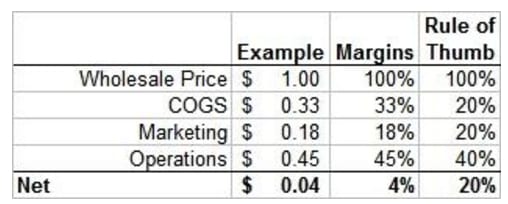](https://eddiesoehnel.com/wp-content/uploads/2012/01/cogs_1.jpg)
|
||||
|
||||
The rule of thumb margins are for an established ongoing CPG business. The example includes an actual business, where wholesale price is the cost to the retailer and the gross revenue to the CPG company. Net includes the earnings before interest and taxes (EBIT).
|
||||
|
||||
In this next table, we’re doing an ROI analysis of the year 1 and year 2 sales (projected) to a specific retailer, based on the terms they are offering. The fees are converted as a percentage of total projected sales and represent a true cost. As you can see, we don’t earn $1.00 on revenue, but it’s actually $.88 and .$94, respectively in years 1 and 2, for sales to that retailer.
|
||||
|
||||
[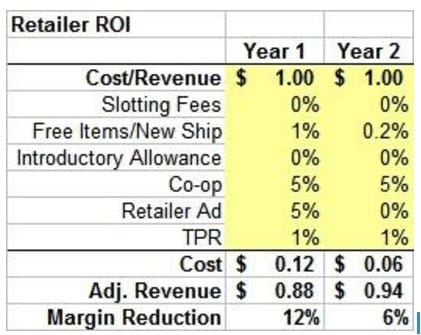](https://eddiesoehnel.com/wp-content/uploads/2012/01/cogs_2.jpg)
|
||||
|
||||
Finally, in this last table, we pop in our revised adjusted revenue to see how it impacts net, especially if we hold our other expense buckets the same.
|
||||
|
||||
[](https://eddiesoehnel.com/wp-content/uploads/2012/01/cogs_3.jpg)
|
||||
|
||||
This is a very simplified example used for illustrative purposes only, so don’t use this for real. The reason is if your retailer fees change, it also changes your operating costs, which might also change your marketing costs. You have to do an ROI retailer analysis in the context of how it impacts your financials on a holistic level. The lesson here and the point of this article is that COGS really impacts your financials.
|
||||
|
||||
A few recommendations with respect to COGS:
|
||||
|
||||
1. It’s OK to have a higher COGS when you are a start-up, but you must have a path towards reducing those costs. The lower the better, but shoot for 30%, which is very hard to achieve in the organic/natural food space unless you are doing some real volume.
|
||||
2. Raise your cost to retailers. That’s really hard to do, unless you can demonstrate rising raw material costs, because the retailer will likely pass that on to consumers and that will likely hurt sales. Its better to start out with as high a cost as possible to the retailer. Conduct thorough category/competitor research and develop your product so that it has high value to your consumers. This gives you room to charge a higher price.
|
||||
3. You could reduce your pack size, but not drop the cost and suggested retail price by an equal amount. In essence, you are fooling the consumer. Consumers are generally adept at price shenanigans and this will hurt your brand.
|
||||
|
||||
Based on these recommendations, it’s clearly better to understand where and how you will reduce your COGS over time and make sure that you lead into the retailer with the right price and pack size.
|
||||
|
||||
[Click here to download the worksheet for this post](https://eddiesoehnel.com/COGSImpactRetail).
|
||||
@@ -0,0 +1,25 @@
|
||||
# How do you calculate the ROI for channel sales?
|
||||
|
||||
Source: <https://eddiesoehnel.com/how-do-you-calculate-the-roi-for-channel-sales/>
|
||||
|
||||
Tags: channel sales, Investment, net profit margin, operating costs, payback period, ROI
|
||||
|
||||

|
||||
|
||||
This was a [Quora](https://www.quora.com/How-do-you-calculate-the-ROI-for-channel-sales) question I was asked to answer.
|
||||
|
||||
I’ve not personally thought of or used ROI for channel sales, but I suppose you could.
|
||||
|
||||
To be clear, when I think of channel sales in context of what I do, which is consumer products, I think of the retail channel, or a subset of retail might be the grocery channel, or the mass channel.
|
||||
|
||||
I think of ROI as a fixed investment with a return marked by a defined period of time. So if you purchase an asset and later sell it, you would calculate your ROI.
|
||||
|
||||
Selling into channels is not something you get in and out of. You set it up, which are defined by costs, which are an investment, then you operate, which are your operating costs.
|
||||
|
||||
When looking at the investment costs, I am more interested in payback period…the costs associated with setting up the channel compared against the profits and how long that takes to earn back the initial investment. These are investment costs that get paid back from profits and are separate from operating costs.
|
||||
|
||||
When accounting for operating costs, the metric I am most interested in is net profit margin for operating in that channel. Take all direct and indirect costs against revenue to determine the profitability of that channel.
|
||||
|
||||
This metric is most useful because you can compare against channels. It is not ROI in the classic sense as I defined above. but operates in the same way in that you can see your return for a given time period and can compare it across different channels.
|
||||
|
||||
I have a simple spreadsheet explaining this [here](https://docs.google.com/spreadsheets/d/1eMPgXBXtGQpW64ZjadYkxgxnuaAim80_N6XP_2Arb1w/edit?usp=sharing).
|
||||
@@ -0,0 +1,29 @@
|
||||
# How to use margins and benchmarks in financial statements for a CPG or consumer product business
|
||||
|
||||
Source: <https://eddiesoehnel.com/how-to-use-margins-and-benchmarks-in-financial-statement-for-a-cpg-or-consumer-product-business/>
|
||||
|
||||
Tags: COGS, Finance, Margins, Marketing, retail price, Wholesale Price
|
||||
|
||||

|
||||
|
||||
This post demonstrates how to use margins and benchmarks in financial statements for a CPG or consumer product business.
|
||||
|
||||
### Margins Defined
|
||||
|
||||
By margins, I mean an expense line item that is relative to net profit, expressed in percentage. Figure 1 is a basic example with the key margins to which we will pay attention.
|
||||
|
||||
*Figure 1 – Margins in a Product Business*
|
||||
|
||||
[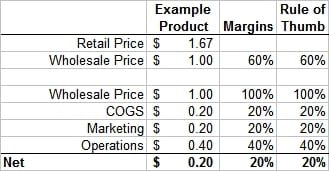](https://eddiesoehnel.com/wp-content/uploads/2011/05/Margins_Figure_1-1.jpg) [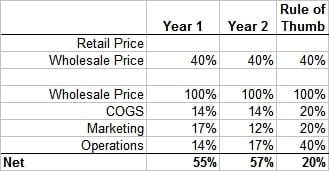](https://eddiesoehnel.com/wp-content/uploads/2011/05/Margins_Figure_2-1.jpg)
|
||||
|
||||
In this example, I made numbers equal to the rules of thumb. In general, wholesale price to a retailer is 60% of shelf-price. This will vary across retail channels, but on average, it’s 60%. The wholesale price is the gross revenue to the manufacturer, whereas the retail price is the gross revenue to the retailer. The retailer pockets the difference between retail price and wholesale price. COGS, marketing and operations rule of thumbs are 20%, 20% and 40%, respectively. Again, these vary across industry and company, but if you don’t know them for your industry, these benchmarks are a good place to start.
|
||||
|
||||
### Example of a Pre-Launch Phase Company
|
||||
|
||||
Figure 2 is one example of a product business in the pre-launch phase. A detailed set of financial projections are working behind the scenes to arrive at these margins. Investment costs are separated out, [as explained in more detail here](https://eddiesoehnel.com/separate-investment-costs-from-your-operating-costs-in-the-profit-and-loss-statement/ "Separate investment costs from your operating costs in the profit and loss statement").
|
||||
|
||||
*Figure 2 – Product business in pre-launch phase*
|
||||
|
||||
[](https://eddiesoehnel.com/wp-content/uploads/2011/05/Margins_Figure_2-1.jpg)
|
||||
|
||||
The expense margins are lower than average, especially the operations number and marketing in year 2. We have to ask: Are the expense and/or revenue assumptions wrong? Is the spreadsheet not making accurate calculations? are there advantages that the business is able to leverage to reduce the expenses? Or, is this the norm for the industry? In this specific case, the business is projecting its ability to leverage certain advantages to reduce costs and the industry tends to have lower expense margins and a much higher net. This could be a great business with room to make errors in the expenses because there is lots of margin to play with.
|
||||
@@ -0,0 +1,33 @@
|
||||
# I am currently working on the development of an e-commerce that sells healthy dry food. What are the typical margins?
|
||||
|
||||
Source: <https://eddiesoehnel.com/currently-working-development-e-commerce-sells-healthy-dry-food-typical-margins/>
|
||||
|
||||
Tags: COGS, direct marketing, direct-to-consumer, Margins, net profit, Profit and Loss, ROAS, SRP
|
||||
|
||||

|
||||
|
||||
*Question: I am currently working on the development of an e-commerce that sells healthy dry food. What are the typical margins?**I’m launching a webshop with healthy products, nutritional supplements and natural cosmetics from different distributors.**What is the typical gross margin for this kind of products? What percentage of my budget should I allocate to marketing? What is the average basket and the purchase frequency?*
|
||||
|
||||
My answer is below.
|
||||
|
||||
I can only speak from the perspective of being the manufacturer/brand/vendor producing and selling products like what you have described direct to consumer via my website (or through my call center). I don’t have experience as a 3rd party e-commerce business. But, I think many of the metrics will be the same, so here’s what has worked for me.
|
||||
|
||||
My goal is to set my anchor prices on products so that my net profit is at least 30%, if I sold 1 unit. Think of your profit and loss statement one each product. Back into the anchor prices assuming 30% net income and 36% operating costs, which leaves 44% left over for COGS. Or, in your case, 44% paid to the vendors to purchase product from them so you can resell it. In general, try to get that number down closer to 30-40%, or less, if possible.
|
||||
|
||||
If 30% is my net profit goal based on my anchor price – my top most price on a single unit – then think of offering generous volume discounts to attract high average order values. I shoot to maintain at least a 15% – preferably 20% – net profit margin when I do volume discounting.
|
||||
|
||||
In general, $75 or greater average order value from each customer seems to be a bit of a magic number for making the direct online operation work. Offer volume discounts upsells, cross-sells, or down-sells in your order process to get above that figure. Any less and you may not be able to pay for all your operating and marketing costs to acquire customers. You might make it up over time through repurchases, but that puts extra pressure on you. Try to adjust your average order value so that you can at least pay for acquiring that customer on the first purchase.
|
||||
|
||||
A 30% or more repurchase rate from initial purchase within 3-months is another good metric to exceed.
|
||||
|
||||
I don’t think of allocating a percentage of my budget to marketing. I use direct marketing (also called direct response marketing) to acquire customers and my goal is to optimize my entire marketing and operation so that my marketing pays for itself through the sales.
|
||||
|
||||
A general breakeven rule of thumb is an ROAS of 2, or gross sales minus cancels/declines/returns, divided by marketing/advertising spend. If your ROAS is hitting 2 or more, in general, your operation will be at breakeven. So you optimize marketing to get you a higher ROAS – say 3, 4 or higher – I have done as high as 7.
|
||||
|
||||
It often takes time to optimize, so I may be spending low dollars on marketing to start, but it is returning less than 2 ROAS. As I optimize and it gets above 2, I then spend more and more and keep going up.
|
||||
|
||||
When you think of it this way, it’s less about allocating percent to marketing, but more about how much more can I spend because I have optimized and I know the marketing is working and will pay for itself with sales coming in.
|
||||
|
||||
But, if I look back, and I have optimized my marketing to a strong ROAS, my P&L generally shows around a 20% marketing spend.
|
||||
|
||||
I try to build my operation around the above-mentioned metrics, and if I am successful, will give me a strong, profitable and generally sustainable business.
|
||||
@@ -0,0 +1,96 @@
|
||||
# Key viability metrics for a startup CPG company
|
||||
|
||||
Source: <https://eddiesoehnel.com/viability-metrics-for-a-startup-cpg-company/>
|
||||
|
||||
Tags: CPG, metrics, retail, startup
|
||||
|
||||

|
||||
|
||||
When I look at CPG opportunities, my goal is to know the following:
|
||||
|
||||
1. Is this product/idea differentiated in the marketplace and how easy is it for the competition to copy/replicate that differentiation?
|
||||
2. Does the team know what they are doing to grow the opportunity?
|
||||
3. What’s the plan to get the opportunity to 20% EBIDTA?
|
||||
|
||||
To accomplish the above, I need the following metrics for a startup CPG, in this order, with the basis at the product unit level that the end consumer would purchase:
|
||||
|
||||
1. Current sales in units/door/week by channel;
|
||||
2. SRP – suggested retail price of the item by channel;
|
||||
3. Repurchase rate;
|
||||
4. Retailer margin (%);
|
||||
5. Wholesale revenue;
|
||||
6. Returns;
|
||||
7. COGS;
|
||||
8. Gross margin (wholesale revenue – COGS);
|
||||
9. Tradespend;
|
||||
10. Marketing costs;
|
||||
11. Sales costs, incl. broker fees;
|
||||
12. Logistics and retailer penalties;
|
||||
13. All other operating costs;
|
||||
14. Net;
|
||||
15. Cash investment.
|
||||
|
||||
The above is structured like a basic P&L. The metrics are less important because in most cases, they will not be to where they should be. What’s more important is the qualitative discussions on each metric to help me get to my 3 goals listed above. With the above metrics and a 30-minute discussion, I can usually know if this is a good opportunity for me.
|
||||
|
||||
Sales/Units/Door/Week and SRP by channel
|
||||
|
||||
This is a core metric to understand how the product is performing in the marketplace. It will be different for each product category, but a good metric for many grocery categories is 1 unit/door/week. If this is average, does this product exceed that or is it below that? If so, why? If above, is it a unique product different enough from the competition? If above, is the company doing some kind of in-store or external marketing that is driving sales? If below, why? Is the company’s marketing not effective? Is it a commodity product getting lost in the clutter of all other commodity products? Is SRP too high, too low? Why?
|
||||
|
||||
These are exactly the kinds of questions category buyers ask in determining whether to take on new products, expand existing ones into more stores, or discontinue them out in favor of another product. Even if a product is meeting sales threshold does not mean it won’t get discontinued. Another better product could come along or one with better marketing. The company needs to know its category and competitors and trends very well to try to position against this.
|
||||
|
||||
When I say “by channel” above, I mean I want to know SRP and margins by channel – grocery, drug, mass, club, etc.. Even if the company is not selling in these channels, what would SRP be in those channels, against the retailer margin? Eventually, I would want to see them sell to the other channels to get more growth. This is important to know now because setting SRP relative to margin and EBIDTA has to be done in the context of looking at other channels, because even though it might work in one channel, it will break in other channels, so you want to get that right from the start.
|
||||
|
||||
Repurchase Rate
|
||||
|
||||
This metric can only be derived with accuracy if the company has a direct-to-consumer (D2C) component (i.e.: sell via their website). And it is very important to know because if the company has a low repurchase rate – and I assume if in grocery stores it’s a consummable product, so there should be repeat purchasing – then the company has a structural problem and eventually it will fail when it runs out of new consumers. Having a D2C component is very important to know information like this. I look at repurchase rate in context of 12-months from initial purchase. Another similar metric is customer lifetime value, but I limit to 12-months.
|
||||
|
||||
If only in retail, the best way to gauge this number is through specialty or smaller chains that the company has been selling in for a while. If succeeding, then you might infer that there is a good repurchase rate. However, the caveat there is that the product is not in an impulse-buy store location, like the checkstand area. If so, then be careful.
|
||||
|
||||
Retailer Margin (%).
|
||||
|
||||
For grocery, the target is 35% – the difference between wholesale and SRP, or the retailers markup. Is it higher or lower than this and why? If lower, then to expand to other chains, it will have to go higher, meaning it eats into EBITDA. If higher, why? Is it because it’s a new product and the category buyer wanted more margin because of the risk? Or, is it because the company is not marketing or not marketing well to support sales, so the category buyer wants more margin?
|
||||
|
||||
Returns
|
||||
|
||||
Usually will be 1-4% for small companies in smaller retailers. It should not be higher than that. If so, why? Dig in to understand what is going on.
|
||||
|
||||
COGS
|
||||
|
||||
For smaller CPG’s in food, selling organic, this figure is easily in the 50-70% range. The key to ask is not necessarily where it is now, but can the company get it down over time with increased volume? They should be able to get it to the 30-40% range – closer to 40 if an organic product. Again, this is for consummables.
|
||||
|
||||
Tradespend
|
||||
|
||||
On average, for all CPG consummables, its 13.5%. If higher why, if lower, why? What is the company doing to warrant it being higher or lower? It’s almost always higher the first year in a retail chain, then goes down. What are the specific factors in tradespend that is causing this number to be what it is? Experienced CPG people will know how to negotiate this number down over time. Does this company know how to do this? Note: diving into this area will really tell you if the company knows what they are doing or not, in my experience.
|
||||
|
||||
Marketing Costs
|
||||
|
||||
This goes with tradespend, because in-store marketing is in tradespend. But external marketing (what the company does independent of the retailer) is everything else. For small companies, marketing should really be direct response drive, in my opinion. By DR marketing, your marketing has to drive sales and you have to be able to measure it to see if its working. You can’t just throw dollars at brand marketing like large CPG companies because you will run out of money before they have an effect, in my experience. With DR marketing, you need to know how many dollars are spent and what sales that brings in – simple equation called MER (marketing efficiency ratio). A ratio of 2 or more is what you want, but it takes time to get there to optimize marketing. A CPG company that knows how to do this can leverage it into retail growth very well.
|
||||
|
||||
Sales costs, incl. broker fees
|
||||
|
||||
Broker fees is what I really want to get at. Goal is to get to 5% with no monthly upfront payment. Hard to do for smaller companies, but that is the goal.
|
||||
|
||||
In the natural channel it will be 8-15% with a $500-800 monthly payment to good brokers. Over time, you can get the monthly payment to go away and with volume, get the % down.
|
||||
|
||||
I care less about the costs now and more about who the brokers are, what are they doing and are they good ones (I can usually tell by knowing how the brokers work by asking the company questions about them). Good brokers are key to growing in retail. You want relationships with good ones.
|
||||
|
||||
Logistics and retailer penalties
|
||||
|
||||
Goal is to get to 5-7%, or even lower if possible. If higher, why? This is another area that by digging in, will tell me if the company really knows what they are doing on an operating level. Companies with less experience or with weak operations will have higher logistics and retailer penalties. This area can kill a company if not under control. This area might not be a problem now, but its a sleeper land mine because it could become a problem if internal processes and systems are inadequate.
|
||||
|
||||
All other operating costs
|
||||
|
||||
I usually don’t dive into any other cost areas. The above is what I really need to get to my 3 goals.
|
||||
|
||||
Net
|
||||
|
||||
What is the EBITDA? Goal is 20%. Now, let me say that 20% is my goal. It does not necessarily mean that is the goal of other companies. I like 20% because it gives me room for error, because there will always be error. In general, if its less than 10%, that’s a problem, because errors will eat into that fast. If not at 20%, then what is going on above to impact this? Based on the above discussion, I would be able to understand better what is needed to get to 20% EBITDA and if the company has the expertise to make it happen. However, I see opportunities all the time that will never get to 20%. Does not make them bad ones, just maybe not ones I would consider.
|
||||
Put the above into a simple excel model and as you play with all the variables, you will see its impact on EBIDTA.
|
||||
|
||||
Cash Investment
|
||||
|
||||
What will my cash investment do for the company to get it towards 20% EBITDA? Or, if it’s at 20% now, what will my investment do for growth? If my investment won’t get it there, will the company need more investment? If so, can they raise money from other investors besides me? Do they have a differentiated opportunity and a good team that would be attractive to other investors?
|
||||
|
||||
Growing CPG companies, especially those in retail, even at positive EBITDA, often need more and more cash to growth. So, even if goal EBIDTA is reached, growth still means more cash will be needed. Can they get it?
|
||||
|
||||
What’s the exit? How do I get my money back? Because growing CPG companies, especially in retail, need cash to fund growth, don’t expect your investment to come from EBITDA distributions to investors, at least any day soon. And selling a company is really hard and very few are able to do that.
|
||||
@@ -0,0 +1,119 @@
|
||||
# Marketing campaign goal metrics model: a simplified version of the most important financial model for any consumer product company
|
||||
|
||||
Source: <https://eddiesoehnel.com/marketing-campaign-goal-metrics-model-a-simplified-version-of-the-most-important-financial-model-for-any-consumer-product-company/>
|
||||
|
||||
Tags: Average order value, clickthroughs, COGS, CPC, Excel, google sheets, kpi, Marketing, net profit margin, reseller, retailer, ROAS
|
||||
|
||||

|
||||
|
||||
### The ultimate goal in any company…
|
||||
|
||||
…is to acquire AND retain customers where costs to acquire and retain are less than expenses, which leads to profits.
|
||||
|
||||
Boiled down to this single statement, then the most important variable in the finances is the marketing spend.
|
||||
|
||||
Even if your other expenses are high or way out of whack or your conversion is terrible and you can profitably acquire and retain customers, then those other expenses matter a lot less.
|
||||
|
||||
So, how do we know how well our marketing is working? We use the model in this post, which is a high level marketing campaign model that aggregates all the detailed costs into a few key components.
|
||||
|
||||
This model is probably the most important model in my arsenal and the one I use the most. It flows like a profit and loss statement with key ratios to help me quickly see how I am doing in a particular marketing or sales campaign.
|
||||
|
||||
Actually, this model is a more simplified version that I use, but for a very high level view, this one works great and useful to explain in this post.
|
||||
|
||||
How it works is rather simple. Let’s dive in.
|
||||
|
||||
### Marketing campaign goal metrics model
|
||||
|
||||
[Embedded resource](https://docs.google.com/spreadsheets/d/e/2PACX-1vSN3B5LUtLtS5hWX6VbWMvb6T6hweBbRX-GtFNxrEfQOnjFXq8LJCsVVF6B200w-WmC19pt72W2IX2n/pubhtml?widget=true&headers=false)
|
||||
|
||||
To download the spreadsheet used in this post, please scroll to the end.
|
||||
|
||||
Marketing Goals
|
||||
|
||||
This variable I set as my gross income that I want. Actually, it might be the last thing I set because I generally start with my net income and net margin goals and work backwards by putting in the variable that will get me there.
|
||||
|
||||
Excel’s or Sheet’s goal seek and goal seeker, respectively, are useful here, or you can interpolate by hand.
|
||||
|
||||
COGS (Cost of goods sold)
|
||||
|
||||
I always try to determine my COGS based on a given revenue range and a particular marketing channel and convert to a percentage of revenue, which makes it easy for the model to use when the other variables change.
|
||||
|
||||
Marketing
|
||||
|
||||
The key here is to understand your costs for a given channel and product that you are promoting in the marketing campaign.
|
||||
|
||||
This is very important because marketing costs can vary dramatically for different channels and products.
|
||||
|
||||
Don’t mix them together.
|
||||
|
||||
This means you want to have a really good accounting general ledger and system to be able to track expenses down to the product and the channel.
|
||||
|
||||
I always like to look at my marketing fixed costs because they can vary quite dramatically by channel and product, so they go in this line item.
|
||||
|
||||
But the one variable in this whole model that I will constantly adjust based on my ad spend is the ad spend line item.
|
||||
|
||||
I highlighted it in blue because when I set all other variables, I find this one will continue to change the most.
|
||||
|
||||
Operations
|
||||
|
||||
This is all other costs for the business, and I mean all other fixed costs. Just lump them all into this variable.
|
||||
|
||||
There will be other variable costs, like product returns, but I generally just try to lump them into this line item based on the revenue range to keep the model simple.
|
||||
|
||||
Other P&L line items of net and profit margin are pretty simple to understand.
|
||||
|
||||
I always try to start with my goal net profit margin, then work backwards from there to fill in all other variables in the model.
|
||||
|
||||
My net profit margin goal is usually 30%.
|
||||
|
||||
ROAS
|
||||
|
||||
Return on ad spend is important because it helps me compare one campaign to the next.
|
||||
|
||||
Do comparison only for each marketing campaign within a specific channel and by product. Don’t use it to compare across different products and channels because it is not an apples-to-apples comparison.
|
||||
|
||||
In general, I look to be in a range for ROAS:
|
||||
|
||||
- 2-4 is generally the range for breakeven for a consumer product business. If I am above that and at or below my breakeven net income, then I may need to try and work on getting my operating costs down to get it in line.
|
||||
- 7 or above for a profitable business via digital marketing usually means I have a great performing campaign. That number is 3 or more for an analog marketing campaign.
|
||||
|
||||
Traffic
|
||||
|
||||
My traffic line items specifically break down the performance for each step in my funnel through purchase.
|
||||
|
||||
Those performance ratios should be in line with my category.
|
||||
|
||||
My goal is to improve those ratios by playing with my funnel and each step in it to get better conversion.
|
||||
|
||||
Average Order Value
|
||||
|
||||
And finally, I have my average order value, which rolls up to revenue.
|
||||
|
||||
### Key things to focus on
|
||||
|
||||
There is a lot going on in this simple model with all the variables you can input, but to keep it simple, here are the key things to focus on:
|
||||
|
||||
1. Ad spend: the goal is to drive this one down, which means finding a marketing channel where the costs are cheaper over other channels (you have good marketing arbitrage).
|
||||
2. Traffic: improve these numbers by working on your funnel to get customers to convert better in each step.
|
||||
3. COGS and Operations: reduce these costs so that those savings flow to your net.
|
||||
4. Average Order Value: get this number up so that fewer customers will do the job for you, which then means your traffic numbers do not need to perform as well.
|
||||
|
||||
This model can technically be used anywhere, even with reseller or retailers. The ad spend is any cost you pay to acquire customers.
|
||||
|
||||
For a reseller or retailer, that is not just the tradespend but also the margin you give to them to resell your product. Margin you give up is an acquisition cost, so I consider it a marketing expense.
|
||||
|
||||
When you look at it this way, the 65% margin that a retailer in a specialty channel is charging to resell your product becomes a huge expense.
|
||||
|
||||
But that is the way you want to look at it because if you can acquire customers for less in other channels (and you usually can), then you might want to focus efforts there.
|
||||
|
||||
Paying that 65% margin usually only starts to make sense when you can sell a lot of volume to get economies of scale, which takes time and cash to get to that point.
|
||||
|
||||
### Summary
|
||||
|
||||
This model rolls up key performance indicator (KPI’s) for a consumer product company.
|
||||
|
||||
Sure, there are [many others](https://eddiesoehnel.com/top-kpis-cpg-companies/) you will want to track, and maybe [one super metric](https://eddiesoehnel.com/north-star-metric/), but they all roll into the ones in this simple model.
|
||||
|
||||
As long as you have [robust and thorough data and accounting tracking systems](https://eddiesoehnel.com/technology-infrastructure-for-consumer-product-companies/) in place, then it becomes quite easy to use this model to figure out what is working in your business.
|
||||
|
||||
[Click here to download the spreadsheet model for this post.](https://eddiesoehnel.com/MarketingCampaignGoalMetricsModel)
|
||||
@@ -0,0 +1,30 @@
|
||||
# One method for determining channel margins when you are not able to talk with industry insiders
|
||||
|
||||
Source: <https://eddiesoehnel.com/one-method-for-determining-channel-margins-when-you-are-not-able-to-talk-with-industry-insiders/>
|
||||
|
||||
Tags: COGS, consumer electronics, distributor, importer, Margin, markup, MSRP, reseller, retailer, SRP
|
||||
|
||||

|
||||
|
||||
This post answers this question I received on Quora:
|
||||
|
||||
*Does the manufacturer of robotic kits for kids have a potential to enter markets overseas by offering a 50% discount on MSRP to importers? Will the importer have enough space to markup the price before CE retailers markups his own purchasing price?*
|
||||
|
||||
The answer is unknown without direct knowledge of the margins amongst the various intermediaries (importers, distributors, retailers/resellers) involved in the sale of products in your category.
|
||||
|
||||
It is hard to pin down using general industry rules of thumb because margins on consumer electronic products varies quite substantially not just between categories, but within categories, between channels and retailers and possible also based on the maturity of the product in the category.
|
||||
|
||||
The best way to get this information is two fold:
|
||||
|
||||
Talk directly with importers/distributors and retailers/resellers to understand their margin requirements.
|
||||
|
||||
If this is not possible, then I would back into this number through the following sequence:
|
||||
|
||||
1. Determine the MSRP of your product. This would be equal to the revenue that the end retailer/reseller makes on the sale of your product to the end consumer;
|
||||
2. Research your specific category within the consumer electronics industry from financial statements by publicly traded consumer electronics retailers. Determine their COGS, which is what they pay the importer/distributor;
|
||||
3. Assume 20% margin to the importer/distributor (this is a rule of thumb and may not be correct for your category), which lets you back into determining your wholesale cost of the product to the importer/distributor (your revenue);
|
||||
4. Assemble your P&L for the product, including COGS and all applicable operating expenses and net income. Assume a reasonable but standard net income percentage for companies like you in your category.
|
||||
|
||||
The goal with this exercise is to determine if you can manufacturer and sell your product at your wholesale cost with all of your P&L variables factored in for that product, based on your industry net income average, which then rolls up to the importer/distributor price, which then then rolls up to the retailer price, factoring in their COGS.
|
||||
|
||||
Build this sequence into a model and you will then be able to determine what margin you can deliver on your product.
|
||||
@@ -0,0 +1,31 @@
|
||||
# Revenue strategies in the early days of your consumer product startup
|
||||
|
||||
Source: <https://eddiesoehnel.com/revenue-strategies-consumer-product-startup/>
|
||||
|
||||
Tags: AOV, MSRP, retention marketing, SRP
|
||||
|
||||

|
||||
|
||||
In the early days of your startup, there are three revenue generating strategies that you want to try and adopt into your business.
|
||||
|
||||
First, try to maximize the price of your product to get as much revenue a possible from a single customer.
|
||||
|
||||
As an example, if your goal is $1000 in gross sales a week, at $100 per product, that is only 10 customers, compared to a $25 product, which is 40 customers.
|
||||
|
||||
It is a lot easier to take care of 10 customers than 40 customers, in terms of processing orders, managing inventory, managing customer service and any returns. You want to make it as easy as possible on yourself when you are starting out and having larger backend operations that add greater costs and complexity don’t help.
|
||||
|
||||
The ideal is to get your MSRP or SRP above $100 but below $1000; any higher and it may require personal selling to close a sale, which will add more work for you.
|
||||
|
||||
Second, try and maximize your order value. That is, try to get that customer to put as much in their cart as possible.
|
||||
|
||||
As a general rule, when selling direct to a customer, you want your average order value to be greater than $100 to really make things work in your business. If your product retails for less than $100, violating the first rule above, then maybe you can make up for it here through incentives to maximize the cart value.
|
||||
|
||||
Third, you want to maximize the revenue from each customer over time. This means you want to work hard to retain customers and keep them as repeat buyers, because it is a lot cheaper and easier to keep a customer than find a new one.
|
||||
|
||||
As a general rule, try to have 30% or more of your customers give you repeat orders. If it is less, then there may be something wrong with what you are selling that is turning customers off, and you need to find out why.
|
||||
|
||||
So, when you are starting out, sell a product or products that have higher price points, try to incentivize your customers to place big orders with you, and do everything you can to retain customers and keep them buying from you.
|
||||
|
||||
If all you can do is one, that is fine, but if you can incorporate two or all three, then that will help you out immensely in the earlier days of your startup.
|
||||
|
||||
As you grow, get sales, cash flow and profits, then you might be able to better afford to have lower priced products or lower average order values.
|
||||
@@ -0,0 +1,29 @@
|
||||
# Separate investment costs from your operating costs in the profit and loss statement
|
||||
|
||||
Source: <https://eddiesoehnel.com/separate-investment-costs-from-your-operating-costs-in-the-profit-and-loss-statement/>
|
||||
|
||||
Tags: COGS, Cost of goods sold, Finance, Investment, Profit and Loss
|
||||
|
||||

|
||||
|
||||
This article talks about how to separate investment costs from your operating costs in the profit and loss statement so that you have good numbers from which to make meaningful analysis.
|
||||
|
||||
### P&L Cost Buckets
|
||||
|
||||
In my P&L, I like to group operating costs into the following buckets: COGS, marketing, and operations. There are many expense line items under these buckets, but they roll up into each of the categories.
|
||||
|
||||
Below my P&L are my investment costs, which I separate into corporate investments and product investments. Investment costs are one-time expenses or paid over a short-period of time and do not recur. On the corporate side, they include costs with setting up legal entities, trademark filings, systems and office setup. These costs occur at the start-up stage or at key growth stages of a company.
|
||||
|
||||
Product investment costs are associated with R&D, development, customer testing, marketing and packaging development, copyright and trademark filings and any other costs to get a product ready for launch. If there are re-branding efforts after the product is launched (like new packaging), they would be grouped under product investment costs.
|
||||
|
||||
There will always be questions on whether some expenses belong in the operating or the investment buckets. For example, website development costs can be ongoing due to the addition of functionality and enhancements in our fast-changing technology environment. So, would they be considered an operating or investment cost? You’ll have to make that decision on your own, but my rule is to group minor changes as part of my operating costs and the addition of functionality or major layout/re-branding efforts to be grouped under investment costs.
|
||||
|
||||
Another example is personnel costs. The salaries you pay your people to develop a product, packaging and marketing is probably the largest investment expense. How do you decide what of their salary is investment expense and what is operations expense? I don’t like to generalize in answering this question by just taking some percentage and allocating towards investment and operations. I try to be more exact and take into account the time they spend in investment vs. operations activities. I need to be able to analyze my business with good data and its very easy to get bad data when you generalize.
|
||||
|
||||
### Analysis
|
||||
|
||||
I separate my costs as outlined above for 3 key reasons:
|
||||
|
||||
1. Investment costs skew analysis of operating results and distort the true health of the business. If they are mixed in with operations, then it will be harder to determine how the core functions of the business are performing. You want to have a clean set of accounting numbers void of investment costs to do your margin analysis on your operations.
|
||||
2. Payback period. The purpose of healthy and sustainable profits in a product business are to help pay back your investment, fund future investment and provide free cash flow that is returned to the shareholders. Looking at your investment costs separate from operations makes this it much easier to determine how long it will take the business to pay back that investment with the profits.
|
||||
3. Investment costs remain transparent. Separating them from operations allows you to look at your investment costs in a clean and transparent way.
|
||||
@@ -0,0 +1,9 @@
|
||||
# Startup fundraising: my thoughts on the process and tips on your fundraising pitch deck
|
||||
|
||||
Source: <https://eddiesoehnel.com/startup-fundraising-tips-on-your-fundraising-pitch-deck/>
|
||||
|
||||
Tags: Fundraising, investors, pitch deck
|
||||
|
||||

|
||||
|
||||
[Embedded resource](https://docs.google.com/document/d/e/2PACX-1vR6pANuMCAOSstwmsAT6GVj5DJE9bKxqwdUzxWlsQFNcUeNVD7drVcdArXDeQHRtd63tC35Qq3YyWAb/pub?embedded=true)
|
||||
@@ -0,0 +1,17 @@
|
||||
# The Flow of Money in a Consumer Product Company (infographic)
|
||||
|
||||
Source: <https://eddiesoehnel.com/flow-money-consumer-product-company/>
|
||||
|
||||
Tags: abandons, AOV, Average order value, CLTV, COGS, cost per click, cost per order, CPC, crossell, downsell, gross margin, Profit and Loss, return on ad spend, ROAS, ROI, ROIMI, sales funnel, upsell
|
||||
|
||||

|
||||
|
||||
The best way to think about this is a profit and loss statement, starting with revenue at the top and net income at the bottom.
|
||||
|
||||
A customer flows from the top, acquired through marketing spend, and everything in between to deliver that product to them, with profit left over, and all the key metrics that matter in this flow.
|
||||
|
||||
You can think of selling to resellers using this same flow, except you will not have to collect and review all the same metrics as you do when selling direct-to-consumer. I organize my financial models and way of thinking based on this flow.
|
||||
|
||||
[Click here to download the spreadsheet for this post.](https://eddiesoehnel.com/FlowofMoney)
|
||||
|
||||
[Embedded resource](https://www.lucidchart.com/documents/embeddedchart/ac5ebb3b-d97b-490e-a04e-5db3b884ef11)
|
||||
@@ -0,0 +1,37 @@
|
||||
# The North Star Metric
|
||||
|
||||
Source: <https://eddiesoehnel.com/north-star-metric/>
|
||||
|
||||
Tags: kpi, north star metric, super metric
|
||||
|
||||

|
||||
|
||||
There’s something called the North Star Metric, which one can also refer to as a super metric or a super KPI (key performance indicator).
|
||||
|
||||
I found it to be best described in this one sentence, [pulled from this post:](http://edsoehnel.us2.list-manage2.com/track/click?u=b0d432e4c7e4ba05821cfae69&id=11c63fb5c2&e=380e33e966)
|
||||
|
||||
*The North Star Metric is the single metric that best captures the core value that your product delivers to customers.*
|
||||
|
||||
I think the best place to discover your North Star Metric is to focus on the final best outcome your product provides to the customer and to quantify and measure that outcome.
|
||||
|
||||
For example, if the product is a weight loss supplement, then the outcome could be pounds lost while taking the supplement.
|
||||
|
||||
If the customer experiences pounds lost, then that may lead to repurchase, which you can track via repurchase rates, which leads to high customer lifetime value, which you can track (assuming you sell direct and have implemented systems to track this data).
|
||||
|
||||
High customer lifetime value means you have more efficient marketing because you are not spending to acquire a customer for every one you lose, which leads to higher profitability
|
||||
|
||||
So, in this example, if you can track how many pounds your customer’s lose from using your product, that could be The North Star metric. If you can track on a weekly basis, then that can serve to align the entire business to keep this number up, because that leads to repeat purchasing…more efficient marketing…more profits.
|
||||
|
||||
But tracking the outcome may not be feasible. It is not realistic for every customer to tell you on a weekly basis how much weight they lost taking your product. So, move backwards from there to track earlier metrics in this process, like product repurchase rates or customer lifetime value. If I had to choose, I think these two metrics are probably the best North Star metrics for consumer product companies.
|
||||
|
||||
I think my best North Star Metric for my business is repeat purchasing rate, which averages 50% for me.
|
||||
|
||||
But I am uncomfortable just using this one metric because averages end up hiding real insight into my business and could be masking underlying problems.
|
||||
|
||||
What is better is to look at repeat purchasing rate by things like specific product, by cohort (for example, which channel I used to acquire a particular set of customers) or segment (for example, my VIP customers versus my regular customers).
|
||||
|
||||
Another possible North Star Metric is customer lifetime value, which for me averages $260 across my entire customer base.
|
||||
|
||||
But again, the averages could mask underlying problems. I am most concerned with raising this number among my VIP customers, so for me, tracking customer lifetime value for my VIP customers is a better North Starmetric.
|
||||
|
||||
So, in sum the North Star Metric is potentially useful to align the entire company, but probably should not be relied upon on its own because averages can mask problems.
|
||||
@@ -0,0 +1,26 @@
|
||||
# What are Honest Co.’s gross margins (and some rules of thumb for figuring this out)
|
||||
|
||||
Source: <https://eddiesoehnel.com/what-are-honest-co-s-gross-margins-and-some-rules-of-thumb-for-figuring-this-out/>
|
||||
|
||||
Tags: COGS, Finance, gross margin, Honest Company, Marketing
|
||||
|
||||

|
||||
|
||||
This is a [Quora](https://www.quora.com/What-are-Honest-Co-%E2%80%99s-gross-margins) questions I was asked. Here is my answer
|
||||
|
||||
I did a quick search in my industry source and did not find anything that specific.
|
||||
|
||||
Here are some quick metrics to make a guess:
|
||||
|
||||
- As of 2016, they are north of $300 mm in sales;
|
||||
- Unprofitable;
|
||||
- Raised $220 mm to date from 10-investors;
|
||||
- Direct-to-consumer sales and no retail to date.
|
||||
|
||||
Based on the type of marketing they are doing (all brand, from what I can tell), I assume their marketing costs are running at least 25% of revenue, and operations costs at 40% (based on their size).
|
||||
|
||||
That leaves 35%, and if they are not profitable, then I assume their COGS is at least 35%.
|
||||
|
||||
Given that they sell organic products, I would peg their COGS at 40%, so gross margin is 60%.
|
||||
|
||||
In my experience, I have not see pure organic companies with COGS below 40%.
|
||||
@@ -0,0 +1,25 @@
|
||||
# What are good margins and markup for a food business?
|
||||
|
||||
Source: <https://eddiesoehnel.com/good-margins-markup-food-business/>
|
||||
|
||||
Tags: Margin, markup
|
||||
|
||||

|
||||
|
||||
Markup depends on the retail channel in which you sell.
|
||||
|
||||
Specialty/natural channels run 50-65%, drug is 45%, grocery is 35%, mass is 30%, and club is 14%.
|
||||
|
||||
If you sell direct to consumers, then the anchor price on a single unit of your product would equal that specialty/natural channel price.
|
||||
|
||||
In my experience and opinion, your EBIT (earnings before interest and taxes) should be 30%+ if you sell direct to consumer. This is your most profitable channel – selling direct to consumers.
|
||||
|
||||
For retail, you should strive for a 20%+ EBIT.
|
||||
|
||||
For cost of goods sold (COGS), you should strive for 40% or lower, which is not necessarily possible when you are a startup or doing smaller volume. I see COGS in the 40%-70% range for startups and small food companies.
|
||||
|
||||
The above profitability and COGS margins assume you are selling at volume, not at startup. You likely won’t have EBIT at 30% or 20% for direct and retail, respectively, and COGS at 40% or lower when you are a startup or running small volume, but you want to make sure you can get to these metrics as you scale.
|
||||
|
||||
In reality, especially if you are selling an organic or natural product, it can be difficulty even at volume to hit the 30% and 20% EBIT metrics, but to be sustainable, you really need to shoot for these metrics.
|
||||
|
||||
If your forecasting reveals that you may not be able to hit these metrics at volume, then go back to R&D to redevelop the product with more value that will allow you to charge the price that will give you the profitability you need to be sustainable.
|
||||
@@ -0,0 +1,31 @@
|
||||
# What are some barriers of entry to running a successful eCommerce business?
|
||||
|
||||
Source: <https://eddiesoehnel.com/what-are-some-barriers-of-entry-to-running-a-successful-ecommerce-business/>
|
||||
|
||||
Tags: Average order value, Customer Lifetime Value, customer retention, Profit and Loss
|
||||
|
||||

|
||||
|
||||
This is a [Quora](https://www.quora.com/What-are-some-barriers-of-entry-to-running-a-successful-eCommerce-business/answer/Ed-Soehnel) question I was asked and my answer is as follows.
|
||||
|
||||
My sense is that a minimum qualification for “successful” is profitable on an EBITDA basis (net profit or earnings before interest and taxes, depreciation and amortization) such that your profits will pay back your original investment in a defined time frame.
|
||||
|
||||
Defined time frame is different for everyone, but could be 3, 5, or 7 years or some other time frame you require for payback on your original investment.
|
||||
|
||||
If we take that minimum definition for “successful”, I think the biggest barrier for new entrants is not knowing the right set of metrics that will get you to success.
|
||||
|
||||
It usually takes trial and error and general testing to learn what those metrics should be for your business. Even if you have direct experience in your specific industry, each company is different so the metrics will be different.
|
||||
|
||||
A big metric includes average order value, which as a general rule should be north of $75, because anything less and you will not be able to pay your operating costs.
|
||||
|
||||
But, that is greatly affected by may other big factors, principally the acquisition cost of each customer and the customer lifetime value of that customer.
|
||||
|
||||
If you have optimized marketing where your customer acquisition costs are low, you might do just fine with a lower average order value.
|
||||
|
||||
And if you can retain your customers so that you can count on repeat purchasing, then in general your marketing costs will be much less because it costs, on average, 7x less to retain a customer than acquire a new one.
|
||||
|
||||
Knowing these and many other metrics in your business takes time and that is often the enemy of ecommerce startups, because the more time they spend to learn this, the more cash they burn, not only reducing available cash, but also increasing the payback period on the original investment.
|
||||
|
||||
To reduce the complexity of these and other metrics,[I have an infographic on the flow of money in a consumer product company](https://eddiesoehnel.com/flow-money-consumer-product-company/) organized into a profit and loss statement and how the main metrics fit together.
|
||||
|
||||
You can use this to model your ecommerce business and see how the metrics fit within the context of profit and loss.
|
||||
@@ -0,0 +1,19 @@
|
||||
# What are the profit margins on plastic storage containers?
|
||||
|
||||
Source: <https://eddiesoehnel.com/profit-margins-plastic-storage-containers/>
|
||||
|
||||
Tags: None listed
|
||||
|
||||

|
||||
|
||||
This is a [Quora](https://www.quora.com/unanswered/What-are-the-profit-margins-on-plastic-storage-containers) question. This is my answer.
|
||||
|
||||
The general goal in consumer products is 20% EBITDA (earnings before interest and taxes) profit margins.
|
||||
|
||||
But these are commodity products and the category is probably competitive, so it’s possible EBITDA is less, may 10%-15%.
|
||||
|
||||
Cost of Good Sold (COGS) on a product like this is probably 15% – that is raw materials+manufacturing+packaging+shipping to warehouse.
|
||||
|
||||
Retailer margin (markup from wholesale) depends on the channel – anywhere from 14% to around 50%.
|
||||
|
||||
So, when you break it all down, the costs are all in marketing, sales and distribution. Prices probably are not that high because this is a commodity product and many competitors, thus less ability for one to charge higher prices.
|
||||
@@ -0,0 +1,43 @@
|
||||
# What are the top KPIs for CPG companies?
|
||||
|
||||
Source: <https://eddiesoehnel.com/top-kpis-cpg-companies/>
|
||||
|
||||
Tags: kpi, metrics
|
||||
|
||||

|
||||
|
||||
The KPIs for CPG depend on the channels sold.
|
||||
|
||||
If sold direct-to-consumer, the top metrics I track include:
|
||||
|
||||
1. Marketing spend;
|
||||
2. Message engagement rates (email, social views, social shares, hashtags, etc);
|
||||
3. Click throughs;
|
||||
4. Conversions;
|
||||
5. Average Order Value;
|
||||
6. Cost per click;
|
||||
7. Cost per visitor;
|
||||
8. Cost per order;
|
||||
9. Cart abandon rate;
|
||||
10. Cancels/Declines/Returns rates;
|
||||
11. Return on advertising spend (ROAS) or marketing efficiency ratio (MER);
|
||||
12. Lifetime value, calculated at least over 12-months, but can be also much sooner depending upon the product repurchase cycle.
|
||||
13. ROI
|
||||
|
||||
If sold in retail, the top metrics I track include:
|
||||
|
||||
1. Units/door/week sold per retailer;
|
||||
2. Sales order change from 52-weeks prior;
|
||||
3. Weeks of inventory on hand that I have;
|
||||
4. Weeks of inventory on hand that the retail account has;
|
||||
5. Retailer weeks of inventory target number;
|
||||
6. Value of outstanding purchase orders;
|
||||
7. Product returns
|
||||
8. Retailer ROI and tradespend and penalties
|
||||
9. PO delivery on-time rate
|
||||
10. Out of stock percentage
|
||||
11. Logistics costs to revenue ratio
|
||||
|
||||
My background is consumer product and CPG startups through low 9-figures in revenue, so I cannot speak to the top metrics tracked for larger CPG’s. I would think they track the above plus additional ones.
|
||||
|
||||
[Click here to download the spreadsheet for this post](https://eddiesoehnel.com/FlowofMoney).
|
||||
@@ -0,0 +1,17 @@
|
||||
# What is the ROI average for e-commerce sites?
|
||||
|
||||
Source: <https://eddiesoehnel.com/what-is-the-roi-average-for-e-commerce-sites/>
|
||||
|
||||
Tags: e-commerce, EBITDA, payback period, revenue-to-funding, ROI
|
||||
|
||||

|
||||
|
||||
This is a [Quora](https://www.quora.com/What-is-the-ROI-average-for-e-commerce-sites) question I was asked to answer.
|
||||
|
||||
I don’t look at ROI in terms of consumer products or ecommerce because that number is not as meaningful due to its wide range across categories, channels and geography.
|
||||
|
||||
EBITDA, net profit margin, payback period, and revenue-to-funding are metrics I prefer.
|
||||
|
||||
Based on that, here’s is some data I have.
|
||||
|
||||

|
||||
@@ -0,0 +1,31 @@
|
||||
# What is the cost to revenue ratio of an e-commerce infrastructure in the retail industry?
|
||||
|
||||
Source: <https://eddiesoehnel.com/what-is-the-cost-to-revenue-ratio-of-an-e-commerce-infrastructure-in-the-retail-industry/>
|
||||
|
||||
Tags: COGS, EBITDA, net profit margin, Profit and Loss
|
||||
|
||||

|
||||
|
||||
This is a [Quora](https://www.quora.com/What-is-the-cost-to-revenue-ratio-of-an-e-commerce-infrastructure-in-the-retail-industry/answer/Ed-Soehnel) question I was asked and my answer is as follows.
|
||||
|
||||
For my P&L’s, I break cost up into 3-main buckets:
|
||||
|
||||
- COGS (cost of goods sold)
|
||||
- Marketing
|
||||
- Operations
|
||||
|
||||
I compute COGS based on landed costs, which includes the complete costs to produce a product so that it is sitting in your warehouse (or your 3rd party logistics partner’s warehouse), ready to ship to an end customer or a wholesaler/reseller. Any cost forward of that would be bucketed into operations, below.
|
||||
|
||||
COGS will vary greatly by product category. For organic food items, figure 40% when you are producing at volume for economies of scale. If you are just starting out, it could be higher, as much as 70% because you cannot spread those costs out over greater production volume. Durable goods or soft goods or any non-food/consumable item is also all over the place. I have seen as high as 30% to as low as 3%.
|
||||
|
||||
Marketing costs are also all over the place, too, from 2% for marketing to repeat buyers, and up from there, depending on the channel and many other factors.
|
||||
|
||||
As a rule I try to keep marketing costs below 25%. More than that and the marketing is probably not efficiently bringing in new customers, so you have to work on marketing optimization, which I cover how to do in this [free workshop here](https://eddiesoehnel.com/best-growth-approach-consumer-product-startups-product-launches/).
|
||||
|
||||
That leaves operations. My rule of thumb for ecommerce is 35% which works for me based on how I setup my ecommerce operations. But, that can vary greatly. If you have no other number to go off of (like past experience), then start with 35%.
|
||||
|
||||
For selling via retail, I use 50%.
|
||||
|
||||
Subtracting the three will give you net profit margin (earnings before interest, taxes, depreciation and amortization – EBITDA).
|
||||
|
||||
I have various spreadsheet downloads related to this question on my [downloads page here](https://eddiesoehnel.com/content/download/).
|
||||
@@ -0,0 +1,29 @@
|
||||
# When will competing on price as a small CPG work?
|
||||
|
||||
Source: <https://eddiesoehnel.com/how-will-competing-on-price-as-a-small-cpg-work/>
|
||||
|
||||
Tags: brand pillars, cheap, perception, price, startup, value
|
||||
|
||||

|
||||
|
||||
If you are a startup or small company, it’s common wisdom to not compete on price. If price is all that differentiates products in the same category, then customers will buy from the lowest-priced competitor. This means that competitors will constantly be pricing their products lower and lower to win business to where eventually, no competitor has any profits. Or, the competitor with the most efficiencies who can eek out a profit will end up the winner, putting the rest out of business.
|
||||
|
||||
So, if you are a startup or small company, when is competing on price as a small CPG OK? By competing on price, I mean that it becomes one of the brand pillars on which you build your entire company and use heavily in your promotion.
|
||||
|
||||
**I think it’s OK to be competing on price if you can defend this position against competitors now and well into the future, without cheapening your product and giving a good explanation to your customers about why you are the lowest price.**
|
||||
|
||||
Let’s unpack that statement.
|
||||
|
||||
1. Defend your position. This simply means that you are able to prevent your competitors from matching your price so that you stay the lowest-priced competitor.
|
||||
|
||||
One defense is through intellectual property patent(s), where, for example, you have a patent on a manufacturing process that allows you to more efficiently make your product, thus allowing you to earn the same profit margins as your competitors, but with lower prices. Or you have a patent on a product that is better than alternative products and can also be sold for less.
|
||||
|
||||
Another defense might be in your supply, where you are able to more cheaply source raw materials than your competitors. Or, you own your supply chain, where you cut out intermediaries, thus lowering costs. Or, you are purchasing locally, reducing the transportation miles required to get the raw supply to you.
|
||||
|
||||
A third defense might be distribution, where you sell direct-to-consumer, cutting out distributors, retailers and other resellers entirely.
|
||||
|
||||
2. Don’t cheapen your product. You don’t want to use inferior materials or processes to produce your product such that it will not meet your customer’s expectations. “Expectations” is the key word, here.
|
||||
|
||||
3. Give customers a good explanation about why you are the lowest price. Low prices can mean lower quality. You don’t want to communicate that your product quality is lower because of price. Thus, I think it’s important to be very proactive and transparent in telling consumers why you are the lowest in price. Maybe it’s because you source locally, sell direct-to-consumer, or have a patent on a manufacturing process that allows you to produce more efficiently. Whatever it is, it is critical that you get this across so as not diminish the perception that your lower price means your products won’t meet expectations.
|
||||
|
||||
Satisfy the above three and you have a good shot at competing on price and really winning big because price is a very powerful way to gain customers and marketshare.
|
||||
@@ -0,0 +1,22 @@
|
||||
# A 50% average email open rate and some other email marketing benchmarks – here’s some things that work for me
|
||||
|
||||
Source: <https://eddiesoehnel.com/50-average-email-open-heres-things-work/>
|
||||
|
||||
Tags: clickthrough, Email, Email Marketing, email marketing benchmarks
|
||||
|
||||

|
||||
|
||||
Here are some quick email marketing benchmarks for my dog category business:
|
||||
|
||||
- The email open rate averages 50%;
|
||||
- The clickthrough rate averages 10%;
|
||||
- In the last 12 months, about 1/6 of my list has not opened any of my emails.
|
||||
|
||||
Overall, I am pretty pleased with my list performance, it’s open rate and engagements.
|
||||
|
||||
Some things that help:
|
||||
|
||||
1. Don’t send emails very often – one to two times a month for us;
|
||||
2. Make them especially entertaining – use fun content with lots of images and video;
|
||||
3. Always send a copy of the email a few days after the first email to those that did not open it – that usually gets me another 5-10% open rates;
|
||||
4. Try to use headlines that increase response.
|
||||
@@ -0,0 +1,17 @@
|
||||
# A few notes on how I build my list of emails for marketing with high quality prospects
|
||||
|
||||
Source: <https://eddiesoehnel.com/list-of-emails-for-marketing/>
|
||||
|
||||
Tags: auotresponders, build my list of emails, email list, Email Marketing, sales funnel, trip wire
|
||||
|
||||

|
||||
|
||||
It’s common practice to throw up a free download as a way to build an email list ail list bait to lure subscribers to your list.
|
||||
|
||||
I typically do not build my list of emails for marketing that way because I want to maintain a high quality list with people that are potentially serious about becoming customers. As a result, I do not use free downloads as bait. In fact, I do not promote my list at all in the overt, in your face ways like popups. Instead, I subtly offer the availability of my list in a discrete ad in my posts, with the subscription form at the footer of the page.
|
||||
|
||||
Once I get a prospect on my list, I have a series of autoresponders with mostly helpful content that ties back to what I sell. In those emails, I offer free access to content or additional downloads, but I don’t just serve it up. Instead, I am funneling clicks to an actual product that is for sale on my website, but which I have discounted to $0.
|
||||
|
||||
The customer can get that product for free, but they must go through my checkout process. In this way, I am getting a physical address for snail mail campaigns, and have the option to use their address to obtain demographic data that I get from third party providers. I am also forcing them into my sales funnel, so I can attempt to upsell them on a paid product or two. I might start with a really cheap product like a trip wire.
|
||||
|
||||
Does all this reduce my list signup and people taking my free content? Of course, but with these strategies, I know I get more high quality leads.
|
||||
@@ -0,0 +1,10 @@
|
||||
# Design your website layout based on the expected traffic sources (diagram)
|
||||
|
||||
Source: <https://eddiesoehnel.com/design-website-layout-based-expected-traffic-sources/>
|
||||
|
||||
Tags: website
|
||||
|
||||

|
||||
|
||||
|
||||
[Embedded resource](https://www.lucidchart.com/documents/embeddedchart/dff395f1-6f21-4afc-9221-e3ac61b8a55d)
|
||||
@@ -0,0 +1,41 @@
|
||||
# Do I spend the $50,000 on this TV commercial or not? Analyzing a TV commercial opportunity with simple metrics
|
||||
|
||||
Source: <https://eddiesoehnel.com/analyzing-a-tv-commercial/>
|
||||
|
||||
Tags: AOV, Average order value, Branding, CLTV, Customer Lifetime Value, Direct Response, ROI, TV
|
||||
|
||||

|
||||
|
||||
This is a question from a business acquaintance:
|
||||
|
||||
*I’ve been approached by a network and their TV show about featuring our line in a commercial as part of an episode.*
|
||||
|
||||
*The rub is that they want a $50k “scheduling fee” from us in order to do the segment.*
|
||||
|
||||
*This would be a big bet for us, about 6-9 months of marketing budget and I’m trying to figure out if it’s worth entertaining.*
|
||||
|
||||
*The show will air twice nationally in the same time slot and our segment would be 5-6 minutes long featuring our products and telling a story about why people should care about the ingredients in their products (and highlighting our brand as a gold standard).*
|
||||
|
||||
*They also provided me with the attached deck which breaks down their viewership.*
|
||||
|
||||
*Overall, I’m trying to figure out if it’s worth it (or even potentially worth it) and you’re the only person I’ve met that’s done anything like this.*
|
||||
|
||||
This is my answer on analyzing a TV commercial:
|
||||
|
||||
My take is that as a small company, this kind of spend must yield measurable results in sales dollars. Branding value is hard to measure, especially when you are a small company. If you were in 30K+ retail outlets and doing 30mm a year in sales, then certainly, opportunities like this might represent great branding value. So, that said, I put on my direct marketing lens to see what kind of metrics I need to at least breakeven on my $50K spend.
|
||||
|
||||
This model should give you more guidance on how I would look at it (see file: MEDIA SPOT ROI). To quickly explain, back into the 50K spend through the various response metrics that might be reasonable for your product category and your target customer. You can play with the input values yourself. In the end, this model tells you how many people need to be watching to get the response (i.e. orders).
|
||||
|
||||
I did not spend much time on the attachment you sent, but zeroed in on the viewership, which is $300K. With the metrics I am using in the attached model, you will get nowhere near that to get your money back.
|
||||
|
||||
But again, I don’t know your AOV (average order value) or CLTV customer lifetime value) or conversion metrics.
|
||||
|
||||
AOV is one order…not including follow-on orders… and CLTV is the value of your customer over time. In direct response analog media, I almost always use AOV and try to maximize that, rather than try to entice a new customer with an entry-level offer and hope to make more from them over time.
|
||||
|
||||
I’ve done analysis both ways with TV buyers and maximizing the AOV from a first time customer offers much better ROI.
|
||||
|
||||
For digital direct respons marketing, capturing an email address for long-term CLTV may make more sense, so in that case, maximizing AOV is not as important.
|
||||
|
||||
Based on this quick analysis, I think you should pass on this opportunity.
|
||||
|
||||
[Click here to download the worksheet for this post](https://eddiesoehnel.com/MediaSpotROI).
|
||||
@@ -0,0 +1,72 @@
|
||||
# Format for consumer product feedback surveys and how it can correct for problems with getting accurate and reliable data
|
||||
|
||||
Source: <https://eddiesoehnel.com/format-for-consumer-product-feedback-surveys/>
|
||||
|
||||
Tags: customer interviews, customer research, market research, primary research
|
||||
|
||||

|
||||
|
||||
Here is a format for consumer product feedback surveys that I use. I take consumer product feedback surveys with a big grain of salt, for [reasons listed here](https://eddiesoehnel.com/ditch-customer-surveys-instead/).
|
||||
|
||||
But they have been useful for me when I follow the format below.
|
||||
|
||||
## Interview Format
|
||||
|
||||
Could be a voice call, in-person/video or over email.
|
||||
|
||||
## Interview Process
|
||||
|
||||
### Describe the product’s outcome
|
||||
|
||||
Do not go in depth on what the product is, why its better, etc. A short sentence on the outcome for using the product. For example, we all know what a diaper is, so, your description is a diaper for infants. If we did not know what a diaper was, then we would briefly describe what it does, which in this case, a product to capture potty accident by infants worn along or underneath clothing.
|
||||
|
||||
### Ask what the consumer does now to solve this problem or to get the outcome you described
|
||||
|
||||
In our example, what do you use to capture potty accidents now. Which products and brands do you purchase, or if you do not buy a product, what are you doing now to solve this problem? Does the product use changed based on circumstance? For example, maybe the consumer uses one type of brand of diaper during the day and a different one at night. Ask why.
|
||||
|
||||
### What channels do you respond to for advertisements
|
||||
|
||||
This is a generic question, but could get more specific. Do they click on ads in social feeds, when doing keyword searches, banner ads, followup with a radio or TV ad, store shelf, word of mouth? Those are general categories to ask, but get as specific as you can. Ask the customer if they have ever responded to ad ad or word of mouth for the current products they use, if they use them. Why did they respond? What caused them specifically to respond (what did the ad say, or what are the product features and benefits)?
|
||||
|
||||
### Describe the outcome and benefits of your product in terms of measureable and noticeable statements.
|
||||
|
||||
For example, my product has the following benefits over existing choices:
|
||||
|
||||
- Potty train in ½ the time;
|
||||
- Cut your sleepless nights in half due from having to get up to change diapers;
|
||||
- Save $800 in potty training;
|
||||
- Save 1/4 dumpster full of diapers.
|
||||
|
||||
These statements are short, hard hitting, and the customer gets them fast.
|
||||
|
||||
They also focus on very key benefits that most everyone is mindful of, including time, cost and frustration/convenience.
|
||||
|
||||
Many people have environmental concerns top of mind but I have found when it comes to parting with their money, they are much less likely to be concerned about this if it means paying more over a competitor’s products.
|
||||
|
||||
You always want to try and link your product to the things consumers tend to be most mindful of for this category. In our example, it is the above four ones mentioned, but for the most part, time, cost, frustration/convenience are pretty much top of mind for consumers no matter what they buy.
|
||||
|
||||
Next, ask the customer to rank the statements above in terms of importance to them in purchasing this product.
|
||||
|
||||
And, that concludes the interview.
|
||||
|
||||
## Interview Process Summary
|
||||
|
||||
The above is designed to keep everything simple, fast, easy to understand.
|
||||
|
||||
Do not go into detail, or exaggerate. Keep to the facts.
|
||||
|
||||
If you start going into too much detail, then your enthusiasm for your product will likely infect the customer and they will exaggerate as well, or they will not want to disappoint you by bursting your bubble, so they will tell you what you want to hear, not what you should hear.
|
||||
|
||||
Notice the format, and what is duplicates. It is plain old marketing.
|
||||
|
||||
The customer sees an ad about the product and its benefits, in a certain ad channel, where they click or respond, which takes them to a product landing page (or if in-store, they pick up the packaging to look at it), which gives them more details and the product benefits, and if they see the benefits they want, they purchase.
|
||||
|
||||
We are duplicating that process in this interview format to help us gather information about how best to market this product.
|
||||
|
||||
Notice we learn what channels the consumer uses now and where they might respond, some potential data on competitors and why the customer buys those products, and what is important to the customer in order for them to purchase this product.
|
||||
|
||||
You can use this process for any qualifying customers, which are ones that might be likely or have a need for your product. In our example, it would be new parents or parents with kids in diapers.
|
||||
|
||||
It is best to find people you do not know, but if all you have to go on is people you know, it might be better than nothing, but be careful because they might be more reserved in what they say to not hurt your feelings and protect their relationship with you.
|
||||
|
||||
I always leave pricing out of this process because pricing is a function of other things that the customer does not have much knowledge of, like competitor pricing and how your product benefits stack up against competitors. After you do all your primary research (like interviews above) and secondary research (like competitive analysis), then you can sit down to figure out pricing.
|
||||
@@ -0,0 +1,19 @@
|
||||
# How Facebook’s Reactions Is a Huge Step Forward in Marketing
|
||||
|
||||
Source: <https://eddiesoehnel.com/facebooks-reactions-huge-step-forward-marketing/>
|
||||
|
||||
Tags: emotions, Facebook, neuromarketing
|
||||
|
||||

|
||||
|
||||
Here’s why I think Facebook’s Reactions is so impactful.
|
||||
|
||||
Marketing is ultimately about the marketer having an emotional impact on the customer, or buyer. We humans purchase and make decisions based on emotions much more than on logic.
|
||||
|
||||
The ability for subscribers to now categorize a Facebook post by emotion let’s Facebook know more about what kind of content drives people emotionally. They can use that data to adjust their algorithms so that each of us is shown more content that we might respond to emotionally, thus keeping us on Facebook longer or causing us to visit more often.
|
||||
|
||||
But it has its limitation. We humans have many biases and are influenced constantly by our emotions. This rolls over into our decisions, so in many respects, we can’t completely trust what we label with a reaction because that can change based on other things going on in our lives and what we are feeling at the moment.
|
||||
|
||||
But this is a step towards neuromarketing, which has really jumped onto my radar in the last few months. It is now not only possible, but also looks scientifically sound to be able to analyze people’s facial reactions and let artificial intelligence truly measure how engaged a consumer is with what they are seeing. Rather than trusting what someone says, you can look deeper at how they truly feel about what they are seeing to get a much more accurate picture of their engagement.
|
||||
|
||||
But that jump – instead of us labeling content with our reactions – to letting Facebook analyze our facial reactions is certainly possible with today’s technology, but requires that Facebook see our facial reactions. That is pretty invasive, I agree, but I am sure Facebook and marketers will figure out how to do that.
|
||||
@@ -0,0 +1,86 @@
|
||||
# How I use my customer data to help me retain my customers and maximize customer lifetime value
|
||||
|
||||
Source: <https://eddiesoehnel.com/how-i-use-my-customer-data-to-help-me-retain-my-customers-and-maximize-customer-lifetime-value/>
|
||||
|
||||
Tags: customer loyalty, customer retention, database marketing
|
||||
|
||||

|
||||
|
||||
In general, I have found that it is at least five times cheaper to retain a customer than acquire a new one. But often that multiple is higher.
|
||||
|
||||
I know this because I maintain detailed customer transaction records and track my marketing campaign activities, costs and conversions.
|
||||
|
||||
As a result, I work hard on my customer retention strategies.
|
||||
|
||||
The methods I can think of available to contact customers for retention marketing are as follows:
|
||||
|
||||
1. Transactional communication, such as sending purchase receipts or communicating about a purchase. I customize my receipts to include additional content to drive interest in my products and brand.
|
||||
2. List email by communicating through my customer email list to those that subscribe to my list.
|
||||
3. Social posts to my social channels.
|
||||
4. Social retargeting by creating custom audience files from my customer database and using them in social and pay per click advertisements.
|
||||
5. Direct mail communication through postal or other delivery services.
|
||||
6. Logistics/shipping by including items like flyers and coupons in direct-to-consumer product shipments.
|
||||
7. Product packaging by including call-to-action statements on the product labels to drive a response from a customer.
|
||||
8. Loyalty programs to reward customers for repeat business and referrals to new business.
|
||||
9. Physical contact through events or other meetings with customers.
|
||||
10. Personalization of my website for each customer when they return for site visits.
|
||||
|
||||
I have more discussion about the above methods [in this post](https://eddiesoehnel.com/retention-marketing-methods-for-consumer-product-companies/).
|
||||
|
||||
Taking the above methods in context, one way I work on customer retention is to reward repeat purchases with free products.
|
||||
|
||||
Here is what I do on a weekly basis to make this happen:
|
||||
|
||||
1. Monday is the day each week where I run prior weeks metrics. I track a wide variety of metrics that I consolidate into one spreadsheet dashboard. You can use any day of the week, but I like to use Mondays to analyze prior week’s results.
|
||||
2. One of those metric pulls originates from my customer database. I have a large report which I call the Core Marketing Report, a fairly sizeable data dump that I can filter and sort in an infinite number of ways to analyze customer data and create direct marketing campaigns.
|
||||
3. I filter the report based on purchases the prior week and omit everything else.
|
||||
4. That filtered data then gets exported in CSV format and opened in Google Sheets. You can use Excel, but I prefer to use Sheets because it is much easier to share files with others and access on any device.
|
||||
5. I further cut this report down by eliminating a bunch of columns of data that I do not need for this activity. The columns of data remaining include the following:
|
||||
1. Customer name: I split first, middle and last in my database but in this report, I concatenate into one column;
|
||||
2. Address: their full contact information is concatenated into one column;
|
||||
3. First Contact Date: when they first became a customer;
|
||||
4. Total Spent Payments (Sum): total they have spent with me since their first purchase;
|
||||
5. Payments (prev. 12 Mos): here I am looking for recency vs total spent payments to see how active they have been in the last 12-months;
|
||||
6. Products Sold: this lists in one cell all the products they have purchased with me;
|
||||
7. Payment Dates: this list all their payment dates in one cell;
|
||||
8. Last Payment Date: this lists the date of last payment received on a purchase;
|
||||
9. Primary Email Address: their email address;
|
||||
10. Referral Source Name: how they were referred to me (this data can be hard to collect, but for my pet company, I have managed to get about 75% of our customers to tell me this so I know how my marketing is performing);
|
||||
11. Campaigns: what specific marketing campaigns I have used to target them. For example, if I do social retargeting, snail mail or specific segmented email campaigns, I create the targeted list first from a data pull in my database and also tie those campaigns to the customer;
|
||||
12. Prior Gifts: this is a list of products or other offerings I have previously offered to a customer to thank them for their business.
|
||||
|
||||
From the above data, I can easily see of the customers that purchased last week and the additional activity they have with my business.
|
||||
|
||||
Accounting for what prior loyalty gifts I have given (point 13 in the list above), I then tailor specific additional giveaways.
|
||||
|
||||
Depending on the size of the list and what I am giving away, sometimes those additional giveaways come in the form of emails that I create and send in bulk, or if the list is smaller or the giveaways more customized, I use semi-customize emails to each customer.
|
||||
|
||||
I prefer semi-customized emails because it is much more personalized, but sometimes the list size gets too big and becomes too time-consuming so I have to resort to using my bulk email distribution software.
|
||||
|
||||
Now, if a customer I am sending a free giveaway has opted out of my email list, then it kinda become a bit of a gray area if I can email them again.
|
||||
|
||||
Technically I probably cannot because my loyalty emails are not about their transaction (see Transactional emails above).
|
||||
|
||||
But I have not yet run into a problem where a customers gets irked with me for emailing them when they have opted out. They are already a repeat buyer so they probably want to hear from me and I am sending something free.
|
||||
|
||||
I could also just use snail mail to communicate with them but that raises costs. Since it has never been a problem for me, I will continue to use email.
|
||||
|
||||
So, what are my giveaways? Mostly free digital premium content that I already have for sale or which I specifically create for customer loyalty. I am a big fan of content marketing and create a lot of content, which can be mixed and matched in different ways to create unique offerings for customers. Using content and digital products keeps my hard costs low.
|
||||
|
||||
But not always. For really good customers I will surprise them with free product. For my pet company in particular, since I mostly sell locally and have events for customers, I often giveaway free product when I see them in person. This cuts down on my shipping and processing costs to send them something for free.
|
||||
|
||||
I also note what I offered to each customer in my database so that in the future, I do not offer the same thing, which would show in the Prior Gifts column in the above report. Or I might still offer the same thing if it is a physical product. But if it is a digital product, then I will not offer it again.
|
||||
|
||||
Once I am done with this activity, I save the above report so I have a record of what I did in a particular week. I also share this report with others in my business for other tasks that need to happen as a result of this data and using Google Sheets is the easiest way to do that.
|
||||
|
||||
Providing personalized giveaways weekly has been very successful for me. Customers love it and appreciate that I take the time to think of them and send them value-added offerings. This has resulted in more purchases and customer referrals.
|
||||
|
||||
What I am doing is using technology and a little effort to offer one-to-one personalization, but doing it with some scale, versus one-to-many that is the norm. And quite frankly, most of us have become smart and numb to these supposed personalized offers coming from companies because we know that is not the case.
|
||||
|
||||
So what is required to do the above?
|
||||
|
||||
You need to sell direct-to-consumer, of course, and you need a database to capture all customer data, transactional data, and any other data you have that you want to add to your customer database. The free Google sheets app is used for the exported CSV files.
|
||||
|
||||
If you are a small consumer product company you may think it is not feasible to have a customer database due to technology costs and complexities, but that is no longer the case. Technology has and continues to advance such that even the smallest company can make use of fairly sophisticated enterprise-level database marketing technology for extremely low cost.
|
||||
|
||||
And with this technology you can do things like I have outlined here to help with customer loyalty to retain customers and maximize customer lifetime value.
|
||||
@@ -0,0 +1,19 @@
|
||||
# How can I thrive in online marketing in textile / fabric?
|
||||
|
||||
Source: <https://eddiesoehnel.com/how-can-i-thrive-in-online-marketing-in-textile-fabric/>
|
||||
|
||||
Tags: Alexa, competitors, digital marketing, Follower.net, Similarweb
|
||||
|
||||

|
||||
|
||||
This is a [Quora](https://www.quora.com/unanswered/I-started-to-work-as-an-Online-Marketing-manager-in-a-Fabric-company-How-can-I-thrieve-in-online-marketing-in-textile-fabric?__snids__=1574518349) question I was asked. Here is my answer.
|
||||
|
||||
Since I do not know who your customer is, I will give you a more general answer that may help you regardless if you sell products to other manufacturers, wholesale for retail sale, direct-to-consumer, or all of the above.
|
||||
|
||||
I would search for my direct and substitute competitors and audit their online marketing. You want to focus on the ones that are doing well in their online marketing efforts. SimilarWeb and Alexa will give you traffic counts and SimilarWeb and Follower.net are good for ad research. Competitors with higher traffic counts are probably doing more sales. You will also understand through this research what other sites are driving traffic to your competitors, and what kind of paid advertising they are doing, if any.
|
||||
|
||||
Next, analyze your competitors eCommerce pages, the marketing copy on these pages, pricing, promotions and any other relevant activities they are doing to promote sales on their site.
|
||||
|
||||
With the information collected above, you want to model what these successful competitors are doing. If they are doing paid advertising, you can find their ads and you might want to model them. If they are advertising on specific websites, you might want to do that. If they have good marketing copy, promotions or any other details on their eCommerce site that appears to be working for them, you want to model that and apply to your business.
|
||||
|
||||
The goal is not necessarily to try and reinvent the wheel, but figure out what is already working in the marketplace and model it to apply in your own marketing efforts. In this process, you will also learn a lot about online marketing and build your education from there.
|
||||
@@ -0,0 +1,49 @@
|
||||
# How do you find customers who will pay the highest price for your products?
|
||||
|
||||
Source: <https://eddiesoehnel.com/how-do-you-find-customers-who-will-pay-the-highest-price-for-your-products/>
|
||||
|
||||
Tags: club, Drug, DTC, Grocery, look-a-like, mass, retail minimum allowable pricinv, retargeting, specialty
|
||||
|
||||

|
||||
|
||||
This is a [Quora](https://www.quora.com/How-do-you-find-customers-who-will-pay-the-highest-price-for-your-products/answer/Ed-Soehnel) question I was asked to answer.
|
||||
|
||||
Here’s how I would go about finding customers who will pay the highest price for my products.
|
||||
|
||||
### Direct-to-consumer (DTC)
|
||||
|
||||
The first thing I would do is create high quality products that customers will rave about.
|
||||
|
||||
I would create a highly polished brand that looks good and presents well via my website, with ample social and brand reputation marks through third party certifications and verification and consumer testimonials.
|
||||
|
||||
I would also have excellent customer service.
|
||||
|
||||
When I build in these main elements into my products and company, I am giving consumers more confidence and comfort in doing business with me, which can allow me to charge a premium in pricing.
|
||||
|
||||
Apple is probably the best brand that exemplifies this, which allows them to charge prices that gives them incredible profit margins.
|
||||
|
||||
### Offline Reseller
|
||||
|
||||
When selling through offline resellers, I want to pick them carefully because there is a hierarchy of reseller channels and the types of customers they attract. In the U.S., they are as follows:
|
||||
|
||||
- The dollar and discount/mass channels (Dollar General and Wal Mart, respectively), are not going to be the best channels to attract customers who can and usually willing to pay extra. They are the channels with the most price sensitive consumers.
|
||||
- Next up are mainline mass channels like grocery, Costco and Target. Although Costco could be considered a retailer that attracts high end buyers.
|
||||
- Next is drug stores
|
||||
- Finally, I have my specialty channels with high end retailers/resellers. In food, for example, that would be Whole Foods Market.
|
||||
|
||||
So, I would not want to sell my product in the lower end channels and focus on the high end channels, otherwise I would cannibalize my sales in favor of the low-end channels.
|
||||
|
||||
### Online Resellers
|
||||
|
||||
Just like selling offline, there is a hierarchy in online resellers and I would only pick those that attract high end customers.
|
||||
|
||||
### Marketing
|
||||
|
||||
For marketing, I would focus on the following to attract high end customers:
|
||||
|
||||
- Retargeting look-a-like audiences that match to my high end customers only.
|
||||
- Display or native advertising through other website that attract my high end customers.
|
||||
|
||||
The big takeaway from all the recommendations above is to make sure that I am not selling my product everywhere at different prices, because consumers, whether they are high end who can better afford my products or not, will always default to buying from where ever the price is cheapest.
|
||||
|
||||
The places where I might resell my product I want to enforce my pricing through what is called MAP (minimum allowable pricing) agreements.
|
||||
@@ -0,0 +1,21 @@
|
||||
# How much of a role does the packaging of a product play in its sales?
|
||||
|
||||
Source: <https://eddiesoehnel.com/how-much-of-a-role-does-the-packaging-of-a-product-play-in-its-sales/>
|
||||
|
||||
Tags: packaging
|
||||
|
||||

|
||||
|
||||
This is a [Quora](https://www.quora.com/How-much-of-a-role-does-the-packaging-of-a-product-play-in-its-sales/answer/Ed-Soehnel) question I was asked to answer. My answer is as follows.
|
||||
|
||||
From a functional perspective, yes. But that I think everyone knows that. If you are talking about protecting the product such that when the user opens the packaging, it is what they expect, of course your packaging is important.
|
||||
|
||||
But if you are asking from a design perspective for marketing purposes, in general, packaging plays a huge role.
|
||||
|
||||
But the more important question is how good does it have to be. Designing packaging and the packaging itself can be expensive, so if you are just starting out, what should you do?
|
||||
|
||||
If you have an exceptional product that captures attention that people talk about and buy over and over again, then the product sells itself and you probably do not need to worry about the packaging as much.
|
||||
|
||||
But if your product is not “WOW!” like I listed above, and while still a good product, does not capture attention as well, then your packaging design probably has to be better to capture attention.
|
||||
|
||||
But even if you have “WOW!” product, and you can afford it, I would try to have great packaging that captures attention. But if you cannot afford it to start, then focus on making a great product that people will buy over and over again and tell others about.
|
||||
@@ -0,0 +1,51 @@
|
||||
# How relevant is TV as an advertising medium for FMCG/CPG marketers (brand managers)?
|
||||
|
||||
Source: <https://eddiesoehnel.com/how-relevant-is-tv-as-an-advertising-medium-for-fmcg-cpg-marketers/>
|
||||
|
||||
Tags: analog marketing, Breakeven, digital advertising, digital marketing, funnel, pay-tv, print, radio, ROAS, TV
|
||||
|
||||

|
||||
|
||||
This is a [Quora question](https://www.quora.com/How-relevant-is-TV-as-an-advertising-medium-for-FMCG-CPG-marketers-brand-managers-in-2018/answer/Ed-Soehnel) I was asked to answer.
|
||||
|
||||
Absolutely yes, but I need to qualify my answer with more details to back that up.
|
||||
|
||||
First, my focus is building consumer product startups, not managing large brands. So, I really have no clue if brand advertising is relevant or not because I have almost no experience doing it.
|
||||
|
||||
Second, to effectively use TV as a startup, you need a “WOW” product that captures attention.
|
||||
|
||||
Third, you need to use direct response advertising, not traditional brand advertising.
|
||||
|
||||
Direct response simple puts a call to action in the ad to get a customer to respond immediately.
|
||||
|
||||
Whereas brand advertising relies more on impressions to stay top of mind with a consumer.
|
||||
|
||||
With direct response, you are in a position to capture metrics fairly quickly on whether your ad is working or not, whereas with brand advertising, it typically takes months of spend to see if you start to get sales lift.
|
||||
|
||||
So, brand advertising can work, but you better have the cash and the time to wait out your spend before you start to see sales lift.
|
||||
|
||||
That is traditionally a luxury available only to large brands, not startups or low 8 to 9 figure companies.
|
||||
|
||||
So, if you are a consumer product startup, with a WOW product that captures attention, is analog advertising relevant? (note: I define national and pay TV, along with radio and print as analog advertising, versus digital advertising which is online.)
|
||||
|
||||
Absolutely.
|
||||
|
||||
But the trick is to optimize campaigns so that you have as high of a return on ad spend as possible (ROAS – gross sales divided by advertising spend).
|
||||
|
||||
To do this, you never want to lead with analog advertising out the gate. You want to use digital first to find out what works in your messaging – keywords, headlines, taglines, copy, landing pages and your conversion funnel (website and call center, if you do that).
|
||||
|
||||
It is cheap and fast to test a multitude of messages using digital and as you gain success and find out what works, you build your ad spend online first.
|
||||
|
||||
When you start to show strong ROAS via digital, and you can successfully ramp your spend across digital and you still have strong ROAS, then you can think about adapting the same messaging for analog.
|
||||
|
||||
Analog is far more expensive to test versus digital. You can start with as low as a few dollars a day for digital, but to test with analog, you need into the 5-figures to effectively test, not including creative development. You are much better off using digital to test your creative than analog.
|
||||
|
||||
What are some benchmark ROAS? For digital, it should be a few whole numbers above your breakeven ROAS. So, if your ROAS breakeven is 3, then you probably want to see a ROAS in digital of at least 5 (but really, 7+ is better).
|
||||
|
||||
In general, direct response analog traditionally does not have as strong a ROAS as digital, so if you roll out with analog, you might never get above a 4, which is why you test on digital first to confirm if your messaging can deliver a ratio of 7 or more.
|
||||
|
||||
I find that when you adhere to the above – WOW product, direct response advertising, with an optimized campaign delivering a positive ROAS, then nothing beats TV.
|
||||
|
||||
In this case, you can be a super small brand with a low 7-figure budget, but you can spend a lot in marketing – punching way above your weight – and achieve incredibly fast growth.
|
||||
|
||||
But you have to work up to it to find out if it will be relevant for your company.
|
||||
@@ -0,0 +1,13 @@
|
||||
# How to build your website supplement sales funnel
|
||||
|
||||
Source: <https://eddiesoehnel.com/website-supplement-funnel/>
|
||||
|
||||
Tags: funnels
|
||||
|
||||
|
||||
|
||||
See this video to learn about the elements, flow, and metrics for a good website supplement sales funnel.
|
||||
|
||||
[YouTube video player 1](https://www.youtube.com/embed/AqW4_xp9RMA?wmode=transparent&autoplay=0)
|
||||
|
||||
[Click here to download the spreadsheet for this post](https://eddiesoehnel.com/WebsiteSupplementFunnelDowload).
|
||||
@@ -0,0 +1,23 @@
|
||||
# How to know you are pushing the edge with your marketing
|
||||
|
||||
Source: <https://eddiesoehnel.com/know-pushing-edge-marketing/>
|
||||
|
||||
Tags: Email Marketing, email marketing benchmarks
|
||||
|
||||

|
||||
|
||||
This landed in my inbox recently.
|
||||
|
||||
A disgruntled email subscriber was not happy…and you can tell because they have multiple misspellings in their response…a possible clear sign of frustration.
|
||||
|
||||
I don’t get these very often and wish I did. People will just unsubscribe and that is the end of it. But this is valuable feedback because it means you are pushing the envelope to some degree. And in marketing, you have to push the envelope and take risks.
|
||||
|
||||
I like to provide serious value to people in list emails through content, but you betcha I am going to push the marketing of my products along with it.
|
||||
|
||||
And most people are willing to put up with marketing if you give them good content along with it.
|
||||
|
||||
In general, I try to follow the 3-to-1 rule…three pieces of value for every one hard sell. I don’t know if that is a rule somewhere, but it is roughly my rule that I follow and seems to work for me.
|
||||
|
||||
I tend to have a 4-to-1 or even higher ratio for those subscribers who are valuable customers (I segment emails based on detailed customer data). I want to keep them and they keep buying from me, so no need to push marketing hard on them.
|
||||
|
||||
But for subscribers who never buy or have very low customer lifetime value, I tend to push the marketing more with a 2-to-1 ratio . Some people will just never buy, and ideally I may not even want those people on my list or in my marketing sphere (my email list, database, social follows, retargeting lists, etc) because they end up wasting time and resources.
|
||||
@@ -0,0 +1,93 @@
|
||||
# How to supercharge growth in a CPG or consumer product start-up
|
||||
|
||||
Source: <https://eddiesoehnel.com/how-to-supercharge-growth-in-a-cpg-or-consumer-product-start-up/>
|
||||
|
||||
Tags: cash flow, Direct Response, infomercial, ROI, start-up, TV
|
||||
|
||||

|
||||
|
||||
For this post, I will be discussing a not-so-well known way to supercharge growth in a CPG or consumer product startup, which I had the opportunity to use in a few different start-ups with great success.
|
||||
|
||||
### **Which set of results would you rather have?**
|
||||
|
||||
[](https://eddiesoehnel.com/wp-content/uploads/2012/06/2012_07_Quarterly_Email-1.jpg)
|
||||
|
||||
Exhibit B is looking a heck of a lot better, isn’t it? In fact, its multiples better across all metrics except investment. Sure, it required more investment, and that might be a problem. But, if you are raising the money, going from one to two million is not a big stretch.
|
||||
|
||||
The sources of these results come from two different companies in very similar product categories, both of whom were raising follow-on rounds from investors. How could one company do so much better than the other, especially when they had similar products? The answer is analog (TV, radio, national print) direct response marketing. DR marketing can provide leverage to grow a brand that manifests through free marketing dollars. Would you like free TV or radio advertising for your product? Yes, there is a catch (actually several), but read on.
|
||||
|
||||
### **Direct Response Defined**
|
||||
|
||||
This type of advertising is defined by a call to action, asking the buyer to do something right now, which is to purchase the product or get more information by calling an 800 number or going online. There are long-form ads that are up to 30 minutes long, while short-form infomercials are 15, 30, 60 or 120 seconds long.
|
||||
|
||||
Most TV ads are branding vehicles that create exposure between the brand and the consumer so that the consumer will purchase the product at retail. Branding ads don’t include a call to action asking the consumer to purchase. DR ads sell direct to the consumer. Many companies use them because they do not have a retail presence.
|
||||
|
||||
DR ads are driven by metrics, where response rates at all levels through the sales process are measured and captured in order to help the marketer determine where they need to optimize and tweak to make improvements. The only metric that cannot be 100% accurately measured is knowing on which network (TV, radio, or print vehicle) a prospect saw the ad that caused them to go to the website.
|
||||
|
||||
### **Where’s The Leverage**
|
||||
|
||||
Here’s where the leverage in free marketing comes in. Since the vast majority of consumer product sales occur in brick and mortar stores, the end goal for most consumer products is to sell on shelf. But to do that, you want brand awareness so that consumers will purchase in-store.
|
||||
|
||||
DR ads can be used to build the brand awareness, but since they are designed with a call to action to purchase now, the revenue derived will pay for the marketing. Further, the revenue derived from selling a product on shelf has no marketing cost behind it because it’s being paid by the DR operation. It’s that simple.
|
||||
|
||||
But aren’t you cannibalizing your DR business with your retail business, or vice versa? No. At least not until much later. At some point, when you reach tens of thousands in retail locations and have built a national brand that people recognize and see in retail, your DR ROI’s will start to drop and the business may no longer prove profitable. But at that point, you’ve built your brand and are selling in retail, so you don’t really care.
|
||||
|
||||
You will still want to run analog advertising to reinforce and continue promoting the brand, but at this point, you would switch to standard 15 or 30 second branding ads and close down the back-end operations of your DR business (customer call center, shipping, returns processing, etc).
|
||||
|
||||
Or, better yet, come up with a next product that you can advertise with DR and start all over again. This gives you the benefit of continuing to use analog media to promote your brand while using the DR to pay for the marketing.
|
||||
|
||||
### **Catch 1 – Optimization takes time and never really stops**
|
||||
|
||||
You don’t just create an ad and throw it up. DR ads are driven entirely by metrics and the goal is to optimize the ad by maximizing the revenue against the media spend. Optimization comes through a variety of things, including:
|
||||
|
||||
- Tweaking the ad creative or the offer presented in the call to action to maximize calls and website visits;
|
||||
- Selecting the right networks to run the ad that will maximize the number of calls and website visits;
|
||||
- Selecting the right day parts (time of day when the ad is run);
|
||||
- Training the sales agents through a customized script so that they maximize the opportunity to close a sale;
|
||||
- …and many more.
|
||||
|
||||
The catch is that optimization often requires testing over some period of time, which means you will have to spend media dollars that may not provide sufficient ROI until you get it right. You might never get it right, requiring that you re-shoot a new ad and try again or cut your losses and throw in the towel. While your optimization might get you to a good ROI, you will never stop your optimization efforts because you want to keep tweaking things to see where you can find incremental improvements.
|
||||
|
||||
Your main goal is to be able to reach some weekly media spend that will, at a minimum, give your ad the reach and the frequency that will build brand awareness and move product off the shelf, while also allowing the revenue from the ad to pay for the media spend and operating expenses (COGS, personnel, S&H, etc.) to run the DR business. Is that weekly media spend $25k, $50K, or $100K? It all depends on a great many factors – you will only know through testing.
|
||||
|
||||
Optimization also takes management focus. You want to dedicate 20-30 man-hours hours per week on the DR business, where you outsource everything but serve the role as QB. Regardless of whether you are spending $25K per week or $200K per week, management time will still generally be in the 20-30 hour range to effectively manage the business and stay on top of the metrics.
|
||||
|
||||
### **Catch 2 – Investment and Cash Flow**
|
||||
|
||||
Traditionally, short-form ads have cost $25K and up to produce, and adding in the expenses to set up the operation, you may be in the hole for a good $50K before you start spending on media. Long form ads can cost $150K and up to create. While this is the way it is usually done, I always start much cheaper than that and only spend the money to create professional ads when they prove out.
|
||||
|
||||
Another catch is that you generally have to pre-pay three times your weekly media spend in buying ad time. This is a cash flow intensive business. Plus, there is a lag on your product returns, which is why you really need a good 3-months testing to factor those into your ROI.
|
||||
|
||||
When you first start out, you are spending a low amounts of cash to minimize losses while you optimize. If you optimize in the right direction and your ROI improves, then you start upping your media spend while you continue to optimize. At some point, you start to see diminishing returns on your media spend, where greater spend results in lower ROI.
|
||||
|
||||
If you want to maximize profitability, you hold your media spend at this level just before you start to experience diminishing returns. If your goal is to maximize your brand building efforts and move product off the shelf, then you spend until your DR business gets to break-even. At this level, your marketing is paying for itself and the profits come through retail sales.
|
||||
|
||||
Another thing about DR is that there is real risk of losing your investment. You can do all the right things to prepare – doing the market research, hiring the right partners and really staying on top of your metrics – and still fail. You just will never really know if your ad and product hit their target until you try. But, there are cheap ways to test before you invest, which is what I do before I spend a lot to develop ads and the backend to support the operations.
|
||||
|
||||
### **Eligible Products**
|
||||
|
||||
[](https://eddiesoehnel.com/wp-content/uploads/2012/06/2012_06_Scireport-1.jpg)
|
||||
|
||||
Not every product will work for DR. In general, products that solve a clear and pressing pain or need, versus ones that create delight, are much more apt to succeed. It’s best if the products have features and benefits that are magnitudes better than what is already available in the marketplace. Think revolutionary benefits versus evolutionary benefits – it is much harder to get a customer to differentiate in their mind if the differences are not dramatic. You are hoping to appeal to a potential customer’s impulse buying behavior. If they see something with dramatic benefits, they are more likely to purchase in the short-term rather than think about it over a longer period of time and decide against a purchase.
|
||||
|
||||
### **Pricing, Margins & Configurations**
|
||||
|
||||
Pricing for a product can be all over the place: for short form ads, 10-$40, with upsells thrown in to get the average order value; long-form range from $30 to $200, with many products spreading the cost out in multiple payments over several months.
|
||||
|
||||
Product margins sold via DR can be better than retail, but not always because it depends on your goals. If you want to achieve brand recognition, you might drop the price and maximize media spend to breakeven, relying on the retail business to bring in the profits. If you are not in retail or have limited presence, then you would want to find the optimal balance between maximum product price, maximum media spend and net profits.
|
||||
|
||||
The industry looks at a multiple of sales to media spend as a common benchmark for performance. Assuming all your variables are optimized, you want around a multiple of 2 to achieve break-even. Star performers achieve multiples of 3 and higher and sometimes a lot higher.
|
||||
|
||||
Product configurations will likely need to be different from those sold at retail, so as to minimize channel conflict, with large quantities/packaging sold via DR and smaller quantities/packaging sold at retail. In general, your goal is to maximize the amount that you get on the first order; don’t assume that you can sell a customer on a small purchase now with the goal that they will like the product and come back for more.
|
||||
|
||||
### **Retail Channel**
|
||||
|
||||
One final element about DR is the retail channel. DR ads are a mass market promotional vehicle, not a grass-roots or guerrilla-style marketing vehicle. As a result, any company growing in retail that wants to use DR will probably have to focus on traditional mass market retailers and not on specialty or niche market retailers.
|
||||
|
||||
For example in food, the specialty/niche markets are natural/organic retailers, such as Whole Foods and Trader Joe’s. Mass market retailers are Walmart and mainline grocery stores like Kroger.
|
||||
|
||||
That might sound counter-intuitive, as start-ups and small consumer product companies think first to establish their reputation in niche markets and among early adopters before expanding to mass. But if you use DR, you won’t be maximizing your brand building efforts through the media if you are not in mainline retail. And, if you are advertising on analog and it is working, mainline retailers are much more likely to bring you in. Focus on mass market first, then go into specialty/niche later.
|
||||
|
||||
### **Summary**
|
||||
|
||||
DR ads really do work and it’s my recommendation for any consumer product company to take a hard look at using this marketing strategy. It won’t work for every product, but the brand building potential may be worth the effort to develop a product or tweak an existing one for a DR ad.
|
||||
@@ -0,0 +1,84 @@
|
||||
# How to use autoresponder sequences for all your marketing and sales
|
||||
|
||||
Source: <https://eddiesoehnel.com/use-autoresponder-sequences-marketing-sales/>
|
||||
|
||||
Tags: Asian, autoresponder, chatbot, funnel, Korean, Mandarin, sales funnel, Social
|
||||
|
||||

|
||||
|
||||
Autoresponders are traditionally thought of in terms of email; you get a subscriber to your list and a series of emails goes out to them.
|
||||
|
||||
Or, a customer buys a product so they get a series of emails, either general emails because you also put them on your list, or specific emails related to their purchase, or both.
|
||||
|
||||
But, autoresponders can also be thought of in terms of other mediums, like text and chat messages that go out in sequence.
|
||||
|
||||
### **I like to think of autoresponders sequences for any customer contact, like from someone I meet or hear from via voice or email for the first time. What is the sequence that I want to deliver to them after that first meeting/email/call?**
|
||||
|
||||
My general goal with an autoresponder sequence is to help me develop and deepen the relationship. In particular, I want to create some sort of emotional connection between my customer and me and my company. Emotional connection helps in creating a long-term customer.
|
||||
|
||||
But, I don’t want my autoresponder sequence to be too long. Short, simple and to the point.
|
||||
|
||||
### **What is ideal length of an autoresponder sequence?**
|
||||
|
||||
Everyone has their own opinion, but for me, I think it is somewhere between 3 and 7 individual messages in an autoresponder sequence.
|
||||
|
||||
Don’t use 4, because in Asian cultures, it’s pronunciation in Mandarin and Korean sounds similar to the word of death.
|
||||
|
||||
As a rule we humans prefer even numbers to odd, [but 7 seems to buck that trend](https://eddiesoehnel.com/gr6h).
|
||||
|
||||
I have gone as high as 12, but after 7, I have noticed a big drop off in open/response rates.
|
||||
|
||||
So, between 3 and 7, but not 4.
|
||||
|
||||
### Next is content
|
||||
|
||||
In general, the earlier part of my communications in the sequence are to try and create a connection between me and the recipient. I try to give them a little of my personal backstory about me, my work, or my personal life, as long as that backstory has relevance, or context, to how they originally came to meet me, email me, call me or subscribe to get my communications.
|
||||
|
||||
That relevance is usually the storyline that goes something like:
|
||||
|
||||
1. I use to have this problem…
|
||||
2. then I came to an epiphany…
|
||||
3. created the solution…
|
||||
4. and here is how it helped me.
|
||||
|
||||
In this way, I am trying to tie my backstory to my current recipient, so they too can get my solution to help them out.
|
||||
|
||||
But the backstory is also to help me be more open, authentic and down to earth with the recipient. I want them to know more about who is the person behind the product/company, because that is one of the greatest advantages for small companies, which is to personalize their business.
|
||||
|
||||
Later in the sequence, I try to give them real value through content that can help them. If I can get them to identify with me through my backstory and be truly helped by giving them something, then that sets up the future much better so that they are more likely to open and respond to my communications.
|
||||
|
||||
### For one-to-many sequences, like to new email subscribers, I also find that telling them how many emails they will get in this opening sequence.
|
||||
|
||||
This helps people know there is an end to your sequence, otherwise, they might unsubscribe before the sequence ends because they think they are going to get something from you everyday…forever. Knowing there is an end means that people are more likely to stick to the end of your sequence. My unsubscribe rates have gone down considerably doing it this way.
|
||||
|
||||
See here for the current autoresponder sequence I am using with my dog business:
|
||||
|
||||
- [Email 1](https://eddiesoehnel.com/9yem)
|
||||
- [Email 2](https://eddiesoehnel.com/30ka)
|
||||
- [Email 3](https://eddiesoehnel.com/ejec)
|
||||
- [Email 4](https://eddiesoehnel.com/1jjr)
|
||||
- [Email 5](https://eddiesoehnel.com/51t3)
|
||||
- [Email 6](https://eddiesoehnel.com/xzmd)
|
||||
- [Email 7](https://eddiesoehnel.com/iqyb)
|
||||
|
||||
I also adapted this sequence for social media subscribers. I auto-post a weekly message to Facebook for new subscribers, [which drives them to this page](https://eddiesoehnel.com/lodsocialfollowwelcome).
|
||||
|
||||
Here is the originating Facebook post:
|
||||
|
||||
[](https://eddiesoehnel.com/wp-content/uploads/2017/08/ba4a2d48-e03c-4345-a81f-00ab4b4fe801.jpg)
|
||||
|
||||
At present, I average a 63% open rate and 21% clickthough rate with my email sequence.
|
||||
|
||||
### But I also want to use sequences to help screen out people.
|
||||
|
||||
Maybe someone signed up for my list, but in the course of the sequence, they decide they do not like me or want my content, in which case they unsubscribe, which is good, because ultimately, I can’t be everything to everyone. Best to get those people to remove themselves early on.
|
||||
|
||||
An autoresponder sequence is really just personal selling that is programmed into a sequence and delivered through a variety of mediums, like email, text, instant messaging, direct mail, and voice.
|
||||
|
||||
This sequence can be adjusted and modified based on the audience, delivered in a one-to-many fashion, like to your email list, or customized and delivered one-on-one to each specific person if the opportunity for personal selling arises.
|
||||
|
||||
The goal is to think through your own sequence and then set it up across your communication mediums that you want to use.
|
||||
|
||||
And your sequence does not have to be email, email, email…email; but can be something like, email, email, personal call, snail mail, email…
|
||||
|
||||
Be creative and use sequences and delivery mediums to help you stand out and capture attention.
|
||||
@@ -0,0 +1,17 @@
|
||||
# Marketing for a small farm
|
||||
|
||||
Source: <https://eddiesoehnel.com/marketing-small-farm/>
|
||||
|
||||
Tags: farm, Marketing
|
||||
|
||||

|
||||
|
||||
A great article on marketing for a small farm from [Riva Richmond](http://www.forbes.com/sites/thestoryexchange/people/rivarichmond/#f8e0170562d6) on [Forbes](http://www.forbes.com/sites/thestoryexchange/2016/04/04/heather-sandford-has-a-strategy-to-bring-home-the-bacon/2/#2079aa9d4cdf).
|
||||
|
||||
I love small farms and buy all our meat direct from ones that meet our standards for quality product and humane treatment of animals. We certainly need more small farms that produce quality products in humane ways. Here’s a comment I left on ways this farm can grow, based on my experience:
|
||||
|
||||
1. Wholesale may likely be the least profitable channel and the hardest one to control the brand impression and quality. Try to compel consumer’s to become direct customers through engaging packaging that drives them to the farm’s website, or co-branding opportunities at restaurants.
|
||||
2. Online could be the most profitable channel, if products are priced right. I try to set higher anchor prices on single units and then offer generous discounts on volume purchases. Shoot for 30% net profit margin on single units and 20% on volume purchases. That may be really hard with their products, but maybe possible by adjusting the branding and finding ways to increase value without cost.
|
||||
3. With online, you also own the customer and have direct communication to them through email or snail mail. Another reason why online can work so well.
|
||||
4. I would think there is a sweet spot in sales/profitability, but how big is too big when you loose that small farm perception that is important to many consumers? On the front end, optimize product pricing (Suggested Retail Prices), drive incentives to purchase through the online or direct channel that is most profitable; and on the back end, optimize operations, which it sounds like they are doing and seeing success, and then drive towards that sweet spot without getting too big.
|
||||
5. A few online tactical marketing ideas: (a) [Follow.net](http://Follow.net), [MixRank](http://MixRank.com), [Ahrefs](http://ahrefs.com) – some good sites for understanding competitor ad strategies. There is traffic already for your product category, you just want to direct that traffic to you, so look at what others in your category are already doing and model their ad strategy; (b) you might want to play with landing pages and sales funnels for where your ads drive consumers back – they might be a better way to sell than just an e-commerce page. My preferred tool is ClickFunnels, but others also on the market
|
||||
@@ -0,0 +1,15 @@
|
||||
# Marketing
|
||||
|
||||
Source: <https://eddiesoehnel.com/startup-roadmap/marketing/>
|
||||
|
||||
Tags: None listed
|
||||
|
||||
Retrieved from the supplied WordPress backup.
|
||||
|
||||
# Marketing
|
||||
|
||||
### Organize the marketing of your product.
|
||||
|
||||
[Embedded Google document](https://docs.google.com/document/d/1ckYUER0X7R-p5AXmfAeW7_tyBWl_rhuSR3Ie6jt5jPg/pub?embedded=true)
|
||||
|
||||
## Questions, Feedback?
|
||||
@@ -0,0 +1,60 @@
|
||||
# My ecommerce sales funnel results
|
||||
|
||||
Source: <https://eddiesoehnel.com/ecommerce-sales-funnel-results/>
|
||||
|
||||
Tags: attribution, crossell, crossells, downsell, downsells, ecommerce, ecommerce sales funnel, infrastructure, PHP, upsell, upsells, woocommerce, wordpress
|
||||
|
||||
## Background on my ecommerce sales funnel
|
||||
|
||||
Ecommerce sales funnels are designed to guide a consumer through the purchase process and present them with value-added offers that compliment their existing purchase before they checkout.
|
||||
|
||||
I architected and had developers build my ecommerce sales funnel. Rather than use an existing solution, I went this route because of the following:
|
||||
|
||||
1. I could not find a customizable ecommerce cart to turn into a sales funnel;
|
||||
2. Which fits with WordPress;
|
||||
3. That can accomodate a multi-product ecommerce setup;
|
||||
4. That is “smart” and can be personalized based on what the customer has or does not have in their cart;
|
||||
5. Whose data from the sale can be sent to an external database;
|
||||
6. All done cost-effectively (there are enterprise-level systems I have used that can do this, but they are far too expensive for startups or small consumer product companies);
|
||||
7. And, once built, allows me to change the funnel sequences and build the upsell/crossell/downsell pages on my own without having to engage with my developer every time. This is a huge requirement because in the past, every time I wanted to change anything in my sales funnel, I would have to engage with my developer, which added cost and time. By having the ability to do it all myself, I save money and can do things quickly myself.
|
||||
|
||||
I designed the flow and requirements, summarized in the diagram below, and had developer’s code this into Woocommerce.
|
||||
|
||||
[](https://eddiesoehnel.com/wp-content/uploads/2018/01/ecommerce_sales_funnel.jpg)
|
||||
|
||||
## What makes my ecommerce sales funnel “smart”?
|
||||
|
||||
What makes this ecommerce sales funnel smart is the rules engine I had built. It works as follows:
|
||||
|
||||
1. Based on what the customer has or does not have in the cart, the cartsell pages will show through guidance with a rules engine.
|
||||
2. The cartsell pages are upsells, crossells and downsells; they are just single wordpress pages.
|
||||
3. For example, full priced items can be shown in the product catalog page, which is the start of the ecommerce sales funnel and cart checkout process. The product catalog page also has a dynamically updating cart to show the customer what is in their cart based on what is added from the product catalog page.
|
||||
4. If the customer selects to purchase them, then cartsell pages on those products will not be shown. If the customer does not have the full price item in their cart, a cartsell page with an offer for a discount can be show to entice the customer to purchase.
|
||||
5. Based on what the customer accepts or does not accept in the cartsell pages, the rules engine can be further customized to change the cartsell page flow.
|
||||
6. Each cartsell page is a dedicated landing page promoting a product or offer.
|
||||
7. I build my cartsell pages and group them under a parent page (like the shop page) and also order them to keep them organized and together in the pages view in WordPress.
|
||||
8. There is a priority list so that if a cart contains more than 1 product that has a rules sequence attached to it, then the rules sequence for the highest level priority product will be shown first.
|
||||
|
||||
Following checkout, I use the Zapier plugin to send the customer information and purchase data to an external relational database, which is my central warehouse for all my customer transactions, marketing and CRM data.
|
||||
|
||||
The rules engine is a single PHP page. To keep it lightweight, I did not build a front-end to it. Once it was built and initial rule sequences built in, if I want to add a sequence, I just copy and paste a section of the code with the sequence I want and change the page ID’s. This allows me to add, delete or adjust sequences based on the models already created on my own without having to engage with my developer. I can read PHP code, so it is not that hard once I grab the sequence I want.
|
||||
|
||||
For example, one rule sequence contains three upsells, and one downsell. If I want to create a new rules sequence with this 3-1 format, I just copy it from an existing rules sequence, paste it in the PHP document in the location I want and comment as needed to keep it organized. Then, I change the wordpress page ID numbers in this copied sequence to match how I want the sequence to go.
|
||||
|
||||
Eazy peazy.
|
||||
|
||||
## The results
|
||||
|
||||
After a year of having the ecommerce sales funnel operational, on average, 13% of customers that enter the ecommerce cart add an upsell, crossell or downsell to their cart.
|
||||
|
||||
That is an across the board average.
|
||||
|
||||
Some products have higher averages and some have lower.
|
||||
|
||||
But I think my overall upsell/crossell/downsell results is much better because I have noticed that some customers which do not accept either in the checkout flow end up making a purchase of one of the upsell/crossell/downsell products later on.
|
||||
|
||||
I can’t necessarily attribute that follow-on purchase to the original upsell/crossell/downsell display in the sales funnel because I am marketing many of my upsell/crossell/downsell products across different channels to the customer (website, email, snail mail, events).
|
||||
|
||||
But the ecommerce sales funnel is just another channel to advertise upsell/crossell/downsell products, even if they do not accept it at the time of checkout.
|
||||
|
||||
My ecommerce sales funnel is in operation in my [pet category company here](https://thelightofdog.com).
|
||||
@@ -0,0 +1,30 @@
|
||||
# One way for testing a business idea even if you do not have a product to sell
|
||||
|
||||
Source: <https://eddiesoehnel.com/testing-a-business-idea-no-product/>
|
||||
|
||||
Tags: A/B testing, conversion, landing page, MER, ROAS
|
||||
|
||||

|
||||
|
||||
I had a pre-launch startup in the pet category contact me with a product idea and a website created around the idea. They were trying to raise money from investors for a seed round to produce a small number of units to sell.
|
||||
|
||||
I personally did not think much of the idea, but what I think does not matter. What did the market think?
|
||||
|
||||
The company had a lot of secondary research about the problem but no primary research to indicate that their solution would solve the problem in a way that would interest consumers to purchase.
|
||||
|
||||
This is a problem for them, especially if they are trying to raise money for an idea that has no primary market data to indicate it will succeed. And, this was not an experienced team, but first-timers in the startup world, so that was another big strike against their prospects.
|
||||
|
||||
My suggestion for testing a business idea with no product was to understand what the market thought of their idea. Here is how:
|
||||
|
||||
1. Setup a landing page with basic copy and product images through a unique, actionable URL;
|
||||
2. Create a call-to-action to get people to sign up to receive emails when the product launches;
|
||||
3. Buy some traffic and run it to that page and do some basic A/B testing to improve email signup conversions;
|
||||
4. Take your ad clicks and divide by signups to get conversion rate. Assume 20% of signups buy the product. With these assumptions plus your ad cost, you can arrive at some assumptions about interest.
|
||||
|
||||
Responders who sign up for emails are certainly not purchases, but they are still people who care enough about what you have to give their email address. That means something.
|
||||
|
||||
The only good thing I saw going for this company – besides a lot of secondary research to indicate the problem – was that the SRP for the unit was pretty high. This means that with less traffic, they can still drive good revenue, versus a lower priced product where they need a lot of traffic to drive top line revenue.
|
||||
|
||||
[See this quick and easy conversion model with some assumptions I threw in](https://docs.google.com/spreadsheets/d/1xO7eTEKTf4VV9BicLMvHXIIuVlPQz4cXFSFlzbdKh9c/edit?usp=sharing), but replace some of these variables with actual results. If you start to see ROAS results that are 4+, then you might have an interesting idea that might increase investor interest.
|
||||
|
||||
If you do not, no matter what kind of A/B testing you do, then you might want to go back to the drawing board to come up with a better idea.
|
||||
@@ -0,0 +1,118 @@
|
||||
# Product reviews: we need them to sell, but we have to sell first to get them…what is a startup to do?
|
||||
|
||||
Source: <https://eddiesoehnel.com/product-reviews-need-sell-sell-first-get-startup/>
|
||||
|
||||
Tags: authenticity, Branding, customer reviews, FOMO, scarcity, transparency, woocommerce, word of mouth, wordpress
|
||||
|
||||

|
||||
|
||||
It’s the classic chicken or the egg…which came first. We need product reviews to sell, but how do we get them if we have not sold? Unfortunately, product reviews have been completely distorted in the marketplace from their original intent:
|
||||
|
||||
- The review has nothing to do with using it to improve products or offerings, which is what review are suppose to do, but instead, just to stoke sales.
|
||||
- Because reviews help sell, companies have resorted to offering bribes to customers to give positive reviews, which taints reviews, which leads to their becoming unreliable.
|
||||
- Negative reviews are leading to lawsuits against the consumers that wrote them.
|
||||
- We consumers are sick of giving reviews, yet are still pestered unbelievable for a review after we buy a product.
|
||||
|
||||
How do we get out of this mess?
|
||||
|
||||
I don’t know, but the question I want to answer is: **How do us startups get honest public validation for our products to help us sell?**
|
||||
|
||||
Here are my thoughts.
|
||||
|
||||
### Asking for product reviews
|
||||
|
||||
Yes, do this, and play with offering incentives to give reviews, but be careful.
|
||||
|
||||
Don’t give a direct incentive via product discount or free product, which is too much of a bribe, but instead, offer a different product that compliments your main offering will help the customer. That way, they get something that they probably would not pay money to receive, so it is less of a direct bribe via a discount or free product, which I think may be going too far.
|
||||
|
||||
Think about building 100 true fans. This is an adaptation of the 1000 true fans approach, because 1000 is a lot for a startup, but if you can genuinely get 100 that love you, your products, believe in you, and have a connection with you, then ask them for genuine reviews to be posted. I think this approach is fine, because you are asking from people that are true believers and users of your products.
|
||||
|
||||
But also ask for reviews not for the end goal of publishing them, but to genuinely get feedback to improve. Get back to using reviews for what they were intended for.
|
||||
|
||||
I built an object in my customer database just for tracking reviews. It tells me who I have asked for reviews, the reviews they submitted, and who has not received a review request. I have to manually update the database object with this information.
|
||||
|
||||
When I send my reviews, I do it from my personal email rather than automated response through my system connected to my ecommerce cart that can also be setup to send reviews.
|
||||
|
||||
### Social likes/Follows/Upvotes
|
||||
|
||||
This is an indirect public validation that while not product specific, can help with sales. But this also probably means having social accounts with good content that will cause people to want to like/follow/upvote your company.
|
||||
|
||||
And if you can give people incentives to also post using your product, that can help significantly, but again, it is like a review and people have to take action.
|
||||
|
||||
### Website validation engine
|
||||
|
||||
This is a term I came up with to describe software I have thought about building, but it appears there are companies popping up already doing this.
|
||||
|
||||
In essence, it is a rolling sidebar popup that displays information about the recent sales of your products, so that a prospect can see that there are others buying on your website already. Check out UseFomo.com as an example.
|
||||
|
||||
I really like this because at the end of the day, it is about selling products, and if others are buying, especially repeat purchasing, then that is what we want to tell the world about, because that is all the validation we really need.
|
||||
|
||||
### Word of mouth
|
||||
|
||||
This is a product review, but posted to our social circles and to people we know. That also is the best product review because it is far more trusted than a public review posted on a product page.
|
||||
|
||||
I actively ask my customers for referrals, whether it is in my marketing emails, transaction emails, snail mail marketing and any other method I use to remarket to my customers.
|
||||
|
||||
If they like your product and like you, then ask them and keep asking them for referrals. It really works.
|
||||
|
||||
I am playing with ways for my products to be shared or sampled out by my customers. This is another indirect form of word of mouth marketing.
|
||||
|
||||
### WOW Products
|
||||
|
||||
I harp on this constantly, that startups need WOW products that CAPTURE ATTENTION QUICKLY. If we really focused on WOW, revolutionary products, then we would care a lot less about asking for reviews because we have such strong repeat customer purchases and word of mouth marketing that they would not be needed.
|
||||
|
||||
And it does not have to necessarily be a WOW product, but could be some element of your company that is wow, like:
|
||||
|
||||
- customer service (think Zappos);
|
||||
- environmental stewardship (think Patagonia);
|
||||
- breathtaking media (think Redbull).
|
||||
|
||||
And if you have such WOW products, then customers may be compelled and really happy to give a public review, and that is the best way to get a review. Don’t ask for it, just deliver such WOW that they will do it for you.
|
||||
|
||||
### Authenticity
|
||||
|
||||
Consumers want to know who they are buying from, and startups can shine in this area by being honest, transparent and authentic about who they are, what is in their product’s, how they are produced, and what their company stands for.
|
||||
|
||||
Creating these elements through content on your website, online and even in offline advertising helps create an emotional connection between you and your customer. That connection is what can help creates sales, repeat sales and loyalty.
|
||||
|
||||
### Money back guarantee
|
||||
|
||||
If you really believe in your product, then offer an insane money back guarantee that is heads and shoulders above your entire industry.
|
||||
|
||||
We did that in a past company: standard return policy was 30-days; we went a full year, no questions asked guarantee. That completely took the risk out of the buying equation for the customer.
|
||||
|
||||
### Content
|
||||
|
||||
Write detailed product descriptions, with lots of high quality copy to really help people get to know your products. Put your complete supply chain history of the ingredients and production online for people to see what is in your products, where it is coming from, and how it was produced.
|
||||
|
||||
Write great content around your product that helps elevate you as an authority in your industry and helps your customers get to know you.
|
||||
|
||||
I like content marketing and use it for my businesses extensively. This is one of the main reasons why my websites are built on WordPress, because it is a content management platform at its core. But the platform has become far more versatile than just content management. Use it in conjunction with WooCommerce to have an excellent direct-to-consumer sales platform that is very scalable. That is what I do.
|
||||
|
||||
### Public Relations
|
||||
|
||||
There’s the old way of sending out press releases that does not work, or the new way, as captured in this awesome instructional video that everyone should watch. These methods explained in this video are cheap and easy for any of us to replicate for our own businesses.
|
||||
|
||||
### Scarcity
|
||||
|
||||
Amazon does this, and a website validation engine can probably also do this. Post available inventory, especially when it is low, because scarcity instills the fear of missing out (FOMO), so people are more apt to make a purchase or stock up.
|
||||
|
||||
But you have to be genuine about this. If there are multiple ways to purchase your product, then someone can just go to another website or reseller. But if you genuinely restrict supply and create scarcity in your product, then that can really help.
|
||||
|
||||
I have seen this work really well for me and I am trying to figure out ways to do more of it.
|
||||
|
||||
### Longevity
|
||||
|
||||
Make products and packaging that sticks around.
|
||||
|
||||
For example, one of my products is in a nice 32-ounce glass reusable jar. I could go with cheap plastic that most of my competitors use, but that sucks for the environment.
|
||||
|
||||
My glass jar is reusable, which means it might stick around after the product inside is all gone and repurposed by the customer for some other use. This increases the chance for more brand impressions because they will still see my label on it (they are not easy to wash off).
|
||||
|
||||
### Events
|
||||
|
||||
Invite your customers to events you put on. This is another form of social validation that inspires camaraderie among a customer base, repeat purchasing and word of mouth, plus a great way to get post event reviews (assuming people had a good time).
|
||||
|
||||
I think this is hard for small companies; easy for a company like Apple. See here as an example for how a small company does it with their customer base.
|
||||
|
||||
I have been experimenting with this the last few years with little success. I think I can make it successful for my company in the future, but I need to build my company, product line and some additional capabilities to do it the way I want.
|
||||
@@ -0,0 +1,19 @@
|
||||
# Recent spikes in email marketing click through rate
|
||||
|
||||
Source: <https://eddiesoehnel.com/recent-spikes-email-marketing-click-rate/>
|
||||
|
||||
Tags: Email Marketing
|
||||
|
||||

|
||||
|
||||
My last two emails sent to my list saw spikes in click through rates on one link in each email.
|
||||
|
||||
Both links led to entertainment-based content with a short video.
|
||||
|
||||
On seeing this, I reviewed all the performance stats on emails sent to my list in the last year and did not see anything near those email marketing click through rates. Those spikes were at least double the email marketing click through rate I have seen in other emails.
|
||||
|
||||
I have not done much entertainment-based short video in the past, so these results means I will be trying to do more.
|
||||
|
||||
While video can be time consuming, neither one of these took long at all to assemble.
|
||||
|
||||
In fact, for one of the videos I used the Snapchat app on my phone to cobble together a bunch of short clips.
|
||||
@@ -0,0 +1,28 @@
|
||||
# Retail e-commerce data and what it means for your consumer product company
|
||||
|
||||
Source: <https://eddiesoehnel.com/retail-e-commerce-data-means-consumer-product-company/>
|
||||
|
||||
Tags: e-commerce, retail
|
||||
|
||||
|
||||
|
||||
[YouTube video player 1](https://www.youtube.com/embed/Ed665gTmt9s?wmode=transparent&autoplay=0)
|
||||
|
||||
Retail e-commerce increased 14.6% from 2014 to 2015, and accounts for only 7.3% of total retail sales.
|
||||
|
||||
Total retail sales increased 1.4% from 2014 to 2015, which means brick/mortar sales increased less than 1.4 when you take out the e-commerce share%, which means brick/mortar actually shrunk relative to inflation (inflation running in the 4% range, according to [Shadowstats](http://www.shadowstats.com/)).
|
||||
|
||||
Map of same day delivery service in major metropolitan areas offered by Amazon.
|
||||
|
||||
Some quick conclusions:
|
||||
|
||||
- Regardless if whether you sell in brick/mortar, you need a strategy and infrastructure to sell online to take advantage of the growth;
|
||||
- You want to position for same day delivery as this segment grows (another reason why you need a strategy and infrastructure for online sales)
|
||||
- If you move or grow in brick/mortar, you are likely replacing someone else, which makes it very competitive;
|
||||
- Brick/mortar still commands the majority of retail sales, so you want to be here, but realize it will take time and likely reduced profitability relative to online in the short-term to make this channel work.
|
||||
|
||||
See data points below:
|
||||
|
||||
[U.S. Dept. of Commerce E-commerce Sales Data – 2015](https://drive.google.com/file/d/0B23QMv-jQxTtc2J3emprenVybjA/view?usp=sharing)
|
||||
|
||||
[](https://eddiesoehnel.com/wp-content/uploads/2016/04/2016_Amazon_Same_Day_Delivery_Map.jpg)
|
||||
@@ -0,0 +1,77 @@
|
||||
# Retention marketing methods for consumer product companies
|
||||
|
||||
Source: <https://eddiesoehnel.com/retention-marketing-methods-for-consumer-product-companies/>
|
||||
|
||||
Tags: direct mail, email list, retention marketing, trans
|
||||
|
||||

|
||||
|
||||
I am a big believer in retention marketing because it works.
|
||||
|
||||
Retention marketing is marketing you do to customers you have acquired through past purchases.
|
||||
|
||||
It is also far cheaper to retain customers than to acquire new ones – [like 5 to 25 times cheaper, depending upon your industry](https://hbr.org/2014/10/the-value-of-keeping-the-right-customers). My personal experience is that it is about 7x cheaper to retain than to acquire.
|
||||
|
||||
I built out my internal systems so that I can do pretty effective and sophisticated retention marketing. I won’t go into detail on those systems but you can get an idea of the [technology infrastructure I use](https://eddiesoehnel.com/technology-infrastructure-for-consumer-product-companies/) to help me do retention marketing.
|
||||
|
||||
What I want to do in this post is list out the specific methods that can be employed for retention marketing and what I do with respect to these methods.
|
||||
|
||||
### Transactional
|
||||
|
||||
When they purchase, you email them a receipt. But transactional communication can also include shipping information, review emails and customer service emails.
|
||||
|
||||
I customize my transactional receipts to cross-sell them on my other products and services. I also try to advertise the availability of any other helpful free offerings, like a link to a recent blog post.
|
||||
|
||||
My review emails are requests for product reviews, but I also include images and links to my product and service groupings, in an effort to do some cr0ss-selling.
|
||||
|
||||
I love selling digital products with lifetime access. This gives me an excuse to email the customers of these products one or two times per year with information about any updates I have made to them and to remind them that they have lifetime access. In the email, I also include images and links to my product and service grouping in an effort to do some cross-selling.
|
||||
|
||||
### Email List
|
||||
|
||||
I automatically put all new customers on my email list, which is the best way for me to do retention marketing. I do general email blasts as well as targeted email blasts based on segments that I create using my customer database.
|
||||
|
||||
### Social Channels
|
||||
|
||||
I post content regularly to my social channels for my subscribers there to see.
|
||||
|
||||
### Community
|
||||
|
||||
I have an online forum or community through my social channels where members can join and participate and I actively participate in it, manage it, and showcase member posts, either on the community, or elsewhere in my advertising.
|
||||
|
||||
### Retargeting
|
||||
|
||||
I consistently retarget my customer base especially on Facebook, mostly with [branding-related content, but sometimes with direct marketing content](https://eddiesoehnel.com/consumer-product-growth-strategies/). Retagreting can also be done on other social and advertising channels. I find the branding-related content works better. Usually, that content is new posts that I will boost or a link to a recent list email that I sent. This is just another way to help stay top of mind with my customers.
|
||||
|
||||
### Direct mail
|
||||
|
||||
To keep costs low, I use targeted direct mail based on segments I create using my customer database. I usually am only sending direct mail pieces to my best customers to keep them engaged. Content is usually around invite to events or to reward them with free product or samples.
|
||||
|
||||
### Logistics and shipping
|
||||
|
||||
This is more related to transactional, but I make it a separate category to distinguish it from digital communication. In this method, I am customizing the shipment to the purchaser, which usually means inserting specific content pieces into the shipment. I like to put in additional helpful information about the product purchased and how to use it as well as marketing information.
|
||||
|
||||
### Product packaging
|
||||
|
||||
One thing I have been trying for awhile without much success is to include specific calls to action on the label of the product itself. I usually put a special URL to drive them to a landing page for something helpful or free. My primary reason for doing this is to see if I can siphon off purchasers at retail to instead become direct buyers from me and not the resellers/retailers.
|
||||
|
||||
### Loyalty programs
|
||||
|
||||
I have not directly used loyalty programs in my businesses, but this is a way to do retention marketing. I sort of indirectly do loyalty marketing through the special offers and perks I give to my best customers.
|
||||
|
||||
### Physical contact
|
||||
|
||||
Anyway I can meet my customers, I will do that. If my business is local, I try to hold events and invite my customers. The more one-on-one interaction I have with them, the higher potential there is to create a bond with them through the personal interaction.
|
||||
|
||||
### Personalization
|
||||
|
||||
This generally means to personalize my website so that each customer is served specific content for them, but you can think of personalization in direct mail and physical contact channels. For a website, personalization takes more advanced back end heavy lifting of the website to be able to recognize customers and customize content based on predefined rules and data about the customer.
|
||||
|
||||
Personalization also encompasses products, where customers can get a product tailored to their needs
|
||||
|
||||
### Crowdsourcing
|
||||
|
||||
Ask your customers to help you design products and services. Involve them in the process which is not just a way to connect with them and retain them, but also a way to help design products and services that your customers will buy.
|
||||
|
||||
Those are the methods I can think of and use.
|
||||
|
||||
Another important element to retention marketing is data collection. As much as possible, you want to be able to track how the above activities work for you. To do that you want to pay special attention to setting up your infrastructure so that all your activities and results flow into your database.
|
||||
@@ -0,0 +1,95 @@
|
||||
# Review of Internet Trends 2017 Report in context of consumer products
|
||||
|
||||
Source: <https://eddiesoehnel.com/review-internet-trends-2017-report/>
|
||||
|
||||
Tags: ad blocking, analog marketing, conversion, customer service, digital marketing, marketing arbitrage, mobile, online video advertising, retail
|
||||
|
||||
|
||||
|
||||
I reviewed [this year’s report](http://www.kpcb.com/internet-trends) and extracted pieces of data important to consumer product brands selling to consumers direct or through resellers. Here they are.
|
||||
|
||||
---
|
||||
|
||||
Global internet users = 3.4 bil at 10% per year growth. The market to sell online continues to grow, especially in developing and frontier markets, so digital products can be sold globally, versus physical products that can be more difficult to sell cross-border. Try to include digital products in your product lineup.
|
||||
|
||||
---
|
||||
|
||||
US internet use/engagements: 4% growth per year. For the U.S. market, attention is going towards digital, so you need to be there in a big way.
|
||||
|
||||
---
|
||||
|
||||
5.6 hours per day on Internet – 60% of that on phone. Optimize entire digital presence for a mobile device, which is easy with current web platform technologies.
|
||||
|
||||
---
|
||||
|
||||
Mobile advertising is where growth is happening -desktop has declined.
|
||||
|
||||
---
|
||||
|
||||
Looks like opportunity in ad spend is on mobile, not on Internet, TV, radio or print, based on usage
|
||||
|
||||
---
|
||||
|
||||
Internet ad spend will surpass TV within 6-months. So, TV might become the better opportunity because more available inventory that will come down in price (marketing arbitrage).
|
||||
|
||||
---
|
||||
|
||||
Google and Facebook command 85% and rising share of internet advertising growth. Opportunity might lie in other networks where marketing arbitrage is better.
|
||||
|
||||
---
|
||||
|
||||
Ad blocking on US desktop is 18%, where mobile is 1% – still does not seem a big problem, but why you need to focus on organic content, not paid or ads, especially if this trend continues. This is what I do for organic content marketing:
|
||||
|
||||
- email list;
|
||||
- snail mail/direct mail;
|
||||
- transactional emails;
|
||||
- customize email signatures;
|
||||
- events;
|
||||
- attract social followers;
|
||||
- product packaging;
|
||||
- product shipments to consumers (customize shipping box, add in other marketing materials to the packaging);
|
||||
- 3rd party marketplaces
|
||||
- product listing ads
|
||||
- content/SEO;
|
||||
- word of mouth
|
||||
- get credible reviews.
|
||||
|
||||
---
|
||||
|
||||
26% of Facebook users that clicked an ad made a purchase. This is a stunning conversion rate to me (and wonder if it is correct). I think it will go down as ad fatigue on Facebook sets in, but now is time to take advantage of it.
|
||||
|
||||
---
|
||||
|
||||
Online video advertising: mobile app reward is only one with which consumers have strong positive attitude towards. All others – social click to play, skippable pre roll, popups, banners – have strong negative attitudes. You may not want to use them as much.
|
||||
|
||||
---
|
||||
|
||||
Interesting idea here for retail locations or if you are doing location-based selling (events, popup stores).
|
||||
|
||||
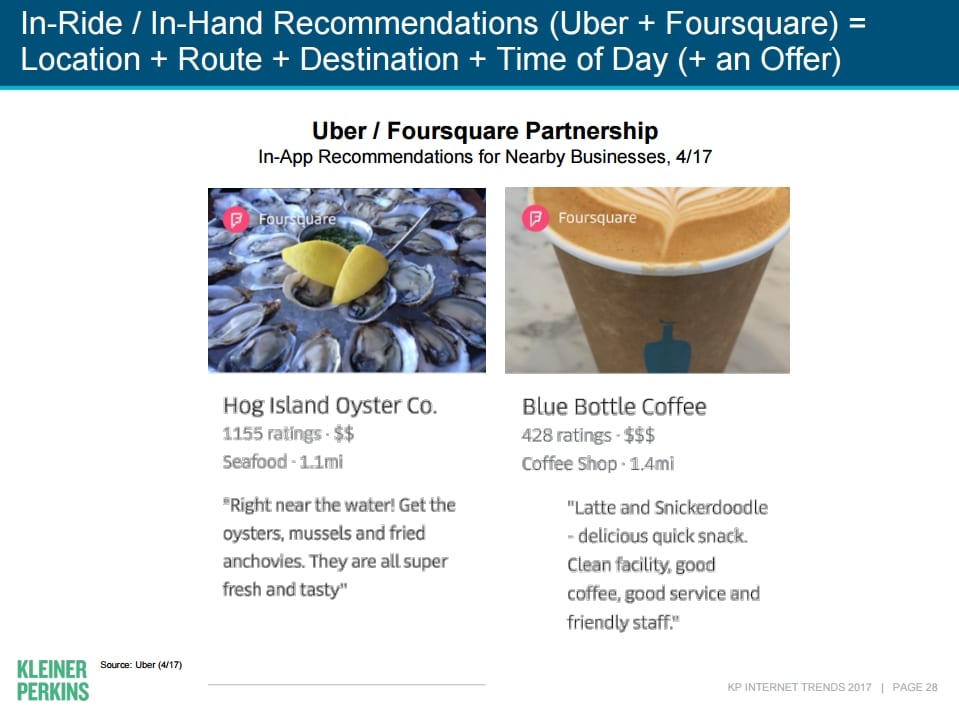
|
||||
|
||||
---
|
||||
|
||||
I would add voice to the statement below as well. But if images, then use lots with your products showing different ways to use or in different settings, maybe with text in the image (but not more than 20% of area is text because of ad restrictions on some platforms).
|
||||
|
||||
|
||||
|
||||
---
|
||||
|
||||
Demand for instant customer service response makes it hard for small, niche companies to compete.
|
||||
|
||||
---
|
||||
|
||||
Retail is not dead, just changing. Old stalwarts are being disrupted. Internet only brands/companies going to retail offering new experiences and leveraging online/offline.
|
||||
|
||||
---
|
||||
|
||||
This slide surprised me. Analog use is not going down, but digital is going up, which means we are just spending more time looking at screens.
|
||||
|
||||
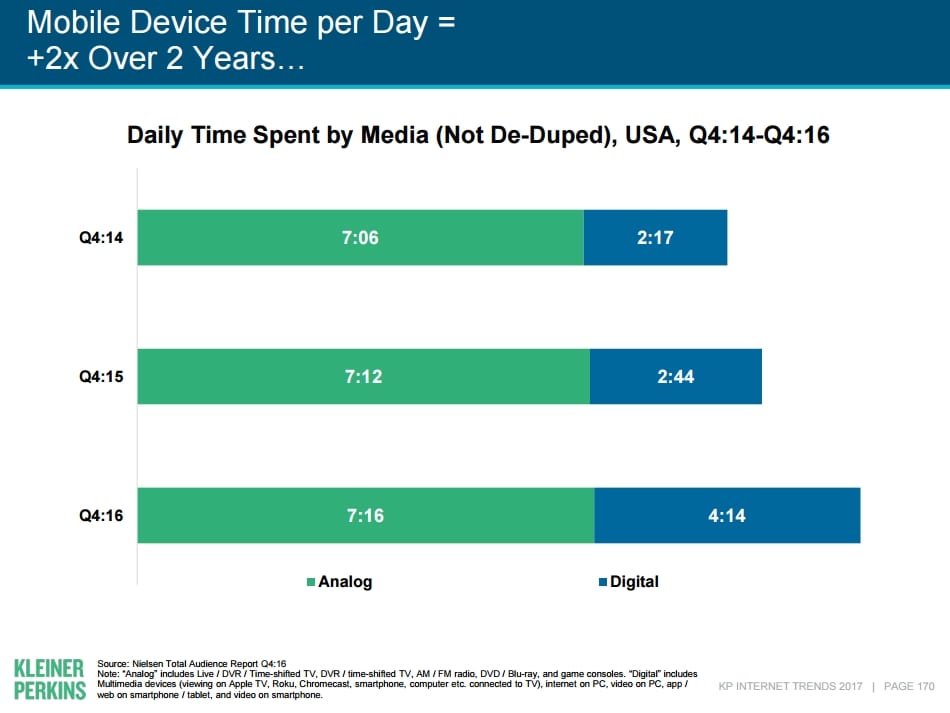
|
||||
|
||||
---
|
||||
|
||||
I found this slide interesting, and it appears that AR/VR will not keep to this trend.
|
||||
|
||||
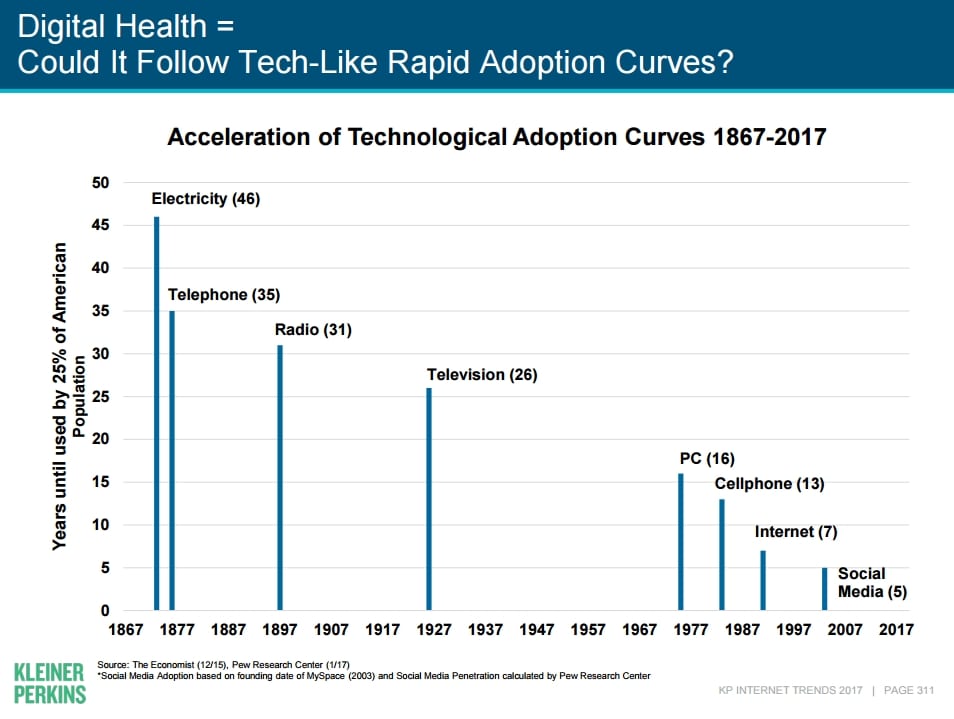
|
||||
@@ -0,0 +1,19 @@
|
||||
# Simple model to determine success of product sampling in e-commerce
|
||||
|
||||
Source: <https://eddiesoehnel.com/simple-model-to-determine-success-of-product-sampling-in-e-commerce/>
|
||||
|
||||
Tags: AOV, Average order value, Breakeven, Customer Acquisition Costs, ROAS, Spreadsheet
|
||||
|
||||

|
||||
|
||||
Here is a simple model to determine success of product sampling in e-commerce.
|
||||
|
||||
I was presented with some quick performance metrics on an e-commerce product sampling campaign for a supplement startup, which included the cost of the sample plus shipping ($.70), the average order value ($39) and the response rate at 20%.
|
||||
|
||||
That got my wheels turning and I quickly determined that this campaign could be a winner.
|
||||
|
||||
How? I made some assumptions, including that the average breakeven return on ad spend (ROAS) for a consumer product company is 2. So if 10 samples were sent at $7 total cost, and 2 orders were placed that is $78 dollars in revenue, which gives a ROAS of more than 11. That is fantastic, but I am missing another variable.
|
||||
|
||||
The unknown that I was not given was the cost to acquire a customer to send them a sample. That would need to be added in to get a sold ROAS number.
|
||||
|
||||
[Here is the model](https://docs.google.com/spreadsheets/d/1_CC9rUoueS_oxIu1jGCxWmLWOEsdz1MHQEZnMrypADU/edit?usp=sharing) I put together that gives a quick analysis and helps me do some what-ifs when the variable that changes is the cost to acquire a customer to send them a sample.
|
||||
@@ -0,0 +1,21 @@
|
||||
# The importance of packaging for a CPG product
|
||||
|
||||
Source: <https://eddiesoehnel.com/the-importance-of-packaging-for-a-cpg-product/>
|
||||
|
||||
Tags: CPG, packaging, retail
|
||||
|
||||

|
||||
|
||||
The importance of packaging for a CPG product is significant. Here’s why:
|
||||
|
||||
- A study done by Proctor and Gamble 25 years ago indicated that consumers pushing a shopping cart down the aisle of a supermarket look at packaging for 1/6th of a second before they decide to stop and look.
|
||||
- According to the Food Marketing Institute, if a customer picks up a package, even if they are not familiar with the product, there is a 71% chance they will put it in the shopping cart.
|
||||
- A study conducted by Goldman Sachs in the 1990s indicated that for shoppers who shop with a shopping list, >60% of the content of the shopping cart were impulse purchases, thus the importance of packaging to appeal to that impulse.
|
||||
|
||||
I think since the great recession of 2008, these last two statistics are not as high, as every indication is that people at all levels of society have changed their behaviors to reflect the economy. But, packaging is still critical because it conveys and confirms our expectation of satisfaction, even if we can’t fully elucidate our expectations. The product has to have an interesting enough presentation to cut through the noise and clutter and appeal to the customer.
|
||||
|
||||
You can improve packaging over time, but it has to be incremental improvements, not revolutionary improvements. If the packaging is incompetent from the start, there will be no second chance. If you are in retail distribution, to continue the baseball analogy, “Strike one. You’re out.”
|
||||
|
||||
Moreover, how happy do you think retailers will be, if any of them are stocking the product, when you announce “all new packaging”? Retailers will want you to pick up the old packaged product at your expense. Also, category managers usually look carefully at the packaging of any new products presented to them and if the packaging is unclear, the use of the product is ambiguous and benefits are not screaming headlines, your chances of getting retail distribution shrink significantly.
|
||||
|
||||
Try to get the major stuff with your packaging right the first time, which is color and key differentiating features about what your product delivers over the competition. Make it crystal clear for the consumer…don’t make them think. Packaging flows from the overall brand strategy.
|
||||
@@ -0,0 +1,31 @@
|
||||
# The two biggest hurdles for successful marketing
|
||||
|
||||
Source: <https://eddiesoehnel.com/the-two-biggest-hurdles-for-successful-marketing/>
|
||||
|
||||
Tags: direct marketing, Marketing, trust
|
||||
|
||||

|
||||
|
||||
I recently worked on a direct marketing campaign with mediocre results. I saw a 7.5% response, which in direct marketing would be considered very successful, but I was hoping for something north of 20%, considering the free offer provided. I don’t have any historical data indicating that I should have gotten 20%; it’s just the number I put in my head that I thought I needed to generate the ROI I wanted on this campaign.
|
||||
|
||||
Next time, I am pretty sure I can improve on that number by modifying the creative, sweetening the free offer a bit and making the landing page easier to navigate.
|
||||
|
||||
So, what’s wrong with this picture? I was pretty obsessed with the response and ROI of THIS campaign. That’s not a bad thing. I mean, marketing has to give an acceptable ROI, right?
|
||||
|
||||
I think what’s wrong with this picture is that I am forgetting about The two biggest hurdles for successful marketing: patience and trust.
|
||||
|
||||
With patience, it really takes time and consistent delivery of a message before a consumer responds. I think this is the case for most products. Some have such a nice “WOW” factor to them that the consumer will respond quickly. But in general, most products take consistent messaging to generate a response.
|
||||
|
||||
What do I mean by trust? Well, I think that trust is the scarcest thing available to companies. Consumers have become leery and cynical towards companies and business in general. They don’t trust that they will do what they say or deliver on their promises. You can’t blame them. Look at the exaggerated claims that companies make about their products and services, and then never deliver. Or, how about the difficulty in returning a product or getting helpful customer service.
|
||||
|
||||
It’s not just company-consumer trust; its business-to-business trust, too. Companies don’t trust sales people who come calling, selling them the latest and greatest. Companies don’t trust consultants and other business service providers. This has evolved, I think, because of competition: to be heard and get your marketing or sales message through all the clutter, you have to make more and more exaggerated claims about your products and services.
|
||||
|
||||
To really succeed, marketing requires patience that your message will resonate and get through.
|
||||
|
||||
Patience means consistently marketing so that customers can see that you are around for the long-haul.
|
||||
|
||||
This leads to trust, which will cause them to buy your products, and if they are good products, buy them again and again.
|
||||
|
||||
As this cycle continues, consumers will develop more and more trust in you, your company, your messaging and your products. That’s how you get good ROI on your marketing.
|
||||
|
||||
So, the lesson here is that this was just one campaign, and I will want to stick with doing many more of the same campaign in the future so that I can slowly build my target market’s trust that I am here, I’m not going away, and I’ve got real value to offer in my products.
|
||||
@@ -0,0 +1,11 @@
|
||||
# Tools for product developers – the hackers – to also become marketers – the hustlers
|
||||
|
||||
Source: <https://eddiesoehnel.com/tools-product-developers-hackers-also-become-marketers-hustlers/>
|
||||
|
||||
Tags: None listed
|
||||
|
||||

|
||||
|
||||
How power to market and sell consumer products is shifting to the hackers. If you’re a hustler – the marketer, which I am – you might want to become a hacker – the product developer – because the world of marketing needs fewer hustlers. Learn more about some of my core marketing tools for hackers to also become hustlers.
|
||||
|
||||
[YouTube video player 1](https://www.youtube.com/embed/2h9lY_1YUtw?wmode=transparent&autoplay=0)
|
||||
@@ -0,0 +1,36 @@
|
||||
# What are the biggest mistakes in CPG package design? How do you avoid them?
|
||||
|
||||
Source: <https://eddiesoehnel.com/what-are-the-biggest-mistakes-in-cpg-package-design-how-do-you-avoid-them/>
|
||||
|
||||
Tags: CPG, packaging, retail
|
||||
|
||||

|
||||
|
||||
I was asked this question on CPG package design on [Quora](https://www.quora.com/Consumer-Packaged-Goods-CPG/What-are-the-biggest-mistakes-in-CPG-package-design-How-do-you-avoid-them?__snids__=118381146&__nsrc__=4). My response is below.
|
||||
|
||||
I think the biggest mistake is not grabbing consumer’s attention. There are so many products on shelf that it’s easy to get lost and not get any attention. This is especially the case if there is limited or no out-of-store marketing to create brand awareness. Consider the following:
|
||||
|
||||
- A study done by Proctor and Gamble 25 years ago indicated that consumers pushing a shopping cart down the aisle of a supermarket look at packaging for 1/6th of a second before they decide to stop and look.
|
||||
- According to the Food Marketing Institute, if a customer picks up a package, even if they are not familiar with the product, there is a 71% chance they will put it in the shopping cart.
|
||||
- A study conducted by Goldman Sachs in the 1990s indicated that for shoppers who shop with a shopping list, >60% of the content of the shopping cart were impulse purchases, thus the importance of packaging to appeal to that impulse.
|
||||
|
||||
Based on this, its important to get it right with your packaging. First, start with some background research:
|
||||
|
||||
1. Have a thorough understanding of your brand – who you are, what you do and how that benefits your target market. Take the time to figure this out as early as possible in the life of your company, and certainly before you are ready to scale.
|
||||
2. Know the value your products provide and how they are differentiated from your competitors.
|
||||
3. Know the market, customer dynamics and trends of your category(s) where you sell.
|
||||
4. Know the purchase drivers that your customers use to make purchase decisions in the category(s) you occupy.
|
||||
5. What is your suggested retail price (SRP) and why? A higher price may mean that your brand and packaging should reflect that higher price – i.e, be more upscale.
|
||||
6. Know your competitors packaging well. Consider setting up a shelf in your office that is the same height and depth as that found in retail so you can place all your competitor’s product on it to compare and contrast.
|
||||
7. Besides knowing your competitors and their packaging, take the time to go through the whole store to see what other kinds of packaging are being used and what might fit with your brand. What grabs your attention and why? This will help give you ideas.
|
||||
|
||||
From your research and analysis above, consider the following to create great packaging:
|
||||
|
||||
1. Use the data from the above questions to help figure out how to appeal to your target market and what holes you fill in your category. Consider using two-axis competitor maps to help you arrive at this.
|
||||
2. Develop words and statements that differentiate you and appeal to your customer’s purchase drivers.
|
||||
3. Develop the form factor, size, graphics, and colors, along with your words and statements, that will allow you to be distinctive, differentiated, clear, concise and hard-hitting. How can you use design elements and text to grab attention in 1/6 of a second against the sea of competitors already on shelf? Try to be different, but not so different that customers will get confused about what your product is and what it does.
|
||||
4. Be careful about putting too much information on the front of your packaging. Keep it simple. Put the most pertinent info that will differentiate, hits at purchase drivers and gets consumers to pick up the packaging.
|
||||
5. Use graphics people who are experienced in packaging design. Use appropriate legal and regulatory experts to review packaging and any claims you use. Proof carefully with many eyes, and do it again, and again.
|
||||
6. Get consumer feedback.
|
||||
7. Take your time. Don’t rush this. When creating new products, allow plenty of time in your project plan to get the packaging done right and give you time to think about it and get appropriate feedback
|
||||
8. Finally, try to do all this before you scale, if you are an early-stage company. That’s not suggesting you never touch your packaging again. On the contrary, you want to keep it fresh and relevant, which requires periodic updating. But if you are a small company with limited resources (cash and time), its best to get it right early on so that you can run for a while without having to touch it again.
|
||||
@@ -0,0 +1,25 @@
|
||||
# What is a good marketing start to sell goods in a luxury segment?
|
||||
|
||||
Source: <https://eddiesoehnel.com/what-is-a-good-marketing-start-to-sell-goods-in-a-luxury-segment/>
|
||||
|
||||
Tags: Brand, content marketing, direct marketing, events, grass roots, luxury, scarcity, SEO, sponsorships
|
||||
|
||||

|
||||
|
||||
This is a [Quora](https://www.quora.com/unanswered/What-is-a-good-marketing-start-to-sell-goods-in-a-luxury-segment) question to sell goods in a luxury segment I was asked to answer. My answer is as follows.
|
||||
|
||||
Are you selling your own products that you created and own to consumers, or are you reselling other luxury products via a wholesale basis? I think the answer depends on which avenue you are pursuing.
|
||||
|
||||
When I review my marketing framework, I think the first to consider is the pain/needs that your product(s) satisfy. Luxury products are much more likely to appeal to the pain/needs of a prospect’s ego and image of themselves. So appealing to this takes a carefully crafted and polished brand via products, packaging, logo/color schemes, and website.
|
||||
|
||||
Next is to consider the type of marketing – [direct marketing, brand marketing or grass roots marketing](https://eddiesoehnel.com/consumer-product-growth-strategies/). I don’t think it is direct marketing at all, but brand marketing through a carefully crafted image. But I feel like you could also incorporate grass roots marketing and stand for something that might help set you apart.
|
||||
|
||||
Next, consider which marketing channels might work best based on the above. When I review my list, I think it is marketing through influencers and association with events that already have a luxury appeal. Luxury is so much about image so you want to try and tie your product to an existing person, event or other product that is already about luxury.
|
||||
|
||||
Consider using scarcity to increase appeal and the image of luxury. If everyone can purchase it, then it diminishes the appeal.
|
||||
|
||||
If you are reselling luxury products, I think it comes down to picking the right luxury products and targeting your marketing properly with effective creative the conveys luxury.
|
||||
|
||||
For digital marketing channels as a reseller, I would use organic SEO and social paid ads and content marketing to boost organic SEO.
|
||||
|
||||
For analog marketing (offline), maybe events and sponsorships.
|
||||
@@ -0,0 +1,25 @@
|
||||
# What is an effective way of creating a brand?
|
||||
|
||||
Source: <https://eddiesoehnel.com/what-is-an-effective-way-of-creating-a-brand/>
|
||||
|
||||
Tags: Brand
|
||||
|
||||

|
||||
|
||||
*I want to create a premium accessories brand. Our products will be hand made from the highest quality materials. I have already created the designs of the products, but I wanted to hear about the different ways of creating a brand and standing out?*
|
||||
|
||||
This is a [Quora](https://www.quora.com/What-is-an-effective-way-of-creating-a-brand) question I was asked and here is my answer.
|
||||
|
||||
I think you mean creating a marketing image.
|
||||
|
||||
A brand happens over time. As you sell products that deliver on a customer’s needs/wants, you gain a level of trust in the marketplace that leads to continued sales and a positive reputation, so that when a customer thinks of your brand, they have positive feelings about it,
|
||||
|
||||
You create an effective marketing image (logos, color pallets, designs, etc) by researching the competition so that in a side-by-side comparison to them, you would clearly “pop” against their logo, color pallet and designs.
|
||||
|
||||
You also research your target market and create buyer personas so that you better understand who your customer is and what type of marketing image they might best respond to.
|
||||
|
||||
But an effective image is not just logos and colors ad designs, but a professional looking website that is responsive across all devices, great customer service, and fast shipping, to name a few.
|
||||
|
||||
For example. If your products are premium, then you may be attracting a type of customer that looks for environmentally friendly production practices and packaging, so you have to deliver on that to create a premium brand.
|
||||
|
||||
A brand is really the sum of all the interactions a customer has with your company, both positive and negative, so you need to be comprehensive in all your interactions with your customer to build a good brand.
|
||||
@@ -0,0 +1,21 @@
|
||||
# What is the advertising to sales ratio investors will look for in a direct to consumer e-commerce startup?
|
||||
|
||||
Source: <https://eddiesoehnel.com/what-is-the-advertising-to-sales-ratio-investors-will-look-for-in-a-direct-to-consumer-e-commerce-startup/>
|
||||
|
||||
Tags: Advertising, P&L, Profit and Loss, return on ad spend, ROAS, Sales
|
||||
|
||||

|
||||
|
||||
This is a [Quora question](https://www.quora.com/What-is-the-advertising-to-sales-ratio-investors-will-look-for-in-a-direct-to-consumer-e-commerce-startup/answer/Ed-Soehnel) I was asked to answer.
|
||||
|
||||
Do you mean the return on ad spend ratio (ROAS)?
|
||||
|
||||
I have never heard of “advertising to sales” ratio, but it probably means the same thing (revenue or sales divided by advertising spend…not to include media development costs or technology costs, just the costs to advertise the media).
|
||||
|
||||
Investors look at many things, but a strong ROAS is a way to capture their attention so that they may be more willing to take a deeper dive.
|
||||
|
||||
For consumer product companies, a ROAS of around 2 is breakeven on the profit and loss. If you can reliable demonstrate a consistent ROAS of 4 or more over the last 3-months with increasing media spend into the 5 figures, that might help capture attention.
|
||||
|
||||
But the higher the better. If you can show a 6 or more, then that should really capture attention. But you need to show consistency in achieving this ratio over time with higher spends (5 figures).
|
||||
|
||||
I have written more posts with ROAS and downloadable models using this ratio, [here](https://eddiesoehnel.com/?s=roas)
|
||||
@@ -0,0 +1,15 @@
|
||||
# What is the minimum statistically significant sample size for a direct mail campaign?
|
||||
|
||||
Source: <https://eddiesoehnel.com/minimum-statistically-significant-sample-size-direct-mail-campaign/>
|
||||
|
||||
Tags: direct mail, sample size, statistics
|
||||
|
||||

|
||||
|
||||
This is a [Quora](https://www.quora.com/What-is-the-minimum-statistically-significant-sample-size-for-a-direct-mail-campaign/answer/Ed-Soehnel) question I was asked and here is my answer.
|
||||
|
||||
That will depend on additional data.
|
||||
|
||||
Do a search for a [sample size calculator](https://www.google.com/search?aqs=chrome.0.69i59j69i60l3j0l2.3560j0j7&ie=UTF-8&oq=sample+size+calculator&q=sample+size+calculator&rlz=1C1CHFX_enUS754US754&sourceid=chrome) and you will probably see a lot of options where you can plug in your assumptions to give you the minimum sample size needed.
|
||||
|
||||
Optimizely has a quick and easy one, [here](https://www.optimizely.com/sample-size-calculator/), as does Survey Monkey, [here](https://www.surveymonkey.com/mp/sample-size-calculator/).
|
||||
@@ -0,0 +1,35 @@
|
||||
# What is the most important attribute of successful startup product marketers?
|
||||
|
||||
Source: <https://eddiesoehnel.com/what-is-the-most-important-attribute-of-successful-startup-product-marketers/>
|
||||
|
||||
Tags: analytics, conversion, data-driven marketing, funnel, Spreadsheet
|
||||
|
||||

|
||||
|
||||
This is a [Quora](https://www.quora.com/What-is-the-most-important-attribute-of-successful-startup-product-marketers) question I was asked. My answer is as follows.
|
||||
|
||||
In short, understanding marketing and sales conversion metrics and analyzing in spreadsheets
|
||||
|
||||
## Why Is This Important?
|
||||
|
||||
A startup requires developing products, producing them, creating marketing copy and creative, all in context of a support structure with people, systems, suppliers/contractors, etc.
|
||||
|
||||
All of that leads to employing the efforts to market and sell a product to earn revenue. This is the tip of the speer for the entire company. And knowing what works in the tip of the speer comes down to metrics: making sure you setup systems to collect them, and processes to effectively analyze them and take action in a timely manner.
|
||||
|
||||
In this way, you will know what is working and what is not and where to take action to correct: (top of the funnel, middle of the funnel, bottom of the funnel, returns, customer service, failure/misalignments in product/market fit, wrong marketing copy/creative, and more).
|
||||
|
||||
When you have a process that collects all this data and analyzes (in real-time, or as best as possible), you can then zero your efforts where fixes need to be made.
|
||||
|
||||
The big ones first and then the small fixes so you optimize your entire company that will drive top line and bottom line revenue.
|
||||
|
||||
A successful product marketer is the tip of the speer and informs the rest of the company, not just tactically, but strategically. And this means knowing the numbers: how to collect, analyze, interpret, all in spreadsheets, and be able to act quickly on them.
|
||||
|
||||
But that is only part of the equation. Marketing and sales requires constant testing and trying new things. You can have the best and fastest process to analyze and interpret results in real-time, but if you cannot steer the company to act on them quickly, and design the company such that it can support the product marketer to try a lot of different things, cheaply and quickly, then marketing metrics won’t help that much.
|
||||
|
||||
A successful product marketer, then, is not just understanding the numbers, but having a company that will let them try a lot of things quickly and cheaply to see what works and does not.
|
||||
|
||||
## Tools To Help
|
||||
|
||||
- This process might help understand the [flow of money](https://eddiesoehnel.com/flow-money-consumer-product-company/) and different metrics to capture for visibility into marketing and sales performance.
|
||||
- See this page and scroll down to [Diagnose Marketing Failures](https://eddiesoehnel.com/startup-roadmap/marketing/) to help understand at a more strategic level where to fix things if they are not working.
|
||||
- To dive more into systems, processes and spreadsheets related to marketing and sales, see my [finance page](https://eddiesoehnel.com/startup-roadmap/finance/), which links to many template models I have used.
|
||||
@@ -0,0 +1,25 @@
|
||||
# When old is new in marketing
|
||||
|
||||
Source: <https://eddiesoehnel.com/when-old-is-new-in-marketing/>
|
||||
|
||||
Tags: direct mail, Innovation, Marketing
|
||||
|
||||

|
||||
|
||||
Marketing is constantly evolving with new channels and vehicles to reach consumers. Technology is pretty much driving and ensuring that. But sometimes, what’s old and that which no one seemingly pays attention to works the best.
|
||||
|
||||
I’ve been working with a company over the last few years that operates in a pretty crowded and competitive space. Two years ago, we were looking at ways to reach our market and decided to give direct mail a try. It was not a traditional marketing method used in the industry, which is why we thought it might be an opportunity to break through the marketing clutter to reach potential customers.
|
||||
|
||||
Since then, revenue has increased a good 20% from direct mail alone! The business recently decided to increase its direct mail outbound reach by 100%.
|
||||
|
||||
Clearly, direct mail ain’t new. But clearly, its working for this business. I think the main reason its working is because direct mail is not traditionally used in this companies industry. As a result, this allows the company to capture mind share from potential customers without interference from competitors using the same method.
|
||||
|
||||
What the company did is borrow a marketing vehicle used on so many other industries and adapted it to its own. What is old became new for this company and its industry.
|
||||
|
||||
This is a great example for teaching us a number of things:
|
||||
|
||||
1. Look to other industries to see what it is being done successfully and adapt to your own;
|
||||
2. Look at old ways of marketing that are not being used in your industry;
|
||||
3. Don’t get mired in the “that’s the way we’ve always done it” thinking;
|
||||
4. Don’t get mired in the “that’s the way everyone else is doing it” thinking.
|
||||
5. Innovation is not just about what’s new or never been done before, but how to tweak something that is unique to your marketplace.
|
||||