added
This commit is contained in:
 eddiesoehnel committed
commit
6a34982699
245 files changed
+9080
No files matched your search
@@ -0,0 +1,44 @@
|
||||
# 25 CPG startups present at Pitch Slam event
|
||||
|
||||
Source: <https://eddiesoehnel.com/25-cpg-startups-present-at-pitch-slam-event/>
|
||||
|
||||
Tags: Fundraising, Naturally Boulder, Pitch Slam, Presentation, start-up
|
||||
|
||||

|
||||
|
||||
I watched 25 CPG startups present at the Pitch Slam event put on by [Naturally Boulder](http://www.naturallyboulderproducts.com/), a networking group for the organic/natural/sustainable segment. Pitch Slam – what a great name – started at 2:30 and ended at 5:00, followed by the dinner event that included pitches by the finalists and selection of the winner. Overall, the event was exceptionally well done and I thoroughly enjoyed it.
|
||||
|
||||
This article summarizes the Pitch Slam presentations, including my score on the presentation, the business idea presented, the judges score and additional notes and learnings. I have not included names of companies, just their product concept. I wrote down my scores before the judges to see how I stack up against these alleged experts. I love attending events like this to hear other companies, not just to hear ideas, but to learn what others are doing and how they are doing it.
|
||||
|
||||
**My Top Four Picks**
|
||||
|
||||
It was supposed to be three, but the judges chose four, so I chose four. They are as follows:
|
||||
|
||||
1. Breast-pad that masks leaking. This is a fantastic concept that was my number one pick. And, the judges thought so to, because it was the grand prize winner. The founder is a mother who saw a clear need from her own experience and came up with a product that solves the problem. Because it uses sustainable materials in its production, the company has added marketing fodder to exploit in its messaging. The company has demonstrated excellent growth thus far and has a catchy name that drives attention. The target market is moms, one of my favorite markets to sell products because there is high word of mouth factor. The company had grown from 0 to over 160 retail locations worldwide in less than a year.
|
||||
|
||||
2. Organic remedies for first aid market/scar healer. The founders first product is a wound healing ointment that promotes healing and
|
||||
|
||||
reduces scaring, which they thought up after trying to find a product like this for their own use. They are attacking this segment with organic products, not synthetic, to help people heal from wounds. Their market can include not just health care facilities, but also the direct consumer through retail outlets. They are currently testing the product and results look as promising as hoped.
|
||||
|
||||
3. Organic seasonings and rubs. The founder did his research in the seasonings market by noticing that this category was rather archaic in its product offerings and had not yet been influenced by the natural/organic sustainable movement that has (and is) transforming other categories. He identified a need for organic and is filling that need with what appears to be innovative products. I also liked that the founder had previously owned CPG company, which I think he said he sold, so there is management experience.
|
||||
|
||||
4. Organic humus. The founder saw an opportunity based on his experience working in grocery and getting to know the category. He has come up with a product that is differentiated primarily based on organic ingredients, but also flavors. He has strong sales results thus far to demonstrate success.
|
||||
|
||||
There is a common thread among all four: they saw a need based on direct experience and qualified that need by studying the category. The first company, the breast-pad maker, however, is solving the need with a product that addresses serious pain (embarrassment and clothes that get soaked through) among breastfeeding women who may experience this issue, and, whose competition includes pretty dismal choices for alleviating this problem. All other companies have substitute products that, while maybe not as good, are sufficient to solve the problem, hence the pain is not as great to cause the customer to buy.
|
||||
|
||||
The judges top four included #1 and #4 of my list, plus a granola product, which did not make my top seven and #5 from my list below.
|
||||
|
||||
**My Next Top Three Choices**
|
||||
|
||||
My next top three picks I liked a lot. Here’s why:
|
||||
|
||||
5. Naturally-died clothing. The next wave in organic/sustainable might be clothing (and should be) and this company is riding this trend. The founder knows the products and has sources in India to make hand-made products. He has shown good early distribution that proves the concept and his model builds in providing more sustainable wages for labor.
|
||||
|
||||
6. Pollen/Chia Seeds/Quinoa-based sports energy food. This concept is near and dear to my heart, since I use to suck down energy foods like crazy back in my endurance event-competing days. This company has strong repeat sales and word-of-mouth marketing results in its retail locations and through the sports events market. It is differentiated in form (it is round balls) versus all other sport foods, whose forms are bars, gooes and drinks and have been that way for a long time. Its ingredients are also new and differentiated. Loyalty can be high in this category, so customer acquisition cost is lower.
|
||||
|
||||
7. Quinoa-based veggy burgers. There is good retail distribution thus far with a great tasting product that has generous margins.. In the food biz, when you have a great tasting product and great margins, you want to look closely at being in that business. They seem to me to be a solid performer that will throw off cash.
|
||||
|
||||
**Few Comments**
|
||||
|
||||
1. I was surprised to hear almost no presenters talk about the online sales channel. All focused on brick and mortar retail distribution as their barometer of success.
|
||||
2. On the whole, the presentations were mediocre-to-terrible, with just a few star performers. This greatly surprised me. When you pitch for money from investors, you have to be on your game and have a rock solid presentation. Is this not widely known? Maybe it’s not, but it has sure been drilled into me from my past experience raising money. I would have liked to see better presentations.
|
||||
+21
@@ -0,0 +1,21 @@
|
||||
# A simple and elegant way to figuring out how to succeed in a business
|
||||
|
||||
Source: <https://eddiesoehnel.com/a-simple-and-elegant-way-to-figuring-out-how-to-succeed-in-a-business/>
|
||||
|
||||
Tags: competitive advantage, Ski, value proposition
|
||||
|
||||

|
||||
|
||||
When you meet the founder of a start-up and the enthusiasm for their business just rolls off of them in waves, you can’t help but to feel some level of excitement with them, even if this business is not in a category or segment that you have an interest. This start-up makes custom downhill and backcountry skis and since I am a skier, this company captured my interest. This article gives a brief profile of this company relative to its value proposition and differentiating features from other ski manufacturers and why I think it has a chance to do well. It sums up by providing a simple and elegant way to figuring out how to succeed in a business that this company seems to have done correctly.
|
||||
|
||||
I do not know much about the product manufacturing side of the ski industry. I do know that it is structured in a relatively traditional manner like other consumer product industries, where you have the traditional large brand manufacturers that produce skis and ship them to retail channels for sale to the public. Then, you have smaller niche manufacturers that make custom skis for individuals. I have bought skis (downhill and X-C) at major retailers, once at a large consumer ski trade show, and my absolute best set of skis, which are worth more than their weight in gold, were purchased used from a former European national-level skier who used them in racing. I have never considered purchasing custom-made skis due to the cost.
|
||||
|
||||
This start-up produces custom skis at a cost that is much less; this is the companies first value proposition and a well-know strategy for any competitor to capture customers. However, pinning your strategy on a cheaper product is not always the best long-term solution, as competitors will generally figure out how to catch up to you by getting costs down to match your pricing. Usually, the larger the company, the more leverage they have in driving down costs, so they stand a better chance at winning the price game. The companies second value proposition is a small one, but still a differentiation, which is to use more sustainable materials to produce skis. Again, competitors might just copy that, too.
|
||||
|
||||
The third value proposition is something that I think could give the company a nice edge that is much harder to emulate by competitors. The company wants to set up a retail location where it will also maintain its ski production line so that customers can select the materials, with guidance from the company staff, and the skis would be produced on site. The companies fourth value proposition is to provide additional level of service by meeting with potential buyers at front-range Colorado-based ski resorts to watch how they ski so that they can help the buyers make more informed choices about ski materials and type.
|
||||
|
||||
I like these two ideas – a retail location and on-slope analysis – because they might be sustainable competitive advantages that are hard for others to emulate. The cost-benefit for a larger competitor to emulate this probably does not make sense because they have to sell volume and having a few of their own retail locations would barely register as a blip on the revenue side. Even if small competitors emulate this, the market is probably big enough to support several companies in one geographic location (Denver-metro area in Colorado). But, when you include the other key value propositions of lower cost and sustainable materials, this company may be able to remain unique in the marketplace.
|
||||
|
||||
It’s important to point out that what this company is doing is creating a unique buying experience for a more cost-conscious buyer who does not want to spend more than $1000 for a set of skis (or a lot less, like me). The customer is included in the process of the development and production of their skis, including an analysis of their own ski style to influence the outcome. Creating a unique and positive experience like this for the customer is a very powerful driver in generating sales for consumer products and cementing your brand for repeat and word-of-mouth sales.
|
||||
|
||||
Here is a final key takeaway. In this article, I have written about things like value propositions, customer experience and competitive advantage – strategic and very business-level analysis. The founder of this company did not intentionally approach his business from a strategic perspective, yet, he has zeroed in on his key success factors. What’s his secret? It’s the same secret that I have seen in lots of small start-ups whose prospects look very promising; through almost 2-decades of being a skier and in the industry, the founder has come to know the market and has observed the customer pain and has taken his experience and observations to craft solutions that solve this pain. A simple and elegant way to figuring out a business, don’t you think?
|
||||
+34
@@ -0,0 +1,34 @@
|
||||
# Are you staying professionally relevant in a changing world? Here’s how I do it
|
||||
|
||||
Source: <https://eddiesoehnel.com/staying-professionally-relevant-changing-world-heres/>
|
||||
|
||||
Tags: career, consumer industry, consumer trends
|
||||
|
||||

|
||||
|
||||
[YouTube video player 1](https://www.youtube.com/embed/dApmsiWTbX0?wmode=transparent&autoplay=0)
|
||||
|
||||
Tips from the video are posted below.
|
||||
|
||||
I heard something recently which I think is important for all of us to reflect on:
|
||||
|
||||
How do we stay relevant with our knowledge and skills as we work for companies or start our own companies and serve our customers?
|
||||
|
||||
Here’s how I do it:
|
||||
|
||||
- Stay abreast of broad changes in my industry. For me, it is consumer trends and consumer products. See included images which are great snapshots for me;
|
||||
- Use technology and stay current with it;
|
||||
- Increase productivity with newly available technology;
|
||||
- Learn new skills…always be learning;
|
||||
- Be creative – don’t do what everyone else does and don’t do it just because that is the way it has always been done;
|
||||
- Know what you don’t know and learn it; the most dangerous thing to becoming less relevant is when you don’t know what you don’t know. Industries change and progress as a result of technology and regulatory changes, so keep track of those in your industry and you will reduce the don’t know what you don’t know state;
|
||||
- Identify your leverage and take advantage of it. One way to define leverage to me is where you can push with less effort than others and get more results;
|
||||
- Know what you are good at and focus on that. Be careful of doing things that water down what you are good at;
|
||||
- Follow your own passions – life is too short;
|
||||
- Know your tribe and who you do your best work with. Try to spend most of your time working work with those people.
|
||||
|
||||
The following are from this article: [The consumer sector in 2030: Trends and questions to consider](http://www.mckinsey.com/industries/consumer-packaged-goods/our-insights/the-consumer-sector-in-2030-trends-and-questions-to-consider) I keep them handy because they provide a great overview of trends to be aware of in my industry of consumer products.
|
||||
|
||||
[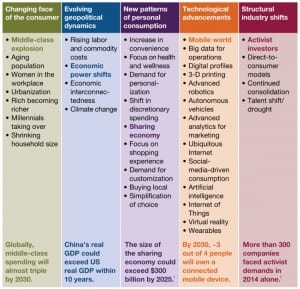](https://eddiesoehnel.com/wp-content/uploads/2016/04/2015_04_Trends_Consumer_Landscape.jpg)
|
||||
|
||||
[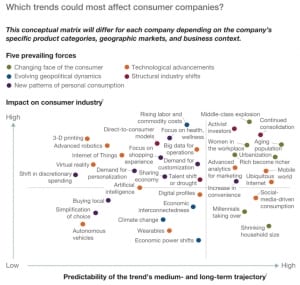](https://eddiesoehnel.com/wp-content/uploads/2016/04/2015_04_Trends_Affect_Consumer_Companies.jpg)
|
||||
+31
@@ -0,0 +1,31 @@
|
||||
# Ask yourself this key question to keep emotions in check when making decisions
|
||||
|
||||
Source: <https://eddiesoehnel.com/keep-emotions-in-check-making-decisions/>
|
||||
|
||||
Tags: Andy Grove, Andy Stanley, emotions
|
||||
|
||||

|
||||
|
||||
No one can help having a certain set of emotions for their business. It’s not just an income, but often a significant source of enjoyment. Many businesses are an extension of the founders, owners and employees passions and interests and personal identity. Over time, our experiences with the business and the relationships we develop create baggage, both good and bad, that we then use as part of our filter for decision-making.
|
||||
|
||||
I’ve seen a few instances where emotions end up hurting growth.
|
||||
|
||||
In one, the founder’s lack of understanding for how the industry works has caused them to react negatively to customers, causing them to lose business.
|
||||
|
||||
In another, the founders have romanticized about their business being an industry disruptor. As a result, they are choosing to turn business away because the industry is not willing to work the way they want to work. I might see that if they are bigger, profitable and on a sustainable track, but they are nowhere near any of that.
|
||||
|
||||
So, how do we keep emotions in check, because we all bring emotions to bear in making decisions?
|
||||
|
||||
Here’s a great tool I learned from [Andy Grove’s “Only The Paranoid Survive](http://amzn.to/2fX5onb)“:
|
||||
|
||||
*Ask yourself, what would my successor do?*
|
||||
|
||||
Here’s the methodology.
|
||||
|
||||
If you were replaced by someone new who does not have the history in your company as you do, who does not have the relationships with all the people you work with like you do, and has not poured themselves into it like you have, what would they do in relation to the decision or situation you are in?
|
||||
|
||||
Since they have little to no background or relationships to use to filter their decision-making, they have to go by the facts of the situation.
|
||||
|
||||
This question tends to bring much more objectivity to the situation and the decision-making process. It has for me and it might do the same for you
|
||||
|
||||
Another area that this question really helps me is when it comes to rationalizing decisions. I am good at rationalizing decisions to make myself feel good about them. You might do the same. When I turn the decision around from the perspective of my successor, I end up making better decisions.
|
||||
@@ -0,0 +1,31 @@
|
||||
# Brand Development and Management Made Practicable
|
||||
|
||||
Source: <https://eddiesoehnel.com/brand-development/>
|
||||
|
||||
Tags: Branding
|
||||
|
||||

|
||||
|
||||
A brand is the sum of all facets, features and characteristics of a company, both good and bad, which are a result of the company’s interactions with suppliers, manufacturers, service providers, distributors, resellers, employees, customers, the general public, owners/investors – basically, every stakeholder to the company.
|
||||
|
||||
Brand development and management can get complex and consume resources that most startups and small companies cannot afford, but it does not have to be resource intensive.
|
||||
|
||||
One of the best ways I have found to develop and manage a brand is through brand pillars. Brand pillars are like a unique recipe to a company that is made up of a set of ingredients. While the ingredients might be common, it’s their combination that makes the recipe unique. The key here is to develop a recipe that no other company can successfully replicate, so that the recipe stays unique and differentiated in the marketplace, and ensure it can be defended. The last word defend – is crucial, because an enduring brand is one that the company can successfully protect in the marketplace against competitors.
|
||||
|
||||
Brand pillars are developed principally through a combination of activities, including the following:
|
||||
|
||||
Identity: looking inside and asking who you are, how you do what you do, what you want to be and why.
|
||||
|
||||
- Company founders/owners look inward to understand vision and mission for their own lives and if and how they want them reflected in their company.
|
||||
- If the company has an operating history, what stories or culture can be identified that make for potential brand ingredients?
|
||||
- What kind of people do you want to work with and how do you want to help them? More great information on this from Russell Brunson in his first video “Module #1 – The Secret Formula” of his Dot Come Secrets Training
|
||||
|
||||
Utility: looking outside to customers, competitors and market.
|
||||
|
||||
- What financial, emotional, physical or spiritual benefits are provided to customers through products and services, support, marketing and pricing that satisfy needs and desires?
|
||||
- How are competitors positioned? What is the company’s fit that makes it unique and differentiated?
|
||||
- Where is the category and market going and how can the company position itself to take advantage of those changes?
|
||||
|
||||
Once developed, brand pillars should help guide companies in many of the usual activities they perform to operate and grow, which also means that they end up managing and developing their brand through the normal course of business.
|
||||
|
||||
[Click here to download the worksheet for this post](https://eddiesoehnel.com/BrandPillarsDevelopment).
|
||||
+25
@@ -0,0 +1,25 @@
|
||||
# CPG Manufacturers selling direct-to-consumer and undercutting distributors, retailers and other resellers
|
||||
|
||||
Source: <https://eddiesoehnel.com/cpg-manufacturers-selling-direct-to-consumer-and-undercutting-distributors-retailers-and-other-resellers/>
|
||||
|
||||
Tags: direct-to-consumer, distributors, retail
|
||||
|
||||

|
||||
|
||||
This is a [Quora question](https://www.quora.com/Retail-Distribution/What-do-distributor-contracts-look-like-and-do-they-ever-allow-companies-to-sell-products-themselves-If-so-how-is-the-margin-controlled-so-that-the-company-doesnt-undercut-the-distributor-We-are-looking-to-begin-selling-a-consumer-good-through-a-website-and-to-stores-but-the-manufacturer-will-also) I was asked to answer.
|
||||
|
||||
The full question is as follows:
|
||||
|
||||
*What do distributor contracts look like, and do they ever allow companies to sell products themselves? If so, how is the margin controlled so that the company doesn’t undercut the distributor? We are looking to begin selling a consumer good through a website and to stores, but the manufacturer will also sell the product in their own stores.*
|
||||
|
||||
My answer is as follows:
|
||||
|
||||
My experience is largely in food and distributor/retailer contracts do not normally restrict the manufacturer from selling products to other distributors, retailers, channels or direct-to-consumer. Unless, however, it is written in agreements with distributors and retailers that the manufacturer will not do that, which I have never seen or heard of and if I were a manufacturer, would not recommend.
|
||||
|
||||
It is wise for CPG manufacturers selling direct-to-consumer because while direct sales can be more profitable, the primary rational is that direct-to-consumer gives the manufacturer a direct relationship with the end-consumer for surveys and other data-gathering purposes. In most cases, I only see manufacturers sell direct via their website. Most do not own their own stores and if they do, there are very few locations.
|
||||
|
||||
If a manufacturer has its own stores in the same geographic area as other retailers and is offering better pricing, that still may not be a problem for other retailers carrying the same product. It comes down to how well the buying public knows about the manufacturer stores and whether or not they will choose to shop there for the best pricing.
|
||||
|
||||
In many cases, convenience trumps price (that is, the consumer has to travel out of their way to get the product at a lower price) and consumer experience can also trump price (that is, the consumer likes shopping at a certain retailer even though the price is higher).
|
||||
|
||||
I would recommend a testing period with the manufacturer’s products to determine if you can generate sufficient sales to satisfy your ROI benchmarks, even with manufacturer stores that are competing with you.
|
||||
+35
@@ -0,0 +1,35 @@
|
||||
# Change the distribution structure for competitive advantage in consumer products
|
||||
|
||||
Source: <https://eddiesoehnel.com/change-the-distribution-structure-for-competitive-advantage-in-consumer-products/>
|
||||
|
||||
Tags: bricks mortar, COGS, company store, direct selling, Profit and Loss, retail, retail fees, SRP
|
||||
|
||||

|
||||
|
||||
Take a look at the following back-of-the napkin P&L. This is from an actual early-stage business.
|
||||
|
||||
[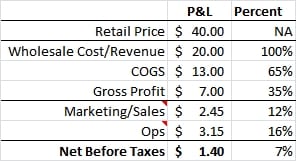](https://eddiesoehnel.com/wp-content/uploads/2015/10/P_L_1.jpg)The product retails for $40 and wholesale cost is $20, which is the gross revenue to the business. COGS is fairly hefty because the business is small and does not yet have the volume to bring down its production costs. Marketing and sales is 35%, which is 15% for retailer fees and co-op and the rest for marketing, while operations is 45%, Net is 7%.
|
||||
|
||||
That is not bad for a small early-stage business. Actually, it’s quite good. Note that startup and investment costs, such as patent filings, product development, and marketing and brand development have been excluded. But from a purely operating perspective, it is making money to eventually pay back those startup and investment costs.
|
||||
|
||||
This P&L is somewhat standard for a lot of consumer product startups that sell at retail. High margin going to the retailer, high COGS, high operating costs and low or negative net income.
|
||||
|
||||
Now take a look at this second P&L. Same business but with some different assumptions about distribution structure.
|
||||
|
||||
[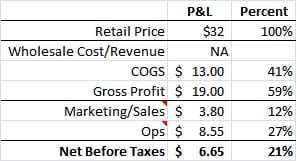](https://eddiesoehnel.com/wp-content/uploads/2015/10/P_L_2.jpg)Retail price went down, but there is no retailer so it flowed directly to the wholesaler. No retailer and no 15% in retailer fees and co-op, but operations went up by 15% to account for added administrative help to support sales, so that is a wash.
|
||||
|
||||
What changed was that the company is now selling direct, bypassing the retailer, giving them a competitive advantage in consumer products. Not only can it drop its retail price to better compete, but it can capture that margin that normally flows to the retailer. This is the basic advantage for going direct.
|
||||
|
||||
We think of online as the primary way to sell direct, and that would be correct. But online has its own challenges, like search engine optimization, shipping costs, latency from ordering product to delivery, and inability to touch the product on screen. Further, there is limited ability for a company to create a customer experience around the purchase, which is a critical selling point for brick/mortar.
|
||||
|
||||
Think about buying a kayak. I can research it online and possibly find the best price, but I can’t try it out. However, if I hop in my car and visit my REI in downtown Denver, I can see them, touch them and get in one, while I learn all the ins-and-outs from the people who work there selling kayaks. Maybe I can even demo one along the South Platte River at [Confluence Park](https://en.wikipedia.org/wiki/Confluence_Park) next to REI.
|
||||
|
||||
Can you see how the experience of getting a kayak is an important part of the purchase?
|
||||
|
||||
How can you combine the benefits of selling at retail but without the retailers and distributors who take margin? Try direct selling or selling through your own company-owned stores. Or, how about mobile stores, like those food trucks we see?
|
||||
|
||||
I don’t know much about these distribution methods, but have had the opportunity recently to learn more about them. What I like is that these distribution methods get a company’s products physically in front of a customer. Further, since there are no middlemen, the company keeps more of the margin, which gives flexibility in selling at a lower price relative to the competition, yet still maintain net income margins.
|
||||
|
||||
The company wins both ways – lower retail price at comparable quality to the competition, and yet higher net income. What a way to build a business! How much more awesome can it get than that!
|
||||
|
||||
So, can you change the distribution structure for competitive advantage in consumer products for your company? If so, what can you do with that advantage? Maybe you produce a higher quality product at comparable prices to your competition and position your brand and products on higher quality? Maybe you produce at comparable quality but now sell at a lower price. With more flowing to the bottom line, does that extra net income allow you to grow your business faster or develop that next product?
|
||||
+29
@@ -0,0 +1,29 @@
|
||||
# Composable and leverage – both mean the same and important to consider in anything I do. Here’s why, and how to make this thought discussion practical for everyday use to increase wealth
|
||||
|
||||
Source: <https://eddiesoehnel.com/composable-and-leverage-both-mean-the-same-and-important-to-consider-in-anything-i-do-heres-why-and-how-to-make-this-thought-discussion-practical-for-everyday-use-to-increase-wealth/>
|
||||
|
||||
Tags: composability, leverage, productivity, strategy, wealth
|
||||
|
||||

|
||||
|
||||
I’ve always found it important to leverage what I have and what I know into more. Make 2+2=5. By leverage, I mean the following:
|
||||
|
||||
- what can I take that I have (whether its an existing asset, knowledge, relationship, etc) and extend it elsewhere?
|
||||
- Where can I push to get more results compared to others because of my knowledge, talent or passion for a subject area?
|
||||
- What is the compound effect of what I am doing, or is there one, or could there be one if I adjusted it a little?
|
||||
|
||||
Leverage means I can do more with what I have. Thus, I always look for leverage everywhere. Leverage = productivity. If I can leverage something to do more, I am more productive, and productivity is critical for increasing wealth (obvious is money, but wealth is measured in more time, better health, better relationships, more satisfaction with who I am, with my life).
|
||||
|
||||
Composability is a relatively new term made famous with web 3. It is simply taking existing resources and using them as building blocks to new applications. It is really the same as leverage, but helps me think slightly differently in that I need to ask myself, what am I doing now, learning now, building now, that can be used as a building block to something else? So while leverage is a bit nebulous, I can think about what I am doing now/learning now/building now as a defined block.
|
||||
|
||||
But to take advantage of whatever it is I am doing now/learning now/building now, which might offer leverage or be composable (a block) into something else, I need to document it, so I have it as a metaphorical block that I can use elsewhere in the future.
|
||||
|
||||
That is probably the biggest reason why I have spent the time to build out my own data and intelligence platform, so that I can quickly and effectively track what I do, what I learn, and what I build, so that I might be able to recall it in the future to use elsewhere.
|
||||
|
||||
So to make this discussion more practical, I should ask myself at the end of every day: **what are the composable blocks I did/learned/built for today that need to be documented so they can be recalled for later use?**
|
||||
|
||||
If the goal at the end of every day is to ask and answer that very question, then my day should be prioritized to the following: **doing/learning/building composable blocks that not only satisfy the task required at hand, but can be recycled for used again in the future.**
|
||||
|
||||
And, to take this thought line to a logical conclusion: **If whatever I am doing/learning/building does not end in a composable block, then maybe I should not do it – not that it won’t get done, because it has to get done – but I should offload it to someone else to do it so I can focus on doing/learning/building that yields composable blocks. Because, composable blocks – or leverage – means more productivity, which can lead to greater wealth.**
|
||||
|
||||
See more about leverage in the [Strategy Section of my Startup Framework](https://eddiesoehnel.com/startup-roadmap/strategy/).
|
||||
@@ -0,0 +1,71 @@
|
||||
# Consumer product growth strategies
|
||||
|
||||
Source: <https://eddiesoehnel.com/consumer-product-growth-strategies/>
|
||||
|
||||
Tags: affiliates, Amazon, augmented reality, brand marketing, direct marketing, Direct Response, e-commerce, entertainmerce, funnels, grass roots marketing, influencers, retail
|
||||
|
||||

|
||||
|
||||
This post provides a summary of consumer product growth strategies that I see, with their relative cost to successfully execute, time to successfully execute, risk of failure and manpower to execute.
|
||||
|
||||
[Embedded resource](https://www.lucidchart.com/documents/embeddedchart/f6323240-4218-4d70-b18e-1bca23590b95)
|
||||
|
||||
## Predominant marketing influencing factors
|
||||
|
||||
The three predominant marketing influencing factors are direct marketing (product centric), brand marketing (reputation centric), and grass roots (identity centric).
|
||||
|
||||
Direct marketing is you appeal directly to individual customers through advertising that has calls to action to purchase your product. In this method, you have to demonstrate the superiority of your product to get them to act. The customer may not know you so you have to sell them on your product. This method tends to be cheaper to use to generate sales and has immediate response so you know if it is working or not, but relies on a truly superior product that captures attention.
|
||||
|
||||
Brand marketing is you appeal indirectly to individual customers through advertising that emphasizes maximum impressions so that as your customers see your ads more and more, they will remember to purchase your product when they have a need. In this method, you are relying more on your reputation from previous products or advertising to get your consumers to purchase. This method tends to be more expensive to use to generate sales and also takes time before it works, so you do not know if it is working until time has passed to see if sales are generated.
|
||||
|
||||
Grassroots marketing is when you appeal directly to individual customers through advertising that emphasizes creating a connection with your customers based on what you stand for or what you are trying to do. In this method, customers identify with who you are and what you stand for, which causes them to want to support you by buying your products. This method tends to be more expensive to use to generate sales and also takes time before it works, so you do not know if it is working until time has passed to see if sales are generated.
|
||||
|
||||
## Sales models
|
||||
|
||||
Here is a list of general high-level consumer product sales models to choose from.
|
||||
|
||||
### Legacy growth models
|
||||
|
||||
Mainline retail distribution: develop, produce and sell a product through traditional brick and mortar retailers.
|
||||
|
||||
Direct response analog: develop, produce and sell a product through traditional direct response (TV, radio and print infomercials) with call center order fulfillment and direct to consumer shipping.
|
||||
|
||||
Grassroots retail distributors: develop, produce and sell a product through traditional small distributors to smaller retailers in fragmented channels.
|
||||
|
||||
### 1st generation growth models
|
||||
|
||||
E-commerce: develop, produce and sell a product through your online website/store.
|
||||
|
||||
Direct digital marketing: develop, produce and sell a product through online advertising.
|
||||
|
||||
Amazon: develop, produce and sell a product through Amazon’s marketplace.
|
||||
|
||||
Online resellers & marketplaces: develop, produce and sell a product through other online marketplaces.
|
||||
|
||||
### 2nd generation growth models
|
||||
|
||||
Affiliates: develop, produce and sell a product through online affiliates. Affiliates promote your product for you to their audience (website visitor, newsletter subscriber and social followers).
|
||||
|
||||
Social grassroots online: develop, produce and sell a product through social (getting likes, follows, etc).
|
||||
|
||||
Dropshippers: develop, produce and sell a product through dropshippers. Dropshippers are like affiliates, but instead, they setup their own storefronts and send the order to you for you to fulfill.
|
||||
|
||||
### 3rd generation growth models
|
||||
|
||||
Same-day delivery; develop, produce and sell a product through Amazon marketplace for same-day delivery.
|
||||
|
||||
Funnels: develop, produce and sell a product through sales funnel approaches. Funnels are a particular type of e-commerce cart that leads buyers through the sales and e-commerce process with value-added offers designed to ascend the buyer up a value chain.
|
||||
|
||||
Influencers: develop, produce and sell a product through influencers with email lists, social followers, or other mass appeal. This is similar to affiliates but influencers are more like celebrities or popular personalities that people follow for entertainment purposes, whereas affiliates tend to get followings due to some sort of utility they offer.
|
||||
|
||||
### 4th generation growth models
|
||||
|
||||
New growth models that appear to be emerging.
|
||||
|
||||
## What I Use
|
||||
|
||||
My Lean & Agile Framework emphasizes direct marketing selling direct-to-consumer via shipping through more progressive methods listed that are cheaper to successfully execute, take less time to successfully execute, have lower risk of failure, with less headcount and overhead to operate, and offer higher profit margins over legacy models.
|
||||
|
||||
This is not to say that the more brand and grassroots centric approaches are not important; they may be, but later in a company’s stage of growth when there is proof of concept, recurring sales and cash flow to support these more expensive methods.
|
||||
|
||||
The Lean & Agile Framework is designed to let a company operate using any of the methods listed, except for future methods that are as yet to be developed. In this case, the Framework tries to anticipate what needs to be built into the company now to effectively operate and compete in environments that will have those future methods.
|
||||
@@ -0,0 +1,13 @@
|
||||
# Culture of Success
|
||||
|
||||
Source: <https://eddiesoehnel.com/culture-of-success/>
|
||||
|
||||
Tags: Chick-fil-a Leadercast, culture
|
||||
|
||||

|
||||
|
||||
I did not attend the 2013 Chick-fil-a Leadercast, but [saw a post](http://michaelhyatt.com/2013-leadercast-takeaways.html) on key takeaways from the event and one caught my attention:
|
||||
|
||||
*Coach Mike Krzyzewski, head men’s basketball coach, Duke University: Don’t focus on winning. Focus on creating a culture of success. This will lead to consistent winning.*
|
||||
|
||||
What is a culture of success? I think it will be different for everyone, but worth thinking about for your company.
|
||||
@@ -0,0 +1,24 @@
|
||||
# Do whatever will get you closer to your customer
|
||||
|
||||
Source: <https://eddiesoehnel.com/do-whatever-will-get-you-closer-to-your-customer/>
|
||||
|
||||
Tags: customer, retail
|
||||
|
||||

|
||||
|
||||
A small Canadian-based CPG company I know has built a nice brand with their products, but have limited U.S. distribution. They have a number of key things going on that has them at a proverbial cross-roads, making it difficult for them to determine how to grow and which road to take.
|
||||
|
||||
1. Sales from their main line of products are strong and steady, but they cannot seem to interest new retail buyers.
|
||||
2. They introduced a second product line where the initial production run sold out in less than a month, but this is potentially a different product category from their main line, which means new buyers and new category sales dynamics; it’s almost as if they would be starting over to gain distribution.
|
||||
3. They sell high quality products with excellent ingredients, but their SRP is higher, putting pressure on sales, especially in mainline grocery channels.
|
||||
4. They do well selling online and want to grow this channel.
|
||||
|
||||
What do they do? Should they focus on their main product line by repositioning and rebranding it so that retail buyers will take interest? Should they focus on their second new product line, which might be a potential hit, even though it would be an entirely different category? Should they drive down their cost to get more competitive on pricing, which means a greater operational focus on production? Should they pour resources into really expanding online sales? They are a small company, which means they have limited resources in which to do things.
|
||||
|
||||
The answer really depends on providing a lot more information about them, which I won’t do here and I don’t think is necessary. That’s because I think the real answer will come down to one thing:
|
||||
|
||||
**DO WHATEVER WILL GET YOU CLOSER TO YOUR CUSTOMER**
|
||||
|
||||
The above 4 items that the company is struggling with suggests different customers in which they are trying to appeal. Who is their customer? Small companies can’t be everything to everyone; they don’t have the resources. So, they have to figure out who is their customer, or which customer segment they want to ultimately serve and build their company and products towards serving that customer better than anyone else in their category.
|
||||
|
||||
When you get close to your customer, you can better understand how to meet their needs, solve their problems, give them joy or create WOW for them. This gets you closer to winning and keeping those customers.
|
||||
@@ -0,0 +1,37 @@
|
||||
# Elements of a Company Vision
|
||||
|
||||
Source: <https://eddiesoehnel.com/elements-of-a-company-vision/>
|
||||
|
||||
Tags: passion, Romans 12:6, vision
|
||||
|
||||

|
||||
|
||||
I’m mentoring a company and we had some recent email exchanges around company vision. What is it and what goes into developing it?
|
||||
|
||||
Here’s my definition of vision from one of my subscriber-only articles:
|
||||
|
||||
*Your vision is the picture that you see of your business at some point in the future. It is what your creation looks like in the future. Three years, five years and 10 years are good vision markers to work with. I typically try to paint a rough picture of my company based on a few facts, such as the revenue and net, numbers of employee/personnel and markets/channels/customers where I sell. There may be other important factors that you want to build into your business, so you want to include them in the picture that your company paints. These factors might include brand recognition or social impact.*
|
||||
|
||||
To expand on that, vision is the core of the company and everything builds on the vision, especially the strategy. As a result, it’s a pretty important piece. To develop a company vision, I think these important elements must be considered:
|
||||
|
||||
Know thyself
|
||||
|
||||
First understand who you are, which includes your personality, likes, dislikes, strengths and weaknesses. What do you do well? Consider Romans 12:6: *“We have different gifts, according to the grace given to each of us.”*What are your gifts? What do you enjoy doing? When someone experiences the intersection of what they do well with what they enjoy doing, the result is passion and the line between work and play gets fuzzy. You’re going to be spending a lot of hours working on your company and understanding yourself will help you create a vision that genuinely reflects what you want to do.
|
||||
|
||||
[See this post](https://eddiesoehnel.com/is-your-startup-the-right-match-for-your-interests-passions-and-talents/) for more resources to help know yourself, your strengths, likes and dislikes:
|
||||
|
||||
What’s the reason for starting the company?
|
||||
|
||||
From my perspective, people start companies for any one or a combination of the following reasons.
|
||||
|
||||
- Freedom: flexibility in when, how and where they work, and with whom.
|
||||
- Financial gain: capitalize on an opportunity in the marketplace.
|
||||
- Social rational: see a need that needs to be filled
|
||||
- Junkie: the excitement of starting and growing a company
|
||||
- No choice: inability to find work
|
||||
|
||||
What’s your reason? Your answer will help guide your vision about what kind of company you want and what you want to accomplish.
|
||||
|
||||
Who do you work well with?
|
||||
|
||||
What interpersonal circumstances do you do your best work? Is it solely, with a spouse or business partner or managing employees. How about having mentors, advisors or investors on your team? Do you do well collaborating with various stakeholders in your company?
|
||||
@@ -0,0 +1,15 @@
|
||||
# Great examples for using a strategy to attack from below
|
||||
|
||||
Source: <https://eddiesoehnel.com/great-examples-for-using-a-strategy-to-attack-from-below/>
|
||||
|
||||
Tags: apparel, Clayton M. Christensen, D2C, Innovation, The Innovator's Dilemma
|
||||
|
||||

|
||||
|
||||
*Successful companies with well-established products are being threatened by newcomers. Winners don’t lose when new rivals attack from the high-end of the market. They lose when startups attack from below.* [The Innovator’s Dilemma](https://www.amazon.com/Innovators-Dilemma-Revolutionary-Change-Business/dp/0062060244) by [Clayton M. Christensen](https://www.amazon.com/Clayton-M.-Christensen/e/B000APPD3Y/ref=ntt_athr_dp_pel_1)
|
||||
|
||||
*The point is that when an established company weighs the cost of new technology or talent against what it already has, it usually sticks with what’s familiar. Why? Because the marginal costs of using what you have are almost always lower than the full costs of investing in something new. B**ut that’s a trap–and one that companies that are young and hungry don’t get caught in, because they don’t think in terms of marginal costs. Rather than basing such selection on costs, start-ups tend to pick what’s best for the job. It’s a key reason newbies displace the old guard: They have better tools.*[Clayton M. Christensen](https://www.amazon.com/Clayton-M.-Christensen/e/B000APPD3Y/ref=ntt_athr_dp_pel_1)
|
||||
|
||||
These are great statements of strategy that I thought of recently after meeting with a company. I know the founders and have worked with them before in another venture. Their new company is a D2C (direct-to-consumer) fulfillment warehouse that is using cheap, off-the-shelf technology plus the founder’s own experience in this space to create a much more cost-effective solution for D2C product companies. I have used D2C companies and have always found them to be inefficient, expensive and bloated with old systems and processes. About time this space get’s attacked from below.
|
||||
|
||||
How can you attack from below in your startup? Or vice-versa, how can you protect against someone else attacking you from below?
|
||||
@@ -0,0 +1,77 @@
|
||||
# How This CPG food company gets to the next level
|
||||
|
||||
Source: <https://eddiesoehnel.com/how-this-cpg-food-company-gets-to-the-next-level/>
|
||||
|
||||
Tags: CPG, Fundraising, Logistics, Marketing, Operations, Production, Sales
|
||||
|
||||

|
||||
|
||||
This post presents a small CPG food company that I recently met. What follows are the facts I know about the company, its struggles and my recommendations.
|
||||
|
||||
Company
|
||||
|
||||
This company is 4 years old with the founder as sole employee. He is also the product inventor.
|
||||
|
||||
Product Innovation
|
||||
|
||||
There are 6 consumer retail products that are flavor variations of its core flagship product and an additional 6 products, some which represent additional flavor variations and the rest which are entirely new product lines. These can be moved into production fairly easily. The products are classified as natural and healthy with supporting lab and nutritional analysis.
|
||||
|
||||
Production
|
||||
|
||||
The company outsources its production to a commercial co-packer, although the founder works on with the co-packer during production.
|
||||
|
||||
Logistics
|
||||
|
||||
The founder handles the logistics of packing/shipping product to distributors, retailers and resellers.
|
||||
|
||||
Marketing
|
||||
|
||||
The product is currently unique in the marketplace and has no direct competitors, although substitutes products are numerous. The company relies on customer word-of-mouth and in-store product sampling as its marketing vehicles. Its packaging is distinctive, differentiated and “pops” on shelf compared to other products in its category. The company attends tradeshows as a way to promote its product in the trade press.
|
||||
|
||||
Sales/Retail
|
||||
|
||||
With several years of sales history, the company has been able to learn from and optimize its product packaging size and price to maximize sales and product turnover on shelf. It is in multiple small retailers and in several locations of regional and large mainstream natural products grocers. It sells to several online resellers.
|
||||
|
||||
Finance
|
||||
|
||||
The founder has supplied all capital to date. The company currently earns little in net income.
|
||||
|
||||
Founder
|
||||
|
||||
The owner seeks capital and personnel who can help him grow the company faster than his current rate of growth. With the added personnel, he wishes to be able to focus his responsibilities on product innovation, production and in-store sampling activities.
|
||||
|
||||
Pros:
|
||||
|
||||
- The co-packer has developed experience for producing the company’s product and has capacity to increase production;
|
||||
- The product is unique in its flavors/ingredients;
|
||||
- The product has a proven track record of sales with price and product size optimized to generate maximum sales and shelf movement and there is demand for the product.
|
||||
|
||||
Cons:
|
||||
|
||||
- The founder is not able to source additional funds for cash flow and inventory and is stuck in a slow growth pattern;
|
||||
- The founder is the sole employee and is not able to allocate more time for sales and marketing;
|
||||
- The founder has no means for paying additional personnel.
|
||||
|
||||
This company is not unlike many small CPG companies in the natural product segment. They are at a virtual ceiling in their ability to grow because they do not have the funding to break through to the next level. The next level requires a healthy six figure investment to prep the company for fast growth. The next level is also much different from an operational and cultural standpoint because it jumps from one as a sole proprietor to one with equity/debt investors, corporate governance, personnel HR, systems and processes.
|
||||
|
||||
So, what plan would I recommend to the founder to help break through the virtual ceiling?
|
||||
|
||||
Operations
|
||||
|
||||
1. Re-allocate time so that the founder can spend less in production and more in sales and marketing. The founder has trained the co-packer to produce the product and should step away from the minutia involved in production.
|
||||
2. Hire a third-party logistics (3PL) company to manage the inventory and retail shipments.
|
||||
3. Focus on larger retailers, not small ones. They require more time but offer much more sales potential. It’s good to use small retailers when first starting out to understand how the product sells and test various in-store marketing tactics, but this company is past this stage.
|
||||
4. Forego attending expensive trade shows.
|
||||
5. Reduce sampling, as it is a very expensive, for any size company. Rely more on the packaging to do the selling and other in-store promotions that do not require a sampling team.
|
||||
6. Make sure there is a basic website with information about the product, its benefits and the company. Be sure to have the company website on the packaging with a call to action inviting customers to visit the website.
|
||||
7. There should be positive customer feedback in the form of online reviews posted through the online re-sellers. If none exist, start selling the products through Amazon to get reviews in place.
|
||||
|
||||
Fundraising
|
||||
|
||||
The founder needs to get the company on a plan to interest investors.
|
||||
|
||||
1. Find managers who are experienced with growing CPG brands AND fundraising; you can’t pay them, but if you can identify them and put them on your business plan as part of the management ream, that will help with investor interest.
|
||||
2. Develop a written business plan with supporting financials and executive summary. Get help from others if you have never done this before.
|
||||
3. Ask people for help with investor introductions.
|
||||
|
||||
In summary, the founder needs to re-prioritize time for sales and fundraising. This is a somewhat simplistic view, as growth challenges are never simple, especially building a team and raising money, but any little step in this direction is a start.
|
||||
+29
@@ -0,0 +1,29 @@
|
||||
# How could you use agile principles in consumer product development
|
||||
|
||||
Source: <https://eddiesoehnel.com/use-agile-consumer-goods-development/>
|
||||
|
||||
Tags: agile, Competition, lean, market research, ROAS
|
||||
|
||||

|
||||
|
||||
Here is how I use agile principles in consumer product development, marketing and sales:
|
||||
|
||||
1. Conduct deep competitive analysis on what is already offered in the marketplace, including features, benefits, and outcomes. Find out which products are selling well through sites like [Similarweb.com – Digital World Market Intelligence Platform](http://similarweb.com/) and through exiting online and offline distribution channels.
|
||||
2. Do secondary research to determine if there is a match between what consumers want and existing offerings. You can do this with keyword and search analysis for what consumers are typing in to find what they want, and through analysis of existing produce reviews on reputable review websites (Amazon is probably the best, but be careful here, as I see more and more reviews from people that have been given the product for free in exchange for a review).
|
||||
3. Conduct passive voice consumer research by visiting forums and discussion groups with people around your product or category of products to find out what they are truly saying and thinking. I prefer this kind of consumer research than direct surveys for a number of reasons listed here: [Why you should ditch customer surveys and what to do instead to get product feedback](https://eddiesoehnel.com/ditch-customer-surveys-instead/)
|
||||
|
||||
Based on this research, where are the holes that a new product could potentially fulfill?
|
||||
|
||||
Once this is determined, develop a product for test sales only through small production runs and generic packaging. Examples of packaging development on the cheap include using services like [crowdSPRING](http://crowdspring.com/)
|
||||
|
||||
Then, adopt a test before invest philosophy by using direct marketing (also called direct response marketing) to test product sales. The key here is to test out the marketing copy so you know what causes a product to sell. Digital marketing is excellent for this through Social and PPC (keyword and tagline/headline testing), and building landing pages and sales funnels for testing copy (not just throwing up a website with an e-commerce cart).
|
||||
|
||||
For performance, I am looking to achieve ROAS of at least a 3 or more (breakeven is usually 2). The higher the ROAS, the more the product is indicative of being a blockbuster for me. But I start at very small marketing spends and as my ROAS climbs and I optimize my campaign at low spends, then I continue to increase my marketing spend as long as my ROAS is above my threshold.
|
||||
|
||||
At a certain point, I will want to optimize my backend (supply chain, logistics, production) and invest in larger product production runs with nicer packaging because I have the data to know that my product sells and the investment has strong probabilities of success.
|
||||
|
||||
The above process is a very test before invest driven methodology which has worked very well for me. Once my product is proven in sales, then I can expand not just digital marketing, but possibly into analog (TV, radio, print) marketing and then with proof of product sales, then I can go to retail.
|
||||
|
||||
The above process relies on direct marketing that when optimized, ends up being virtually free so that I can run a lot of it on a consistent basis. This is what drives sales, awareness, brand building and interest from retailers.
|
||||
|
||||
In terms of who is doing this? In my experience, most consumer product companies do not do this and lack the know how. They develop a product, then go straight to retail (if they can) and hope for the best. Consumer products is still a very traditional industry and products are brought to market the same way they have been for a long time. This is expensive, time-consuming and ultimately not successful for most consumer product startups I see. You will find “agile” being practiced more among pure internet marketers and some traditional direct response (infomercial) marketers.
|
||||
+25
@@ -0,0 +1,25 @@
|
||||
# How do I find commercial retail CPG distribution for my natural product?
|
||||
|
||||
Source: <https://eddiesoehnel.com/how-do-i-find-commercial-retail-cpg-distribution-for-my-natural-breath-freshener/>
|
||||
|
||||
Tags: breadth freshener, gum, mint, natural, organic, retail, start-up
|
||||
|
||||
|
||||
|
||||
*I came up with a new type of natural breath freshener that I want to introduce in the US. How do I find commercial retail CPG distribution for my natural breath freshener?*
|
||||
|
||||
This is a [Quora question](https://www.quora.com/Retail-Distribution/How-do-I-find-commercial-distribution-for-my-natural-breath-freshener/answer/Ed-Soehnel). My answer is as follows:
|
||||
|
||||
I am assuming you are a new company with a new product. If so, then I would first establish an online e-commerce presence through your own website as well as other third-party e-commerce sites. At a minimum, you want to be selling through [Amazon](http://amazon.com). Look for other popular e-commerce websites that sell consumer products like yours and consider selling through them as well. Examples for your product might include [DrugStore.com](https://eddiesoehnel.com/how-do-i-find-commercial-retail-cpg-distribution-for-my-natural-breath-freshener/DrugStore.com) and [VitaCost.com](https://eddiesoehnel.com/how-do-i-find-commercial-retail-cpg-distribution-for-my-natural-breath-freshener/VitaCost.com). Online sales are important to prove the saleability of your product and hopefully, if consumers like the product, earn you positive recommendations online, especially at Amazon.
|
||||
|
||||
One you have been selling online and have a track record of sales, then you can consider retail, as retailers usually will not bring a new product in without a record of sales. Online is a good channel to build a track record for sales, but other methods can also include farmer’s markets, mall kiosks and possibly vending machines.
|
||||
|
||||
Understand your product category, which is Gums, Mints and Breadth Fresheners. Know your competitors, substitute products and be able to clearly differentiate your product from theirs. Know the dynamics of the category and what drives sales and where the category is going in terms of product development and consumer trends.
|
||||
|
||||
Front-end check stand sales may be a good place for this product, but normally, this is a separate category in a retail store that is managed by its own buyer. You will have to prove that your product can sell in the Gum, Mints and Breadth Fresheners section before being included in the check stand section.
|
||||
|
||||
If you truly have a natural product, as natural is a very broad-encompassing definition for consumer products, you may want to start targeting the natural/organics channel of retailers. Retail is segmented by channel and this channel includes truly natural and organic products. Examples of retailers in this channel include [Whole Foods](http://Wholefood.s.com), [Trader Joe’s](http://www.traderjoes.com) and [Wegmans](https://eddiesoehnel.com/how-do-i-find-commercial-retail-cpg-distribution-for-my-natural-breath-freshener/www.wegmans.com/). However, many mainline retailers are taking in natural and organic products, but you really have to demonstrate a good sales track record before you get into mainline retailers.
|
||||
|
||||
While Whole Foods and Trader Joe’s are good natural/organic retailers to sell in, I would not make them my first choice. I would first focus on small independent retailers in this category. Again, you want to demonstrate a good track record of sales and more importantly, understand how to sell your product at retail. You want to know what in-store marketing and promotion vehicles help move your product off-shelf. You learn this by getting into independents first and experimenting so that when you go to the larger chains, you know what works. You don’t want to get into a mainline retailer and get kicked out because your product does not sell. If that happens, you may not get the chance to come back to that retailer.
|
||||
|
||||
To actually sell into a retailer, you use a direct sales method where you contact the retailers to present your product to the buyer. You can also use brokers, but you have to choose them carefully and will likely have to pay them a monthly upfront fee, in addition to a percentage of sales.
|
||||
@@ -0,0 +1,23 @@
|
||||
# How fast should you grow your company?
|
||||
|
||||
Source: <https://eddiesoehnel.com/how-fast-should-you-grow-your-company/>
|
||||
|
||||
Tags: growth, startup
|
||||
|
||||

|
||||
|
||||
How fast should you grow your company? I get this question from to time by startup and early-stage companies. Assuming that there is demand for your product/service and the sales are there for the taking, here’s my response:
|
||||
|
||||
1. Competitive environment. Do you have a defensible competitive advantage, like a patent? Or, another way to look at it is can your product/service be easily and quickly copied? If so, then you might need to race forward in growth to prevent competitors from copying, catching and passing you up.
|
||||
2. Market state. Are you riding a consumer trend? If so, then you might need to grow quickly to take advantage of that trend.
|
||||
3. Financial pressures. How quickly do you need to achieve profitability? Do you have funding to get you to profitability without fast growth?
|
||||
4. COGS. I have yet to meet a startup or early-stage company in consumer products who does not have a COGS problem. That is, their COGS is very high because they don’t have the economies of scale that comes with size and/or they don’t yet have the expertise (usually gained through experience or hiring the right people) to source materials. Quick growth can mean economies of scale to help lower COGS.
|
||||
5. Personal goals. Do you thrive on fast-paced, fluid and changing environments? Do you want to attempt to sell your company within a 10 year time frame? If so, then you might want to grow fast.
|
||||
|
||||
**When is growth too fast?**
|
||||
|
||||
In my experience, growth is too fast when:
|
||||
|
||||
1. You lose budegtary control and expenses start to spin our of control and you can’t stop them.
|
||||
2. You make lots of stupid mistakes.
|
||||
3. Your marketing/sales spend is not efficiently retaining customers. That is, you might do a great job at trial or one-time buys, but not at retention, thus your marketing/sales is constantly working to replace the customers you are losing. If this is the case, then you may very well be building a house of cards in your business that will fall apart when you run out of first-time customers.
|
||||
+57
@@ -0,0 +1,57 @@
|
||||
# How has your brand used consumer insights to inspire product innovation?
|
||||
|
||||
Source: <https://eddiesoehnel.com/how-has-your-brand-used-consumer-insights-to-inspire-product-innovation/>
|
||||
|
||||
Tags: CRM, database, Innovation, knowledgebase, product adoption lifecycle, research
|
||||
|
||||

|
||||
|
||||
*This is a [Quora](https://www.quora.com/How-has-your-brand-used-consumer-insights-to-inspire-product-innovation/answer/Ed-Soehnel) question I was asked and my answer is as follows.*
|
||||
|
||||
I think to use consumer insights to inspire product innovation you need to setup a process for identifying consumer insights relative to your product(s) and brand.
|
||||
|
||||
From a high level perspective, I look at three areas to obtain research and insights.
|
||||
|
||||
### **Secondary Research**
|
||||
|
||||
I will start with this first, as I consider it a top-down approach to gathering consumer insights, and comes largely from marketplace and industry intelligence sources (not from the consumer, which is primary).
|
||||
|
||||
Marketplace intelligence is about what consumers are responding to and the trends that underpin their actions. For this, I read a variety of marketplace intelligence resources (some free, some paid), I talk to industry contacts, and perform competitive research.
|
||||
|
||||
Industry intelligence helps me understand how an industry that serves a consumer is responding to consumer insights, which is a great way to back into consumer insights. This might be a part of competitive research but also would include service providers that serve the industry (for example, a co-packer that manufacturers for different brands).
|
||||
|
||||
### **Primary Research**
|
||||
|
||||
I consider primary research to be more bottom-up, because I am interacting directly with consumers to get insights. I like to use [passive consumer voice mining](https://www.quora.com/What-are-the-best-ways-to-determine-which-key-words-indicate-the-highest-likelihood-of-a-potential-consumers-intent-to-buy/answer/Ed-Soehnel) for primary research on consumers. I am not a big fan of surveys, which I have outlined why, here: [Why you should ditch customer surveys and what to do instead to get product feedback](https://eddiesoehnel.com/ditch-customer-surveys-instead/)
|
||||
|
||||
There are many many big data tools – both free and paid – to gather insights on what customers do. I mostly use free ones like keyword and hashtag searches.
|
||||
|
||||
There is also neuromarketing as another primary research tool, which I have not yet used. There has been some negative research come out about using elements of this for consumer insights, but it still seems to hold promise.
|
||||
|
||||
I think primary research is just a lot of about observing and watching what people do and respond to (not necessarily what they say because that can be misleading).
|
||||
|
||||
### **Personal Experience**
|
||||
|
||||
I think the best way to obtain consumer insights is often your own experiences with respect to a need, a pain, a product or product category. If you have a problem that you want to solve with creating a new product, odds are other people have the same product.
|
||||
|
||||
I think without personal experience the primary and secondary research you do still won’t give you the real perspective to innovate.
|
||||
|
||||
### **Organizing Research**
|
||||
|
||||
I use a knowledgebase I created to help organize and keep track of my research. My knowledgebase is a combination of a database that I use for my eyes only and a content management system where I allow others to access.
|
||||
|
||||
I find it helpful to categorize the research across a few different dimensions:
|
||||
|
||||
1. Based on the product adoption lifecycle;
|
||||
2. Sometimes tied to an individual or a company in my database;
|
||||
3. Based on which component of a company that insight falls into (for example, how a consumer responds to certain types marketing may fall under marketing, not R&D). See image below for a breakdown of the different components that makeup a company.
|
||||
|
||||

|
||||
|
||||
### **Research Sources**
|
||||
|
||||
There are many primary and secondary data sources and it is hard to keep track of them. I have a master list of my intelligence sources and am adding to it all the time. This helps me remember what sources provide what kind of data. This is independent of my CRM database that has all of my contacts, many who are always great sources of insights.
|
||||
|
||||
### **Inspiring Product Innovations**
|
||||
|
||||
My process above helps inform me, which I suppose based on having the information, will inspire me as well. Since I work predominantly in consumer product startups, I feel I don’t need inspiration to do product innovation because it is just a natural part of my work.
|
||||
@@ -0,0 +1,9 @@
|
||||
# How our business principles limit our growth
|
||||
|
||||
Source: <https://eddiesoehnel.com/business-principles-limit-growth/>
|
||||
|
||||
Tags: Production, supply chain
|
||||
|
||||
|
||||
|
||||
[YouTube video player 1](https://www.youtube.com/embed/B3QzWZWTxB8?wmode=transparent&autoplay=0)
|
||||
@@ -0,0 +1,14 @@
|
||||
# Instead of selling, just try to make it easier to buy
|
||||
|
||||
Source: <https://eddiesoehnel.com/instead-of-selling-just-try-to-make-it-easier-to-buy/>
|
||||
|
||||
Tags: Marketing, Sales
|
||||
|
||||

|
||||
|
||||
I read an article recently about instead of selling [just try to make it easier to buy](http://www.mengonline.com/community/newsroom/meng_blend/blog/2012/09/25/buying-not-selling-by-charles-gold). It got me thinking of a few ways this plays out in my work:
|
||||
|
||||
- Messaging vs. product: do I focus on more messaging/advertising or do I focus on improving and making a better product that drives word-of-mouth marketing and repeat customers?
|
||||
- Price vs. customer service: do I focus on dropping my price to induce purchases or offering better customer service with a generous return or guarantee policy?
|
||||
|
||||
These comparisons are not necessarily an either/or, but do offer food for thought in how I might spend my resources to make it easier for a customer to buy. Instead of trying to sell harder, how can you make it easier for your customer’s to buy?
|
||||
+14
@@ -0,0 +1,14 @@
|
||||
# Is your startup the right match for your interests, passions and talents?
|
||||
|
||||
Source: <https://eddiesoehnel.com/is-your-startup-the-right-match-for-your-interests-passions-and-talents/>
|
||||
|
||||
Tags: Books, interests, passion, strength, talent, weakness
|
||||
|
||||

|
||||
|
||||
Does your startup the right match for your interests, passions and talents? Only you can answer that question, but here’s a list of books I have read over the years that will help.
|
||||
|
||||
1. [Book Yourself Solid](https://www.amazon.com/Book-Yourself-Solid-Reliable-Marketing/dp/0471783935): mostly about creating a successful consulting business, but does a good job at helping you understand how to grow a business based on your passions for work and life.
|
||||
2. [Cure for the Common Life](https://www.amazon.com/Cure-Common-Life-Max-Lucado/dp/0849947081/ref=sr_1_1?s=books&ie=UTF8&qid=1359392789&sr=1-1&keywords=cure+for+the+common+life): helps you understand what is your sweet spot in life.
|
||||
3. [First, Break all the Rules](https://www.amazon.com/First-Break-All-Rules-Differently/dp/B004QCCYXO/ref=sr_1_8?s=books&ie=UTF8&qid=1359392818&sr=1-8&keywords=First%2C+break+all+the+rules): best book I’ve read for managing people and to help you do that, it teaches you how to understand talents, skills, strengths and weaknesses, not just of others, but yourself, too.
|
||||
4. [The Toiler Paper Entrepreneur](https://www.amazon.com/Toilet-Paper-Entrepreneur-tell---like-/dp/0981808204/ref=sr_1_1?s=books&ie=UTF8&qid=1359392875&sr=1-1&keywords=the+toilet+paper+entrepreneur): does a great job helping you understand how to identify a business idea based on your interests and passions in life.
|
||||
@@ -0,0 +1,21 @@
|
||||
# Key elements for success in a CPG natural food startup
|
||||
|
||||
Source: <https://eddiesoehnel.com/key-elements-for-succees-in-a-cpg-natural-food-startup/>
|
||||
|
||||
Tags: CPG, Distribution, Image, natural, retail, Taste
|
||||
|
||||

|
||||
|
||||
I had the opportunity to see about 20 start-up companies in the CPG natural food startup category that showcased their products at a recent event. All were small CPG natural food startups no more than 4 years old – half were probably less than 1-year-old. I went around to each one, tried products and asked questions. I was most interested in different ways companies market and distribute to get ideas for my work. Following the event, I spent a few days mulling over what I learned and which companies I thought had the best growth prospects. I thought through a number of characteristics that these companies must have in the small natural food category to succeed.
|
||||
|
||||
The first characteristic is a unique product or products with distinct features and benefits. For food, that could be new ingredients not generally used before. Or, ingredients prepared and/or combined in a certain way. Another is a different delivery system, like drinking vs. eating, vs snacking not utilized before for a given set of ingredients. Or, it could be increased shelf life or packaging that increases the freshness. Basically, a set of features and benefits that make the product unique and different.
|
||||
|
||||
A second characteristic is taste, which in food, as I have learned, is king. You can’t simply rest on the fact that your product provides some functional benefit (like keeping you full without the added calories). If it does not taste good, you eventually lose your customers. Taste, of course is relative. You really can’t compare a traditional white flour pizza crust to a gluten-free pizza crust. The former just tastes better, either way you look at it. But, if the latter does not taste good, the consumer won’t eat it. They will find a competitor that has worked out a better taste or just not eat it at all.
|
||||
|
||||
Third is image, or the presentation of the company and brand in the logo, packaging and name. I like these elements to be distinctive, such that they will catch my eye from afar without knowing anything about the product. They also must be distinctive from competitors or the category in which they would be classified.
|
||||
|
||||
The last element is story, or why the company or product exists. We always like to hear a good story about how a company started in the kitchen, infused with the personality, background and unique experiences of the founders, which is a good thing. This is an OK story, but not really captivating like it use to be when starting a company and being an entrepreneur was unique. A better story is why the product(s) were developed, such as to treat a sick family member. People like stories which give a product or service meaning, a reason for being other than just to make money.
|
||||
|
||||
These elements can all be developed in any company. I saw some of each element in all the companies, but maybe only a few that seemed to be on the path to doing so. But the challenge faced by each company, not just at this event but common to probably every small CPG food start-up, is marketing and distribution.
|
||||
|
||||
I would like to have the opportunity to buy most of the products I saw at this event. They were high quality, great tasting foods, some with great functional benefits. But there are not available in my local natural grocery store where I shop. An online purchase with S&H can get expensive, especially for some of the refrigerated and frozen products.
|
||||
+42
@@ -0,0 +1,42 @@
|
||||
# Marketing and Distribution For A CPG Natural Food Start-up
|
||||
|
||||
Source: <https://eddiesoehnel.com/marketing-and-distribution-for-a-cpg-natural-food-start-up/>
|
||||
|
||||
Tags: Distribution, Marketing, mobile, QR Code, radio, retail, TV
|
||||
|
||||

|
||||
|
||||
In my last post I wrote about [some characteristics I thought CPG natural food start-ups must have to succeed in that category](https://eddiesoehnel.com/some-key-elements-for-succees-in-a-cpg-natural-food-start-up/ "Some Key Elements For Success In A CPG Natural Food Start-Up"). As context for that article and this article, I visited with about 20 start-up companies in the natural food category that showcased their products at a recent event. I want to continue from my last post where I left off, which was highlighting the common challenge of marketing and distribution for a CPG food start-up. In this post, I will try to provide solutions to this challenge.
|
||||
|
||||
At this event, I asked every company I visited what they are doing for marketing and distribution. The majority offered a similar overall strategy that goes likes this:
|
||||
|
||||
1. They are attending farmers markets and other local events to sell and promote;
|
||||
|
||||
2. They are in a few retail locations, the vast majority naming the same retailers (one which is a big name natural products retailer) who are testing sales of their products;
|
||||
When I asked about another local prominent natural product retailer, they said they were trying to reach the buyer to see about getting shelf space, but the majority had not gotten in, yet;
|
||||
|
||||
3. They had a social strategy through Facebook and were trying to accumulate likes;
|
||||
|
||||
4. Some had a few additional twists, such as selling in alternative locations like coffee shops or restaurants, and of course, online e-commerce.
|
||||
|
||||
The above is not necessarily a bad strategy. But, given that there are a large number of small natural food CPG companies, especially in Colorado, it becomes a challenge to find distribution when everyone is plowing the same road to get their product out there. And, retail shelf space is not growing commensurate with the products being created by small companies.
|
||||
|
||||
Most small CPG brands don’t have a lot of money for marketing, and probably very little. Spending on marketing is one of the first things that interest buyers at retailers and helps move product off the shelf. None of the companies I spoke with had any kind of marketing, beyond the online social through Facebook and their presence at local events.
|
||||
|
||||
Here are some other ways in which I might approach marketing and distribution:
|
||||
|
||||
1. A [major retailer is testing billboard advertising](http://www.telegraph.co.uk/technology/mobile-phones/8601147/Tesco-builds-virtual-shops-for-Korean-commuters.html) in major pedestrian areas in Korean cities, which displays pictures of product and a QR code next to each for consumers to scan with their phone to place an order, from which it will be delivered to their home. Why not try the same here? Display a product in public locations such as bus stop billboards and include an enticing picture of the product with a call to action (CTA) statement allowing consumers to scan the code on their mobiles, pay and get the product shipped to their home. Or, tag a retailer in the ad so the consumer knows where to get the product.
|
||||
|
||||
2. Identify local home delivery companies – there are 2 in the metro-area of Denver – that deliver produce to consumers. These companies may be looking for packaged products to add to their catalog. Additionally, see if you can partner with these home delivery companies to do some co-marketing, such as paying for emails they send to their subscriber base to promote your product, or including flyers in home delivery orders about your product. In fact, major retailers are testing grocery home delivery and its only a matter of time when they figure out the economics, logistics and process to make this service viable.
|
||||
|
||||
3. Identify local gift companies that provide gift boxes with local products. See if you can sell to them. [Here is one](http://www.bouldersbestorganics.com/) for Colorado and they might be doing the same in other areas of the U.S.
|
||||
|
||||
4. Radio and TV spots can be dirt cheap, so don’t assume they are too expensive for a small company. It is probably too cost prohibitive to get on prime time slots or channels (unless you have a good media buyer that can get you some remnant buys). But you can find air-time with a small budget.
|
||||
|
||||
5. Most start-ups seem to want to get to the bigger well known retailers as fast as possible. Don’t do that. If a large retailer tests you in one location and you bomb, do you think they will give you other stores? Probably not. Test your product in small single-location retailers first. You will want to test your product in different locations in the store with various kinds of in-store advertising (shelf tags, endcap promotions, sampling, etc). You have a better shot at doing this kind of testing with a small single-location retailer rather than a chain.
|
||||
|
||||
6. Create an booklet and e-book with health articles. For example, if your product is gluten free, it might have health benefits for people that may not be perceived to be having issues with gluten, but with some education, they might gravitate to gluten-free, including buying your product. Use this material to give to people through your website or through the above names distributors and locations.
|
||||
|
||||
There are many other ideas I might explore, like targeting small format retail stores such as convenience stores. C-stores? You ask. I know, the stereotype is that C-stores don’t sell healthy food products. But, that is changing. I have also wondered about those automated retailing machines which brands like Best Buy are using. Maybe these is a place for your product in one of those somewhere.
|
||||
|
||||
There way are many ways to market and distribute. Just cast aside your stereotypes and do some research and you might be surprised at what you can do.
|
||||
+29
@@ -0,0 +1,29 @@
|
||||
# My take on 3 characteristics that make for a great startup business idea
|
||||
|
||||
Source: <https://eddiesoehnel.com/the-3-things-and-only-things-that-make-for-a-great-business-idea/>
|
||||
|
||||
Tags: Distribution, intellectual property, product-market fit
|
||||
|
||||

|
||||
|
||||
In my experience, a great startup business idea is one with 1, or better yet, 2 or even all three of these characteristics:
|
||||
|
||||
## Intellectual Property
|
||||
|
||||
You have some sort of defensible intellectual property, like a process, a patent, data, expertise or a product.
|
||||
|
||||
By defensible, I mean you can defend it from competitors copying, reverse engineering or getting around it.
|
||||
|
||||
And, your IP creates a significant enough differentiation to your target customers that they want to buy your product and not direct or substitute competitors. They are captive to you and only you.
|
||||
|
||||
## Unique Distribution Channel
|
||||
|
||||
You have a way to market and distribute your product that no other or few competitors can take advantage of.
|
||||
|
||||
The best example is your own subscriber list, whether its email, Youtube, podcast, or other social channels.
|
||||
|
||||
## “WOW” Product
|
||||
|
||||
This is what I advocate to all companies.
|
||||
|
||||
Develop a product with such great product-market fit that consumers think…”WOW”.
|
||||
@@ -0,0 +1,13 @@
|
||||
# Personality discovery template
|
||||
|
||||
Source: <https://eddiesoehnel.com/personality-discovery-template/>
|
||||
|
||||
Tags: personality
|
||||
|
||||

|
||||
|
||||
This personality discovery template is a worksheet to explore your personality useful for determining your interests, passions and talents.
|
||||
|
||||
[Download it here](https://docs.google.com/document/d/1poLrv-4h2HKdvGNqK3jrc-M2S5tEjBD1uelgtJL-Uxg/edit?usp=sharing)
|
||||
|
||||
[Embedded resource](https://docs.google.com/document/d/e/2PACX-1vQYFZtb19uP-RVrPJc2KklE4RNX1Q53uTZrhH_mbXGSNiLnKrdvJFtAbrJ0Vyu8_hJyFfhglDxjft3d/pub?embedded=true)
|
||||
@@ -0,0 +1,51 @@
|
||||
# Qualify an idea for a CPG or consumer product business
|
||||
|
||||
Source: <https://eddiesoehnel.com/qualifty-an-idea-for-a-cpg-or-consumer-product-business/>
|
||||
|
||||
Tags: idea, startup
|
||||
|
||||

|
||||
|
||||
This post provides guidance for qualifying an idea for a CPG or consumer product business (B2C or a B2B2C).
|
||||
|
||||
In my opinion, the process for qualifying idea for a CPG or consumer product business is really hard because your first iteration is NEVER the final and best idea. Your business idea should naturally evolve as you think about it and do research through the questions provided below.
|
||||
|
||||
The cheapest and most effective way to ensure your business idea is a success is to do a lot of grunt work at this stage. This helps you avoid potentially painful and expensive changes you might have to make after you’ve started your business.
|
||||
|
||||
Ever remember someone telling you to look for the good in people or a situation…you know, “the glass is half-full” thinking? Well, when considering a business idea, don’t do it that way. You need to do the opposite.
|
||||
|
||||
I like to start from the perspective that my idea is a bad one and I am going to do some research to prove that. If I start with that mindset, it helps keep me from falling in love with the idea, where I will be much more prone to discount information that qualifies it as a bad idea.
|
||||
|
||||
This critical attitude forces me to look at all the negatives and check them off my list. If the negatives are not proving out, then I am more likely to have a good idea.
|
||||
|
||||
The questions are as follows:
|
||||
|
||||
Primary questions:
|
||||
|
||||
1. What pain, need, problem, unmet demand or customer delight does your idea provide? What keep’s them up at night? Identify the specific needs that correspond to a good market opportunity. For example, you probably don’t want to enter a market where customers are extremely happy with how well the existing products meet their needs. When you develop a new product or improve an existing product, you want to address customer needs that aren’t adequately met: their “underserved” needs.
|
||||
2. What is your “WOW” factor. How would consumers be impressed such that you give them a feeling of “WOW” and make a memorable impression on them? How can you surprise them in unexpected but delightful ways that they do not see coming? Customers are going to judge your product in relation to the alternatives, so the relative degree to which your product meets their needs in a clearly differentiated and impactful way depends on the competitive landscape.
|
||||
3. Do your potential customers know they have a need, problem, unmet demand and do they care? Seriously…do they care? Enough to spend money on it?
|
||||
4. Can you solve it quickly?
|
||||
5. Who are your customers? Define them as specifically as possible. How can you reach them to let them know about your product/service? Can you profitably reach them?
|
||||
|
||||
Dissect your idea further with the following:
|
||||
|
||||
1. Scene or situation: focus on the moment of frustration with the customer. What is going on? What is the user about to attempt?
|
||||
2. Desired outcome: what is the user trying to accomplish? Why is this important?
|
||||
3. Attempted approach: without your new product, how does the user go about the task?
|
||||
4. Interfering factors: what goes wrong? How and why does it go wrong?
|
||||
5. Economic Consequences: so what? What is the impact of the user failing to accomplish the task productively?
|
||||
|
||||
Additional questions:
|
||||
|
||||
1. Is your product an evolutionary improvement or a revolutionary improvement? The latter tends to have the most impact and reward, but also usually carries much more risk. How can you make your product revolutionary? If your product is an evolutionary improvement, is it enough to make a difference that a customer will care?
|
||||
2. Is your product a required spend by consumers or a discretionary spend? If the spend is part of a consumer’s behavior, then it can trend toward being a required spend. If it’s a discretionary spend, then your “WOW” factor has to be high.
|
||||
3. In a perfect world, what is the absolute best outcome or dream that your product/service delivers for the customer? Can you engineer backwards based on that outcome and pull together the right resources to achieve it?
|
||||
|
||||
I think successful startups must have at least one of the following:
|
||||
|
||||
1. “WOW” product to deligh customers;
|
||||
2. Intellectual property that they can defend and which gives them a clear market advantage;
|
||||
3. A unique distribution channels for making product sales.
|
||||
|
||||
Rgeardless of whether a company has IP or a unique distributon channel, consumers have choices and you still have to WOW them.
|
||||
+85
@@ -0,0 +1,85 @@
|
||||
# Questions to ask yourself to help you innovate in your company
|
||||
|
||||
Source: <https://eddiesoehnel.com/questions-to-ask-yourself-to-help-you-innovate-in-your-company/>
|
||||
|
||||
Tags: Evernote, Guy Kawasaki, Innovation, iPhone, Michael Hyatt
|
||||
|
||||

|
||||
|
||||
This is a list questions/statements I’ve assembled over the years that have really helped me to think about how to be innovative in my companies. They are in no particular order. They might help you innovate in your company.
|
||||
|
||||
---
|
||||
|
||||
**Where is your industry/category going? How are your consumers changing with respect to taste’s, preferences and purchasing/buying behavior? What is the nature of supply, demand, logistics, impacts of weather, etc. that is changing your industry/category? How can you position yourself to take advantage of where things will be in 1, 3 or 5 years?**
|
||||
|
||||
*For example, I did some advisory work with a confectionary company. I told them that despite their high quality and relatively unique-flavored product, their chances of succeeding in the crowded chocolate category were low, so instead, they should focus on owning their supply chain from which they source their unique chocolate flavors and provide the raw ingredients to brands. Since cacao supply in general is shrinking worldwide due to crop failures from changing weather patterns, owning the supply may represent a significant value driver in the future, much more so that owning a small confectionery brand in a very crowded consumer marketplace.*
|
||||
|
||||
---
|
||||
|
||||
**What assets (physical/tangible, skills, IP, contacts, partner companies, other relationships, geographic, data, brand/awareness) do you have that can be leveraged?**
|
||||
|
||||
*For example, one advantage with living in Denver, Colorado is that it is relatively central to the Continental U.S. and Canada, with a major airport that has direct flights to major and many minor airports and many international flights. Does this provide an advantage if you have to travel a lot to all parts of the U.S. and/or Canada?*
|
||||
|
||||
---
|
||||
|
||||
**Identify the key areas in your business that consume resources of time, money, and/or management mindshare. Odds are, those are significant pain points not just for you, but other companies as well, which means someone or some company out there is trying to solve it. Go find them and either outsource to them or bring in their technology to help you.**
|
||||
|
||||
*For example, packaging development has always been frustratingly expensive and time consuming…a real stumbling block to the nimble business that wants to exploit market opportunities.*
|
||||
|
||||
---
|
||||
|
||||
**Can you find comparables, and especially failures in your industry/category so you can learn from them? Can you take out the failure so you can engineer success? Be careful not to rationalize failures.**
|
||||
|
||||
---
|
||||
|
||||
**“Jump to the next curve – don’t try to do existing better, but do something new”.**
|
||||
|
||||
*Guy Kawasaki said this*
|
||||
|
||||
---
|
||||
|
||||
***Is your product an evolutionary improvement or a revolutionary improvement? The latter tends to have the most impact and reward, but also usually carries much more risk.***
|
||||
|
||||
*For example, the first iPhone can be considered a revolutionary improvement in mobile handsets.*
|
||||
|
||||
---
|
||||
|
||||
**In a perfect world, what is the absolute best outcome or dream that your product/service delivers? Can you engineer backwards based on that outcome and pull together the right resources to achieve it?**
|
||||
|
||||
---
|
||||
|
||||
**H****ow do you create captive customers – that is, they not only want to buy from you, but they can only buy from you?**
|
||||
|
||||
*Evernote is a great example. They certainly have me as a captive customer. [See more here about captive customers](https://eddiesoehnel.com/survive-and-thrive-with-captive-customers/).*
|
||||
|
||||
---
|
||||
|
||||
**Would a buyer of your product truly feel a “WOW”…be honest. Wow suggests it is something they have not experienced before and which is so clearly different from anything similar they have tried in the past. If not, what would WOW look like in your product or service: features, benefits, attributes, functionality, taste, appearance, size, ingredients/materials, how made, how sold/delivered, marketing messaging, price/value, sustainability/green, quality, longevity, customer reviews, customer experience, customer service/support, any others you can think of? And, how do you get to WOW?**
|
||||
|
||||
---
|
||||
|
||||
**I find that asking people directly about a product idea does not yield the most informative answers. A better approach is to focus more on the outcome that the idea delivers in the context of what need or pain the potential customer is experiencing. Outcomes can satisfy benefits across different spectrums – financial, emotional, physical, and spiritual – so be aware of that when qualifying answers/data in your research.**
|
||||
|
||||
---
|
||||
|
||||
**What compelling problem does your product solve for them? (We’re talking about a problem that actually causes pain, not a mild annoyance.) Do they know they have the problem, and do they care? Seriously, do customers really care? Enough to spend money on a solution?**
|
||||
|
||||
---
|
||||
|
||||
**Can you solve a problem in an unexpected, but delightful way?**
|
||||
|
||||
---
|
||||
|
||||
**How can you make your customer’s life easier? Think beyond the product’s use, but how it’s packaged, purchased, priced, thrown-out, recycled, when you collect payment, durability, how it looks when it ages, etc.**
|
||||
|
||||
---
|
||||
|
||||
**What marketing idea, customer-adoption method, industry, company, or trend is winning mindshare and dollars and why. Can you leverage or adapt any of that for your benefit? Where is technology going and how to exploit for your industry/category?**
|
||||
|
||||
---
|
||||
|
||||
**Does your idea exploit something about you personally that is outstanding or unique?**
|
||||
|
||||
---
|
||||
|
||||
**Is there an area in your category where competitors are not with a particular product form or function that you can exploit and which they won’t care about?**
|
||||
@@ -0,0 +1,85 @@
|
||||
# Recommendations for a small established CPG food brand
|
||||
|
||||
Source: <https://eddiesoehnel.com/case-study-recommendations-for-a-small-established-cpg-food-brand/>
|
||||
|
||||
Tags: Brand, CPG, Grocery, retail
|
||||
|
||||

|
||||
|
||||
This post presents a small established CPG food brand that I recently worked on. What follows are some general facts about the company, its current state and my recommendations.
|
||||
|
||||
**Background**
|
||||
|
||||
Company
|
||||
|
||||
This company is a family run operation started by the current owners and is more than 10 years old.
|
||||
|
||||
Product Innovation
|
||||
|
||||
The company has a relatively large line of products that it produces for a small CPG brand. Its main retail buyer stocks at least 8 of its SKU’s. Current product are continually tweaked to maximize taste and quality, while new products are always in the development hopper. The company watches its competitors and its overall category to see what new products are coming out that it can adapt and develop for sales through its retail buyers. It also has its own retail store at its plant, which it uses to test new products and gather direct consumer feedback.
|
||||
|
||||
Production
|
||||
|
||||
The company owns and operates its own production plant with excess capacity.
|
||||
|
||||
Logistics
|
||||
|
||||
The company owns its own transportation vehicles for delivery of product.
|
||||
|
||||
Marketing
|
||||
|
||||
The company has done no marketing to build its business. Sales have come from word-of-mouth. The only marketing the company occasionally participates in is trade shows and in-store marketing.
|
||||
|
||||
Sales/Retail
|
||||
|
||||
Sales come predominantly from regional retailers, with the majority of sales from one retail chain. Wholesale and online business is very small and an insignificant source of revenue.
|
||||
|
||||
Finance
|
||||
|
||||
The founders have supplied all capital to date.
|
||||
|
||||
Goals
|
||||
|
||||
The company wishes to grow, but not certain in what direction it should expand and is concerned that with growth, product quality will suffer. The company is known for its product taste and quality and does not want to compromise these key brand pillars.
|
||||
|
||||
Pros:
|
||||
|
||||
- The company is established, profitable and has built an excellent brand reputation among its retail buyers and consumers.
|
||||
- The company controls production and has excess capacity.
|
||||
|
||||
Cons:
|
||||
|
||||
- Expanding production without proper oversight can easily compromise product quality. Since the owners directly manage production, product quality is dependent on their constant hands-on expertise.
|
||||
- Sales are not diversified, as the majority of revenue comes from one retailer.
|
||||
|
||||
**Recommendations**
|
||||
|
||||
Brand loyalty in the category the company sells is dependent on maintaining a high quality and good tasting product. Brand name really does not carry much weight among consumers. The company is correct in maintaining its vigilance in this area.
|
||||
|
||||
Production
|
||||
|
||||
If something were to happen to the owners, the company would have a difficult time because the owners directly manage production and cannot readily step away from the business to focus on sales, marketing, or even to take vacations. The company needs to try to find employees it can groom to assume some of these responsibilities.
|
||||
|
||||
Marketing
|
||||
|
||||
The company has wondered it should develop a more visual brand via its logo and packaging. They don’t need to. Since brand is dependent on product quality, the visual elements count for less. In addition, the company’s visual brand is already distinctive from competitors in its own way, so there is no need to do this.
|
||||
|
||||
The company should update its website to include some basic information about it and its products and it should include a URL on its packaging that customers can use to find out more about the company and its products.
|
||||
|
||||
It would be wise for the company to build an e-commerce component, not just on its website, but also it should sell through Amazon and several other online food-focused marketplaces. These websites would simply take orders, while the company would provide fulfillment. These websites also handle customer reviews, which is important for the company to have.
|
||||
|
||||
Sales
|
||||
|
||||
The company really needs to diversify into other retailers. There are many ways to grow in retail: focus on specific channels, a multi-channel approach and target specific retailers in each channel and/or target geographically.
|
||||
|
||||
It is recommended that this company seek other retailers that I would call the under-the-radar leaders and do so in adjoining geographic areas to where it is currently located. These are companies that are smaller and tend to operate by city or region and are excellent at retailing and capturing consumer’s loyalty. By focusing on these retailers, the company will likely sell more product per store to a more discerning consumer who values quality and taste over price and it will stay under the radar of larger direct competitors that are seeking distribution through national retailers.
|
||||
|
||||
The company has tested selling via wholesale to institutions, such as schools. I can’t really provide a judgement on whether this is a good channel or not, since I have little direct experience in these sales channels. I think it could be because the product the company sells to this channel is much easier for it to produce. As a result, it could expand production in this area with less risk of product quality degradation.
|
||||
|
||||
Finance
|
||||
|
||||
Economic shocks in the current unstable environment that we live are a threat to any companies lines of credit. As long as this company has access to cash to sustain temporary shocks, which it appears it does, it should be OK.
|
||||
|
||||
Summary
|
||||
|
||||
My overall concern is that the company needs to pay attention to protecting the wealth of the owners, which is largely in the business, primarily by diversifying its sales as already described above. The company is currently not in a great position to self itself, which is a long-term goal of the owners. Its revenue is in a lower range that would not capture the attention of investor buyers, yet revenue is in a higher range that would make it difficult for a new owner to finance the purchase without some significant seller financing. The company needs to grow to make itself more attractive, yet it needs to grow strategically, capturing sales from where it knows it can compete and from buyers who value the company’s attention to taste and product quality.
|
||||
@@ -0,0 +1,62 @@
|
||||
# Recommendations for this early stage food start-up
|
||||
|
||||
Source: <https://eddiesoehnel.com/recommendations-for-a-paleo-friendly-early-stage-food-start-up/>
|
||||
|
||||
Tags: Brand, CPG, Food, gluten-free, Paleo, start-up
|
||||
|
||||

|
||||
|
||||
This post presents a small CPG food startup-up brand that I recently met. What follows are the facts I know about the company, its current state and my recommendations.
|
||||
|
||||
Company
|
||||
|
||||
This company is 6 months old with four founders who serve as the sole employees. They work for other companies and are growing this opportunity in their spare time.
|
||||
|
||||
Product Innovation
|
||||
|
||||
There are two consumer retail products that the company has developed and is selling. The products are sold in the bakery section. They are gluten-free and Paleo friendly.
|
||||
|
||||
Production
|
||||
|
||||
The company outsources its production to a commercial co-packer.
|
||||
|
||||
Logistics
|
||||
|
||||
Given that sales result only from a local farmers market, the owners currently handle warehousing and logistics.
|
||||
|
||||
Marketing
|
||||
|
||||
The product appears to be unique in the marketplace and has no direct competitors, although substitute products are numerous. The company has so far relied on customer word-of-mouth and sales at a local farmers market as its marketing vehicles. I have not seen its packaging and it does not have an operational website.
|
||||
|
||||
Sales/Retail
|
||||
|
||||
The company has been approved to sell its products through a local natural products retailer and expects to be on shelf in the near future in one location.
|
||||
|
||||
Finance
|
||||
|
||||
The founders have supplied all capital to date. Net income is negligible.
|
||||
|
||||
Founders
|
||||
|
||||
The owners wish to increase retail distribution and are considering hiring a production manager to oversee the co-packer so that they have time to spend on sales and marketing.
|
||||
|
||||
Pros:
|
||||
|
||||
- The founders work for an existing natural food products conglomerate and are leveraging their experience and connections to help grow their business.
|
||||
- There is funding available among the founders to help grow the company.
|
||||
- The products are currently unique in flavors/ingredients.
|
||||
|
||||
Cons:
|
||||
|
||||
- The products have limited proven sales track record.
|
||||
|
||||
My recommendations to the founder’s are as follows:
|
||||
|
||||
1. Use the initial retail location to test every aspect of the product, including product taste and performance, packaging appeal and if possible, different areas in the store for shelf placement. Use in-store marketing methods to test ways that help drive product sales. They can include, but are not limited to, product sampling, shelf-tags, in-store posters, and endcaps. Optimize the packaging size and price to maximize profitability and product turn.
|
||||
2. Launch a website with company and product information. Setup e-commerce capabilities through Amazon so that customers can make purchases (but the company fulfills). Amazon does an amazing job optimizing SEO of its products. In addition, the ability for customers to submit product reviews on Amazon, if they are positive, will help sales.
|
||||
3. Develop a set of attributes that the company can own to help identify and differentiate its brand. Be mindful of the future, especially technology trends, and position the brand so that it can evolve and stay relevant into the future.
|
||||
4. Develop a product innovation strategy and timeline that enables you to quickly develop and launch flavor variations or new product lines to capitalize on customer interest.
|
||||
5. Take full advantage of current employer in learning about how to develop, market and grow your products.
|
||||
6. Gather research to help you understand your category. Organizations that can provide good information include the [National Association for the Specialty Food Trade](http://www.specialtyfood.com/nasft/) and [Mintel](http://www.mintel.com/).
|
||||
|
||||
This small company is pretty early out the gate. But the founder’s have experience in the food industry and are positioning themselves to capitalize on the growing interest in the Paleo friendly foods, which excites me because I am on this diet. I look forward to seeing them in retail.
|
||||
@@ -0,0 +1,13 @@
|
||||
# Running into doors
|
||||
|
||||
Source: <https://eddiesoehnel.com/running-into-doors/>
|
||||
|
||||
Tags: your own worst enemy
|
||||
|
||||

|
||||
|
||||
I like Seth Godin’s blog. He put up a recent post about how he [broke his nose](%20http://sethgodin.typepad.com/seths_blog/2012/11/how-i-broke-my-nose-for-the-second-time.html) walking into a glass door. While I have yet to do that (break my nose, that is), I can certainly sympathize because I seem to always find many ways to hurt myself. My problem is that I tend to rush through getting things done, plus I may not be paying as close attention as I should. Hence, I end up doing something stupid, like tripping over the grocery bag walking in the house (last week), slicing my finger (every week, it seems) or stubbing my toe (this morning).
|
||||
|
||||
That got me thinking: I really am my own worst enemy, and I suspect the same is probably the case for other people as well. And the problem is that being our own worst enemy, we create our own stress.
|
||||
|
||||
What throws you off and creates your stress? Be honest, is it a result of your actions, in-actions, bad decisions? How are you your own worst enemy? What can you do today to change that, however small the change?
|
||||
@@ -0,0 +1,25 @@
|
||||
# Should this CPG chocolate food company take the order?
|
||||
|
||||
Source: <https://eddiesoehnel.com/should-this-cpg-chocolate-food-company-take-the-order/>
|
||||
|
||||
Tags: Brand, Chocolate, CPG, Manufacturing, Quality
|
||||
|
||||

|
||||
|
||||
I read an article from Inc Magazine with a case study on a small CPG chocolate food company. The article described how the founders had received a sizeable order that could provide significant PR value to their company, but they were not certain they could fulfill the order in time.
|
||||
|
||||
The case study offered three recommendations from experts. Here is my perspective on each of these recommendations.
|
||||
|
||||
1. Focus on Quality. Don’t take the order.
|
||||
|
||||
I agree with this recommendation. It does not take much bad press or poor online reviews to sink your sales. It’s rare to find a food product that does not have direct competition or substitutes where customers will bolt if yours is inferior. But, I would also add that in addition to product quality, you need to focus on improving your product. Innovation is the best way to stay ahead of competition.
|
||||
|
||||
2. Build the Brand. Take the order.
|
||||
|
||||
I don’t agree with this recommendation because it takes time to get a reliable co-packer on board and trained to run your product. If they got the order in October 2010 for the Christmas season, that means they would have had to fulfill and ship in early November, at latest, so that the stores could be stocked. That is just not enough time to get a co-packer on board, so matter how hard you push. Any small CPG company needs to be thorough in doing test production runs to work out all the kinks. Rushing it and there is too much room for errors.
|
||||
|
||||
What the founder’s should have done from day one, which every small CPG company should do, is plan how to fulfill demand through third-party co-packers. Unless you are well-funded, building your own facility may not be feasible nor financially prudent, especially if you build it and your capacity sits idle. I have seen several companies in the last year that seem to insist on doing their own production or using the founder’s and employee time to closely manage production with a co-packer. This is not wise because the revenue side of any business is developing products, marketing and sales. Every other aspect of running a business is an expense. It’s best to train and outsource your production to third-party co-packers so you can stick to doing the task of building sales.
|
||||
|
||||
3. Expand Capacity. Don’t take the order.
|
||||
|
||||
I partially agree with this recommendation, for the reasons just mentioned. However, the recommendation is to invest in expanding their own capacity. I am not so sure about investing in your own operations to fulfill orders. It might tie up too much precious cash that can be used for sales and marketing. It might be best to have several co-packers, one that is larger and takes more lead time to fulfill orders, but can do the volume economically, and a smaller one that might be able to fulfill orders with less lead time.
|
||||
+41
@@ -0,0 +1,41 @@
|
||||
# Spreadsheet enhancements to Personal Consumption Expenditures
|
||||
|
||||
Source: <https://eddiesoehnel.com/spreadsheet-enhancements-to-personal-consumption-expenditures/>
|
||||
|
||||
Tags: personal consumption expenditures
|
||||
|
||||

|
||||
|
||||
Personal Consumption Expenditures (PCE) data is easily accessible and [published monthly](https://www.bea.gov/). But it is not very useful in its downloadable form, so I improved it with additional sheets for calculations and charts built on the fly.
|
||||
|
||||
It is useful to take a look at top level consumer product categories to see their performance over time. I left in the services expenditures as well as there was no need to delete and could be useful to compare against the goods expenditures.
|
||||
|
||||
### Core Data Sheet
|
||||
|
||||
The core data is actual expenditures by dollar. The Dashboard Core Data contains the charts built on the fly based on the categories and the data ranges selected.
|
||||
|
||||
### Changes Month-over-Month Sheet
|
||||
|
||||
Expressed as a percentage basis. The Dashboard Mo-o-Mo contains the charts built on the fly based on the categories and the data ranges selected.
|
||||
|
||||
### Percent of Total Sheet
|
||||
|
||||
Expressed as a percent of total PCE expenditures. The Dashboard % of Total contains the charts built on the fly based on the categories and the data ranges selected.
|
||||
|
||||
### Correlations
|
||||
|
||||
A simple correlation output to see how each category correlates against all others. This is run in Excel and copied into this Google Sheets file.
|
||||
|
||||
### Recent Movement
|
||||
|
||||
Take a look at the far right for the data sheets (not the graph sheets) for additional calculations I include that look at the last 3 years data. I use conditional formatting to help me spot categories that are rising (black text) and falling (red text).
|
||||
|
||||
### Compare Categories
|
||||
|
||||
You can compare up to 4 categories. To remove a category, just select the cell with the drop down list and select “delete” on the keyboard
|
||||
|
||||
### Copy New Data In
|
||||
|
||||
You can copy in [updated data](https://www.bea.gov/) by creating new columns to the right and the sheet should update automatically.
|
||||
|
||||
### [Open the sheet here](https://docs.google.com/spreadsheets/d/1_KxQeZv_kASZJq_69jYvfvp7yZdMgjO6DXckwS98agk/edit?usp=sharing).
|
||||
@@ -0,0 +1,15 @@
|
||||
# Strategy
|
||||
|
||||
Source: <https://eddiesoehnel.com/startup-roadmap/strategy/>
|
||||
|
||||
Tags: None listed
|
||||
|
||||
Retrieved from the supplied WordPress backup.
|
||||
|
||||
# Strategy
|
||||
|
||||
### Before starting your company, achieve alignment and fit between your goals, brand pillars, category/product selection and target market.
|
||||
|
||||
[Embedded Google document](https://docs.google.com/document/d/1N9sUuDgzVe6TZ6xrUNx6BueLb4_k4fJGiPbIEeNeZUU/pub?embedded=true)
|
||||
|
||||
## Questions, Feedback?
|
||||
+43
@@ -0,0 +1,43 @@
|
||||
# The 3 problem areas every consumer product startup encounters and how to prepare to overcome them
|
||||
|
||||
Source: <https://eddiesoehnel.com/3-problem-areas-every-consumer-product-startup-encounters-prepare-overcome/>
|
||||
|
||||
Tags: cash flow, direct-to-consumer, Distribution, forecasting, funding, Fundraising, Pricing, product-market fit, Production, startup, supply chain
|
||||
|
||||

|
||||
|
||||
There are 3 problem areas every consumer product startup encounters. But there are ways to overcome them if you think ahead and build those solutions into your growth strategy.
|
||||
|
||||
## Problem #1: Product-Market Fit
|
||||
|
||||
This is the most classic problem every startup encounters.
|
||||
|
||||
Does your product and it’s benefits or outcomes it provides, fit with the needs and desires of your target market, appropriately priced, marketed to attract your target customer, and distributed such that your target customer can easily acquire it.
|
||||
|
||||
For early-stage companies, this is the most difficult problem to solve and usually takes lots of iteration to get right.
|
||||
|
||||
The best way to achieve product-market fit is what not to do, which is try not to rush it. Take your time to do your market research and plan a long runway to get great product-market fit.
|
||||
|
||||
## Problem #2: Cash Flow
|
||||
|
||||
One product-market fit is achieved, then comes the growth and expansion stage.
|
||||
|
||||
All companies need cash to grow in this stage and for most, it is hard to find.
|
||||
|
||||
One great way, which is a major platform that I use to grow, is to sell direct-to-consumer. If you did your product-market fit research properly, this can be a very profitable way to sell and you can do it slowly and in a measured way so that you can help fund your own growth.
|
||||
|
||||
Raising money from investors is an option, but most companies are not successful using this approach, so don’t count on it.
|
||||
|
||||
## Problem #3: Supply Chain
|
||||
|
||||
By now, you have sales and growth, and maybe you still have cash flow requirements (most startups never get away from this).
|
||||
|
||||
You will have supply chain challenges. As you’re sales volume increases, it will become more difficult to source raw ingredients, and probably at stable prices. That is just the nature of the world we live in.
|
||||
|
||||
Always have multiple suppliers and multiple factories to distribute your risk.
|
||||
|
||||
Price your products so you can absorb price increases without having to pass along to consumers.
|
||||
|
||||
Try to have sourcing, production, distribution and sales in close geographic proximity, which will make it much easier to get product produced and to market
|
||||
|
||||
Have rock solid forecasting models in place so you can anticipate demand and make sure you have as much extra inventory as you can afford (at least 10% above forecast)
|
||||
@@ -0,0 +1,21 @@
|
||||
# The 4 levers of growth for a CPG business
|
||||
|
||||
Source: <https://eddiesoehnel.com/4-levers-of-growth-for-a-cpg-business/>
|
||||
|
||||
Tags: Marketing
|
||||
|
||||

|
||||
|
||||
I read a good article called [The 3 Most Important Levers of Growth for Business](http://www.mpdailyfix.com/the-three-most-important-levers-of-growth-for-business/?utm_source=feedburner&utm_medium=feed&utm_campaign=Feed:+MarketingProfsDailyFix+%28Marketing+Profs+Daily+Fix%29). They include:
|
||||
|
||||
1. Grow the market, or attract new customers;
|
||||
2. Grow volume with existing customers, or sell them more of the same product or new products you roll-out;
|
||||
3. Steal share, or attract a competitor’s customers;
|
||||
|
||||
I would add a 4th leve of growth for a CPG business:
|
||||
|
||||
- Create a new market with a product/service innovation.
|
||||
|
||||
It’s a somewhat fuzzy line to define what is a new market vs. growing an existing market. For example, prior to the late 70’s (or around this time), mobile phones did not exist. Did their introduction signal the start of a new market, or just an innovation in an existing market, which was telecom?
|
||||
|
||||
Or, the authors example of the iPad growing an existing market of portable PC’s. However, the iPad is a tablet and can be considered a new market, since people who have a laptop don’t necessarily stop using the laptop.
|
||||
@@ -0,0 +1,84 @@
|
||||
# The best productivity tool I use
|
||||
|
||||
Source: <https://eddiesoehnel.com/the-best-productivity-tool-i-use/>
|
||||
|
||||
Tags: productivity
|
||||
|
||||

|
||||
|
||||
I have a tool that I use weekly which has become the best productivity builder in not just my business, but my entire life.
|
||||
|
||||
The tool is based on helping me capitalize on my most valuable resource, which is time.
|
||||
|
||||
Most people, me included, wish they had more time, and as the years go by and we get older, we realize that time goes by very quickly, and we wish we had more of it.
|
||||
|
||||
I review this tool on a weekly basis, usually on Sunday’s, which is generally my day of the week that I use to rest, reflect, re-organize and re-prioritize. It is a simple tool that can be used in any document processor.
|
||||
|
||||
This tool has 4-components.
|
||||
|
||||
### Component #1: Friction
|
||||
|
||||
I define friction in my life as anything that causes friction from my moving forward. You need to define what moving forward is for you, but for me, I tie it to my goals that I lay out for myself, both professionally and personally.
|
||||
|
||||
There are a lot of things that cause friction I can’t get out of doing, like brushing my teeth, or showering. Exclude those kinds of friction from consideration.
|
||||
|
||||
The friction I am talking about is that which you might be able to outsource to someone else.
|
||||
|
||||
I have several sub-lists within my friction component: personal and professional.
|
||||
|
||||
Personal friction for me has increasingly become necessary chores around my home and property where I live. For example, I actually like getting on my tractor and mowing my acreage, but its become a source of friction for other things that are more important.
|
||||
|
||||
My personal friction list is anything that can be outsourced for someone else to do. That does not necessarily mean I can outsource it, because maybe I can’t afford to pay someone else to do it, but it goes on the list for me to eventually figure out how to get someone else to do it for me.
|
||||
|
||||
Professional friction for me is backend admin of my work. Updating records and accounting, for example. I actually despise doing this stuff anyway, so it is an easy decision to outsource.
|
||||
|
||||
But some backend admin work I use to not be able to outsource because of system limitations. It use to be that processing transactions into my accounting spreadsheet could only be accomplished by me, but I changed that to an online system that automates a lot of that and allows for someone else to do.
|
||||
|
||||
Friction can also be anything I struggle with, which ends up taking me more time to do.
|
||||
|
||||
I am not very good with brand and product names, color pallets, or design. I struggle with this and end up spending time on these functions that is not efficient. So, I outsource these kinds of things to others.
|
||||
|
||||
I prioritize my friction lists, so those that are further up are candidates for outsourcing more than ones further down. Those that are really causing a lot of friction go up to the top.
|
||||
|
||||
### Component #2: Prune
|
||||
|
||||
There’s lots of stuff you cannot outsource, and maybe it becomes a candidate for pruning.
|
||||
|
||||
For me, I have dramatically pruned my personal and professional social interactions.
|
||||
|
||||
I don’t socialize as much with friends like I use to. In fact, certain people have just been pruned off my list. Not that I do not like them, but I just need to be allocating time for those who are more important in my life.
|
||||
|
||||
I also have dramatically cut down on my in-person networking that I use to do through one-on-one meetings, events and tradeshows. Especially when so much of this can now be done online, these activities where not giving me enough bang for my buck, so I cut them out.
|
||||
|
||||
Like friction, I prioritize my prune list so I focus on making the changes for the ones that are higher up the list versus ones lower on the list.
|
||||
|
||||
### Component #3: Leverage
|
||||
|
||||
I define leverage as anything where I can push and get more results compared to others, which really means to play to my strengths and not my weaknesses
|
||||
|
||||
Leverage is also defined as the compound effect of what I am doing.
|
||||
|
||||
I try to do things that will give me more leverage.
|
||||
|
||||
For example, I love figuring out ways to solve problems that can also end up being a product I can sell.
|
||||
|
||||
My wife and I put the time and effort into researching and making raw dog food for our dogs, using the right ingredients and the right proportions, because we were disgusted with all the commercial options available.
|
||||
|
||||
Because of the lack of commercial products available, we also figured this could be leveraged to a product.
|
||||
|
||||
But we did more than that and leveraged it into multiple products.
|
||||
|
||||
Now that is what I call leverage. We fixed our own personal problem that ended up becoming a line of products.
|
||||
|
||||
### Component #4: Margin
|
||||
|
||||
This last one is more of an indirect productivity tool, because I find if I neglect this, then I may not lose productivity in the short-term, but over time, it will impact my life negatively.
|
||||
|
||||
I try to build in margin to help absorb the inevitable twists and curves along the path of life. There are 4-areas of margin:
|
||||
|
||||
1. Physical margin. I am careful to not stack on too much work, exercise or travel into my schedule where it impacts my health or prevents me from recovering.
|
||||
2. Spiritual margin. I guard my prayer time and make sure I do not stack my schedule where it takes time away from that on a daily basis.
|
||||
3. Financial margin. I try to build in savings for the proverbial rainy days, and I admit I have not always been good at doing this in my life.
|
||||
4. Emotional margin. I define this one as having quality and deep relationships in my life.
|
||||
|
||||
Each week I do a quick check of these 4-areas of margin and adjust my schedule accordingly if margin is starting to slip.
|
||||
+19
@@ -0,0 +1,19 @@
|
||||
# The importance of knowing where a consumer or CPG category is going
|
||||
|
||||
Source: <https://eddiesoehnel.com/the-importance-of-knowing-where-a-consumer-or-cpg-category-is-going/>
|
||||
|
||||
Tags: CPG, raw materials, retail, strategy, supply chain
|
||||
|
||||
|
||||
|
||||
I met with a small CPG food start-up recently and the discussion focused on the company’s growth strategy. Only 6 months old, the start-up is generating online sales and is looking to retail distribution, which is the primary reason why I was there. It is entering a crowded and competitive CPG category for its product (what food CPG category isn’t crowded with competitors these days?), and needs help in figuring out how to hit retail with a line or two of products that provide compelling features and benefits and which afford the company some competitive advantages.
|
||||
|
||||
While nothing was decided in the meeting, I think I may have convinced the company to not go the consumer route, which also means they won’t be hiring me, since my focus is consumer products and brands. Here’s why:
|
||||
|
||||
1. What’s important to the company owners? The founders/owners place a high priority in sourcing their raw materials from farmers that have sustainable environmental and labor practices. This is so important that one of the founders spends 6 month a year traveling overseas to develop sourcing relationships with farmers and their communities.
|
||||
|
||||
2. What value is the company creating? The company has spent generous time and resources cultivating its supply chain. Most small consumer companies focus more on the consumer brand by carefully developing the features, benefits and competitive advantages of the products. They go to suppliers who have the systems, processes and expertise to source the raw materials from farms. The raw materials purchased by this company include unique crop varieties not found anywhere else, which they can further blend to create distinct flavors.
|
||||
|
||||
3. Where can this value be most profitable to the company? To answer this question, its critical to understand where the industry is going. In this case, the industry that this company operates may be moving in the direction that coffee and tea have already been. In the last few decades, these industries have seen a proliferation of demand for blends and flavors that are further differentiated by where they are geographically sourced. As a result, the industries have fragmented with many competitors, large and small, fighting for the consumer’s mindshare.
|
||||
|
||||
In the final analysis, the company may be better off becoming a raw materials suppliers to other brands, wholesale and institutional buyers and take a pass on directly developing a consumer brand and products. It appears that they may have developed some competitive advantages with their ability to source raw materials that have unique flavor characteristics not found anywhere else in the world. With this advantage, why not sell to other brands and let them duke it out in the marketplace for a share of the consumer’s wallet. For a small CPG start-up, it is difficult enough just focusing on developing the consumer brand and retail products. Trying to also develop and own the supply chain and manufacturing spreads management too thin and requires far more investment that may not yield the ROI.
|
||||
@@ -0,0 +1,89 @@
|
||||
# The secret to business success
|
||||
|
||||
Source: <https://eddiesoehnel.com/the-secret-to-business-success/>
|
||||
|
||||
Tags: emotion, failure, mindset, processes, risk, speed, success, systems
|
||||
|
||||

|
||||
|
||||
Everyone defines business success differently, although universally, it includes profits.
|
||||
|
||||
When I ask people who are successful in business profits what is the one thing that they owe to their success, most say it comes down to this: try a lot of things, fail at most, but through all those failures, you find a few that succeed.
|
||||
|
||||
For me, I have also found this to be the case.
|
||||
|
||||
Here is how I have put this into action in my life.
|
||||
|
||||
### Develop the mindset that I will fail at most things I try, but don’t let it get me down; just keep plowing forward.
|
||||
|
||||
I have found that this mindset has helped me out a lot.
|
||||
|
||||
Not because I need this mindset to justify my failures or to serve as a convenient scapegoat if I fail.
|
||||
|
||||
But this mindset allows me to try more things than if I did not have this mindset. It helps me to not fear failure.
|
||||
|
||||
### Make sure those failures are small and manageable, which means to not take on such huge risks that the failure would create significant calamity in my life, both professionally and personally.
|
||||
|
||||
This is one area I have had to learn the hard way.
|
||||
|
||||
When I was younger, I use to bet the farm and sometimes I won big, but I also lost big.
|
||||
|
||||
A large part of this is my personality and how I am wired: when I commit to something, it’s “ALL OR NOTHING”; hence the tag line for my website.
|
||||
|
||||
That can be good from a perseverance or staying power perspective, but also bad from a risk management standpoint.
|
||||
|
||||
As I have grown older, I have learned to break up risks into smaller and more manageable chunks.
|
||||
|
||||
The proverbial “test before you invest”, which is a huge element of my Growth Stack approach to growing consumer product companies, allows me to keep risk low. I still go all in, but just in smaller steps rather than in one big leap.
|
||||
|
||||
But sometimes going slow in small steps can increase your costs in the long run, so maybe taking a larger step makes more sense. For example, if I want to test working with a new contractor or support provider, and am offered a month-to-month payment option, it might be best just to negotiate a 6-month contract with some reduction from the month-to-month, since doing anything less might not be enough time anyway to test out the relationship.
|
||||
|
||||
### Make sure I set myself up to learn from those failures so that I stand a good chance of engineering out the circumstances around those failures for future endeavors.
|
||||
|
||||
This is really important; anytime something does not work, I analyze why, summarize lessons or rules and document them so that I am hopefully less likely to make that mistake in the future.
|
||||
|
||||
Same goes for successes. What worked, why and how do I build in a process to do that again?
|
||||
|
||||
To me, documenting learnings is huge, which I do extensively in my [knowledgebase](https://eddiesoehnel.com/) for growing consumer product companies.
|
||||
|
||||
I even created a specific section in my knowledgebase to document the pitfalls – the things that tripped me up in the past. I also maintain a personal journal with a lot of free form thoughts where this stuff goes.
|
||||
|
||||
### Build in the capabilities that let me try a lot of things and fail at them quickly so I can learn towards my successes.
|
||||
|
||||
The more I try, the more I learn, so its best to be able to do this quickly, which means I need to build in the capabilities to let me do that.
|
||||
|
||||
The best example is how I have engineered my marketing technology infrastructure for my businesses: I built it to be able to quickly try marketing campaigns, collect the data, analyze, make corrections, then try again, all at a fast pace.
|
||||
|
||||
If, for example, I had to engage with a developer to adjust or develop a new landing page for every marketing campaign, that would dramatically slow down this process (and increase costs), which is why I built my system so I can run it all myself.
|
||||
|
||||
### Setup my systems and processes to keep me on track.
|
||||
|
||||
I have found that when I setup systems and processes for nearly everything in my life, I am more successful and less prone to getting emotionally carried away, which is bad for decision-making.
|
||||
|
||||
Systems and processes keep me on track, focused and more objective.
|
||||
|
||||
### Identify at least 3 other areas where you can leverage the risk if it fails.
|
||||
|
||||
For example, a risk is introducing a new product. The goal is to increase profits.
|
||||
|
||||
But if that fails, what can I still get out of it?
|
||||
|
||||
1. More learnings, obviously, but only if those learnings can be applied in the future. If I introduce a food consumer product, which is one of my key categories where I like to play and it fails, I know I will learn for future food product launches. But if I build a B2B SAAS product, which is a category I do not work in and do not know and it fails, and I never intend to do anything there again, then those learnings may not be giving me much to leverage into the future.
|
||||
2. If a food product, then maybe I can take the formula into a different direction with some minor tweaking and introduce it as a new product in a new category.
|
||||
3. Maybe the food product does not succeed as a lead horse to drive my growth but can succeed as a follow-on or upsell product to another lead horse product.
|
||||
4. Maybe the food product does not succeed anywhere but is inexpensive for me to make and stock so I can sell it at cost or even give it away to really good customers.
|
||||
5. Maybe there are some key business relationships I will build with others to be leveraged elsewhere through this food product.
|
||||
|
||||
Analyzing from this perspective helps position me to still win even if this particular risk fails.
|
||||
|
||||
### How I have put these elements into action
|
||||
|
||||
I have phrased the elements above into the following questions that I use to help me make decisions that involve risk:
|
||||
|
||||
1. Do you have the right mindset?
|
||||
2. Is this a small risk? If not, can you break it down into a series of smaller risks?
|
||||
3. What is the risk(s) with this decision? Be specific and quantify.
|
||||
4. Can you review the outcomes (successes and failures) and capture good data to obtain the learnings?
|
||||
5. Do you have the capabilities to attempt this risk quickly? If not, how can you increase the speed of it so it does not drag itself out and bog you down?
|
||||
6. Do you have the right systems and process in place help you make a decision that keeps emotion out of it? [See more here about keeping emotion in check when making decisions](https://eddiesoehnel.com/keep-emotions-in-check-making-decisions/).
|
||||
7. Can you identify at least 3 other areas to potentially leverage into if the risk fails?
|
||||
@@ -0,0 +1,9 @@
|
||||
# Tools for discovering and analyzing trends
|
||||
|
||||
Source: <https://eddiesoehnel.com/tools-for-discovering-and-analyzing-trends/>
|
||||
|
||||
Tags: trends
|
||||
|
||||

|
||||
|
||||
[Embedded resource](https://docs.google.com/document/d/e/2PACX-1vQWMOR_bECkaz7GhvbHpEuW6M0kJIRSBl-6VxTSkyTW0hnQUSEbiQNfjIVokEMoex6gujJytGwUV8_p/pub?embedded=true)
|
||||
+9
@@ -0,0 +1,9 @@
|
||||
# Toolset for analyzing risk, solving problems, making decisions and managing distractions
|
||||
|
||||
Source: <https://eddiesoehnel.com/toolset-for-analyzing-risk-solving-problems-making-decisions-and-managing-distractions/>
|
||||
|
||||
Tags: decisions, distractions, problem solving, risk
|
||||
|
||||

|
||||
|
||||
[Embedded resource](https://docs.google.com/document/d/e/2PACX-1vQ2xlSu4kdYqza0WpTnHQ5pZ9B3vTSP3Elux4VcSv_NvCFkC3BmEatJ635WmBz551L1YFe9IUPKxNlc/pub?embedded=true)
|
||||
@@ -0,0 +1,43 @@
|
||||
# Vision, mission (values), culture, goals and strategy
|
||||
|
||||
Source: <https://eddiesoehnel.com/vision-mission-values-culture-goals-and-strategy/>
|
||||
|
||||
Tags: culture, goals, mission, strategy, vision
|
||||
|
||||

|
||||
|
||||
This post provides high level descriptions of company vision, mission (values), culture, goals and strategy and how they are related and different from each other.
|
||||
|
||||
**Vision**
|
||||
|
||||
Your vision is the picture that you see of your business at some point in the future. It is what your creation looks like in the future. Three years, five years and 10 years are good vision markers to work with. I typically try to paint a rough picture of my company based on a few facts, such as the revenue and net, numbers of employee/personnel and markets/channels/customers where I sell. There may be other important factors that you want to build into your business, so you want to include them in the picture that your company paints. These factors might include brand recognition or social impact.
|
||||
|
||||
**Strategy**
|
||||
|
||||
There are usually many ways to achieve a vision. Your strategy identifies a specific way or a set of ways to achieve that. You want to know things like: how much investment do I need and when? What products do I introduce and when? When do I hire? What markets/channels/customers do I pursue and in what order and when? How am I going to win? I like to think of my business plan that I use for internal purposes as the tool to build my strategy.
|
||||
|
||||
**Mission/Values**
|
||||
|
||||
While vision is your picture of what you want to look like, mission defines how you will go about working to achieve that. Its more than just making a product and selling it. Its how you go about making and selling that product which helps guide you and keep you on track towards accomplishing your vision. You look at your values and build those into your mission so that you have a set of rules that help keep you centered on how you run your business.
|
||||
|
||||
**Culture**
|
||||
|
||||
Culture develops out of the vision and mission/values. It becomes the habits and routines for how people in the company interact and do the work. It’s best to think of culture according to the following:
|
||||
|
||||
1. What we protect or punish;
|
||||
2. What we reward or remove;
|
||||
3. What we allow and disallow;
|
||||
4. What makes us happy, sad or mad.
|
||||
|
||||
**Goals**
|
||||
|
||||
You set goals that when achieved, are designed to get you closer to your vision.
|
||||
|
||||
**Summary**
|
||||
|
||||
I think of this illustration in climbing a mountain:
|
||||
|
||||
- My vision is to be on the summit.
|
||||
- My strategy is to ascend and descend within an eight-hour time frame, taking the southwestern route, with three rest breaks on the ascent and two on the descent, and do it in late spring, so I should prepare for hiking in snow and the possibility for cold conditions, which means packing extra clothing and food.
|
||||
- I have set certain goals that will help me achieve the summit; goal 1 includes hiking to point A and resting; goal 2 is rock climbing to point B; goals 3 is the final push to the summit along the ridgeline.
|
||||
- My mission is how I will climb, which is to make it fun, safe, taxing but not overly strenuous, and taking lots of photos to document the day.
|
||||
+17
@@ -0,0 +1,17 @@
|
||||
# What are a few up-and-coming CPG startups in the US? Is there a list or organization of any kind for CPG startups vs the well-established guys?
|
||||
|
||||
Source: <https://eddiesoehnel.com/coming-cpg-startups-us-list-organization-kind-cpg-startups-vs-well-established-guys/>
|
||||
|
||||
Tags: cpg startups
|
||||
|
||||

|
||||
|
||||
This is a [Quora](https://www.quora.com/What-are-a-few-up-and-coming-CPG-startups-in-the-US-Is-there-a-list-or-organization-of-any-kind-for-CPG-startups-vs-the-well-established-guys) question. My answer is as follows.
|
||||
|
||||
[AngelList](http://Angel.co) and [http://F6s.com](https://F6s.com) have fairly comprehensive lists of startups. Although more heavily weighted towards tech, you will still find CPG’s.
|
||||
|
||||
<https://www.f6s.com/programs> looks like it has a comprehensive list of accelerator programs that startups can apply to. Some funds are CPG focused and you can go to their websites to see individual prospects.
|
||||
|
||||
There are probably many local networking groups in cities. An example is <http://NaturallyBoulder.com>, which is natural product focused in Boulder. CO, with members from the local CPG startup scene. It is harder to find groups like this because they are not listed in any directory that I know of.
|
||||
|
||||
I maintain lists of startups through [Basecamp InQb8r](https://basecampinqb8r.com/), an online business intelligence platform for the consumer product marketplace.
|
||||
+66
@@ -0,0 +1,66 @@
|
||||
# What are key success factors of new brand launch in fashion categories of cosmetic and jewelry?
|
||||
|
||||
Source: <https://eddiesoehnel.com/key-success-factors-of-new-brand-launch-in-fashion/>
|
||||
|
||||
Tags: Brand, cosmetics, Fashion, influencer, jewelry, metrics
|
||||
|
||||

|
||||
|
||||
This is a [Quora](https://www.quora.com/What-are-key-success-factors-of-new-brand-launch-regarding-to-cosmetic-and-fashion-jewellery-collaboration/answer/Ed-Soehnel) question I was asked and here is my answer.
|
||||
|
||||
Based on your question, it appears you have a brand with products geared toward the fashion categories of cosmetics and jewelry. You want to know what you need to do to ensure a successful launch.
|
||||
|
||||
In comparison to consumer products in general, the fashion category is particularly tough:
|
||||
|
||||
- Trends can come and go quickly, which means brands have to adapt quickly;
|
||||
- Fashion is a leading and progressive category for technology adoption, so brands have to keep up with what consumers want.
|
||||
|
||||
Based on those factors, here is what I would focus on.
|
||||
|
||||
**Brand look and Capabilities**
|
||||
|
||||
Through as much secondary research (articles, trade journals, etc) and primary research (interviewing and talking with potential customers), understand your target market as best as possible, which include demographics, psychographics (their interests, hobbies, behaviors) and geographics (where are they located).
|
||||
|
||||
You want to use this information to create the right brand look and feel with the right marketing copy and other creative elements to appeal to your target market. Fashion is so much about a brand’s intangibles – even more so than the utility of the product, which is where creative elements like look, feel, and marketing copy become so important.
|
||||
|
||||
You are also looking at other factors that you need to put in place that might be important to your target market, like same-day delivery, payments via croptocurrency, great customer service, cause marketing, etc.
|
||||
|
||||
While research ahead of launch is very helpful, you need to be able to change and adapt quickly, so have the right internal processes and systems setup so you can do that. You don’t want to get locked in such that it is very difficult and time consuming for you to change, because otherwise the market will change and you will not be able to adapt.
|
||||
|
||||
**Messaging Platforms**
|
||||
|
||||
You want to use the latest ways in which your target market will want to hear from you and communicate from you. That is a highly functional website with personalization components built in, with marketing deployed across the current channels in which your target market spends their time, and sales through 3rd party marketplaces where your target market likes to shop.
|
||||
|
||||
As already mentioned, fashion is a progressive category in technology adoption, so you may need to have the best and latest.
|
||||
|
||||
**Metrics**
|
||||
|
||||
Build in robust systems to capture metrics on your marketing and sales. You need a feedback mechanism that tells you how well your messaging is performing, which means systems to capture and analyze the data. But you have to be able to analyze and react to the data quickly. As already mentioned, fashion is a fast moving industry, so you have to be setup to react fast.
|
||||
|
||||
General metrics in particular that I look to gauge success include:
|
||||
|
||||
- Marketing spend;
|
||||
- Message engagement rates (email, social views, social shares, hashtags, etc);
|
||||
- Click throughs;
|
||||
- Conversions;
|
||||
- Average Order Value;
|
||||
- Cost per click;
|
||||
- Cost per visitor;
|
||||
- Cost per order;
|
||||
- Cart abandon rate;
|
||||
- Cancels/Declines/Returns rates;
|
||||
- Return on advertising spend (ROAS) or marketing efficiency ratio (MER);
|
||||
- Lifetime value, calculated at least over 12-months, but can be also much sooner depending upon the product repurchase cycle.
|
||||
- ROI
|
||||
|
||||
**Influencers**
|
||||
|
||||
Fashion categories are heavily influenced and driven by influencers and personalities, not by ads.
|
||||
|
||||
Your success may be greatly impacted by the use of influencers to help promote your brand, so look for those that command the attention by those in your target market and work with them to help promote you.
|
||||
|
||||
For more information, I would read from the following industry resources to help you stay on top of what fashion brands are doing to succeed:
|
||||
|
||||
- [The Business of Fashion](https://www.businessoffashion.com/)
|
||||
- [Glossy](http://www.glossy.co/)
|
||||
- [L2](https://www.l2inc.com/)
|
||||
@@ -0,0 +1,19 @@
|
||||
# What are the barriers to entry for CPG companies?
|
||||
|
||||
Source: <https://eddiesoehnel.com/barriers-entry-cpg-companies/>
|
||||
|
||||
Tags: Marketing
|
||||
|
||||
|
||||
|
||||
This is a [Quora](https://www.quora.com/Brands-and-Branding/What-are-the-barriers-to-entry-for-CPG-companies-Food-HPC-What-prevents-new-on-trend-brands-better-for-you-from-displacing-established-brands) question:
|
||||
|
||||
Brands and Branding: What are the barriers to entry for CPG companies (Food, HPC)? What prevents new on-trend brands (“better for you”) from displacing established brands?
|
||||
|
||||
My answer is as follows.
|
||||
|
||||
There are two key reasons, from my perspective.
|
||||
|
||||
Brands that come up with new products with small improvements over existing products may not offer enough differentiation to get the attention of consumers or retail category buyers.
|
||||
|
||||
New brands, especially small startups, usually do not have the marketing dollars to create sales and brand awareness.
|
||||
+27
@@ -0,0 +1,27 @@
|
||||
# What are the key components of a product-led growth strategy?
|
||||
|
||||
Source: <https://eddiesoehnel.com/what-are-the-key-components-of-a-product-led-growth-strategy/>
|
||||
|
||||
Tags: exponential growth, linear growth, ROAS, word of mouth
|
||||
|
||||

|
||||
|
||||
This is a Quora question I was asked to answer.
|
||||
|
||||
My expertise is in B2C and B2B2C products so I will answer this question in context of these product types.
|
||||
|
||||
A product-led growth strategy means the product sells itself without having to rely as much on marketing, distribution and sales.
|
||||
|
||||
Product Development
|
||||
|
||||
Build the marketing into the product. Build the marketing into the product where the consumer will tell others about the product through word of mouth. This kind of marketing can lead to exponential growth (vs linear growth) when the features and functionality of the product itself require or include social interactions, so people are inclined to tell all their friends about it because the product becomes better when more and more people use it. Think of social and gaming networks as the best examples of social-led exponential growth marketing. Think about building in “WOW” to your product where in 10-seconds or less, the customer thinks “WOW” about the product. I have written more about building in “WOW” here.
|
||||
|
||||
Finance
|
||||
|
||||
Revenue model. A free product that monetizes through advertising can be the best for product-led growth. But if the product is not free and it is a digital service, try a freemium model that lets users try the product for free with upgrade to paid. If its a physical product that requires purchase before use, purchase is usually a function of competitive differentiation (how well the product differentiates from the competition to capture attention) and pricing.
|
||||
|
||||
Marketing, Distribution and Sales
|
||||
|
||||
Frictionless sales. Build the product and its sales process such that it is easy to understand, purchase and use. The customer does not need any help to purchase it, understands it quickly and the product solves problems or meets the customer’s desires quickly so they can make an impulse decision to use it now.
|
||||
|
||||
ROAS. Product-led growth strategies does not necessarily mean the company won’t need to do any marketing, distribution or sales, unless a product has off-the-charts strong word of mouth marketing and social-led exponential growth, which is rare. it just means that their return on ad spend will be much higher, so they will spend less on promotion. The goal is to to find marketing and distribution channels that give the company high ROAS.
|
||||
@@ -0,0 +1,35 @@
|
||||
# What is a moonshot?
|
||||
|
||||
Source: <https://eddiesoehnel.com/what-is-a-moonshot/>
|
||||
|
||||
Tags: Astro Teller, moonshot, Peter Diamandis
|
||||
|
||||

|
||||
|
||||
I am copying this word for word from [Peter Diamandis.](https://eddiesoehnel.com/whatismoonshot) This is worth keeping in mind for entrepreneurs.
|
||||
|
||||
*My definition of an entrepreneurial or corporate Moonshot comes from my friend Astro Teller, who is the current head of X (formerly Google X).*
|
||||
|
||||
*He defines it as going 10X bigger, while the rest of the world is trying to grow 10%.*
|
||||
|
||||
*As Astro described it, most executive teams aim for 10% growth… they’ll work harder, buy new equipment, work nights or weekends, and try to eke out 10% growth.*
|
||||
|
||||
*A Moonshot (10x improvement), in contrast, can’t be achieved by working harder alone.*
|
||||
|
||||
*You have to start with a clean sheet of paper and be willing to try seemingly crazy ideas.*
|
||||
|
||||
*You have to keep writing down crazy ideas until you find one that doesn’t actually seem so crazy.*
|
||||
|
||||
*Don’t forget that “the day before something is truly a breakthrough, it’s a crazy idea.”*
|
||||
|
||||
*Moonshot entrepreneurs like the founders of Uber, Google, Facebook, and Tesla didn’t just wake up one morning with an idea to change the world.*
|
||||
|
||||
*They found a big, juicy, seemingly unsolvable problem and didn’t sleep until they came up with a solution.*
|
||||
|
||||
*But why do Moonshots matter?*
|
||||
|
||||
*As Astro described it, there are three principal reasons:*
|
||||
|
||||
1. *When you try and do something radically hard, you approach the problem differently than when you try to make something incrementally better. The goal of 10x improvement forces you to throw out old problems and brainstorm something radically new.*
|
||||
2. *When you attack a problem as if it were solvable, even if you don’t know how to solve it, you’ll be shocked with what you come up with. Just giving yourself permission to say, “I have no idea what I’m going to do,” and, again, just forcing yourself to write down crazy ideas will allow you to ideate convergences and breakthroughs you wouldn’t have normally made. It unshackles you.*
|
||||
3. *Aiming for something that is 10x better vs 10% better is 100 times more worth it… but never 100 times harder.*
|
||||
+25
@@ -0,0 +1,25 @@
|
||||
# What is the best way to retain customers in hospitality/ retail business without a need of giving away free stuff and perks?
|
||||
|
||||
Source: <https://eddiesoehnel.com/what-is-the-best-way-to-retain-customers-in-hospitality-retail-business-without-a-need-of-giving-away-free-stuff-and-perks/>
|
||||
|
||||
Tags: hospitality, price, retail
|
||||
|
||||

|
||||
|
||||
This is a question I received and here is my answer.
|
||||
|
||||
I would think about differentiating your core product/service offering from everyone else.
|
||||
|
||||
Don’t be like everyone else. Identify who your customer is (or who you want your customer to be) and figure out what their needs/desires are and create your product offering to meet those needs.
|
||||
|
||||
Be different and unique. Start from the end result – your ideal customer persona and they being “WOWed” by what you offer, and figure out how you can get there in your product/service offerings.
|
||||
|
||||
The problem I see in the marketplace is that product/services do not differentiate from the competition so the consumer can’t really distinguish how/why one product is better than another. This then leads them to choose based on best price or convenience, or in your case, how many freebies they can get for the same price that another competitor offers. It’s the classic “race to the bottom” that is prevalent in so many industries. In this scenario, only the largest competitors win because they usually have the economies of scale to compete on price.
|
||||
|
||||
Small businesses should rarely compete in price, in my opinion. If you might win for a while, but then another bigger competitor will copy you and then beat you on economies of scale. Unless you have a way to defend from competition (like intellectual property no one else can copy), then competing on price is a bad idea.
|
||||
|
||||
Do competitive research to find out what others are doing and if it makes sense, copy some of what they do, and be different in everything else.
|
||||
|
||||
When you can successfully do the above for your target customer, you may have a better opportunity to charge higher prices for the differentiated product/service that you offer, which makes it easier to pay for the freebies that may be expected.
|
||||
|
||||
Or, you may be able to get away from having to provide freebies because your customers are there not for that, but because you are different from anyone else or doing something so special and unique that they do not care so much about the freebies.
|
||||
+37
@@ -0,0 +1,37 @@
|
||||
# What to do when growing your company is like pushing a 10,000 pound boulder up a hill
|
||||
|
||||
Source: <https://eddiesoehnel.com/what-to-do-when-growing-your-company-is-like-pushing-a-10000-pound-boulder-up-a-hill/>
|
||||
|
||||
Tags: growth, Innovation, Sales
|
||||
|
||||

|
||||
|
||||
A few weeks ago, I talked to two different companies. Both were lamenting at how difficult it was in growing their company.
|
||||
|
||||
I delved a bit into each one’s respective operations. I could not find anything major that they were doing wrong. In fact, both businesses were growing. One had just landed a major customer, although only on a trial basis, but still, a significant step forward. The other continued to gain new customers, even though each new one was small and only added a fraction to sales.
|
||||
|
||||
I’ve been involved in tech startups in the past and when people ask me about those experiences, I usually tell them the following:
|
||||
|
||||
*“In tech startups, you can do everything right and still fail”*
|
||||
|
||||
I think when you have the smartest people and the most money chasing after tech, odds are pretty good that you’re not the first one with your idea, so your success requires an element of luck. Maybe that is just an excuse to make me feel better because I ended up crashing two of those startups.
|
||||
|
||||
After speaking with these two companies, and thinking of the above statement, I’ve come up with another statement:
|
||||
|
||||
*“In starting and growing any company, you can do everything right and still struggle with generating new sales and growing your business”*
|
||||
|
||||
Doing everything right does not automatically mean you will grow your company along a steep curve.
|
||||
|
||||
So, what should a company do when it is struggling for each new sale? Three things come to mind:
|
||||
|
||||
1. Innovate. Develop a new product or service or just find better ways of doing things in your company that save time and money.
|
||||
2. Save time. Figure out ways to do things quicker and more efficiently to save you time so you can work on that next innovative product or service or go after more sales.
|
||||
3. Save money. Wring out all the costs in your operation so that more flows to the bottom line.
|
||||
|
||||
Those were the easy, no-brainer ones to write down. I think most business owners will think of that themselves. But there is one more thing I want to add:
|
||||
|
||||
4. **Ask questions**. Find your peers in other companies. Call them up and starting asking them questions about how they do things. Offer to share how you do things. Schedule a quarterly coffee or lunch that brings a few of you together. Learn from each other.
|
||||
|
||||
As owners, we get caught up in our companies and the countless things we have to do to keep them moving forward. It probably occurs to us to talk to our peers, but it’s low on the priority list.
|
||||
|
||||
Who can you think of right now in your industry that you can contact? Call them.
|
||||
+53
@@ -0,0 +1,53 @@
|
||||
# When is the right time to Kickstarter or crowdfund your consumer product company
|
||||
|
||||
Source: <https://eddiesoehnel.com/right-time-kickstarter-crowdfund-consumer-product-company/>
|
||||
|
||||
Tags: crowdfunding, Indigogo, Kickstarter, MER, product adoption curve, ROAS
|
||||
|
||||

|
||||
|
||||
I have not done any hard core research into the success or growth track of companies following a successful Kickstarter, Indigogo or other crowdfund campaign.
|
||||
|
||||
But anecdotally, this is what I have observed. And this is definitely what I see in many startups, even ones that do not go the Kickstarter/crowdfund route.
|
||||
|
||||
Take a look at the graph below, a rough approximation of growth I see.
|
||||
|
||||
[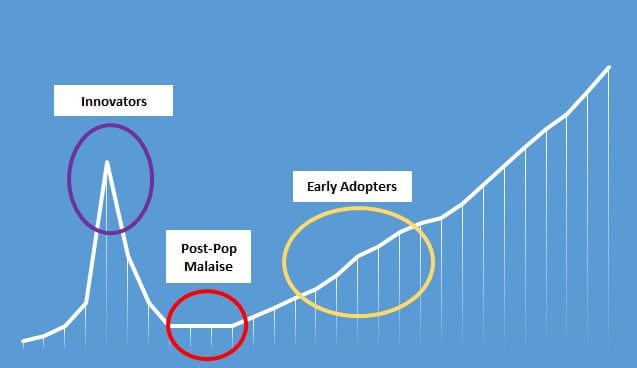](https://eddiesoehnel.com/wp-content/uploads/2016/08/product_adoption_curve_2.jpg)
|
||||
|
||||
A company comes out with a new product/service and sees a pop in their growth that comes from enthusiastic supporters – also called innovators when we look at in context of the classic [product adoption curve](https://www.google.com/search?q=product+adoption+curve&rlz=1C1CHBF_enUS704US704&oq=product+adoption+curve&aqs=chrome..69i57j0l5.1766j0j4&sourceid=chrome&ie=UTF-8).
|
||||
|
||||
That follows a defined deflation with a longer path to growth, if at all. Or, it could be a mild deflation off the initial top and settle into a range without any breakout on the upside. If there is growth, it is much slower and purchases from early adopters takes time.
|
||||
|
||||
What is going on in my experience is that the new company is getting its initial pop from its enthusiastic supporters or innovators in the category; it is selling on their emotions and tapping into their enthusiasm, but is never able to find its footing in appealing to the broader market that does not experience the same level of emotion or enthusiasm. This can lead to slow growth, no growth or a decline, all of which can lead to its demise.
|
||||
|
||||
Either the owners get tired, they are not able to raise more money, competitors come in and take over, or they just fail because of declining sales.
|
||||
|
||||
How does a company avoid this post-pop malaise?
|
||||
|
||||
I would argue that a company is better off understanding as early as possible how to appeal to the broader market. Instead of spending dollars to appeal to the innovators, spend to figure out who is the broader market (customer personas), how to sell to them (keywords, headlines, copy, marketing messages), and if they will actually purchase. The easy part is getting the innovators; the hard part is turning it into a real company with appeal to a broad enough market to power its growth and sustainability.
|
||||
|
||||
But, doesn’t early sales help generate cash flow? Well, maybe, but is it enough to help? Let’s take a look.
|
||||
|
||||
The worksheet copies below are just a real rough back-of-the napkin P&L to a successful crowdfund or innovator growth campaign.
|
||||
|
||||
[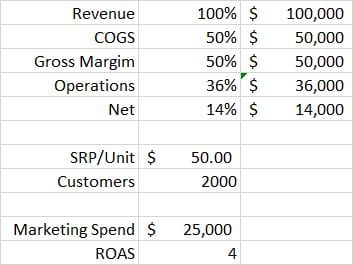](https://eddiesoehnel.com/wp-content/uploads/2016/08/crowdfund_financials_3.jpg)
|
||||
|
||||
[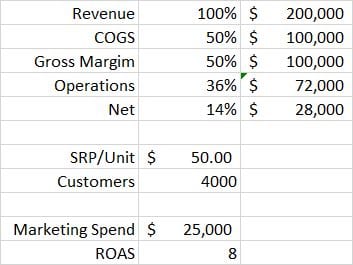](https://eddiesoehnel.com/wp-content/uploads/2016/08/crowdfund_financials_2.jpg)
|
||||
|
||||
Let’s say the product retails for $50, the marketing campaign costs $25K, and it nets 2000 customers, $100K in revenue, a net of $14K and an ROAS /MER(return on ad spend/marketing efficiency ratio) of 4. That is respectable, but not great. Great would be an ROAS OF 7 or more, which is really what you want when selling to innovators at this early stage.
|
||||
|
||||
Let’s say ROAS is 8, which means revenue would be 200K, and net is $28K.
|
||||
|
||||
Whatever variables you want to use in the model, the end result is still not a lot of net income, and I am being generous when I only have COGS at 50% and operations at 36%. Those are usually higher for startups.
|
||||
|
||||
How far will that net income go to power more growth? Maybe not the far.
|
||||
|
||||
That is why you may be better off to figure out how to appeal to the broader market.
|
||||
|
||||
And when you have nailed that with positive metrics and solid ROAS, come back to do your innovator/crowdfund phase for some early revenue and then continue straight into going after the early adopter phase with your proven campaign that you tested out earlier.
|
||||
|
||||
Less loss in momentum from your successful crowdfund campaign and maybe even a heck of a lot better crowdfund results because you have previous learnings that you can apply.
|
||||
|
||||
Want to download the spreadsheet model in this post?
|
||||
|
||||
[Click here to download the worksheet for this post](https://eddiesoehnel.com/CrowdfundIncomeStatement).
|
||||
@@ -0,0 +1,21 @@
|
||||
# When multiple growth opportunities distract – part II
|
||||
|
||||
Source: <https://eddiesoehnel.com/when-multiple-growth-opportunities-distract-part-ii/>
|
||||
|
||||
Tags: Fundraising, growth, mission, purpose, vision
|
||||
|
||||

|
||||
|
||||
[I wrote a post on this topic](https://eddiesoehnel.com/when-multiple-growth-opportunities-distract/ "When multiple growth opportunities distract") and want to add a few additional thoughts.
|
||||
|
||||
I am working with three different businesses who are seeing great growth opportunities. Two have recently been approached by investors, even though neither is raising money at this time. All three have too many opportunities coming at them and are trying to focus on the best ones.
|
||||
|
||||
Problem is, its difficult to compare one opportunity against the next. And, how does one define best? Is it most revenue, most net income, most customers…? One looks like it will bring in short-term cash and help improve the P&L, but another will add more long-term strategic value. Or, there are two others that look like good opportunities, but each requires research, development and market testing, but there are only enough resources to pursue one. Which one to select?
|
||||
|
||||
I am all for running spreadsheet analysis on opportunities and seeing what the numbers say. Projecting revenue and expenses and using discount rates to forecast risk…I love all that! But before it can happen, I like to use more of the fuzzy stuff to analyze opportunities. By fuzzy stuff, I mean purpose, vision, mission and brand pillars.
|
||||
|
||||
- Purpose: What are my passions, interest and talents? How do they intersect for what God has in mind for my earthly life? Do these growth opportunities fit with my purpose?
|
||||
- Vision: Where do I want me and my business to be in 5 years? What are the general product/services offered, the markets/channels served, and the revenue and net that is feasible for me and my business? Do these growth opportunities help accomplish my vision?
|
||||
- Mission: How do I go about accomplishing my vision? What are my personal values that give me a set of rules for how I run my business. Do these growth opportunities violate my personal values?
|
||||
- Brand Pillars. These are like a unique recipe to a company that is made up of a set of ingredients. While the ingredients might be common, it’s their combination that makes the recipe unique. Do these growth opportunities violate my brand pillars?
|
||||
- Investment. If I plan to take on investment in the future, then I need to consider opportunities that will help me grow my revenue quickly, as that is one of the criteria investors use in due diligence. Do these growth opportunities provide me with fast revenue growth?
|
||||
+20
@@ -0,0 +1,20 @@
|
||||
# When multiple growth opportunities distract, which ones do you choose?
|
||||
|
||||
Source: <https://eddiesoehnel.com/when-multiple-growth-opportunities-distract/>
|
||||
|
||||
Tags: customer marketing sales growth distract
|
||||
|
||||

|
||||
|
||||
If you have many growth opportunities, that’s good, right?
|
||||
|
||||
Well, sort-of. The trick is focusing on the best opportunities and not getting too distracted.
|
||||
|
||||
Here’s what I suggest to pick the right ones:
|
||||
|
||||
1. Figure out who is your customer – the really loyal ones. Develop a profile of who that is. Is that market big enough to really help grow your business? Can you build a solid financial footing (i.e. – revenue, repeat customers, manageable COGS, positive net income) with this specific customer group?
|
||||
2. Figure out the total value that you can provide to this loyal customer. It might be more than just your product. Think about value add-ons to your core product or service, your mission statement, company practices and customer service. The goal is to create a comprehensive value offering that differentiates you from competitors, and delights and impresses your target market so much that they become loyal and repeat customers who give tremendous word-of-mouth advertising.
|
||||
3. How do you promote to this loyal customer? What’s your marketing messaging and marketing channels that would capture their attention?
|
||||
4. How do you sell to this loyal customer? What are the channels where they frequent and purchase?
|
||||
|
||||
Start there. Don’t get distracted by other potential customer groups or sales channels. Focus on that loyal customer base and do everything in your power to knock their socks off. The best customer is one that keeps buying from you, as it is probably far cheaper to keep a customer than gain a new one. When you are bigger with more resources, then you can branch out and take on other customer segments and growth opportunities.
|
||||
@@ -0,0 +1,43 @@
|
||||
# Which one of these start-ups would I join?
|
||||
|
||||
Source: <https://eddiesoehnel.com/which-one-of-these-start-ups-would-i-join/>
|
||||
|
||||
Tags: apparel, Apps, bagels, CU Denver, Fashion, MBA, restaurant, technology, vegan, vegetarian
|
||||
|
||||

|
||||
|
||||
I watched six start-ups from the MBA program at CU Denver pitch their ideas to a panel of judges and the audience. I love watching start-ups pitch their ideas, as its fun to hear presentations and I always walk away with new information and ideas about what others are doing. All six in this group gave great presentations. They were well rehearsed and there were no technology glitches. There was a seventh company who presented first, but I walked in at the end of their presentation, so am not including them in this post. Here’s a quick summary of each one with some of my own thoughts about their idea, followed by my pick of the winners and how the judges picked. Then, I’ll weigh in on which one I would join, if given the opportunity.
|
||||
|
||||
1. Mobile application development. This company has developed several mobile applications that were selling and driving revenue. It’s strategy is to develop apps for other companies for a reduced cost in exchange for a revenue cut. The company wants to become what it calls a private equity fund for apps by working on many apps in hopes of a few in its portfolio hitting it big. I liked that the founders have revenue and some proof of concept with several apps. It felt to me like they wanted to become the Amazon of app development, taking on all forms of apps in many different markets. I would prefer to see them focus and go deep in understanding one or two markets.
|
||||
2. Restaurant technology platform. I was impressed with the deep research that the founders completed with a few local restaurants to determine how technology can be leveraged to improve the restaurant experience for customers. I liked their ideas and if implemented, could do some pretty cool things for restaurants. However, I think they were biting off too much at once. It would be better for them to solve one big problem that is easier to implement rather than try to sell a complete technology suite to a restaurant. Down the line, after they have customers, traction and revenue, they can layer on different services and modules to their platform to solve other problems for restaurants.
|
||||
3. Bagel restaurant. This founder had really done his homework for creating authentic New York bagels in Denver, which included developing a patent-pending process for creating New York city water in Denver. Apparently, New York city water is an important ingredient in creating authentic New York city bagels. I think this founder has a hit on his hand. His plan is to grow with company-owned bagel restaurants. While I like his idea a lot and think he will do very well, I am a grow-fast-grow-big start-up guy, and this founder did not want to grow fast or grow big.
|
||||
4. Online fashion curator balancing between style and sustainability. I don’t know much about the fashion industry, but from my limited knowledge, it feels like it’s getting closer to being transformed by the sustainable movement. This start-up aims to be an online high-end curator of women’s clothing fashion, balancing stylish clothing that is also produced sustainably. The founder has assembled an impressive team with deep experience in the fashion industry. They are swinging for the fences and if they connect, they will hit it big. I think the idea, team and timing is good for a home run hit. Hopefully, they will be able to raise the funding to get their shot.
|
||||
5. Vegetarian restaurant. The founders want to open a vegan/vegetarian restaurant, with the possibility of franchising the concept in the future. There are some excellent existing vegan/vegetarian restaurants in the Denver-metro area, but I don’t see them opening additional locations or franchising their concepts, so I wonder if the market can support such a growth plan.
|
||||
6. Health messages on clothing products. This idea wants to develop a women’s bra that would include messages on the clothing for helping detect breast cancer. The promotional model was to replicate the Toms Shoes model of giving away one free item to people in third world countries for every item purchased in the U.S. My problem with this model is that the value seemed to be in the messaging on the product, but not in the product in the form of improved features/functionality. Also, as one of the panelists pointed out, many other companies have tried or are trying the Tom’s model with no success.
|
||||
|
||||
My picks:
|
||||
|
||||
1. First place: Online fashion curator;
|
||||
2. Second place: Bagel restaurant;
|
||||
3. Third place: Restaurant technology platform.
|
||||
|
||||
I like to see ideas that solve real pain and its seems to me that these three do that, while the others do not. I was a bit torn between who would take first place – the online fashion curator or the bagel restaurant. I chose the former because I am a grow-fast-grow-big start-up junkie, which is what this prospect wants to do. The bagel restaurant took second place because I think it’s a solid, well-research idea that will do well. I like third place and while it could be huge, their idea has not been baked enough compared to the other two.
|
||||
|
||||
The judges picks:
|
||||
|
||||
1. Tie for first and second: Online fashion curator and mobile app developer;
|
||||
2. Second place: restaurant technology platform.
|
||||
|
||||
I can see the judges picking the mobile app developer. Two of the judges were software/internet investors, so they are coming from a more biased position towards technology.
|
||||
|
||||
Which one would I join?
|
||||
|
||||
Not the restaurant technology platform. I spent almost 10 years in technology and worked on three different start-ups; four companies total, if you count the company I went to work for after selling my start-up to them. I love technology, but really don’t like doing software start-ups. There is so much money and so many smart people that I find it too hard to succeed. Plus, it moves so fast that its hard to keep up. You can do everything right with a tech start-up and still fail…there is too much of an element of luck that makes or breaks companies. I just don’t like those odds. Which is why I migrated to consumer products. But if you combine hardware with technology in a consumer product, that is interesting to me and I hope to do one someday.
|
||||
|
||||
So, how about the bagel restaurant? I love the concept and think it will be successful, but the founder wants to grow slow and not get big. If he changes his mind and wants to supercharge his growth by adding wholesale and retail channels, I would be really interested.
|
||||
|
||||
So that leaves the online fashion curator. What interests me about this company is:
|
||||
|
||||
1. Timing. Sustainability as a value differentiator for apparel may start to take hold in a big way.
|
||||
2. Fashion fascinates me. I am always amazed at how the industry can bring products from concept to market in such short-time frames, even with production and target markets spread half a world away. It would be fun to learn more how this is done.
|
||||
3. Great team. I like working with smart people. The founder appears to have put together a great team that has deep experience and intelligence for the industry.
|
||||
Reference in new issue
Block a user