added
This commit is contained in:
 eddiesoehnel committed
commit
6a34982699
245 files changed
+9080
No files matched your search
+18
@@ -0,0 +1,18 @@
|
||||
# A ballpark guide to relative sales of items by retail channel
|
||||
|
||||
Source: <https://eddiesoehnel.com/ballpark-guide-relative-sales-items-retail-channel/>
|
||||
|
||||
Tags: club, Drug, Grocery, mass, natural, retail, speciality
|
||||
|
||||

|
||||
|
||||
[YouTube video player 1](https://www.youtube.com/embed/CHc1d9BPr5Q?wmode=transparent&autoplay=0)
|
||||
|
||||
Assume sales of items by retail channel in units per week per retail door.
|
||||
|
||||
- Grocery: Baseline channel
|
||||
- Natural/Specialty: 2.5 x grocery
|
||||
- Drug: 1 x grocery
|
||||
- Mass: 10 x grocery
|
||||
- Club: 20 x grocery
|
||||
- C-store: 3 x grocery
|
||||
+17
@@ -0,0 +1,17 @@
|
||||
# Do most mega supermarkets charge $10,000+ one-time fees for newly registered suppliers?
|
||||
|
||||
Source: <https://eddiesoehnel.com/do-most-mega-supermarkets-charge-10000-one-time-fees-for-newly-registered-suppliers/>
|
||||
|
||||
Tags: slotting fees, tradespend
|
||||
|
||||

|
||||
|
||||
This is a [Quora](https://www.quora.com/Do-most-mega-supermarkets-charge-10-000+-one-time-fees-for-newly-registered-suppliers) question I was asked and here is my answer.
|
||||
|
||||
Yes, that is normal. Most major retailers charge up front fees, called slotting fees, some which can easily be high in the 5 figures.
|
||||
|
||||
You cannot look at slotting fees without considering the whole range of retailer tradespend requirements and terms, because most things can be negotiated and what you pay in tradespend is highly dependent on many factors.
|
||||
|
||||
You might be able to negotiate slotting fees down by shipping more units of free product to stores on opening order, higher marketing coop commitments, or offering other tradespend items.
|
||||
|
||||
But, you might not. In the end, you do not have much negotiating power as a new vendor. You often have to take what you can get, prove sell through over time and negotiate tradespend requirements down as time goes on.
|
||||
+27
@@ -0,0 +1,27 @@
|
||||
# Does it make sense for brands to have their own E-commerce teams (direct-to-consumer online) or leave it up to the retailers to sell the products online?
|
||||
|
||||
Source: <https://eddiesoehnel.com/make-sense-brands-e-commerce-teams-leave-upto-retailers-sell-products-online/>
|
||||
|
||||
Tags: direct-to-consumer online channel, online marketing, online sales, retail
|
||||
|
||||

|
||||
|
||||
I always have a direct-to-consumer online channel, and I always start that way and may or may not get to retail later. Here’s why:
|
||||
|
||||
1. Direct-to-consumer online is much more profitable than through retail. I always try to develop pricing so that I have at least a 30% net profit when selling D2C. Whereas with retail, at best I shoot for a 20% net profit, but that can still be difficult to achieve, especially with tradespend. And I never make money in the first year of retail due to additional charges imposed by retailers for new brands. I am better off building my D2C business to build sales and profits to afford retail.
|
||||
2. With D2C, you can start small, testing all elements of your product, from the product itself, to pricing and marketing message. You don’t have such wide latitude with testing in retail – actually, no latitude at all. You cannot play around with pricing at retail. You usually have to have a decent amount of inventory to support retail, so if your messaging is not right, it’s not a simple thing just to switch out packaging. With your own D2C operation, you can test sales with consumers and know if they repurchase or not. You cannot tell this with retail and it takes a long time (at least a year, in my experience) to determine if your product has legs in retail.
|
||||
3. If your product does not sell well, you get kicked out of retail, including having to purchase back product with potential for additional costs in reverse logistics. And, you risk not being able to come back. Better to test with direct sales to make sure you can sell.
|
||||
4. You really want to build your online channel because then you not only own the customer, but you can re-sell to them or hopefully, crosssell and upsell other products to the same customer.
|
||||
5. It is hard to get into retail. If you have prior sales though your direct-to-consumer online channel and can show repeat purchases, that makes it much easier to drive into retail and grow in this channel faster.
|
||||
6. Online e-commerce and marketing tools are becoming easier to use, more cost-effective and automated, so you may not necessarily need an e-commerce team, but might manage online sales with 1-person and outsourcing customer service and fulfillment.
|
||||
7. Retail in-store and online operations are still separated from a lot of retailers, and retailers are typically not good at online, compared to straight e-commerce companies. Further, retailers use legacy technologies and cannot move as fast as a small brand in their own e-commerce operation. Online marketing and sales tools are advancing at such a rapid pace that legacy and large companies cannot keep up, but small brands can adopt the latest tools much quicker.
|
||||
8. Having a retailer sell my product online only is not a long-term viable solution, in my opinion. Volume compared to in-store is quite low, again, in my experience. If all a retailer would do is sell my product online, then I would decline. The action is on shelf. But online can be a path to shelf.
|
||||
|
||||
All that said, as much as I like online, selling in retail stores is highly advantageous after a brand has proven itself online, and I usually recommend it:
|
||||
|
||||
1. Retail still commands 90% of consumer product sales in the U.S., so huge sales can be made in this channel
|
||||
2. It is a different channel for capturing customers.
|
||||
3. If sold on shelf, retail tends to entrench brands better than online. Online customers are more fickle, switching brands more quickly.
|
||||
4. There is more competition online than in stores.
|
||||
5. Consumers trust a brand more if it is sold in major retail, so that ends up benefiting the online operation
|
||||
6. M&A activity is still focused on brands that sell on shelf, not purely online, at least in my experience.
|
||||
@@ -0,0 +1,53 @@
|
||||
# Get your product and company ready for retail CPG
|
||||
|
||||
Source: <https://eddiesoehnel.com/get-your-product-and-company-ready-for-retail-cpg/>
|
||||
|
||||
Tags: CPG, retail, retail trade, Wal Mart
|
||||
|
||||

|
||||
|
||||
This post is a basic guide to get your product and company ready for retail CPG.
|
||||
|
||||
**Finance**
|
||||
|
||||
Retail takes cash. You will have to invest in product inventory that won’t realize cash very soon. Expect to pay upfront shelf fees to get your product on shelf. It could be a combination of cash, free product to stock stores or discounts on your opening order. General retailer terms range from 15 days to 60, but can be longer for new products. Some retailers will only pay you when the product rings through the register, called pay on scan. You can eventually get on normal terms when your product shows movement off the shelf.
|
||||
|
||||
Retailers have trade spend fees, which in addition to shelf fees or opening order discounts, can include: new store fee, which is a cost or free product to stock new stores that the retailer opens; product damage fees, which may be a percentage of sales, and cooperative marketing fees, which is a percentage of sales the retailer withholds for in-store or circular advertising expenses. Also expect to pay for periodic promotions and additional in-store or circular advertising. Retailers like buy one get one (BOGO) promotions; or, 2 for 3, or 3 for 5 or 8 for 10…and other combinations.
|
||||
|
||||
A few other finance items to expect: product liability insurance is a requirement and coverage amounts will depend on your product; if your product does not do well and gets booted off the shelf, there will be costs to buy product back from the retailer or support steep markdowns on close out sales.
|
||||
|
||||
**Operations and Logistics**
|
||||
|
||||
If you are a small company, you will most likely want to outsource this function to an experienced partner who already does this. They will have the experience for dealing with the myriad of packaging, routing and shipping requirements that each retailer has. However, be prepared to have your own small fulfillment operation in your office to send samples to brokers and retailers.
|
||||
|
||||
More and more retailers are moving to EDI (the largest are already there), which means that orders and logistics information are all electronic. Your warehouse may not necessarily need to be EDI, but at a minimum you must. There are many third party EDI providers that can get you setup so that you can electronically receive and communicate orders and information with the retailer.
|
||||
|
||||
You will need an accounting and inventory system that can handle retail. There are many packages available and some are hosted securely online. It is common for the bigger more established warehouses and other partners to be able to integrate data flow into your hosted data system, which is recommended.
|
||||
|
||||
Make sure your cases are configured properly to support retailers. How many units per case? How many inner cases, or “inners” per case. A retailer will likely send your case to a distribution center (DC) and then break it open to parcel out the inners to specific stores. Configure it to meet requirements for your most important retail customers. This data would be included in your product specifications sheet that retailers would use. Additional data would be the specific product dimensions, UPC and GTIN numbers and pallet information. Triple check this sheet to make sure all data is correct before it goes to retailers. I’ve seen how easy it is to get things mixed up and it can be very difficult to correct once the retailer has the data loaded into their systems. Depending upon the retailer, you may be required to utilize online product data synchronization services that are becoming the norm in retail. Retailers synchronize their systems to these data warehouses. These services require annual subscriptions and provide templates to load and manage product specifications.
|
||||
|
||||
What is your sustainable resources strategy? Wal Mart has taken the lead in this area by using its leverage to get manufacturers to adopt operational practices that promote resource conservation and minimize environmental impact. Even if you do not plan to sell to Wal Mart, retailers will follow.
|
||||
|
||||
**Retail Shelf**
|
||||
|
||||
It goes without saying, but I will say it anyway. Do your research. Who are your competitors and substitutes? What are your features and benefits and positioning relative to them and why? Who are your target customers? What kind of product sales movement can you expect? What is minimum product sales movement required by the retailer? Can you get Nielsen or IRI data to see competitor and category movement sales? When do retailers do their product reviews and shelf resets? What is the best way the retailer likes to work with its vendors – through brokers or meetings at specific trade shows, through email only? Many of these questions and data take primary research by visiting retail locations and secondary research through industry trade sources and retail brokers.
|
||||
|
||||
Your retail price is a critical piece of research that you need to get right. You want your price to be competitive on shelf to other products or substitutes but you also you want to maximize the retail price. You want to make sure you have good profit margins on the product as well as providing enough margin for the distributors and retailer. Leave room in there so that you can absorb future expense hits, such as discounts and promotions that you will be likely be required to run with the retailer, COGS increases, and the like. Note that just because your costs rise does not mean you can easily pass those on to retailers.
|
||||
|
||||
In general, it is getting harder to make it on shelf. Product ideas and manufacturing capabilities and capacities are seemingly endless, but the real estate in a store is not. You will have to compete for space with direct or substitute competitors. Further, retailers are creating space for their own brands, pushing out traditional consumer packaged good manufacturers. Retailers make more money with their own brands because they keep the margin in profits that a CPG company would have.
|
||||
|
||||
A competitive advantage over another product will not always get you in. You may have to prove that you can increase the number of consumers that buy in the store category.
|
||||
|
||||
Usually your product will define where you will be on shelf. But if you can get space in a higher traffic category, consider positioning your product to fit there. However, this could backfire if you are not careful. A higher traffic section might also have much higher shelf-movement requirements, and if your product won’t move off the shelf, you will no longer be in that retailer.
|
||||
|
||||
Make your package stand out and differentiated from competitors. Don’t underestimate the ability to market on the shelf. However, you want to be careful to differentiate within the dimensions normal for the category. That is, don’t size the packaging where it won’t fit or present well on the shelf. Think about using [QR codes](https://en.wikipedia.org/wiki/QR_Code "QR Code") or messaging on your package that drives consumers to web content via their smartphones while they are in the retailer: Content can include testimonials, Youtube videos about the effectiveness of your product, or other information that motivates a purchase.
|
||||
|
||||
If given the opportunity, take advantage of displays and other in-store signage. End-caps, shelf displays, posters and the like are a great way to increase your real estate space in addition to being on shelf. They also make great in-store banner advertisements. There will be increased costs, but can be worth it.
|
||||
|
||||
One thing to be aware of is if your product is so new and different that it does not fit into one category but straddles across several categories. In this case, the target consumer sees risk in buying something that is not normally found in the category that they buy from, making a purchase more difficult. Or, there are features and benefits not important to them, so they pass on a purchase. In this case, sampling and in-store promotions are critical to get consumer trial, which can get very expensive.
|
||||
|
||||
**Other Items**
|
||||
|
||||
If you get into retail, hopefully you already have an additional product in the works or different variations of your flagship product (flavors, sizes, colors, etc) to follow. If you want to grow, you need to capture more shelf space, and that comes from more products. Consumers can also tire of your product, so its important to offer variation, improvements or new products to compliment your brand. Unfortunately, this needs to happen faster than you might think. My rule of thumb is when I launch a product in retail, I better have the next one ready to go so if my brand really takes off, I can capitalize on the momentum. Aggressive innovation is also a good competitive strategy.
|
||||
|
||||
Retail is not hard, but there are many details to manage, so execution is important. You want to appropriate the staff, time and management tools to keep a close eye on your expenses, especially trade spend, retailer charges, the cash tied up in inventory and your logistics costs A trick I have seen retailers use is to continue taking discounts on shipments that was limited to the opening order shipment only. Or, they fine you for early or late shipments when you have documented proof that you were on time to make the delivery. Items like these can get out of hand quickly if you do not watch them carefully. Regardless of your product’s success, expenses can kill your company.
|
||||
+44
@@ -0,0 +1,44 @@
|
||||
# Growing by bypassing online sales and instead, just selling through retail (even though I dislike doing it this way)
|
||||
|
||||
Source: <https://eddiesoehnel.com/growing-bypassing-online-sales-instead-selling-retail-even-though-dislike-way/>
|
||||
|
||||
Tags: competitors, direct-to-consumer, Pricing, retail
|
||||
|
||||
|
||||
|
||||
Why I dislike launching a product direct in retail, instead of selling online first, and some tips if I can only launch a product this way.
|
||||
|
||||
[YouTube video player 1](https://www.youtube.com/embed/b3ew-wNapfE?wmode=transparent&autoplay=0)
|
||||
|
||||
## Video Transcription
|
||||
|
||||
I really dislike going straight to retail or through other resellers.
|
||||
|
||||
- Sell online direct to consumer first because you can start small and test your messaging, pricing and acceptance of product;
|
||||
- You want to have these items really dialed in before retail because you cannot play around with pricing, and it is expensive and time consuming to switch out packaging;
|
||||
- Plus if you don’t get good traction in retail, you will get kicked out and may not be able to come back;
|
||||
- Selling D2C is much more profitable and can help establish profitability to afford retail, which is rarely profitable in the first year.
|
||||
|
||||
But, I am currently working on a product that is not a good product for shipping direct to consumer. It gets damaged easily and can lead to more product returns and disgruntled consumers.
|
||||
|
||||
I can’t do smaller pack sizes for this type of product.
|
||||
|
||||
I might design packaging to help prevent this, but that may be cost prohibitive.
|
||||
|
||||
So what do I do?
|
||||
|
||||
- Do as much research online to understand what consumers like and don’t like with existing products;
|
||||
- Research this through product reviews and in online discussion groups and forums around your product category;
|
||||
- Know what pricing currently sells;
|
||||
- Look at the copy on competitors’ websites and packaging to see what they are doing;
|
||||
- Hard to know which competitors are doing well. If you know who is doing well with sales, you can model their copy, pricing;
|
||||
- You can find this out with some fuzzy accuracy for some brands via tools like SimilarWeb, but it’s not perfect;
|
||||
- Really know how your product is positioned against competitors so you have some very clear and hard-hitting differentiation when approaching retailers;
|
||||
- Have a marketing plan and budget in place;
|
||||
- Without sales history your differentiation and marketing budget will help sell into retail.
|
||||
|
||||
There is also been no innovation in this particular category I am targeting with this product, so I can sell to retailers how my product is innovative (actually, it is) and how the category needs an innovator like me to grow (the category has been flat).
|
||||
|
||||
The other products are also made with chemicals, whereas mine is not, so that is also a potential selling point to a retailer.
|
||||
|
||||
Also, the company behind this product has ample funding, so they can afford to do it this way and absorb setbacks if their product, pricing or packaging is not right in retail. But if they had no cash, then I would absolutely not recommend this route.
|
||||
+19
@@ -0,0 +1,19 @@
|
||||
# How are FMCG profit margins distributed across the supply chain?
|
||||
|
||||
Source: <https://eddiesoehnel.com/fmcg-profit-margins-distributed-across-supply-chain/>
|
||||
|
||||
Tags: broker, Co-manufacturer, fmcg profit margins, retail price, SRP, tradespend, Transportation, Warehousing
|
||||
|
||||

|
||||
|
||||
Working from SRP (Suggested Retail Price) backwards, I see the following for FMCG profit margins:
|
||||
|
||||
1. Anchor price/SRP: Start with SRP to your most expensive channel – which represents your top-most anchor price. The markup from you as vendor to retailer is 50-60% to the specialty/top priced retailers. For non-specialty channels – like drug, mass, grocery, club, figure 45%, 30%, 35% and 14% respectively.
|
||||
2. Tradespend: But, you have to figure an additional 13.5% average of your wholesale price in tradespend fees that you pay to the retailer (payment terms, damaged product allowances, in-store marketing allowances, etc). That is average across all channels. It will be highest in drug and lowest in club/mass.
|
||||
3. Broker fees: If you use them, then it will be as low as 5%, or could be as high as 12% of your wholesale price, depending upon the channel and if you are a startup or new brand, they will be on the high side.
|
||||
4. Distribution: I assume 30% of wholesale price, but that may come down depending on the channel.
|
||||
5. Co-manufacturer: If you manufacturer through a co-packer (you contract it out), assume they want a 20% net profit margin. So, take your cost of goods sold (COGS) and figure 20% of that is net profit margin to the manufacturer (product and packaging).
|
||||
6. Transportation: Assume 5-7% domestically of your wholesale price, but this is if you know how to optimize your logistics, otherwise, assume 10-12%. For international shipping, I assume another 3%.
|
||||
7. Warehousing: assume 1% of your wholesale price.
|
||||
|
||||
[Click here to download the worksheet for this post](https://eddiesoehnel.com/COGSImpactRetail).
|
||||
@@ -0,0 +1,34 @@
|
||||
# How are wholesale prices determined?
|
||||
|
||||
Source: <https://eddiesoehnel.com/how-are-wholesale-prices-determined/>
|
||||
|
||||
Tags: COGS, competitors, Margin, net income, Pricing, SRP, Wholesale Price
|
||||
|
||||

|
||||
|
||||
This is a [Quora](https://www.quora.com/How-are-wholesale-prices-determined) question I was asked to answer. Here is my answer.
|
||||
|
||||
There are many different ways to set wholesale prices and anyone that does that will probably have their own nuances and rules of thumb they follow.
|
||||
|
||||
For most product categories, consumers will compare you to competitive offerings, as they need a point of reference to gauge the value to them. Assuming that, here is my process.
|
||||
|
||||
1. Researching competitive offerings, both online and in retail, and segment by channel (specialty/high end channels vs mass/volume-base channels and everything in between).
|
||||
2. Document all quantitative factors including anchor price, sales prices, serving sizes, product sizes, etc.
|
||||
3. Document qualitative factors: in particular benefits – what value will my user / customer get out of using this; features – what part of my product lets the user / customer get that value; outcomes – what’s the end result the user wants to achieve with the product/service); pain/needs/desires satisfied.
|
||||
4. Identify the target customer/segments.
|
||||
5. Audit competitor advertising. What they say, how they say it, and their look and feel in websites, packaging and advertising, including where they advertise, communicates value, which is reflected in price.
|
||||
6. List out your benefits, features, outcomes, pain/need/desire satisfied in a table relative to competitors.
|
||||
|
||||
With all this data, you want to get a sense for where along the value spectrum you fall relative to competitors and what would be your top-most anchor price (your suggested retail price – SRP – that a consumer would pay for the product).
|
||||
|
||||
Next, develop a profit and loss statement based on your top-most anchor (SRP), with channel margin, then wholesale prices, cost of good sold (COGS), operating costs, then your net income (top to bottom flow). Everything flows to net income, so I set my target net income percentage that I want and then roll up from there.
|
||||
|
||||
You lay this out by channel – so each column is one channel, starting with your direct-to-consumer sales, then sales to specialty channel, drug, grocery, etc, etc. When you do it this way, you can see in one screen view all the important metrics to your pricing and your business. And you can see with much more clarity where things might break in your profit and loss statement.
|
||||
|
||||
If, for example, my net income drops below my threshold, it is because my COGS is too high, or my SRP is not high enough, but maybe I cannot charge a higher SRP because my benefits/features, etc do not allow me to do that. Or, maybe my pricing breaks in a specific channel based on the channel required margin, so I may need to go back to adjust my SRP. It is all a very iterative process.
|
||||
|
||||
I spend a lot of time on pricing and this model to get it right. But even then, I won’t know until I get into the marketplace. So, I always start selling online where I can much more easily adjust my pricing in my testing. I cannot do this if selling through resellers. I want my pricing to be set before I go to resellers.
|
||||
|
||||
A few other things to consider in setting price is whether your product can be considered a status symbol; if so, then a premium price may be justified. Is it a scare product? These all can be used to adjust pricing up.
|
||||
|
||||
I would no try to compete on price unless you can defend it successfully in the marketplace. Competing on price almost always means the largest competitor that can do the most volume and get economies of scale, will win. Unless that is you, better to position elsewhere.
|
||||
+23
@@ -0,0 +1,23 @@
|
||||
# How big of a deal is securing a purchase order from Urban Outfitters
|
||||
|
||||
Source: <https://eddiesoehnel.com/how-big-of-a-deal-is-securing-a-purchase-order-from-urban-outfitters/>
|
||||
|
||||
Tags: retail, Urban Outfitters
|
||||
|
||||

|
||||
|
||||
*This is a [Quora](https://www.quora.com/Retail/How-big-of-a-deal-is-securing-a-purchase-order-from-Urban-Outfitters?__snids__=145229718&__nsrc__=4) questions that I was asked to answer. My answer is below.*
|
||||
|
||||
In general, I think it is probably a big deal, since UO is a large and recognized apparel retailer. But I am not specifically an apparel expert, so that real answer is, “it depends”. But here is how I would go about answering that question.
|
||||
|
||||
How big is the PO and for how many stores? Is UO placing a small PO to test merchandise sales in a small group of stores? If so, then it might not be a big deal, especially if this is the way that large apparel retailers test new products.
|
||||
|
||||
If UO is placing a large PO for a large number of stores, then that would be a bigger deal to me because it might show that they believe in the vendor enough to be making a commitment to stock that many stores. That would certainly add more weight when approaching other apparel retailers to also stock the vendor.
|
||||
|
||||
How many SKU’s are included in the order. If it’s several product lines and SKU’s within each line, then that carries more weight than a retailer ordering 1 or 2 SKU’s only. The more shelf space a brand can capture, the more it indicates that the retailer believes in the vendor and what their products can do for the retailer.
|
||||
|
||||
Where will the product be merchandised? Is it in an attractive shelf location with good foot traffic that is eye-level? Or, is it on the bottom of the shelf in a sleepy category of the store?
|
||||
|
||||
Does UO have good recognition withing the apparel retail industry?. For example, in food, there are many channels (club, mass, grocery, drug, etc). The grocery channel includes many large and small grocers. Some of the large and well-run grocers, such as Kroger, carry more weight in the industry and if you are a food vendor, you generally want to sell to Kroger. I would place more weight on a vendor that sells to Kroger chain-wide than say SuperValu, which is not as good a grocer as Kroger. Same goes with CVS/Walgreens vs Rite Aid. The former are better drug retailers than Rite Aid. Selling to these retailers might give the vendor more leverage when approaching other “A” retailers, like Costco, Walmart, Target, etc.
|
||||
|
||||
Finally, what is the financial condition of UO? Will they be able to pay the vendor? Or, are they just ordering merchandise based on lowest cost and best terms and not on the vendor’s brand strength?
|
||||
+113
@@ -0,0 +1,113 @@
|
||||
# How can a local retail store survive, or prosper, in the age of superstores and the Internet market?
|
||||
|
||||
Source: <https://eddiesoehnel.com/can-local-retail-store-survive-prosper-age-superstores-internet-market/>
|
||||
|
||||
Tags: Amazon, customer acquisition, niche, profit margins, reseller, retail, retention marketing
|
||||
|
||||

|
||||
|
||||
This is a [Quora](https://www.quora.com/How-can-a-local-retail-store-survive-or-prosper-in-the-age-of-superstores-and-the-Internet-market/answer/Ed-Soehnel) question I was asked and here is my answer.
|
||||
|
||||
I don’t work in retail, but sell to retailers, so I can only talk from this perspective. In addition, while I predominantly sell direct-to-consumer with my products, with one of my companies, I have location-based sales that while not pure retail, is a hybrid of sorts.
|
||||
|
||||
My suggestions are as follows:
|
||||
|
||||
### Product selection
|
||||
|
||||
Passionate Market Niche
|
||||
|
||||
You want to focus on a tight niche of customers who are passionate about your product category. It is a lot easier to interest people who have an emotional connection to a product category.
|
||||
|
||||
For example, in one of my companies, we sell high quality raw dog food. Raw dog food is hard to purchase in general because it is such a small subset of the entire commercial dog food market. It must be frozen, which adds a lot of cost to transportation and storage, and there is the false stereotype that handling or feeding raw dog food is not safe due to the pathogens in raw meat. And, most vet doctors do not believe in raw, so the same customer usually has to find a different vet who does support raw, and there are not as many of them.
|
||||
|
||||
As a result, raw dog food is only of interest to a very small niche of dog owners who really care about the quality of the food they feed their dogs, are willing to pay for the extra cost and the added inconvenience of having to purchase it from non-traditional retailers who carry the brand and/or selection they want, have the freezer storage available at their home to keep frozen raw dog food, and go to a non-traditional vet doctor who support raw.
|
||||
|
||||
A lot of work, but for those that do, this means they are passionate dog owners. These kinds of customers are less concerned about cheap price and more concerned about buying the brand and products that meet their needs. This is a perfect niche for us.
|
||||
|
||||
Sales Volume
|
||||
|
||||
You want to focus on niche markets that the large resellers will not bother with because they are about sales volume, which means mass market products, and not niche products that have too low of a sales volume for them to make money. But for a small retailer, there is plenty of volume to sell into this niche.
|
||||
|
||||
Higher AOV
|
||||
|
||||
You want higher priced products, where you will need less traffic to make revenue and net income sales.
|
||||
|
||||
For example, compare your average order value (AOV) of $35 to $250. Assuming your profit margin is the same (the percent of your profit divided by your revenue), you need 7-times more traffic to make the same profit. Or, you need 7-times more sales to make the same profit.
|
||||
|
||||
For example, our raw dog food is a high-priced product, so we do not need a lot of customers to meet our sales goals.
|
||||
|
||||
Maybe you sell a lot of lower priced products, but, on average, your order value is higher than $200. That is OK. It’s when your AOV is low that it makes it harder for you to survive.
|
||||
|
||||
The exception is if your location is in a very high traffic area and where people are prone to shop and spend.
|
||||
|
||||
Unique Products
|
||||
|
||||
Small retailers may be able to outshine the larger ones by unearthing unique products from small vendors.
|
||||
|
||||
Again, large resellers are all about volume. They small vendors cannot meet their volume needs, so that is where you can make a niche for yourself.
|
||||
|
||||
Don’t use the argument…”Support me because I am small”
|
||||
|
||||
I do not believe the argument small retailers make to support small business by buying from us, not them, when it is a commodity product that is cheaper from the larger sellers.
|
||||
|
||||
That argument is falling flat on consumers who in general are always looking to save money when the same product can be purchased elsewhere for less.
|
||||
|
||||
You have to offer value for the customer’s money and time. If someone else offers the same value cheaper, then you are fighting a losing battle, because eventually they will switch to save money,
|
||||
|
||||
### Increase convenience and reduce friction
|
||||
|
||||
There is no reason why a small retailer cannot have an online store with shipping options. It is easy and cost-effective to implement this technology for any size company.
|
||||
|
||||
Technology costs have continued to drop, while sophistication has continued to increase, making it relatively cheap and easy to set up a direct-to-consumer operation.
|
||||
|
||||
I use [WordPress](https://wordpress.org/) with the [Woocommerce](http://woocommerce.com/) shopping cart for all of my businesses. These are leading technology platforms, free to install, which are well supported and used by a large number of website worldwide, so they will likely stay relevant.
|
||||
|
||||
Another excellent platform for small businesses is [Shopify](https://www.shopify.com/), although I much prefer Woocommerce because it integrates with WordPress and I have customized it highly to fit my needs. I do not know how much you can customize Shopify compared to Woocommerce.
|
||||
|
||||
One of Amazon’s biggest features, next to low prices and selection, is that it has reduced the friction to purchase with easy checkout and fast shipping.
|
||||
|
||||
Consumers want convenience and less friction in their lives.
|
||||
|
||||
It is a natural fit for a small retailer to offer online purchasing and shipping because they already have the locations in which they can maintain inventory and process shipments. And, they have an advantage in that since they operate locally, they can probably deliver faster.
|
||||
|
||||
Many hyperlocal options continue to emerge to allow fast delivery to consumers, whether that is doing it yourself (which is what I do for one of my businesses), hiring a delivery service or using the postal service. In the future, autonomous driving vehicles could create a significant advantage for local businesses. You want to be positioned to take advantage of that when it comes.
|
||||
|
||||
### Customer service through product knowledge
|
||||
|
||||
Product knowledge is an area difficult for larger resellers to leverage, but not so with small resellers. Most small resellers get into the business because of a passion and knowledge for the category, and some consumers need this kind of help.
|
||||
|
||||
Resellers can easily create their own content around products that they can publish on their website, distribute in emails to their customer base, through direct mail, or at their location through printed handouts.
|
||||
|
||||
### Marketing acquisition and retention
|
||||
|
||||
The more you know about your individual customers, the more you can segment the marketing campaigns to them through email, direct mail and when they come to your store, you can use this knowledge to offer them specific offers or value based on their past purchases. All this takes a database of some kind, but there are so many on the market, including out-of-the-box contact management and CRM systems to start using now.
|
||||
|
||||
The common data to collect on customers is their transaction history. That alone helps to segment customers to create unique marketing to them. Segments can include your top 20% by lifetime spend, your frequent buyers, your one-time or low lifetime spend buyers, and everything in between.
|
||||
|
||||
But if you have a more customized database solution like I do, you can append demographic data purchased from third parties. I am also collecting psychographic data based on my own interactions with customers and use this data when I segment my marketing campaigns to them.
|
||||
|
||||
I went the route of architecting my own relational database and having a developer build it for me. I use the [Knack](https://www.knack.com/) database platform. But, this was surprisingly inexpensive to do and is very inexpensive to maintain. All of my e-commerce data, customer data (contact information, demographic data I append from external sources and psychographic data that I am collecting) and marketing campaign data gets funneled into my database. I also added an inventory management solution to manage all of my product inventory
|
||||
|
||||
With this data collection, there is no reason why a small reseller cannot use online marketing to target their customers, given the geographic targeting capabilities of platforms.
|
||||
|
||||
All the major ad platforms have made it easy for any one to advertise on their network and use their systems to create ads.
|
||||
|
||||
There is no reason why a small reseller cannot use custom audience marketing, email and direct mail marketing to retain their existing customers. These methods are effective and relatively inexpensive to use and operate.
|
||||
|
||||
List email systems, like [Mailchimp](http://mailchimp.com/), which is what I use, are easy to set up, free in some cases and offer advanced capabilities to scale.
|
||||
|
||||
I also use direct mail. If you ship your own packages, then direct mail is easy to add-on.
|
||||
|
||||
### Offer an experience
|
||||
|
||||
Small resellers have the advantage of creating a unique store experience and selling environment that makes it interesting for consumers to visit. This includes layout, decoration, and offering events. Retail is becoming as much about buying as it is about experience. Look at some major retail chains like REI, with their demo areas for new products, climbing walls, coffee shop, etc.
|
||||
|
||||
We do production from our farm, so we have days in which we invite our customers to visit the farm with their families and dogs and hike our property and trails. This not only helps us sell, but provides a different experience for our customers.
|
||||
|
||||
### Summary
|
||||
|
||||
I think a major hindrance to implementing the above is the thinking that the technology to implement the above is too expensive or requires special expertise.
|
||||
|
||||
That is no longer the case, as technology has advanced and costs to implement have dropped, making it very cost-effective for even the smallest reseller to use advanced technology systems to market and sell.
|
||||
|
||||
And since online has advanced in the ability to target niche markets, small resellers have more capabilities to find their ideal customer.
|
||||
+43
@@ -0,0 +1,43 @@
|
||||
# How do I convince an established distributor to distribute my newly launched product when he already has many successful products?
|
||||
|
||||
Source: <https://eddiesoehnel.com/convince-established-distributor-distribute-newly-launched-product-already-many-successful-products/>
|
||||
|
||||
Tags: distributors
|
||||
|
||||

|
||||
|
||||
This is a [Quora](https://www.quora.com/How-do-I-convince-an-established-distributor-to-distribute-my-newly-launched-product-when-he-already-has-many-successful-products/answer/Ed-Soehnel) question I was asked and my answer is below.
|
||||
|
||||
These are the major considerations when selling to distributors, resellers or retailers.
|
||||
|
||||
### History/Sales Results
|
||||
|
||||
Demonstrate prior sales results of your product either direct to your consumer, or through other distributors, resellers or retailers. You want to prove that your product sells.
|
||||
|
||||
### Marketing
|
||||
|
||||
Demonstrate prior marketing to help drive sales of your product and have a commitment to continue to market.
|
||||
|
||||
If you can demonstrate prior marketing, then at some level, it must be working, otherwise you would not be doing, and this can help convince a distributor, reseller or retailer that you are serious and have a history to prove it.
|
||||
|
||||
### Differentiation
|
||||
|
||||
Show the distributor, reseller or retailer how your product fills a hole in their category or current offering.
|
||||
|
||||
Maybe your product appeals to a different demographic niche that might help the distributor, reseller or retailer better capture those buyers.
|
||||
|
||||
In the absence of sales results or marketing history, differentiation might be enough to help get you in.
|
||||
|
||||
### Terms and Tradespend
|
||||
|
||||
Offer better pricing and support through tradespend to the distributor, reseller or retailer.
|
||||
|
||||
I have found this alone will not do it, but it can help close the deal if I have the above 3 in place, or some combination of the above 3 in place.
|
||||
|
||||
I cover more about tradespend [here](https://eddiesoehnel.com/what-is-tradespend/).
|
||||
|
||||
### Operations
|
||||
|
||||
Have you been in business for awhile to prove to the distributor, reseller or retailer that you have experience running your business and can adequately meet their volume demands?
|
||||
|
||||
They need confidence that you can be a good vendor over the long haul. It is time consuming and expensive for distributor, resellers and retailers to bring on new vendors, so they want someone with staying power.
|
||||
@@ -0,0 +1,11 @@
|
||||
# How do I find consumer product distributors?
|
||||
|
||||
Source: <https://eddiesoehnel.com/how-do-i-find-distributors/>
|
||||
|
||||
Tags: distributors
|
||||
|
||||

|
||||
|
||||
In the last week alone, I got asked multiple times about how to find consumer product distributors, so it merits a quick post.
|
||||
|
||||
My answer is to contact the retailers that you want to sell to and ask them who the distributors are that they work with. Some retailers prefer that you go through a distributor, and they will tell you.
|
||||
+20
@@ -0,0 +1,20 @@
|
||||
# How do I get my products into retailers like Nordstroms, Barneys, and Independent Shops?
|
||||
|
||||
Source: <https://eddiesoehnel.com/get-products-retailers-like-nordstroms-barneys-independent-shops/>
|
||||
|
||||
Tags: retail, tradespend
|
||||
|
||||

|
||||
|
||||
This is a [Quora](https://www.quora.com/How-do-I-get-my-products-into-retailers-like-Nordstroms-Barneys-and-Independent-Shops?__snids__=1588798101) question and here is my answer.
|
||||
|
||||
Here is a general list of requirements before approaching retail:
|
||||
|
||||
1. Have a unique and differentiated product, enough to capture consumer attention.
|
||||
2. Have prior sales history, either online or in smaller retailers to prove your product(s) and brand will sell.
|
||||
3. Have marketing support to help build brand awareness for your product. Analog marketing (TV, radio, print) is always best, but digital marketing will also help. One of my growth secrets is using direct response marketing so that the net cost of my marketing is $0, which allows me to afford to do marketing to build my brand.
|
||||
4. You have to effectively answer if your product will increase sales for the retail category buyer, and will it drive more traffic into the store category. It is expensive and time-consuming to switch out brands and replace with a new brand, so you need to convince the retail category buyer that you can do both. Retail is generally not growing, so if you want to go in, you are really displacing an existing brand (and beating out many other new brands that also want to sell to retail)
|
||||
5. Do you have cash to fund inventory and tradespend? Winning in retail is a long game and you need staying power with cash to be able to fund inventory and retailer tradespend requirements. Likely you will not make money in year 1 of retail. Tradespend averages 13.5% of your costs, so you need to factor this into your forecasting. Some retailers it is much higher – like 25%.
|
||||
6. Do you have experience and the operations to support retail? You want to give the retailer confidence that you can work well in retail.
|
||||
|
||||
If you have the above, then contact the retailer and find the category buyer for your product. Ask them what is their process for reviewing new products. Their response will dictate what you need to do from there.
|
||||
+17
@@ -0,0 +1,17 @@
|
||||
# How do I hire a product distributor to get my product into pharmacy stores?
|
||||
|
||||
Source: <https://eddiesoehnel.com/hire-product-distributor-get-product-pharmacy-stores/>
|
||||
|
||||
Tags: Distribution, distributors
|
||||
|
||||

|
||||
|
||||
This is a [Quora](https://www.quora.com/How-do-I-hire-a-product-distributor-to-get-my-product-into-pharmacy-stores) question I was asked. My answer is as follows.
|
||||
|
||||
I am not aware of any specific product distributor to the pharmacy channel. The channel has largely consolidated into Walgreens and CVS, or pharmacy departments within major retailers.
|
||||
|
||||
Many distributors do not do actual sales for you, so in my opinion, it is not really worth using them unless the retailer specifically requests it. You still have to do your own sales. As a result, it is better to sell directly to and ship to the pharmacy retailers.
|
||||
|
||||
If you do find any independents you want to sell to, contact them and ask them if they work with any distributors.
|
||||
|
||||
For more about how to setup a relationship with a distributor, [please see this Quora question that I answered](https://eddiesoehnel.com/how-do-i-find-distributors/).
|
||||
@@ -0,0 +1,33 @@
|
||||
# How do I sell to Walmart or other retail giants?
|
||||
|
||||
Source: <https://eddiesoehnel.com/how-do-i-sell-to-walmart-or-other-retail-giants/>
|
||||
|
||||
Tags: Direct Response, retail, Wal Mart
|
||||
|
||||

|
||||
|
||||
To sell to Walmart can be boiled down to the following:
|
||||
|
||||
### Cash and Inventory
|
||||
|
||||
Retail takes cash. You will have to invest in product inventory that won’t realize cash very soon. Expect to pay upfront shelf fees to get your product on shelf. It could be a combination of cash, free product to stock stores or discounts on your opening order. General retailer terms range from 15 days to 60, but can be longer for new products. Some retailers will only pay you when the product rings through the register, called pay on scan. You can eventually get on normal terms when your product shows movement off the shelf.
|
||||
|
||||
Your will need to invest in sufficient inventory to meet demands by the retailer. For product entry, assume at least 1-2 cartons per store per product. While shelf movement for each product and category is different, this can help serve as a guide to understand relative movement from one channel to the next:
|
||||
|
||||
*Figure 1 – Relative Movement in Retail Channels*
|
||||
|
||||
[](https://eddiesoehnel.com/wp/wp-content/uploads/2011/05/Walmart_Retail_Giants_FIgure_1.jpg)
|
||||
|
||||
It’s not just inventory you ship to stock a shelf. While you have product selling from the shelf to customers, you will also have product in your warehouse, in transit, in the store district centers, and possibly in a store warehouse. It takes a lot of inventory to fill and maintain this pipeline, especially for mass and club retailers.
|
||||
|
||||
### Movement and Promotion
|
||||
|
||||
Prior to gaining entry with a major retailer, you will need to show that your product sells. If you are a new brand, you often start with small single-location retailers, then add larger chain or regional players before having a chance with the majors. Product movement takes promotion and for large retailers, that usually means a national marketing plan that probably involves TV, radio and/or print or some combination thereof. Or, if appropriate, you could use a direct response/infomercial strategy to sell your product, which can build widespread awareness and serve as your national marketing and branding platform. However, this strategy also takes cash.
|
||||
|
||||
### Differentiation and Product Features
|
||||
|
||||
In general, it is hard to make it on shelf. Product ideas and manufacturing capabilities and capacities are seemingly endless, but the real estate in a store is not. You will have to compete for space with direct or substitute competitors. Further, retailers are creating space for their own brands, pushing out traditional consumer packaged good manufacturers. Retailers make more money with their own brands because they keep the margin in profits that a CPG company would have.
|
||||
|
||||
A competitive advantage over another product will not always get you in. You may have to prove that you can increase the number of consumers that buy in the store category.
|
||||
|
||||
If you get into retail, hopefully you already have an additional product in the works or different variations of your flagship product (flavors, sizes, colors, etc) to follow. It is far easier for a retailer to deal with manufacturers who have staying power and the less they need to change out product and reset their shelves, the better for them. If you want to grow, you need to capture more shelf space, and that comes from more products. Consumers can also tire of your product, so its important to offer variation, improvements or new products to compliment your brand. Unfortunately, this needs to happen faster than you might think. My rule of thumb is when I launch a product in retail, I better have the next one ready to go so if my brand really takes off, I can capitalize on the momentum. Aggressive innovation is also a good competitive strategy.
|
||||
+49
@@ -0,0 +1,49 @@
|
||||
# How do you find customers who will pay the highest price for your products?
|
||||
|
||||
Source: <https://eddiesoehnel.com/how-do-you-find-customers-who-will-pay-the-highest-price-for-your-products/>
|
||||
|
||||
Tags: club, Drug, DTC, Grocery, look-a-like, mass, retail minimum allowable pricinv, retargeting, specialty
|
||||
|
||||

|
||||
|
||||
This is a [Quora](https://www.quora.com/How-do-you-find-customers-who-will-pay-the-highest-price-for-your-products/answer/Ed-Soehnel) question I was asked to answer.
|
||||
|
||||
Here’s how I would go about finding customers who will pay the highest price for my products.
|
||||
|
||||
### Direct-to-consumer (DTC)
|
||||
|
||||
The first thing I would do is create high quality products that customers will rave about.
|
||||
|
||||
I would create a highly polished brand that looks good and presents well via my website, with ample social and brand reputation marks through third party certifications and verification and consumer testimonials.
|
||||
|
||||
I would also have excellent customer service.
|
||||
|
||||
When I build in these main elements into my products and company, I am giving consumers more confidence and comfort in doing business with me, which can allow me to charge a premium in pricing.
|
||||
|
||||
Apple is probably the best brand that exemplifies this, which allows them to charge prices that gives them incredible profit margins.
|
||||
|
||||
### Offline Reseller
|
||||
|
||||
When selling through offline resellers, I want to pick them carefully because there is a hierarchy of reseller channels and the types of customers they attract. In the U.S., they are as follows:
|
||||
|
||||
- The dollar and discount/mass channels (Dollar General and Wal Mart, respectively), are not going to be the best channels to attract customers who can and usually willing to pay extra. They are the channels with the most price sensitive consumers.
|
||||
- Next up are mainline mass channels like grocery, Costco and Target. Although Costco could be considered a retailer that attracts high end buyers.
|
||||
- Next is drug stores
|
||||
- Finally, I have my specialty channels with high end retailers/resellers. In food, for example, that would be Whole Foods Market.
|
||||
|
||||
So, I would not want to sell my product in the lower end channels and focus on the high end channels, otherwise I would cannibalize my sales in favor of the low-end channels.
|
||||
|
||||
### Online Resellers
|
||||
|
||||
Just like selling offline, there is a hierarchy in online resellers and I would only pick those that attract high end customers.
|
||||
|
||||
### Marketing
|
||||
|
||||
For marketing, I would focus on the following to attract high end customers:
|
||||
|
||||
- Retargeting look-a-like audiences that match to my high end customers only.
|
||||
- Display or native advertising through other website that attract my high end customers.
|
||||
|
||||
The big takeaway from all the recommendations above is to make sure that I am not selling my product everywhere at different prices, because consumers, whether they are high end who can better afford my products or not, will always default to buying from where ever the price is cheapest.
|
||||
|
||||
The places where I might resell my product I want to enforce my pricing through what is called MAP (minimum allowable pricing) agreements.
|
||||
+25
@@ -0,0 +1,25 @@
|
||||
# How does category management enable suppliers to add value to the retailer’s business and not just its own?
|
||||
|
||||
Source: <https://eddiesoehnel.com/category-management-enable-suppliers-add-value-retailers-business-not-just/>
|
||||
|
||||
Tags: None listed
|
||||
|
||||

|
||||
|
||||
This is a [Quora](https://www.quora.com/How-does-category-management-enable-suppliers-to-add-value-to-the-retailers-business-and-not-just-its-own) question and here is my answer.
|
||||
|
||||
Buyers are very busy and have tough jobs. Obvious ways in which suppliers can be helpful are strong product sales, marketing and tradespend support, and limiting out-of-stocks.
|
||||
|
||||
Category management by the supplier also helps the buyer and can position the supplier as a strong category player. The following encompass strong supplier category management practices and how they can help the buyer:
|
||||
|
||||
- Review the category performance for the retailer and the market as a whole, including specific brand and item performance, not just for your products, but those of competitors and others in the category;
|
||||
- Do pricing, promotion and location analysis of all products in the category; identify ways in which your products and others can be improved in these areas.
|
||||
- Conduct deeper analysis to highlight category and market trends, especially relative to the retailer.
|
||||
- Educate the category buyer about category and market trends relative to your brand and products and other brands and products.
|
||||
- Make recommendations to help the buyer grow their category and bring in new customers. Include not just how your products fit, but also others. Be balanced in your approach and discussion between your products and others.
|
||||
- Understand the buyer’s demographic profile relative to those shopping the category; is that difference working against you or the buyer from increasing your product and overall category sales? If so, you may need to point this out to the buyer.
|
||||
|
||||
Many of these require category data that is only accessible through the retail data providers: Spinsscan for natural/organic, Nielsen and IRI for conventional channels excluding Wal Mart.
|
||||
Good brokers can be a great source of information, mostly anecdotal, but still valuable nonetheless.
|
||||
|
||||
In reality, I think only the mid-to-large CPG firms will absolutely do all of this and do it well because it takes manpower, which most smaller CPG firms cannot afford.
|
||||
+40
@@ -0,0 +1,40 @@
|
||||
# How many products sold represent a good “market test” prior to taking a product to a large retailer such as Costco, Walmart or Target?
|
||||
|
||||
Source: <https://eddiesoehnel.com/how-many-products-sold-represent-a-good-market-test/>
|
||||
|
||||
Tags: Costco, Target, Wal Mart
|
||||
|
||||

|
||||
|
||||
[YouTube video player 1](https://www.youtube.com/embed/U8DIEmFjOmI?wmode=transparent&autoplay=0)
|
||||
|
||||
Text of video is below.
|
||||
|
||||
This is a [Quora](https://www.quora.com/How-many-products-sold-represent-a-good-market-test-prior-to-taking-a-product-to-a-large-retailer-such-as-Costco-Walmart-or-Target) question I was asked and here is my answer.
|
||||
|
||||
Actual number of products sold is not how these large retailers decide on bringing in new products. It is more about asking:
|
||||
|
||||
- Where else is the product selling and is it successful;
|
||||
- Is the product ready for mass-scale selling through these retailers;
|
||||
- Is there marketing to support the awareness of the product and is it consistent;
|
||||
- Can the vendor reliably supply the retailer?
|
||||
|
||||
**Previous Sales Channels and History of Success**
|
||||
|
||||
Traditionally, consumer product companies grow slowly in retail channels. They will start in smaller channels and smaller retailers and prove that the product can sell and fine-tune their in-store and external marketing tactics. Then, when they move into these mass-scale channels, they have proven their sales and marketing, so it is more a question about if they can execute on a consistent basis.
|
||||
|
||||
This traditional approach takes time and in my opinion, is more risky, as it opens up consumer product companies, particularly startups, to being copied/replicated by other more established companies or ones with more money.
|
||||
|
||||
A non-traditional approach that I like to follow is proving my sales through digital/online direct marketing, building a marketing model that pays for itself (so I can run a lot of marketing at $0 net cost), and then because I consistently run marketing, that makes me much more attractive to all retailers at an early stage, not just small ones, but the large ones listed in your question. I have a webinar replay I posted about this non-traditional approach and how to implement it: <http://ConsumerProductGrowthSecrets.com>.
|
||||
|
||||
**Mass-Scale Selling**
|
||||
|
||||
The above retailers occupy the mass (Wal Mart and Target) and club (Costco) channels. To sell in these channels, products usually should appeal to mainstream buyers. So even if you are selling well in other smaller, earlier stage channels, does not mean these retailers will bring you in unless you appeal to a large audience.
|
||||
|
||||
**Marketing Support**
|
||||
|
||||
In my experience, you need consistent spend in your marketing to support sales in these channels, which in general, equals at least $30K per week or more. This is a very generalized rule of thumb for selling in these mass-scale channels.
|
||||
|
||||
**Operational Support**
|
||||
|
||||
Selling to the above named retailers takes cash to be able to fund the inventory and operational support. These retailers will phase you in slowly, but still, selling to just a few hundred Wal Marts can amount to significant volume. As a rule of thumb, I assume unit sales per store per week to be the following: Grocery is baseline; Natural/specialty channels are 25 X grocery; Mass channel is 10 x Grocery; and club channel is 20 x grocery. So use those numbers to help arrive at inventory requirements.
|
||||
+21
@@ -0,0 +1,21 @@
|
||||
# How much influence do places like Walmart, Costco, and Kroger have over package size of consumer products?
|
||||
|
||||
Source: <https://eddiesoehnel.com/how-much-influence-do-places-like-walmart-costco-and-kroger-have-over-package-size-of-consumer-products/>
|
||||
|
||||
Tags: Costco, packaging, retail, Sam's Club, Walmart
|
||||
|
||||

|
||||
|
||||
This is a [Quora question](https://www.quora.com/How-much-influence-do-places-like-Walmart-Costco-and-Kroger-have-over-package-size-of-consumer-products/answer/Ed-Soehnel) I was asked to answer. My response is as follows.
|
||||
|
||||
Quite a bit for smaller vendors, which is what I know. Probably less with larger vendors. But it also depends on how much the retailer wants the vendor’s products and what gets negotiated in the vendor agreement.
|
||||
|
||||
And the influence will be more for Walmart and Costco, who are the leaders in the category, but less so with Kroger, who competes in a more fragmented retail category.
|
||||
|
||||
The influence is not necessarily a negative, as optimizing packaging size for a major retailer helps to maximize sales.
|
||||
|
||||
You also want do not want to get caught in a price war between major sellers like Costco and Sam’s Club when you have the exact same packaging and size at each retailer. The vendor will end up losing this one as each retailer races to the bottom in pricing and comes back against the vendor for creating this problem. In this case, you absolutely want different size packaging.
|
||||
|
||||
But the negative to the vendor is SKU proliferation, where you have more items to manage in inventory systems while also needed to create stock and track it from production, through warehousing, logistics and the retailer. This adds cost and complexity, but that is the reality of selling in retail and there is no way around it.
|
||||
|
||||
In my experience, you will want different packaging for the same product in the specialty channel, Walmart and Target, Costco and Sam’s, while grocery and drug get the same product. That is just a general rule of thumb to follow. So in this case, you will need six different package sizes for the same product if you sell in each of these channels to these retailers.
|
||||
+32
@@ -0,0 +1,32 @@
|
||||
# How not to sell an evaporative cooler installation (or anything else, for that matter)
|
||||
|
||||
Source: <https://eddiesoehnel.com/how-not-to-sell-an-evaporative-cooler-installation-or-anything-else-for-that-matter/>
|
||||
|
||||
Tags: Sales
|
||||
|
||||

|
||||
|
||||
There a lot of things not to do when you are handling a one-on-one sales meeting, but here are some pretty obvious ones that stick out to me.
|
||||
|
||||
1. Don’t try to find out about who the customer is, their knowledge base and what they want.
|
||||
2. Make the problem seem larger and more complicated than it is.
|
||||
3. Don’t listen to what the customer wants, even though the customer knows their way is not the best way, but it’s what they want.
|
||||
4. Don’t try to work with the customer when your quote is too high and the customers says it’s too high and asks, “can you do better?”
|
||||
5. Have a one size fits all solution.
|
||||
6. Assume the customer does not know about or have access to the Internet to cross-check what you are telling them.
|
||||
|
||||
This scenario played itself out last week quite nicely for me to write-up here. The heat of the summer has finally worn us down and we’ve decided to install an evaporative cooler in our house. We got some referrals about who to use and made some appointments to get estimates. This particular sales person represents a very large and long-established home repair and installation company, whom I will refer to as BigCo. We knew they would be higher, but wanted to get a sense for what they were offering compared to the one-man company we also got quotes from.
|
||||
|
||||
BigCo never asked me what I knew about evaporative coolers, my experience with them, or if I knew how to start them in the spring and winterize them in the fall. I am no expert, but I’ve had evaporative coolers in past residences and I know how to maintain them myself, so I might not want to pay for extra service fees. Further, I know how they work, and while the location I wanted it to be may not be the most efficient for cooling, it was going to be more than adequate for our purposes. Further, where I wanted it installed is in a location not visible from the front yard or the back yard. So, aesthetics was an important consideration for its location. The first rule in sales for any product is to know your customer. BigCo did not ask me about any of the above.
|
||||
|
||||
BigCo was time-consuming, waxing on and on about how complex it was going to be. Further, they only use the best equipment that they get exclusively from such and such manufacturer. And, their installation contractors are better than anyone else because they have been in business since the early part of the 19th century (Seriously, he said this).
|
||||
|
||||
BigCo was using a typical sales tactic of instilling and building fear in the customer in an effort to make it seem like the problem is so big that only they can solve it with their decades of experience and vast supply chain. Come on, man, it’s an evaporative cooler, which I can buy over the Internet from this same manufacturer (I later checked)! It’s not a friggin’ jet engine!
|
||||
|
||||
Finally, the quote, further sweetened with a 5% friends and family discount that he will get me in on, but its only available if I accept right now. I wish I could say the F/F discount put the deal over the top for me, but since it was two times over my budget and four times greater than my lowest quote, it was a non-starter from the get-go.
|
||||
|
||||
I did not say no, or I would think about it, I just said that’s way over budget, can you do better? I gave him a classic opening to come back and work with me. I knew BigCo was going to be higher anyway, but I also knew that they probably had better warranties, assuming the company does not file for bankruptcy, which you can never rule out anymore, so I was willing to consider a higher quote than what I already had.
|
||||
|
||||
He did not budge. No, “let me look at where you want to put it and see how much it reduces the costs”, or, “let me take out the service fees and warranties” or, “let me call my boss to see about increasing our F/F offer”, or… Nothing. Nadda. He said his quote was the best he can do.
|
||||
|
||||
So, in summary, BigCo did not get the sale. But the encounter is sure a good experience about what not do to in sales.
|
||||
@@ -0,0 +1,26 @@
|
||||
# How small brands can sell to Costco
|
||||
|
||||
Source: <https://eddiesoehnel.com/how-small-brands-can-sell-to-costco/>
|
||||
|
||||
Tags: Costco, retail
|
||||
|
||||

|
||||
|
||||
Costco is considered a higher-end club retailer and vendors in the natural/organic/LOHAS category can sell to Costco. Small CPG vendors that do not have national advertising or a substantial brand name behind their product may still have the opportunity to get their product in Costco.
|
||||
|
||||
That can happen through the Special Events program, also called the Roadshow program. This program allows vendors the opportunity, if accepted, to sell their product at select Costco locations on weekends (Thursday through Sunday). The product does not get put on shelf, but is placed on the floor in locations that generally see more traffic than just the aisle (like endcaps or depending upon the product, is setup with a demo table staffed by the vendor). Here are the program details:
|
||||
|
||||
- To apply, there is a food safety audit fee that is paid to Costco, which can vary, but figure $1000 or more. The food safety audit involves a visit by Costco inspectors to the vendor’s manufacturing facility to ensure compliance with Costco standards. The inspectors will provide the company a list of what they are looking for before the inspection so that the vendor can achieve compliance in advance.
|
||||
- There is a charge per selling day per warehouse location and figure $50 for that.
|
||||
- Costco charges its usual 14% markup on all good sold as its SRP, and SRP needs to be at least 20% less than regular retail (mass/grocery).
|
||||
- To apply, the vendor sends a brief description of the product and company to the Costco regional special events manager (see here for Costco regions: ). The manager presents to the category buyer to determine applicability and availability. If approved, the vendor will need to meet with the category buyer before receiving approval.
|
||||
- The category buyer will pick up to locations in 1 weekend. Depending on sales results, additional roadshow weekends can be scheduled.
|
||||
- In general, minimum sales to qualify for additional roadshows is $3000 per SKU per warehouse location per weekend, but could be more.
|
||||
- The vendor can utilize in-store demo teams to help promote the product. The vendor can use Costco’s demo team provider or their own (which can certainly include company employees). In my experience, the cost for Costco’s demo team for food averages $300 per weekend per store per demo table, not including the cost of product samples.
|
||||
|
||||
A few other general details about doing business with Costco:
|
||||
|
||||
- In general, any vendor cannot have total Costco sales that are more than 20% of that vendor’s gross revenue.
|
||||
- If the item does exceptionally well at roadshows, Costco may consider the SKU as an in-line item (sold on regular shelf). However, it may be important to continue some level of promotion, whether that be some frequency of in-store demos, advertisement in the Costco Connection monthly circular (quite costly to do), or some other in-store method that Costco may allow. Placement on shelf does not automatically guarantee the minimum movement required by Costco for products in that category.
|
||||
- As a general rule of thumb, figure that your food product should move 25 times the movement in a typical grocery store. If movement is less, then Costco may discontinue your item.
|
||||
- Costco category management is generally done by each regional buyer and there are 8 regions in the U.S.
|
||||
@@ -0,0 +1,17 @@
|
||||
# How to sell to QVC
|
||||
|
||||
Source: <https://eddiesoehnel.com/sell-to-qvc/>
|
||||
|
||||
Tags: Direct Response, Home Shopping Network, HSN, QVC
|
||||
|
||||

|
||||
|
||||
Here’s some quick points on selling to QVC. I have never sold to HSN, although I am guessing these points can also apply there:
|
||||
|
||||
- If you do not have at least have a direct-to-consumer component to your business or are not already in some form of retail distribution, then QVC efforts may not do much for you. The benefits to QVC is that they give you awareness for sales in other channels, but which you are not yet in full distribution.
|
||||
- Unless you have a truly unique idea that is sufficiently different to interest a large number of consumers, you probably won’t make a heap of money off of QVC.
|
||||
- QVC has a very lengthy and thorough product approval process.
|
||||
- QVC has a minimum sales requirement – like $5000 or higher – per minute of air-time. I have worked with QVC from 2 different companies/products and this hurdle was the same for both. This hurdle might be different based on the product and category, but suffice to say, it will still be high, regardless.
|
||||
- You might only get a few minutes of air-time to start and then its wait a few months before you are scheduled again, if you get scheduled again.
|
||||
- QVC may have specific packaging requirements to be able to sell your product. Look at possibly creating new SKU’s for them.
|
||||
- QVC requires time and money and the return might not be there. Look more at the ability for QVC to build awareness for your product rather than produce sales for you.
|
||||
+33
@@ -0,0 +1,33 @@
|
||||
# I surveyed some of my key retail brokers about bringing a new brand to retail and here is what they said
|
||||
|
||||
Source: <https://eddiesoehnel.com/surveyed-key-retail-brokers-new-brand-said/>
|
||||
|
||||
Tags: None listed
|
||||
|
||||
|
||||
|
||||
[YouTube video player 1](https://www.youtube.com/embed/CjBks0TjqOI?wmode=transparent&autoplay=0)
|
||||
|
||||
A summary of what I discuss in this video is below.
|
||||
|
||||
I am helping a new brand come to market. Here is some background for context:
|
||||
|
||||
- This is a new brand with new products in the home outdoor category;
|
||||
- The category sales are flat;
|
||||
- This is a small category with annual sales around $1 billion;
|
||||
- There is largely no product or marketing innovation in this category;
|
||||
- Because the category is small and sales are flat, there is no marketing innovation and instead, messaging is very traditional that does not work on consumers like it use to.
|
||||
|
||||
The question: how might we interest category buyers for bringing a new brand to retail?
|
||||
|
||||
The general consensus from my key retail brokers is as follows:
|
||||
|
||||
- You have to demonstrate that your product will grow the category for the retail buyer. They won’t bring you in if you just steal sales from the competition and they won’t bring you in and remove other SKU’s just to trade sales;
|
||||
- It is expensive and time-consuming to make category planogram changes so unless you provide an incentive through increased sales, they are reluctant to move;
|
||||
- They will only bring you in if you are really stealing share from competitors and they need to bring you in as a defensive tactic to maintain their sales, otherwise their consumers will just buy from someone else who is carrying the product. But this may not be likely because competitors won’t go down without a fight;
|
||||
- In a category with flat sales and no innovation, that fight will mean price competition, where everyone loses:
|
||||
- You and your competitors lose because you are beating each other up on price;
|
||||
- They retail buyer loses because sales drop;
|
||||
- And while the consumer might win for a while, in the long-run, they lose because with flat sales, there is no incentive to innovate, so they don’t see new innovative products.
|
||||
|
||||
The lesson for us in this situation is that we should focus on product innovation and marketing innovation to not just steal market share, but also interest consumers who normally do not shop in this category.
|
||||
+49
@@ -0,0 +1,49 @@
|
||||
# In-store advertising methods and strategies for a CPG company
|
||||
|
||||
Source: <https://eddiesoehnel.com/in-store-advertising-methods-and-strategies-for-a-cpg-company/>
|
||||
|
||||
Tags: BOGO, EDLP, Hi-low pricing, in-store advertising, sampling, shelf-tags, TPR
|
||||
|
||||

|
||||
|
||||
The available methods that I know of for in-store advertising methods and strategies for a CPG company, which vary by retailer, are as follows:
|
||||
|
||||
- Packaging ([see here](https://eddiesoehnel.com/the-importance-of-packaging-for-a-consumer-product/ "The importance of packaging for a CPG product") for all about packaging);
|
||||
- Point-of-purchase: shelf tags, posters, flyers;
|
||||
- Shippers, displays, stand-alone end-caps, and shelf displays;
|
||||
- In-store looping videos;
|
||||
- Price promotions: coupons displayed at shelf, in a retailer’s newspaper/flyer (BOGO’s – buy-one-get-one; TPR – temporary price reduction, like a 3 for 5 or 8 for 10);
|
||||
- Sampling and demos;
|
||||
- More shelf space for more product or more SKU’s.
|
||||
|
||||
### What works best?
|
||||
|
||||
You won’t know what works best until you try it and compare the data. The data benchmarks I always use are current sales on a weekly basis (but make sure it’s not around events/holidays that might spike or depress sales for your category…examples are BBQ sauces and memorial day and July 4th), then comparing to my sales during the in-store advertising method used, and then watching sales carefully for the next 6 weeks to determine how fast sales dropped down after the use of the advertising and ultimately, and most important, did I get a new baseline lift to my weekly sales. That is, baseline was 100, it’s now 110.
|
||||
|
||||
Quick drops and drops that return to baseline indicate that you might not be growing your customer base at same store locations with the same product mix. That is not necessarily bad, because as you add stores and hopefully more SKU’s in each store, you still grow as a company, but you do have to ask why you cannot increase your customer base with your existing products, especially as a young company or new product. Taste, not enough flavors offered, pricing/value, competitors, packaging, etc. etc….those all impact products in growing their customer base. Or, maybe you are gaining new customers but loosing old ones. Different story if you have been established, in full distribution and around awhile because then it’s harder to grow existing products because you’ve reached saturation.
|
||||
|
||||
That is a benefit to online/direct sales from your website in that you can determine your re-purchase rate and timing. A low repurchase rate is not necessarily bad, but ultimately, if you can, you want to build long-term customer loyalty. You can also survey those customers because they purchased from you, which is invaluable in getting product feedback.
|
||||
|
||||
### Sampling
|
||||
|
||||
In my opinion, it works better for new products that are out of a customer’s comfort zone for purchasing. For example, we are use to purchasing hot cocoa in a mix, but what if it was in a cup that you throw into a microwave, heat up, shake, and open and you are ready to go? That is a different enough format that might require sampling to get a customer comfortable with this new vehicle for making hot cocoa. I don’t know if this product exists, just throwing out an example.Also, Sampling is very expensive and for small companies, I generally don’t recommend it. But, you won’t know till you test it. Try to do the selling of your product through your packaging, not sampling.
|
||||
|
||||
See also “Deciding the best way to sample your product” in shared tools folder
|
||||
|
||||
### Price Promotions
|
||||
|
||||
They don’t work as well as they use to for increasing baseline sales. What they really do is give you more sales now at the expense of sales later. Studies indicate that a large percent (2/3, maybe more) of consumers expect many products to go on sale in the future and will wait till then to purchase. Retailers are showing signs of moving away from using them and adopting an everyday low price strategy (EDLP), or a high-low price strategy, where they price high for new or in-demand products and low for old or low-demand products.
|
||||
|
||||
I like to use price promos strategically:
|
||||
|
||||
1. to promote my brand and get exposure to more people, for example, a memorial day promo for BBQ sauce, but no more than 4 times per year. See about tying the use of your promotions with an end-cap (see below);
|
||||
2. to boost sales in the short-term, either because I need the cash, I am getting a deal on raw materials, or for some other strategic reason that will help further the value of my company;
|
||||
3. to support a retailer, because it’s in my best interest to work with that retailer so I can continue to sell through them. However, as much as possible, limit the retailer from running price promos, if you can negotiate that upfront.
|
||||
|
||||
### Shippers, displays, stand-alone end-caps, and shelf displays
|
||||
|
||||
These are generally great vehicles to use. They increase your footprint in the store aside from where you are in your regular shelf location. However, retailers may be moving away from these items to clean up store aisles.
|
||||
|
||||
### Other
|
||||
|
||||
In my experience, you are always testing current in-store advertising against old ones. You never stop testing and trying new things. If you are doing sampling and have good data and try something else that works better, you start using that, and maybe test sampling again in the future.
|
||||
+17
@@ -0,0 +1,17 @@
|
||||
# Is obtaining distributor pricing from a manufacturer purely based on your order volume with said manufacturer?
|
||||
|
||||
Source: <https://eddiesoehnel.com/obtaining-distributor-pricing-manufacturer-purely-based-order-volume-said-manufacturer/>
|
||||
|
||||
Tags: distributor, Pricing
|
||||
|
||||

|
||||
|
||||
This is a [Quora](https://www.quora.com/Is-obtaining-distributor-pricing-from-a-manufacturer-purely-based-on-your-order-volume-with-said-manufacturer) question I was asked. My answer is below.
|
||||
|
||||
In food/consummables, manufacturers publish their price list, which in my experience does not normally include discounts for volume-based orders.
|
||||
|
||||
If volumes are very low, then there may be a higher cost to cover the additional administrative and logistics costs associated with smaller orders, but that is usually done on a case-by-case basis and not normal. If the order is small and requires unique shipping or logistics, which can mean more administrative hand holding, then this makes sense to charge a higher list price.
|
||||
|
||||
However, in general, it is easier for the manufacturer to just post its price list and not worry about charging higher distributor pricing amounts for small orders or small vendors because it is more of a hassle to manage that.
|
||||
|
||||
When volumes become significant, then the manufacturer can offer discounts on a case-by-case basis.
|
||||
@@ -0,0 +1,15 @@
|
||||
# On average, how much does Target mark up its items?
|
||||
|
||||
Source: <https://eddiesoehnel.com/average-much-target-mark-items/>
|
||||
|
||||
Tags: Margin, MSRP, price, retail price, SRP, Target, Wholesale Price
|
||||
|
||||

|
||||
|
||||
This is [Quora](https://www.quora.com/On-average-how-much-does-Target-mark-up-its-items) question I was asked about how much does Target mark up its items.
|
||||
|
||||
Not including produce, on average Target’s margins in my experience are 25–30%.
|
||||
|
||||
I use margins and not markup because in the industry, margins is what is used and they are computed off of suggested retail price (SRP or MSRP). So, for example, using a $9.99 SRP, wholesale cost to Target would be around $7.20, giving them a margin of 27.9%.
|
||||
|
||||
If you look at a markup, then it would be 38% in the above example.
|
||||
@@ -0,0 +1,15 @@
|
||||
# Resellers
|
||||
|
||||
Source: <https://eddiesoehnel.com/startup-roadmap/resellers/>
|
||||
|
||||
Tags: None listed
|
||||
|
||||
Retrieved from the supplied WordPress backup.
|
||||
|
||||
# Resellers
|
||||
|
||||
### Sell through retailers, distributors, drop shippers, affiliates and others.
|
||||
|
||||
[Embedded resource](https://docs.google.com/document/d/148mBHina24XGbkyLLlpUweL9Zb0bKLNg4gJHjl_3nY0/pub?embedded=true)
|
||||
|
||||
## Questions, Feedback?
|
||||
+74
@@ -0,0 +1,74 @@
|
||||
# Retail CPG Brokers: When to hire, how to find and manage and when to fire
|
||||
|
||||
Source: <https://eddiesoehnel.com/retail-cpg-brokers-when-to-hire-how-to-find-and-manage-and-when-to-fire/>
|
||||
|
||||
Tags: broker rep retail
|
||||
|
||||

|
||||
|
||||
This post provides guidance on using retail CPG brokers and product reps, and is organized as follows:
|
||||
|
||||
1. Should I hire a broker?
|
||||
2. How do I find a broker?
|
||||
3. How do I manage a broker?
|
||||
4. Compensation
|
||||
5. When do I fire a broker?
|
||||
|
||||
### **Should I hire a broker?**
|
||||
|
||||
It depends on (1) how big your team is, (2) how fast you want to grow, (3) how many retailers you want and who those retailers area, (4) what kind of cash you have to support your operations and (5) the complexities of working with a retailer that take time/investment to learn. I have used brokers and also gone direct.
|
||||
|
||||
- (1), (2), (3). I would use reps to augment my efforts because either my team is small or it just me and I want to grow fast (and I have the investment to do that), so using brokers as an extension of me is a big plus. Also, brokers might get me in faster because they know the buyer already and sell products to them (assuming I get the right brokers for the category…sometimes is a bit trial and error to find the right broker). If I want to control the pace of growth (either because I do not have the investment to support fast growth or my product’s category is not a fast grower), I might stick with direct or use a limited number of brokers.
|
||||
- (4) I can hire my own sales staff now with a greater impact on my cash flow or use a brokers with much less immediate cash flow impact and pay out later as sales flow in. It gets back to what kind of investment I have to support my growth
|
||||
- (5) Good brokers also help you with paperwork, navigating retailer vendor systems and getting sales data on a weekly basis, especially with the major retailers.
|
||||
|
||||
### **How do I find a broker?**
|
||||
|
||||
Sometimes it’s not easy finding the right broker. It’s a bit of a trial and error. Start by obtaining referrals, if possible, and interview the prospect by finding out which lines they currently represent. Referral sources include other companies, LinkedIn groups, Internet search, tradeshows and associations you can join related to your products. There are some existing large brokerage companies that have pretty broad coverage of channels and retailer. Find magazine or trade journals related to your products and look for ads from brokers or brokerage companies. I have asked and gotten referred to brokers from the category buyer at the retailer. I have used brokers from large national companies and sole-proprietar companies with great results from each, so the size of the brokerage company does not determine capabilities or success, in my experience.
|
||||
|
||||
It’s important to know if they currently rep any direct competitors, because the broker might be in the position where they can influence the buyer to add shelf space to one competitor at the expense of another. I got caught in that situation without knowing it for almost a year, when I learned the broker represented a direct competitor. I kept wondering why we could not land that retailer. He was clearly protecting the current line at our expense.
|
||||
|
||||
What about a broker’s experience and access to the buyer. Well, it makes sense you want one with both, but I have had mixed results. I have had brokers who have been in the industry forever and know the category, buyers and retailers, and they did not do jack for me! Others with much less experience or access are the best performers I could ever hire. Really the only way to know is a bit of trial and error and just plain business experience, where you learn how to read people via what they say, don’t say, do, don’t do. This allows you to make decisions about whether to hire a certain broker or continue to work with them, if you already hired them and are seeing mixed results.
|
||||
|
||||
### **How do I manage a broker**
|
||||
|
||||
You always want a written agreement in place that defines the following:
|
||||
|
||||
- the geographic territory, the channels and specific retail chains;
|
||||
- sales materials that will be provided to the broker;
|
||||
- the compensation, whether the broker can hire sub-brokers
|
||||
- exclusivity or not
|
||||
- the term (usually 12 months);
|
||||
- and, the usual other standard contractual terms.
|
||||
|
||||
I like to have an appendix to the agreement that defines the territory, channels and retail chains and the compensation. That way, when accounts are added or taken away based on mutual agreement, it’s just an addendum to the main agreement executed via the appendix, which can be done through mutual agreement via email. You then print off the email and add in to the file. It just makes it easier than having to re-execute the entire agreement again with new signatures.
|
||||
|
||||
The general elements from which I work with and manage the broker are as follows:
|
||||
|
||||
1. Create all the selling materials and supply it to the broker. Don’t let them create or modify selling collateral, unless you pre-approve it. It’s your company, you know it, and you need to own it and keep control of how your sell and promote to retailers through your brokers.
|
||||
2. Clearly define what new retailers you want your broker to target and what they need to do to grow sales with existing accounts (which products to push, their pricing, merchandising, and promotions). Set goals and objectives with timelines so that you can critique the broker. You can put in your agreement with the broker (which I may or may not do depending upon the broker and the account).
|
||||
3. Keep on a regular schedule of communicating with your broker so you stay top-of-mind with them and to catch problems or issues as they arise.
|
||||
|
||||
During the sales phase of acquiring a retailer, I like to get weekly updates from the broker, making sure there is movement – did they make calls to introduce the product…when is the meeting…what does the retailer need? I don’t like to hear that they have not gotten to things yet.
|
||||
|
||||
Getting your products into the retailer does not end the broker’s responsibilities, even though some think so. The fun work is making the sale, but the hard work is maximizing success over the long haul by doing things like facilitating purchase orders and fulfillment, ensuring that out-of-stocks stay at a minimum, obtaining weekly sales data and participating with you in analyzing it, communicating opportunities to you about in-store marketing and other tasks.
|
||||
|
||||
There is some balance between what the brokers do and what you do. If you are a small company, your sales might be a very small percentage of the broker’s compensation. They are less motivated to give you their undivided attention. And, you can’t really blame them. You really need to talk through your and their expectations in the contract process and get a sense for what this balance is.
|
||||
|
||||
Sure, if you are pulling well into the 7 figures in sales from one retailer, the broker should command your attention! But if your sales are in the 4 figure range with a few small distributors and that broker has 8 other lines to manage, take a seat in line. When you are small and growing, you might have to do more of the work yourself, like retailer paperwork that the broker would ordinarily do, or providing extra copies of sales materials that the broker might ordinarily print off. I find that if I am proactive and enthusiastic in doing some things like this, it rubs off on the broker as well and they will come around, especially if I am growing.
|
||||
|
||||
**Compensation**
|
||||
|
||||
In my experience, brokers are generally paid according to the following:
|
||||
|
||||
- Natural/Specialty channel: 5-12% plus a monthly fee of $500-$1000. The monthly fee may be waived by certain brokers depending upon your volume;
|
||||
- Club, Mass, Grocery channels: 5%;
|
||||
- Drug channels: 5-7%;
|
||||
|
||||
Percentage should always be paid on net sales (minus returns) and only after you have been paid by the retailer. After 12 months, assuming you have a 12 month contract with a broker, which is standard, you may be able to negotiate the percentages down, especially if you are doing well with sufficient volume.
|
||||
|
||||
**When do I fire a broker?**
|
||||
|
||||
You discontinue working with fire a broker if they can’t make progress with selling you into a retailer. Most of the time, it’s a mutual decision between you and the broker. If they can’t make progress, then why would they want to waste their time? When is the time to do this? It depends on the retailer, but in general, I want to give the broker 3 months to secure a meeting. You have to give them a chance. But, this is a general rule. The retailer might not review the category for another 6 months, or, some retailers are notoriously late adopters anyway, so it might be a year.
|
||||
|
||||
You might eventually discontinue working with brokers when you get big enough that it pays for you to hire staff to handle the retailer directly. And, rarely, you fire a broker because they are dragging their feet and don’t use best efforts to sell your product or some other infraction. I’ve only had to fire a few brokers, of all the ones I’ve worked with.
|
||||
@@ -0,0 +1,295 @@
|
||||
# Retail CPG Grocery Categories
|
||||
|
||||
Source: <https://eddiesoehnel.com/retail-cpg-grocery-categories/>
|
||||
|
||||
Tags: Grocery, retail
|
||||
|
||||
Retrieved from the supplied WordPress backup.
|
||||
|
||||
Below are grocery categories useful for [determining where you can sell in a retail location](https://eddiesoehnel.com/how-to-determine-where-you-will-sell-in-retail-for-your-cpg-or-consumer-product/).
|
||||
This is a list of traditional retail CPG grocery categories found in food markets.
|
||||
|
||||
- Baby
|
||||
- Beer, Wine & Spirits
|
||||
- Beverages: tea, coffee, soda, juice, Kool-Aid, hot chocolate, water, etc.
|
||||
- Bread & Bakery
|
||||
- Breakfast & Cereal
|
||||
- Canned Goods & Soups
|
||||
- Condiments/Spices & Bake
|
||||
- Cookies, Snacks & Candy
|
||||
- Dairy, Eggs & Cheese
|
||||
- Deli & Signature Cafe
|
||||
- Flowers
|
||||
- Frozen Foods
|
||||
- Produce: Fruits & Vegetables
|
||||
- Grains, Pasta & Sides
|
||||
- International Cuisine
|
||||
- Meat & Seafood
|
||||
- Miscellaneous - gift cards/wrap, batteries, etc.
|
||||
- Paper Products - toilet paper, paper towels, tissues, paper plates/cups, etc.
|
||||
- Cleaning Supplies - laundry detergent, dishwashing soap, etc.
|
||||
- Health & Beauty, Personal Care & Pharmacy - pharmacy items, shampoo, toothpaste
|
||||
- Pet Care
|
||||
- Pharmacy
|
||||
- Tobacco
|
||||
|
||||
Here is a more complete list:
|
||||
|
||||
1. Carbonated Beverages
|
||||
2. Milk
|
||||
3. Fresh Bread & Rolls
|
||||
4. Salty Snacks
|
||||
5. Beer/Ale/Alcoholic Cider
|
||||
6. Natural Cheese
|
||||
7. Wine
|
||||
8. Fz Dinners/Entrees
|
||||
9. Cold Cereal
|
||||
10. Cigarettes
|
||||
11. Yogurt
|
||||
12. Rfg Juices/Drinks
|
||||
13. Ice Cream/Sherbet
|
||||
14. Bottled Water
|
||||
15. Soup
|
||||
16. Crackers
|
||||
17. Cookies
|
||||
18. Bottled Juices
|
||||
19. Coffee
|
||||
20. Luncheon Meats
|
||||
21. Breakfast Meats
|
||||
22. Rfg Fresh Eggs
|
||||
23. Toilet Tissue
|
||||
24. Dog Food
|
||||
25. Total Chocolate Candy
|
||||
26. Fz Pizza
|
||||
27. Rfg Salad/Coleslaw
|
||||
28. Fz Novelties
|
||||
29. Laundry Detergent
|
||||
30. Vegetables
|
||||
31. Fz Seafood
|
||||
32. Spirits/Liquor
|
||||
33. Snack Bars/Granola Bars
|
||||
34. Baby Formula/Electrolytes
|
||||
35. Processed Cheese
|
||||
36. Shortening & Oil
|
||||
37. Fz/Rfg Poultry
|
||||
38. Cat Food
|
||||
39. Spices/Seasonings
|
||||
40. Dinner Sausage
|
||||
41. Paper Towels
|
||||
42. Fz Plain Vegetables
|
||||
43. Creams/Creamers
|
||||
44. Processed Fz/Rfg Poultry
|
||||
45. Frankfurters
|
||||
46. Pastry/Doughnuts
|
||||
47. Sports Drinks
|
||||
48. Fz Breakfast Food
|
||||
49. Pasta
|
||||
50. Spaghetti/Italian Sauce
|
||||
51. Pickles/Relish/Olives
|
||||
52. Mexican Foods
|
||||
53. Canned/Bottled Fruit
|
||||
54. Snack Nuts/Seeds/Corn Nuts
|
||||
55. Seafood - Ss
|
||||
56. Food & Trash Bags
|
||||
57. Salad Dressings - Ss
|
||||
58. Rfg Side Dishes
|
||||
59. Rice
|
||||
60. Total Non-Chocolate Candy
|
||||
61. Butter
|
||||
62. Dry Packaged Dinners
|
||||
63. Fz Meat
|
||||
64. Margarine/Spreads/Butter Blen
|
||||
65. Dough/Biscuit Dough - Rfg
|
||||
66. Tea/Coffee Ready-To-Drink
|
||||
67. Mayonnaise
|
||||
68. Baking Needs
|
||||
69. Sugar
|
||||
70. Ss Dinners
|
||||
71. Cups & Plates
|
||||
72. Baking Mixes
|
||||
73. Tomato Products
|
||||
74. Vitamins
|
||||
75. Fz Potatoes/Onions
|
||||
76. Rfg Meat
|
||||
77. Soap
|
||||
78. Bakery Snacks
|
||||
79. Diapers
|
||||
80. Household Cleaner
|
||||
81. Pies & Cakes
|
||||
82. Mexican Sauce
|
||||
83. Ss Meat & Rfg Ham
|
||||
84. Fz Appetizers/Snack Rolls
|
||||
85. Dish Detergent
|
||||
86. Cream Cheese/Cr Chs Spread
|
||||
87. Peanut Butter
|
||||
88. Jellies/Jams/Honey
|
||||
89. Internal Analgesics
|
||||
90. Gravy/Sauce Mixes
|
||||
91. Cottage Cheese
|
||||
92. Energy Drinks
|
||||
93. Aseptic Juices
|
||||
94. Gum
|
||||
95. Rfg Entrees
|
||||
96. Hot Cereal
|
||||
97. Lunches - Rfg
|
||||
98. Sour Cream
|
||||
99. Mustard & Ketchup
|
||||
100. All Other Sauces
|
||||
101. Baby Food
|
||||
102. Cold/Allergy/Sinus Tablets
|
||||
103. Toothpaste
|
||||
104. Tea - Bags/Loose
|
||||
105. Weight Con/Nutrition Liq/Pwd
|
||||
106. Fz Bread/Fz Dough
|
||||
107. Pet Supplies
|
||||
108. Gastrointestinal - Tablets
|
||||
109. Facial Tissue
|
||||
110. Sanitary Napkins/Tampons
|
||||
111. Flour/Meal
|
||||
112. Cat/Dog Litter
|
||||
113. Dried Fruit
|
||||
114. Shampoo
|
||||
115. Popcorn/Popcorn Oil
|
||||
116. Syrup/Molasses
|
||||
117. Deodorant
|
||||
118. Drink Mixes
|
||||
119. Baking Nuts
|
||||
120. Batteries
|
||||
121. Air Fresheners
|
||||
122. Gelatin/Pudding Prd And Mixes
|
||||
123. Foils & Wraps
|
||||
124. Desserts -Rfg
|
||||
125. Baked Beans/Canned Bread
|
||||
126. Fz Desserts/Topping
|
||||
127. Skin Care
|
||||
128. Blades
|
||||
129. English Muffins
|
||||
130. Spreads - Rfg
|
||||
131. Rfg Whipped Toppings
|
||||
132. Canned Juices - Ss
|
||||
133. Rfg Dips
|
||||
134. Fz Pies
|
||||
135. Cleaning Tools/Mops/Brooms
|
||||
136. Toaster Pastries/Tarts
|
||||
137. Dry Fruit Snacks
|
||||
138. Toothbrush/Dental Accesories
|
||||
139. Barbeque Sauce
|
||||
140. Rfg Teas/Coffee
|
||||
141. Charcoal
|
||||
142. Sugar Substitutes
|
||||
143. Fz Fruit
|
||||
144. Asian Food
|
||||
145. Paper Napkins
|
||||
146. Fabric Softener Liquid
|
||||
147. Hair Conditioner
|
||||
148. Seafood - Rfg
|
||||
149. Moist Towelettes
|
||||
150. Juices - Frozen
|
||||
151. Dip/Dip Mixes - Ss\Candles
|
||||
152. Dry Beans/Vegetables
|
||||
153. Mouthwash
|
||||
154. Misc. Snacks
|
||||
155. Instant Potatoes
|
||||
156. Coffee Creamer
|
||||
157. Kitchen Storage
|
||||
158. Vinegar
|
||||
159. Eye/Contact Lens Care Product
|
||||
160. Evaporated/Condensed Milk
|
||||
161. Milk Flavoring/Cocoa Mixes
|
||||
162. Frosting
|
||||
163. Fz Prepared Vegetables
|
||||
164. Hand & Body Lotion
|
||||
165. Hair Coloring
|
||||
166. Bleach
|
||||
167. Breadcrumbs/Batters
|
||||
168. Other Rfg Products
|
||||
169. Non-Fruit Drinks
|
||||
170. Light Bulbs
|
||||
171. Fz Pasta
|
||||
172. Laundry Care
|
||||
173. Salad Toppings
|
||||
174. Smokeless Tobacco
|
||||
175. Fz Pot Pies
|
||||
176. Dessert Toppings
|
||||
177. Foil Pans
|
||||
178. Pest Control
|
||||
179. Tea - Instant Tea Mixes
|
||||
180. Baked Goods - Rfg
|
||||
181. Salad Dressing - Rfg
|
||||
182. Misc Health Remedies
|
||||
183. Adult Incontinence
|
||||
184. Rfg Tortlla/Eggrll/Wontn Wrap
|
||||
185. Dried Meat Snacks
|
||||
186. Sponges & Scouring Pads
|
||||
187. Pizza - Rfg
|
||||
188. Steak/Worcestershire Sauce
|
||||
189. Rug/Upholstery/Fabric Treatmt
|
||||
190. Pancake Mixes
|
||||
191. Pasta - Rfg
|
||||
192. Fz Side Dishes
|
||||
193. Stuffing Mixes
|
||||
194. First Aid Treatment
|
||||
195. First Aid Accessories
|
||||
196. Premixed Cocktails/Coolers
|
||||
197. Fabric Softener Sheets
|
||||
198. Gastrointestinal - Liquid
|
||||
199. Hair Styling Gel/Mousse
|
||||
200. Cold/Allergy/Sinus Liquids
|
||||
201. Cosmetics - Eye
|
||||
202. Suntan Products
|
||||
203. Firelog/Firestarter/Firewood
|
||||
204. Pickles/Relish - Rfg
|
||||
205. Disposable Tableware
|
||||
206. Rice/Popcorn Cakes
|
||||
207. Croutons
|
||||
208. Hair Spray/Spritz
|
||||
209. Household Cleaner Cloths
|
||||
210. Cocktail Mixes
|
||||
211. Cough Drops
|
||||
212. Cosmetics - Facial
|
||||
213. Baby Accessories
|
||||
214. Nasal Products
|
||||
215. Baby Needs
|
||||
216. Hair Accessories
|
||||
217. Marshmallows
|
||||
218. Foot Care Products
|
||||
219. Office Products
|
||||
220. Coffee Filters
|
||||
221. Cigars
|
||||
222. Cosmetics - Nail
|
||||
223. Cheesecakes
|
||||
224. Feminine Needs
|
||||
225. Specialty Nut Butter
|
||||
226. Cough Syrup
|
||||
227. Shaving Cream
|
||||
228. Fz Corn On The Cob
|
||||
229. Denture Products
|
||||
230. Cotton Balls/Swabs
|
||||
231. All Other Breakfast Food
|
||||
232. Pizza Products
|
||||
233. Socks
|
||||
234. Shaving Lotion/Mens Fragrance
|
||||
235. Ice Cream Cones/Mixes
|
||||
236. Razors
|
||||
237. Childrens Art Supplies
|
||||
238. Cosmetics - Lip
|
||||
239. Lighters
|
||||
240. Furniture Polish
|
||||
241. Water Softeners/Treatment
|
||||
242. Other Frozen Foods
|
||||
243. Writing Instruments
|
||||
244. Automobile Fluids/Antifreeze
|
||||
245. Contraceptives
|
||||
246. External Analgesic Rubs
|
||||
247. Gloves
|
||||
248. Charcoal Lighter Fluids
|
||||
249. Floor Cleaners/Wax Removers
|
||||
250. Anti-Smoking Products
|
||||
251. Sleeping Remedies
|
||||
252. Water Filters/Devices
|
||||
253. All Other Tobacco Products
|
||||
254. Motor Oil
|
||||
255. Family Planning
|
||||
256. Pantyhose/Nylons
|
||||
257. Fragrances - Women's
|
||||
258. Baking Cups/Paper
|
||||
+7
@@ -0,0 +1,7 @@
|
||||
# Retail Margin or Markup on Consumer Packaged Goods (CPG) and Consumer Products (infographic)
|
||||
|
||||
Source: <https://eddiesoehnel.com/retail-margin-markup-consumer-packaged-goods-cpg-consumer-products-infographic/>
|
||||
|
||||
Tags: Amazon, club, Drug, Grocery, Margin, markup, mass, MSRP, retail, specialty, SRP, wholesale
|
||||
|
||||

|
||||
@@ -0,0 +1,80 @@
|
||||
# Strategies and tactics for selling to retail category buyers
|
||||
|
||||
Source: <https://eddiesoehnel.com/strategies-and-tactics-for-selling-to-retail-category-buyers/>
|
||||
|
||||
Tags: retail, Sales
|
||||
|
||||

|
||||
|
||||
I have never found sales to be much art at all. It’s all science and execution, not some black magic.
|
||||
|
||||
Selling to retail category buyers comes down to a numbers game, where the more you do it, the more you can learn and refine, and eventually, you will succeed. You prepare, rehearse, execute, analyze, refine; then again, prepare, rehearse, execute, analyze, refine; and, keep doing it till you succeed. I think the biggest challenges to sales are:
|
||||
|
||||
1. Getting the prospect to hear and understand what you are selling so they can give you an informed decision. Category buyers, in particular, are so busy and bombarded with new products that its hard to break through this clutter so you get enough of their attention to give you a good answer.
|
||||
2. Accepting their rejection and knowing why they rejected you. This is critical, because without feedback, it’s very hard to know why you are being rejected. Any buyer that gives me an informed rejection is an answer I am thrilled to accept, because then I can go back and act on that information to either come back to them in the future or sell to another buyer.
|
||||
3. Giving up to soon. Keep at it, is all I can say.
|
||||
|
||||
With that said, how does one get the attention of a category buyer?
|
||||
|
||||
Before I go into specific strategies and tactics, there is one item that you should burn into your brain, **and if there is only one takeaway from this article, this is it**: **your job is to make the category buyer’s job easier.**
|
||||
|
||||
That’s it. Think about your sales process and even after you get on shelf, your account management process in light of this statement and you will have a happier buyer. These are exceptionally busy people, almost frenetic and under lots of pressure. Keep that always in mind.
|
||||
|
||||
**Cold Calls**
|
||||
|
||||
This is the one thing I do not do a lot because I am usually working through brokers, but it does work when you say the right things. You call the retailer HQ (or the regional office where the category buyer is based) and ask to speak to the buyer for your category. Ask for their name and extension or direct line. Ask the receptionist how this buyer likes to be contacted – is it a phone call, email, letter? They will tell you if they can provide that info.
|
||||
|
||||
What do you say in a VM or email? The less, the better. Honestly, keep it really short. Save the bulk of what you want to say in a presentation that you attach if you have the buyer’s email address.
|
||||
|
||||
Tell the buyer who you are, your product, where you are selling (other retail), your sales results on a weekly basis, and why your product will help them increase sales in their category. Buyers want to know how your product will drive more people into their category.
|
||||
|
||||
Maybe it’s not your product, but you have effective marketing. **If it drives category growth, then a buyer is interested.** **That’s probably the second most important takeaway from this article**.
|
||||
|
||||
What if the buyer does not call you back? Well, they won’t. I can almost guarantee it. So, you knuckle down and leave them messages, email and snail mail with results about your product that will give them a CTA (call to action) to eventually respond.
|
||||
|
||||
I generally work on a call once a week, along with email once a week, then after a month, settle into a call/email/snail mail (yes, all three at once) about once every 2-3 weeks with good actionable data. That data can include any or a combination of:
|
||||
|
||||
1. New retail accounts or new locations you have entered;
|
||||
2. Sell through data on retail or other direct marketing channels;
|
||||
3. Promotions that you did and results;
|
||||
4. Industry/category news that is noteworthy for its growth potential and how you fit;
|
||||
5. IRI/Nielsen/Spinsscan data and compare where you fall in that list and why that is a good ranking (you can always spin data to your advantage);
|
||||
6. Your regional or national marketing activities, their results and how they are increasing awareness for your product
|
||||
|
||||
You want to give the buyer good information that independently proves your success. You are not standing on the soapbox extolling how great your product is. You are letting other outside events and information tell that story for you, like new retailers you’ve added, solid weekly sell-through data, etc.
|
||||
|
||||
Most buyers could care less about your product’s features and benefits; they just want to know if it sells. It it does, they could almost care less what they put on shelf. OK…maybe that is a bit extreme, because most do care, but hopefully you get the picture that it’s your product’s ability to sell that counts.
|
||||
|
||||
When to contact the buyer: never on Monday’s, wait at least 1 day from their return from a work trip, and 3 days from a vacation. Try at 8 am in the morning and 4:30 pm in the afternoon. Sometimes, they will actually answer the phone at those times.
|
||||
|
||||
**Establish Relationship with Reception**
|
||||
|
||||
Be personable and honest with reception about you being a vendor and you are not sure the process for category review, so are calling to see about how you can reach the buyer to present to them. Many retailers do not have a way to reach the buyers. You have to adjust as you go.
|
||||
|
||||
For example, one major midwest retailer allows no category buyer contact. You have to send an email first to their main vendor catch-all address. However, again, if you are nice and respectful, they will pass along your information to the buyer.
|
||||
|
||||
If you can reach the assistant buyer or someone in the buyer’s department, that is the next best option. Ask them more questions about the category review process, the planogram reset dates, and what they look for in new products, such as what kind of marketing they like to see and terms.
|
||||
|
||||
Don’t ask them too many questions or take up too much of their time, unless they are willing to talk and offer more. Just get enough so you are more informed about how to best present your product.
|
||||
|
||||
**Brokers**
|
||||
|
||||
Use brokers, is all I can say. That is the best way to sell to category buyers. I have a separate article about brokers [here](https://eddiesoehnel.com/brokers-when-to-hire-how-to-find-and-manage-and-when-to-fire/ "Brokers: When to hire, how to find and manage and when to fire").
|
||||
|
||||
**Tradeshows**
|
||||
|
||||
Find out which ones they attend and see if you can meet them there. Or, you can try to see if you can run into them for a quick informal meeting.
|
||||
|
||||
**Other Companies and Relationships**
|
||||
|
||||
Ask other companies that you might network with at networking events or tradeshows how they reach buyers at specific retailers. Also, try LinkedIn groups and post questions there. Who in your contact list might be able to connect you to a retailer?
|
||||
|
||||
**Unconventional Methods**
|
||||
|
||||
Go to the buyer’s office unannounced. This is dangerous because you might be turned away. But again, ask reception ahead of time if you can do this to score a chance meeting. Say you are in town and would like to drop by just to see if you can meet. Plan to hang around all day, if possible, and catch the buyer when they leave, go to lunch, etc.
|
||||
|
||||
I have never done this, but was almost going to do it once when the buyer finally responded to me. What other unconventional ways can you think of in reaching a buyer?
|
||||
|
||||
**Summary**
|
||||
|
||||
The methods I use the most are cold calls/emails/snail mail to retailers that I go direct, brokers and tradeshows. It’s important to point out that your results sell you and your product. If you have effective marketing that is moving sales of your products, that is the best calling card when selling to retailers. Then, sales come a lot easier.
|
||||
+23
@@ -0,0 +1,23 @@
|
||||
# The correct way and the specific equation to use to determine markups and margin for resellers and retailers
|
||||
|
||||
Source: <https://eddiesoehnel.com/correct-way-specific-equation-use-determine-markups-margin-resellers-retailers/>
|
||||
|
||||
Tags: club, COGS, Drug, Grocery, Margin, markup, mass, retail, specialty, SRP, storage containers, tradespend, Wholesale Price
|
||||
|
||||

|
||||
|
||||
I got this question emailed to me by Marty:
|
||||
|
||||
*I’m looking to find out the typical pricing markups (margins) for plastic storage containers, from manufacturing through retail. I came across your post on Quora (dated 3/16) which was helpful, but I had trouble understanding some of it. Wondering if you could clarify through an example, working backwards. So, if a consumer Retail price for a container is $100, then at a retail 50% gross margin, the Wholesale price would be $66. What would the corresponding prices / markups for the Wholesaler and Manufacturer be using this example, and the implied COGs? (assuming the percentages in your post).*
|
||||
|
||||
I thought it would be good to post my answer because it may help clarify for others as well.
|
||||
|
||||
You have to work forward, not backwards, for pricing and margins. If wholesale cost is $50, and the channel operates on a 50 margin, then they markup to $100, so the margin of 50 is difference between the wholesale and retail (SRP). This is also called keystone price (2x multiple of wholesale).
|
||||
|
||||
Use this equation: take 1-(wholesale divided by SRP) to arrive at the correct margin.
|
||||
|
||||
Margin depends on channel. Club is 14%, mass is 25-30%, grocery/department is 35%, drug is 42% and specialty stores are 50% (Like The Container Store or Bed Bath Beyond). That is a rule of thumb. I’ve not sold storage containers so do not know for certain.
|
||||
|
||||
Note that margin does not include tradespend, which averages 13.5% of revenue across all channels.
|
||||
|
||||
If wholesale is $50, and COGS is 30%, then COGS is $15. That is a good rule of thumb, but storage containers, given that they are commodity durable goods, might be lower COGS than that.
|
||||
+189
@@ -0,0 +1,189 @@
|
||||
# The evolving consumer product retail landscape and how consumer goods startups can best take advantage
|
||||
|
||||
Source: <https://eddiesoehnel.com/the-evolving-consumer-product-retail-landscape-and-how-consumer-goods-startups-can-best-take-advantage/>
|
||||
|
||||
Tags: 3D printing, Albertsons, Amazon, BJ's Wal Mart, Black Friday, BOPIS, buy in store, buy online pickup in store, cashierless checkout, China, Costco, Cyber Monday, discount, Ebay, ecommerce, Etsy, Kroger, luxury, marketplace platforms, Meijer, omnichannel, packaging, personalization, Prime Daty, reseller, retail, retail ecosystems, shopping festivals, Singles' Day, sustainability, Target
|
||||
|
||||

|
||||
|
||||
That’s my Vizsla, Zooka at 10-months old. He does not stop for anyone or anything, particularly when he is off-lead having a good time bounding through the snow.
|
||||
|
||||
[Embedded resource](https://eddiesoehnel.com/wp-content/uploads/2020/03/2020_02_12_Zooka_Walk_Video_slow_mo_2_H_264.mp4)
|
||||
|
||||
The evolving consumer product retail landscape is like Zooka, not stopping for anyone or anything.
|
||||
|
||||
This post is summarizes the evolving state of resellers and retail and how consumer goods startups and small companies can best take advantage of it. Like most of my content that I try to keep current, I will do the same with this post.
|
||||
|
||||
## Current landscape and trends
|
||||
|
||||
### Big getting bigger
|
||||
|
||||
The big are getting bigger and offering more and more at lower and lower prices. As more consumers shop these large resellers, and more brands climb on board, its a self-reinforcing feedback loop.
|
||||
|
||||
Big resellers (examples include Costco, Sams, BJ’s, Wal Mart, Target, Meijer and Kroger), marketplace platforms (examples include Amazon, Wal Mart, Target, Kroger, Ebay, Etsy & Albertsons) and retail ecosystems (example is Amazon/Whole Foods Market/Amazon Go) started on volume and pricing but are now offering substantial selection and choice.
|
||||
|
||||
And among those in this group, it is really no longer about online versus offline, because most that were traditional offline now have fairly robust online operations.
|
||||
|
||||
[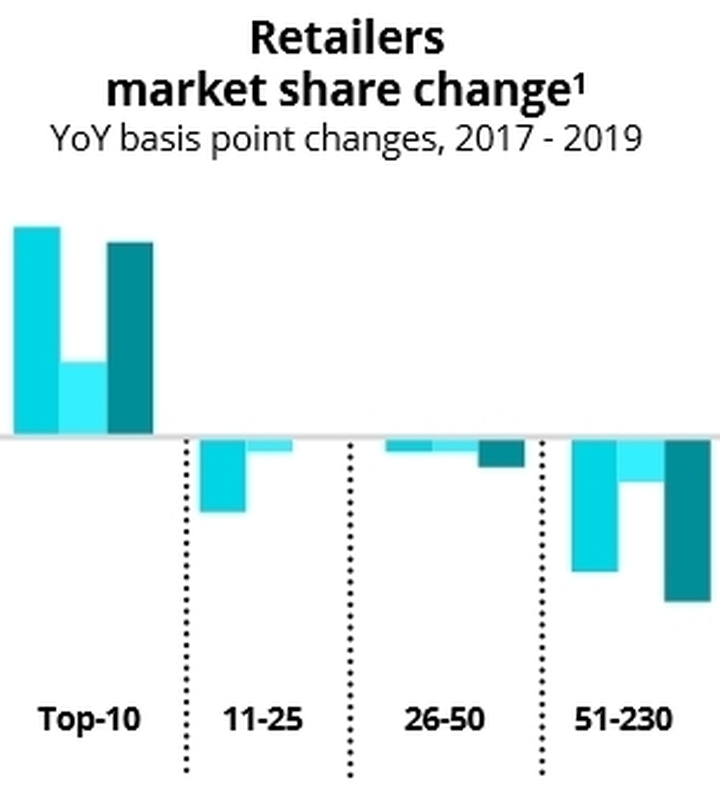](https://drive.google.com/open?id=1O-OU-4-y5Ki9Iv0uMP2q7vY5Nq085Y_0)
|
||||
|
||||
Via [Deloitte](https://www2.deloitte.com/us/en/industries/consumer-industry.html?icid=top_consumer-industry)
|
||||
|
||||
### Online penetration and growth
|
||||
|
||||
In the U.S. market it stands at 11%, whereas in China, it is 38%. There is probably significant growth ahead in the U.S. for online e-commerce.
|
||||
|
||||
While convenience attracts most first-time customers to online ordering, it has some limits in that online shoppers are citing a pain point of falling into a rut, especially with grocery, because of automated ordering of the same basket again and again. Some miss the sensory experience of shopping in person.
|
||||
|
||||
### Discount vs luxury
|
||||
|
||||
There is a bifurcation happening between lower quality/lower pricing/high volume versus high quality/high pricing/scarcity/luxury, with products and resellers that fit somewhere in the middle loosing ground.
|
||||
|
||||
[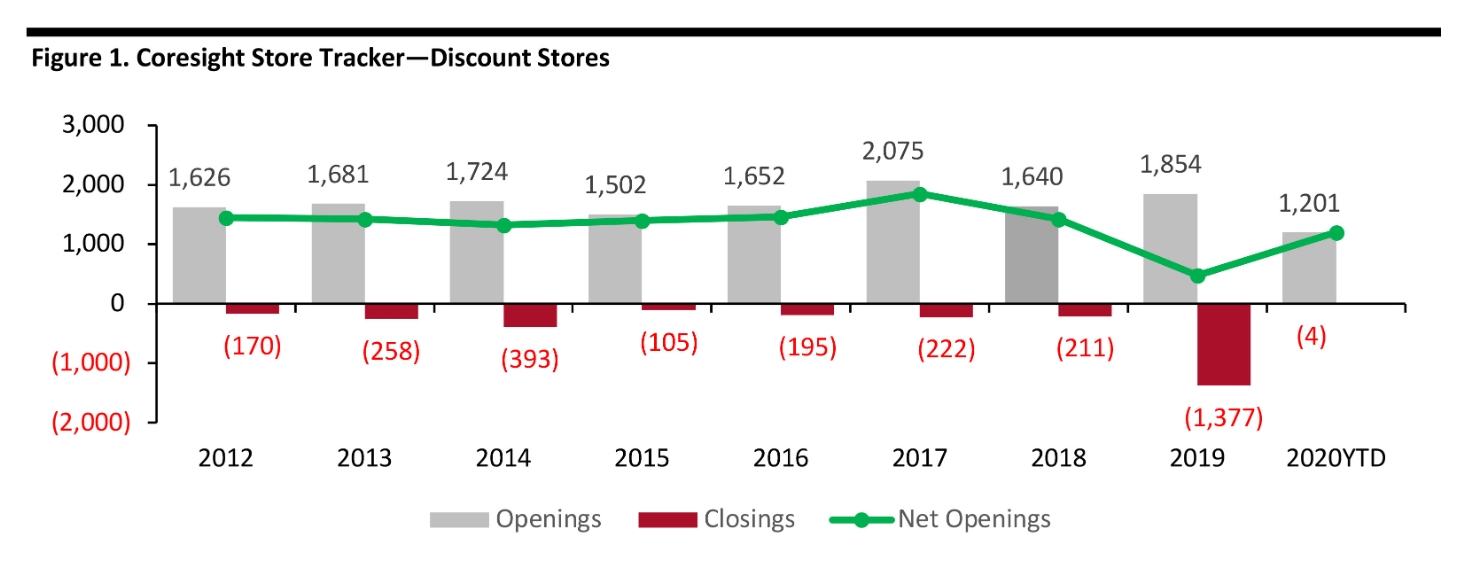](https://coresight.com/)
|
||||
|
||||
Via [Coresight](https://coresight.com/)
|
||||
|
||||
### Shopping festivals and shopping holidays
|
||||
|
||||
They are likely to get bigger, just like big retailers are getting bigger. Amazon’s Prime Day, Alibaba’s Singles’ Day, the emerging Black Friday event in July in the U.S., and existing events such as Black Friday and Cyber Monday in November. Smaller resellers are piggybacking off of these events. Events like these and online shopping have made the year-end holiday period less important for retailers.
|
||||
|
||||
[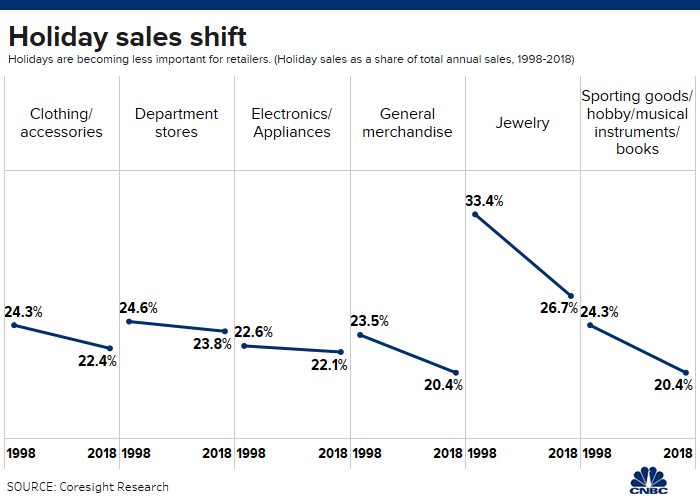](https://www.cnbc.com/2019/10/01/the-holidays-are-less-important-to-retailers-as-more-sales-shift-online.html)
|
||||
|
||||
Via [CNBC](https://www.cnbc.com/2019/10/01/the-holidays-are-less-important-to-retailers-as-more-sales-shift-online.html)
|
||||
|
||||
### Smaller Footprints and new store concepts (where is the retail apocalypse?)
|
||||
|
||||
For every store that closes, 5 new ones open, and the trend is smaller stores closer to customers to increase convenience.
|
||||
|
||||
There is an apocalypse in certain segments, especially apparel and department stores, but overall offline growth is healthy and continues.
|
||||
|
||||
Look for new store concepts that offer more experiences, different visual displays and store layouts and ways to personalize products.
|
||||
|
||||
[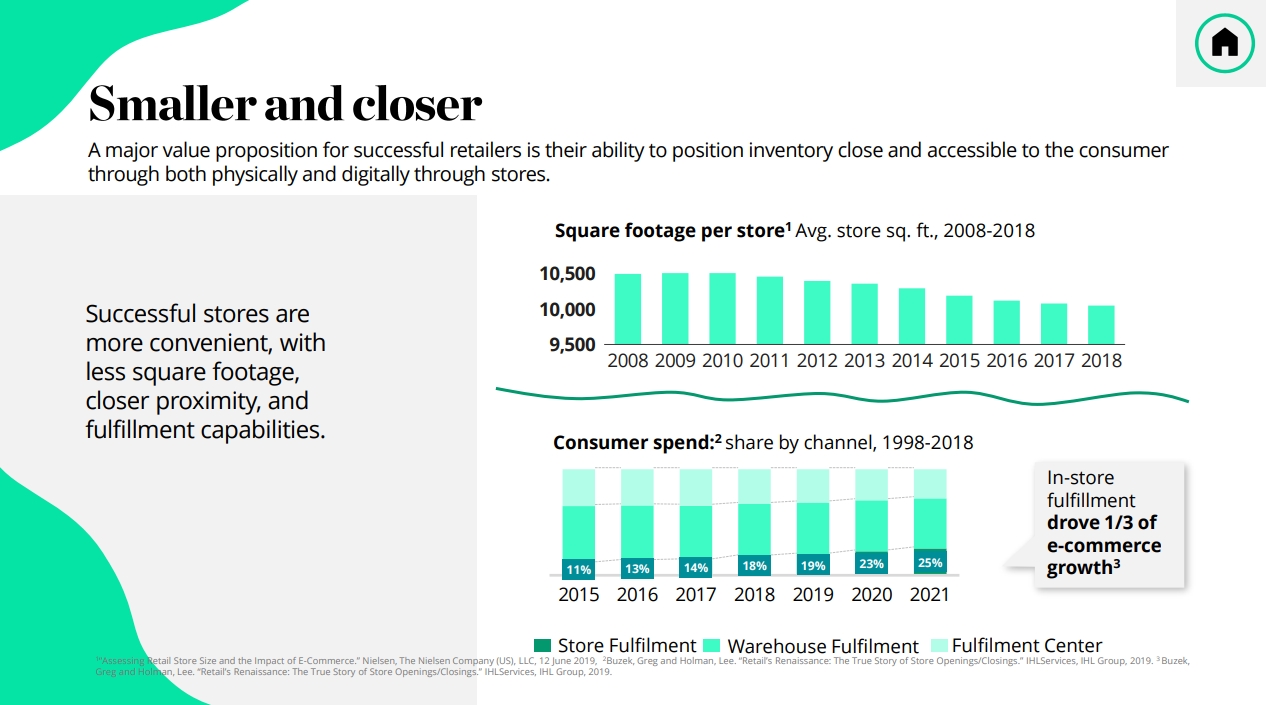](https://drive.google.com/open?id=1O-OU-4-y5Ki9Iv0uMP2q7vY5Nq085Y_0)
|
||||
|
||||
Via [Deloitte](https://www2.deloitte.com/us/en/industries/consumer-industry.html?icid=top_consumer-industry)
|
||||
|
||||
### Technology and services
|
||||
|
||||
Technology and services being deployed:
|
||||
|
||||
- Ultra convenience with store locations and online ordering: buy in store, order online and pickup in store, order online for delivery, or deliver in 2-days, or same day;
|
||||
- Cashier-less checkout;
|
||||
- Free returns;
|
||||
- Loyalty programs;
|
||||
- Customer service;
|
||||
- Omnichannel personalization of marketing and messaging and product offerings;
|
||||
- On demand personalization and possibly 3D printing vi in-store kiosks for certain products;
|
||||
|
||||
### Resellers as vendors and data scientists and increasing automation
|
||||
|
||||
We’ve already seen a boom in private label and that will continue.
|
||||
|
||||
They are also becoming more data centric and are using it in every aspect of their operation. It will continue to be used to drive selection of vendors and how vendor relationships are managed and how vendor products are sold. Data about vendor selection comes from existing sales in other channels or resellers and on platforms (i.e.: Amazon can use sale data on its marketplace to help make decisions about vendors in its retail locations).
|
||||
|
||||
Robotics and machine learning are leading to more automation in warehouses and in stores.
|
||||
|
||||
These initiatives require significant investment that not all can make.
|
||||
|
||||
### Differentiate or Cease To Exist
|
||||
|
||||
Another problem I see is lack of differentiation, especially when it comes to products and pricing. There is less curation or discovery involved. If you don’t find what you want at one reseller, then another a block or click away has what you want.
|
||||
|
||||
Naturally what has happened is that consumers migrate to purchasing whoever can offer the cheapest price, which means the biggest resellers, marketplace platforms or retail ecosystems. And increasingly, with all the technology and services it enables being adopted by the largest players, there is less incentive for consumers to shop anywhere else.
|
||||
|
||||
And that trend is expected to continue. Just in the grocery channel alone, it is estimated that by 2026, $700 billion in annual spend, or 41%, is expected to shift to online, supercenters, club and discount channels.
|
||||
|
||||
[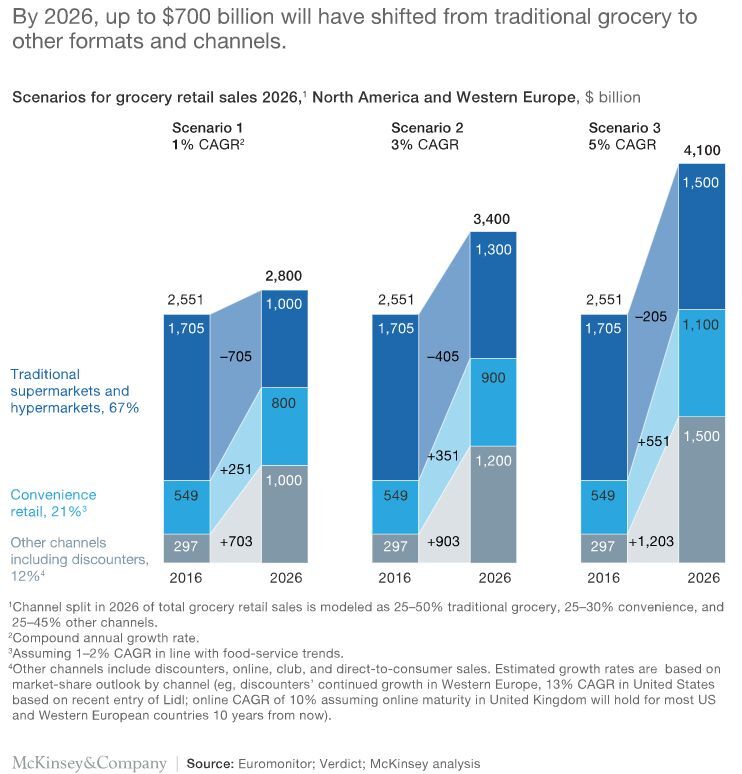](https://www.mckinsey.com/industries/retail/our-insights/reviving-grocery-retail-six-imperatives)
|
||||
|
||||
Via [McKinsey](https://www.mckinsey.com/)
|
||||
|
||||
So on one end are price leaders and the other end is product differentiation, where resellers curate products. The middle is the squeeze and resellers must go in one direction or the other, unless they occupy the top spot already, in which case they can likely stay n the middle and thrive.
|
||||
|
||||
[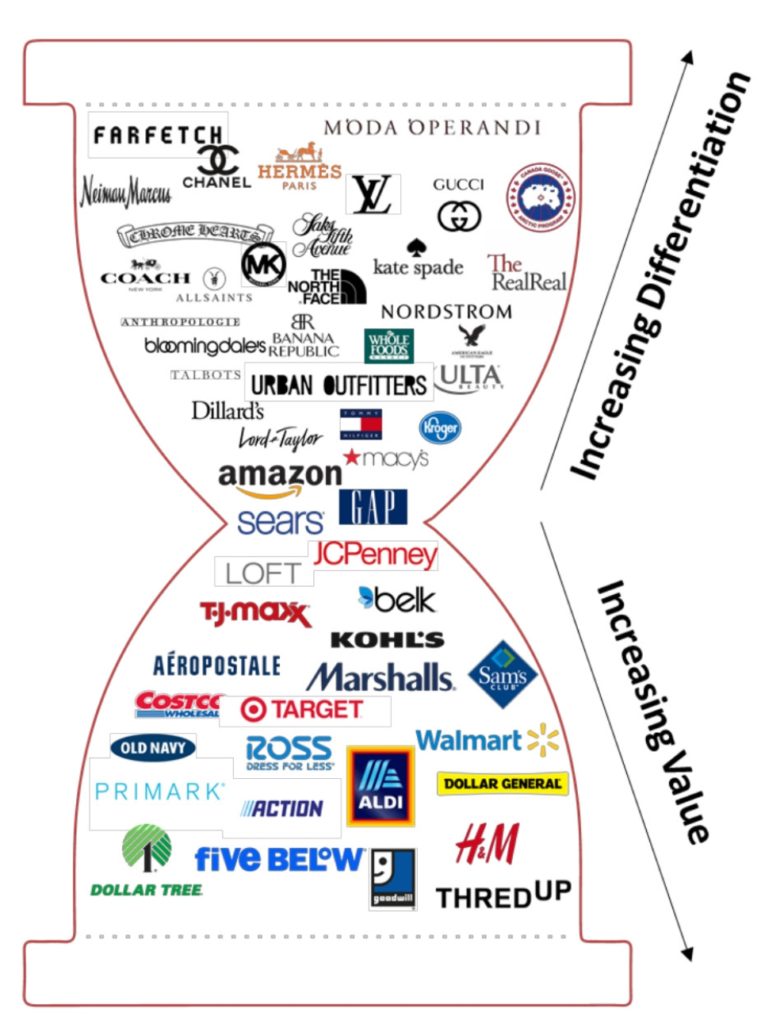](https://coresight.com/)
|
||||
|
||||
Via [Coresight](https://coresight.com/)
|
||||
|
||||
### Environmental concerns and sustainability
|
||||
|
||||
See apps emerge to help notify consumers to sell expiring items ([already in Europe](https://drive.google.com/open?id=1gGVHhj7YlgLS1V3cckZlabGkkxixtzJG)).
|
||||
|
||||
Services like [Loop](https://loopstore.com/) are partnering with consumer goods to recycle and reuse. Might that extend to in-store drop offs?
|
||||
|
||||
### Exogenous Events
|
||||
|
||||
These are external events from the industry. Pandemics, weather events and trade disputes are on the rise, creating supply chain and pricing issues that are sure to create more stress, which will continue to support and possibly accelerate the death of many resellers.
|
||||
|
||||
## What consumer goods startups and small companies can do
|
||||
|
||||
How does a startup or small consumer brand navigate this landscape.
|
||||
|
||||
Here are some thoughts.
|
||||
|
||||
### Where do you fit? Hopefully not in the middle
|
||||
|
||||
Do you differentiate with low prices or by product benefits and features. Pick one direction or the other, but like retailers, if you are caught in the middle, you may get squeezed.
|
||||
|
||||
### Innovate and differentiate
|
||||
|
||||
The obvious is to do your best to make and sell products that provide true points of differentiation that a consumer can clearly see within 2 seconds (what I call “WOW” products). It could be price but that is a tough place to be because someone bigger can usually come along and get more economies of scale and sell at a cheaper price.
|
||||
|
||||
Whatever area in which you choose to differentiate, make the products or the parts of your company that really matter to the consumer defensible so they cannot be copied.
|
||||
|
||||
### Focus on niches, figure how to sell to them and own that segment
|
||||
|
||||
Really understand to whom you sell, why and own that niche. A $50 mm a year business (the space I like to play) is niche; even $100 million is still niche. You can be super niche and still do very well. In fact, I would say your goal is to be so good at knowing your customer and how to sell them that other companies would want to hire you as a consultant just to reach this target customer.
|
||||
|
||||
You can only really effectively learn this by selling direct-to-consumer, or at least through online platforms where you can at a minimum, capture the consumer’s vitals (email, phone, address) so you can do your own analysis through third party data appending.
|
||||
|
||||
And by selling direct, you can learn this stuff quickly, on the cheap, and you have a lot of flexibility to try new marketing, messaging, packaging, even product iterations. So even if you really do not want to sell direct as a core revenue generator strategy, just do it for testing.
|
||||
|
||||
Understanding the customer goes beyond the usual demographics and psychographics and personas. It is more about [understanding the communities and tribes they belong to](https://adage.com/article/opinion/opinion-why-taste-communities-are-future-marketing/2223986). Understanding how those communities and tribes work, what they believe, what they celebrate and what they denigrate helps to understand them and how your products and offering might be tailored to their needs and desires.
|
||||
|
||||
I would identify and understand these communities and tribes – niche markets if we want to call them – and build my offering (products, packaging, marketing, services, etc) to solve their problems or fill their desires. And I would get really good at that.
|
||||
|
||||
Make sure the niches you pick are growing.
|
||||
|
||||
### Optimize packaging
|
||||
|
||||
There are more hops it is taking to reach the end consumer, especially out of its case packaging, so make sure it can’t get destroyed or look haggard in the logistics process.
|
||||
|
||||
Make it recyclable to prepare for services like Loop that allow customers to return used packaging to stores.
|
||||
|
||||
Make sure it presents well in augmented and virtual reality.
|
||||
|
||||
### Create redundancy in the supply chain
|
||||
|
||||
Do risk scenario planning to shore up supply chain as best as possible. Dive into using artificial intelligence to help manage supply chain to optimize cost and delivery times.
|
||||
|
||||
### Selling to consumers is coming down to convenience
|
||||
|
||||
Successfully do the above but you still have to make it convenient and easy for them to buy. Unless you have such a blockbuster product without direct or substitute competitors, consumers won’t put up with the hassle if it is not convenient and easy for them to buy.
|
||||
|
||||
[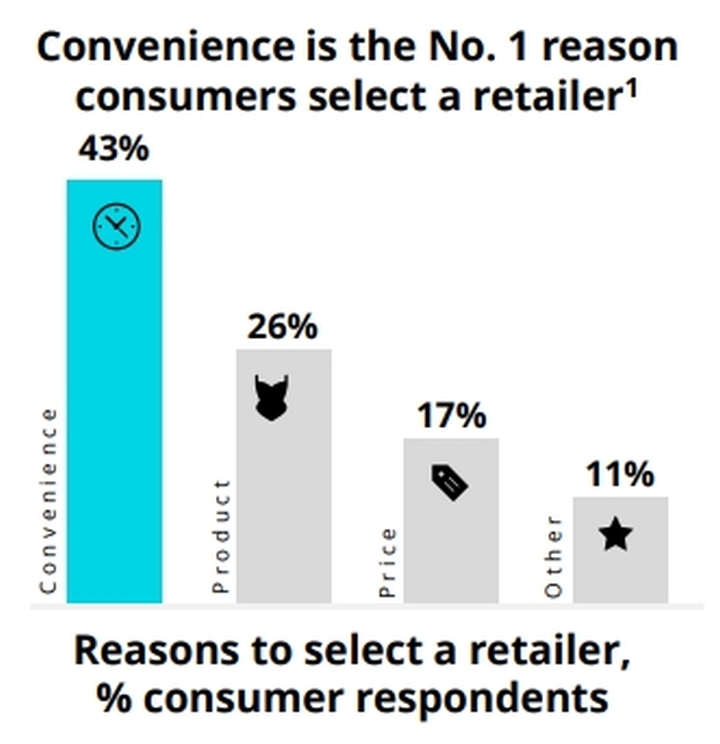](https://drive.google.com/open?id=1O-OU-4-y5Ki9Iv0uMP2q7vY5Nq085Y_0)
|
||||
|
||||
Via [Deloitte](https://www2.deloitte.com/us/en/industries/consumer-industry.html?icid=top_consumer-industry)
|
||||
|
||||
That means that you at least have to be well-represented selling on marketplace platforms (like Amazon) and be findable through SEO and relevant advertising on those platforms.
|
||||
|
||||
### Pick resellers and retailers carefully
|
||||
|
||||
After that, there are going to be losers, especially if we believe the trends outlined above continuing.
|
||||
|
||||
You will have to research them carefully and understand:
|
||||
|
||||
- how they differentiate – along price, product curation, or something else, or , are they stuck in the middle getting squeezed?
|
||||
- do they have a good growth strategy, are they financially viable over the long term and are they making investments to maintain or improve their differentiation?
|
||||
- do they sell to your niche buyers, or are they trying to sell to your niche buyers (in which case you can help them do that through your product and your marketing)
|
||||
|
||||
The usual game plan is to sell in as many channels and resellers in each channel. I would say that it might be better to pick one in each channel and create a strong relationship with your category buyer and help them differentiate more with your products.
|
||||
|
||||
You might create more trust and gain better opportunities with that reseller than if you try to be everywhere. And if sales are forthcoming, you might be able to lower tradespend a bit.
|
||||
|
||||
Use your data that you collect selling direct and through marketplace platform to help your category buyer. They are arming themselves with data too, so you have to be prepared and bring your data to the table as well.
|
||||
|
||||
### Geography matters
|
||||
|
||||
Be in resellers who are in high density population areas. Again , proximity to your niche market where they can conveniently find you or order your product for same day delivery.
|
||||
|
||||
### Go big if you can
|
||||
|
||||
Get to the top reseller in your category, if you can, but you might not be able to get there. There is only so much shelf space that a top retailer can handle.
|
||||
@@ -0,0 +1,29 @@
|
||||
# What are Whole Foods Market markup/margin numbers?
|
||||
|
||||
Source: <https://eddiesoehnel.com/whole-foods-market-markupmargin-numbers/>
|
||||
|
||||
Tags: retail, SRP, Whole Foods Market, wholesale
|
||||
|
||||

|
||||
|
||||
This is a question I received via a discussion thread and I am reposting my contributions to the thread here.
|
||||
|
||||
As a rule of thumb, natural.organic is always a 50% margin. If selling through UNFI, Tree, etc. there might need to be another 15% added in for them, for a total margin of 65% to WFM, or maybe higher, depending upon the product and category.
|
||||
|
||||
I say might because other factors go into whether WFM carries your product and their markup. I once sold products only to natural distributors – UNFI, Tree, etc, but did not sell the retailers direct to purchase from UNFI. I was more focused on club, mass, grocery, drug and was also running a national TV campaign. I found my products in natural channel stores at a 50% margin, which means they must have a margin of only 35% to account for UNFI’s 15%. In this case, because I was running a national TV campaign, I think the retailers in natural were willing to take less margin because the product was likely to turn more from the marketing.
|
||||
|
||||
So that is why margins are not so cut and dry…many other factors can affect it, but as a rule, I always use 50% for WFM, plus 15% for UNFI. If there is anyway you can approach WFM from a position of strength – i.e. – you’ve got external marketing, or an aggressive demo plan scheduled, etc, then you might be able to negotiate better margins.
|
||||
|
||||
*And…*
|
||||
|
||||
I see natural brokers asking for 7% plus draw of $250-$750/mo. All other channels is 5% and possibly no draw. For tradepsend (ad supports, samples, shelf fees, etc), I use 3% for natural and as high as 20% in first year for grocery and drug (13%-15% per year thereafter). I do not see as high a tradespend costs in natural as I do in grocery and drug. But, demos cost $150 a pop (not including product samples) at WFM, which I estimate then on top of the 3%. They can get very expensive. I try to amortize all tradespend over 1 year to really know what my costs vs revenue is and how bad I might be in the hole that first year. It is very hard as Josef says to figure out all of that in a proforma, but still worth doing upfront so you have a ballpark of what to expect.
|
||||
|
||||
*And…*
|
||||
|
||||
Growing in CPG is a challenge because it takes cash to fund inventory and entry to retail, if you go the retail route. This is especially the case for natural/organic products with high COGS sold to WFM and that natural channel. And as along as you are growing, you will generally need more and more cash (unless your expenses are so low that its easy to turn a profit and you can use them to fund growth). In my experience, the first few million in sales, at least, is about surviving and minimizing cash flow burn.
|
||||
|
||||
As a result, I highly encourage companies to maximize their online sales (and SEO, PPC, email, social and content marketing), even before going to retail, because amazing sales and brand awareness can be driven here before pushing into retail, and there is usually less of a cash drain with an online-only strategy
|
||||
|
||||
Or, if you do have the cash, consider direct response marketing (DR), along with online, before retail (DR won’t work for all products). If you build your brand awareness and demand for your product first, either through online or DR or some other method (viral, direct sales via consultants – think Avon), then it may be an easier sell to category buyers and you might negotiate better terms.
|
||||
|
||||
[Click here to download the worksheet for this post](https://eddiesoehnel.com/COGSImpactRetail).
|
||||
@@ -0,0 +1,40 @@
|
||||
# What are deduct from invoice fees with retailers?
|
||||
|
||||
Source: <https://eddiesoehnel.com/what-are-deduct-from-invoice-fees-with-retailers/>
|
||||
|
||||
Tags: Bj's, Costco, Drug, fees, Grocery, retail, ROI, Sam's, Target, Wal Mart
|
||||
|
||||

|
||||
|
||||
A question that I was recently asked is what are deduct from invoice fees with retailers?
|
||||
|
||||
**For dietary supplement products, what are deduct from invoice fees associated with doing business with Walmart, Target and club stores like Sam’s, Coscto and Bjs; how about for grocery chains like Safeway or drug stores like Walgreens?**
|
||||
|
||||
*To clarify this question: I read that large retailers impose various fees that can be classified as “deduct from invoice fees.” I am not sure what these fees are and how big they are, except that I did read that they can be substantial; whatever that may mean. Maybe they are fees associated with customer returns, marketing allotments, etc. Since offline retail is new to me, I am unsure of how everythign works and I am unsure of the particular jargon. I am basically looking for someone to walk me through a case study relationship with various types of retailers. Maybe I am looking in the wrong places, but it is very hard to find people who detail from A-Z, the specifics of working with national retailers.*
|
||||
|
||||
### My answer:
|
||||
|
||||
The average fees to do business with offline retail is 13% of wholesale cost (price you charge the retailer for your product). Those fees vary by retailer and are discussed during vendor negotiations. They can include the following:
|
||||
|
||||
1. 2% for payment within standard 30 day terms;
|
||||
2. Opening order discounts (for new product ships), also called introductory allowance;
|
||||
3. Slotting fees;
|
||||
4. Discounts on orders to new stores that the retailer opens;
|
||||
5. Volume pricing discounts;
|
||||
6. Automatic fee to account for damaged product;
|
||||
7. Fees to ship back damaged or returned product or to dispose of damaged or returned product;
|
||||
8. Co-op marketing/marketing allotments (this is a big one), where the retailer deducts on behalf of marketing that it does for you;
|
||||
9. Coupons/discount programs that the retailer runs on your product;
|
||||
10. Penalties on mistakes on shipping/routing requirements or late fees for not delivering your product in your assigned delivery window.
|
||||
|
||||
There might be other ones I am missing, but these are the major ones I’ve dealt with among the retailers you have mentioned in your question.
|
||||
|
||||
In general, the fees charged, ordered from least to most, are as follows:
|
||||
|
||||
1. Costco – less than 2%;
|
||||
2. Walmart/Sam’s/BJ’s – less than 5%;
|
||||
3. Target – 5-15%;
|
||||
4. Grocery – 10-15%;
|
||||
5. Drug – greater than 15%;
|
||||
|
||||
That said, these are fees after year 1 that you should expect. Typically, due to opening order discounts, fees charged in year 1 are higher as a percentage of sales. For example, drug could easily hit 25% in year 1. Because of the above fees, it is critical that you maximize your suggested retail price and thus, your wholesale cost because retailer fees can really reduce or completely eat-up your profit margins. Further, you really need to do a detailed ROI in doing business with each retailer so that you know what you are getting into.
|
||||
+24
@@ -0,0 +1,24 @@
|
||||
# What are items to consider in setting up a relationship between a CPG manufacturer and distributor
|
||||
|
||||
Source: <https://eddiesoehnel.com/items-to-consider-in-setting-up-a-relationship-between-a-cpg-manufacturer-and-distributor/>
|
||||
|
||||
Tags: distributors
|
||||
|
||||

|
||||
|
||||
This is a [Quora](https://www.quora.com/What-are-the-considerations-to-set-up-a-deal-between-a-manufacturer-and-distributor?__snids__=1066428838&__nsrc__=4) question I was asked about setting up a relationship between a CPG manufacturer and distributor. My answer is below.
|
||||
|
||||
I know and work in food, so I can only respond from that context.
|
||||
|
||||
1. Does the distributor serve the market you want to directly target? Obvious question but needs to be asked.
|
||||
2. How big of a market are you targeting? Are you staying local, regional, or nationwide. If you are a startup and starting locally, then smaller distributors might be best because they may be able to serve your retailers better. Also, you may not be able to get into large distributors to start.
|
||||
3. Will the distributor pickup from your warehouse or do you have to ship to their distribution center(DC)? Factor these costs into your [ROI analysis](https://eddiesoehnel.com/retailer-roi/).
|
||||
4. What sales activities will the distributor do on your behalf? Do they put you in their catalog, do they have a sales team that will promote your product, is there a cost for those sales promotional activities and is there a positive ROI on that (ask the distributor for past comparables to help you determine that), do they have a field sales force that would be selling your product?
|
||||
5. Many distributors don’t do much in terms of sales promotion or activities for you. They will put you in their catalog and handle logistics between you and your retailers. You will have to sell to retailers/account directly. Factor this into your ROI analysis.
|
||||
6. Have a [sales deck](https://eddiesoehnel.com/checklist-to-sell-into-retail-cpg/) ready to sell to the distributor. You will likely need to sell the distributor on your product, its value propositions, sales history, and your own sales efforts/broker network. Even for distributors that can help you with sales, they will almost always want to understand what direct retail sales efforts you are undertaking to help move your product. In addition, what external marketing are you doing to help sell your product? What [retail marketing](https://eddiesoehnel.com/in-store-advertising-methods-and-strategies-for-a-cpg-company/) are you doing or supporting (marketing you are doing in retail to sell your product – demos, promotions, in-store advertising, etc).?
|
||||
7. What promotions are required of you by the distributor? Are there certain times of the year they want to see a promo from you? Do they have tradeshows they want you to support with promos and product samples? Do they have marketing they want you to support (catalog ads, for example). Factor all of these into your ROI analysis.
|
||||
8. What are the [terms](https://eddiesoehnel.com/develop-your-retail-cpg-terms-cheat-sheet/) for doing business with the distributor? Key ones are payment terms, guaranteed sales terms, opening order discounts and manufacture incentives offered to retailers through the distributor. Factor these into your ROI analysis.
|
||||
9. What kinds of sales data will you get from the distributor? Ideally, you want to know timing and quantities of buys from specific retailers. That data helps you in your production and inventory forecasting. However, you ultimately need store-level sales data (units/store/week) to really have robust forecasting. You are forecasting sales movement on shelf, but then also forecasting the shipments. The former tells you how well you are doing relative to the category and your sales goals and consumer interest/uptake, the latter is used for forecasting production and inventory levels.
|
||||
10. What happens if product does not sell? How much time do you have to prove sell-through before you have to take the product back (guaranteed sales component in the terms analysis – see above). Is there any kind of reverse logistics costs you have to absorb (costs to ship product back to you but also administrative costs the distributor imposed to pull product out of their system)?
|
||||
11. Do you want to enforce MAP (minimum allowable pricing) pricing with the distributor’s accounts? If so, you need to have that policy in place before talking to the distributor and ask them how they handle that on your behalf.
|
||||
12. Regardless of your sales activities to retailers, ask the distributor which accounts they think will take in your product earlier rather than later. In food, many e-commerce accounts are usually the first types of accounts to take in new products before the brick/mortar accounts. Are you OK with that? It gets harder to enforce MAP pricing with Internet-only retailers.
|
||||
+17
@@ -0,0 +1,17 @@
|
||||
# What are the retail legal requirements and considerations for selling a product I created (e.g. greeting cards) to retail stores?
|
||||
|
||||
Source: <https://eddiesoehnel.com/what-are-the-legal-requirements-and-considerations-for-selling-a-product-i-created-e-g-greeting-cards-to-retail-stores/>
|
||||
|
||||
Tags: accounting, certificateof analysis, COA, distributors, FTC, guaranteed sale, insurance, MSDS, Prop 65, retail, terms, trademark, tradespend, USDA, USPTO, Wordmark
|
||||
|
||||
This is a question I received and here is my answer.
|
||||
|
||||
In terms of retail legal requirements, here’s what comes to mind:
|
||||
|
||||
1. Do you need to or should you file any relevant trademark/wordmark/copyright filings with USPTO to protect your works? Check with an attorney about this. Retailer’s won’t care, but should you be trying to protect your works?
|
||||
2. You will need to incorporate, as retailers purchase from corporate entities, not individuals, unless it’s very small retailers (single locations or small chains), or are willing to purchase from a sole proprietor.
|
||||
3. Do you need any product liability insurance? Besides a standard general liability policy, you might need to add product liability, and the retailer will also be named as the insured on your policy, which is another reason why you need to incorporate, as insurance companies insure corporations/partnerships, not sole proprietor. Check with a business broker about insurance.
|
||||
4. Does the retailer have vendor documents that you need to sign? Do they have a routing/shipping and logistics policy that you must adhere to? They may also require guaranteed sale, which means if the product does not sell, you agree to purchase it back. What are there other terms – especially payment? Is it the standard 30 net 2? Do they have any other tradespend requirements (like damage or marketing requirements – additional percentages off your wholesale price to them for these kinds of terms)? You want to analyze all this carefully because these “tradespend” requirements can really eat into your profitability. On average, across all retail, tradespend ends up being 13.5% of your wholesale price, so it can add up. Drug stores are 20% +, especially in year 1.
|
||||
5. Are there any FTC requirements/standards regarding your product category? My guess is not, but check anyway. If it is food, check with the FDA/USDA. Are you subject to providing a material safety data sheet (MSDS) to the retailer about your product? My guess is not, but check anyway. Do you need Prop 65 overlabeling for selling in California? My guess is not, but check anyway. If food, you will need a COA (certificate of analysis).
|
||||
6. Do you need to use distributors? A retailer may prefer to order product through a distributor. Ask them when you are selling to them. Or, you might want to use a distributor who can help sell your product to a wider retail base. What are their legal requirements?
|
||||
7. Make sure when you do business with a retailer that you obtain a W9 from them so that you have legal record of where to send any relevant tax documents to them. Also get a copy of the resale certificate so you have proof that you are selling for wholesale purposes, and thus you do not need to collect or pay sales taxes.
|
||||
+39
@@ -0,0 +1,39 @@
|
||||
# What are things that can make or break an online retail business (a specific niche retail business)?
|
||||
|
||||
Source: <https://eddiesoehnel.com/what-are-things-that-can-make-or-break-an-online-retail-business-a-specific-niche-retail-business/>
|
||||
|
||||
Tags: ecommerce, ecommerce sales funnel, inventory management, P&L, Profit and Loss, returns, ROAS, shipping, website
|
||||
|
||||

|
||||
|
||||
This is a [Quora](https://www.quora.com/What-are-things-that-can-make-or-break-an-online-retail-business-a-specific-niche-retail-business) question I was asked to answer. My answer is below.
|
||||
|
||||
There are many things that can make or break and online retail business but some key ones in my experience are as follows.
|
||||
|
||||
### Marketing
|
||||
|
||||
Not understanding what your breakeven return on add spend (ROAS) is for each product by channel. This could lead to unprofitable advertising spend. The way to remedy this is to thoroughly understand your cost structure organized into a profit and loss statement by product and channel. [This diagram and spreadsheet model can help](https://eddiesoehnel.com/flow-money-consumer-product-company/).
|
||||
|
||||
Spending to acquire a customer and they only purchase once. You need to retain customers because in my experience, it costs 7x less to retain a customer than to acquire a new one. Even if you can profitably acquire a customer with a good ROAS, eventually you will run out of customers. It is better to think about your products and your offerings upfront in terms of how they can help you keep customers before you launch.
|
||||
|
||||
### Website
|
||||
|
||||
Poorly designed website, where it does not look good, it is not very well organized, and hard to move around and find things.
|
||||
|
||||
Shopping carts with too many steps. Of course you absolutely want to design your checkout with a funnel to include upsell, crosssells and downsells, but they have to make sense to what the customer is already purchasing.
|
||||
|
||||
### Shipping
|
||||
|
||||
No free shipping available.
|
||||
|
||||
No free returns with ample time to make a return.
|
||||
|
||||
Not informing them on checkout with their tracking code and estimated delivery date.
|
||||
|
||||
Now, that said, if you have an exceptional product that truly wow’s a customers, they may be willing to forgive many of the mistakes made in a website and the shipping, but probably not for long. For physical product, ecommerce is pretty easy to setup and get the above elements right out the gate, so better to do it before you launch.
|
||||
|
||||
### Backend Operations
|
||||
|
||||
Lack of inventory management, which could mean you experience have out-of-stocks, and unless you have a unique, exceptional product without direct or substitute competitors, you may loose that customer. Or it could mean you have too much inventory that does not move and you end up soaking up valuable cash that sits in a warehouse.
|
||||
|
||||
Too many returns that ends up eating up a lot of your profit in trying to process returns and return product to inventory and/or disposing of.
|
||||
+35
@@ -0,0 +1,35 @@
|
||||
# What do suppliers look for in their retail distribution partners?
|
||||
|
||||
Source: <https://eddiesoehnel.com/what-do-suppliers-look-for-in-their-retail-distribution-partners/>
|
||||
|
||||
Tags: Distribution, retail
|
||||
|
||||

|
||||
|
||||
A [Quora question](https://www.quora.com/Retail-Distribution/What-do-suppliers-look-for-in-their-distribution-partners) in retail distribution category that I was asked and my answer.
|
||||
|
||||
**Question:**What do suppliers look for in their distribution partners?
|
||||
|
||||
**My answer:** Here’s how I evaluate distribution partners:
|
||||
|
||||
1. Reputation/history. Do they have a good reputation? Ask for referrals to other suppliers in your size range that you can contact for references.
|
||||
|
||||
2. Financial health/credit history. Will you require payment upfront before product is delivered? Or, is the company’s reputation/history such that standard payment terms (2% net 30 is standard) will suffice? Or, the company is large and established and they will only agree to payment terms?
|
||||
|
||||
3. Markup. What is their margin/markup on resell of product? Does this leave enough margin for the end retailer/end seller to earn on the product such that the retail price is not too high?
|
||||
|
||||
4. Sales and marketing. Do they already sell into the channel or specific retailers/end sellers that you wish to reach? How do they sell in: a catalog for their customers to buy from; direct sales calls/visits? What kind of promotional programs do they offer with end-retailers to help move product? Ask specific questions about how they intend to sell your product so you can understand the process and check the logic behind it.
|
||||
|
||||
5. Performance. What kind of product movement can you expect, or should expect? Does this meet your performance requirements?
|
||||
|
||||
6. Fees. Are there setup fees with them? Do they require free product on opening order or a discount on the opening order? Do they have requirements that you participate in tradeshows they put on? Do they have requirements that you participate in ads in their catalog? Do they need samples to sell? Are there annual fees? Be sure to understand all the costs to doing business with them so you can determine your ROI from doing business with them. Your profit can be seriously reduced and even eliminated through all these fees if you are not careful to analyze the relationship before you commit.
|
||||
|
||||
7. Reporting. How do they report sales to you via end-customers, if at all? Can you get weekly movement numbers? In what format?
|
||||
|
||||
8. Shipping. What are their shipping and routing policies and can you comply with them? What are their product case/packaging guidelines and freight terms. Do they require EDI for order transmittal/receipt?
|
||||
|
||||
9. Is product guaranteed sales? That is, if they do not sell it, they can return it for a full refund. Would this put undue financial burden on you if product is returned?
|
||||
|
||||
10. Orders. Can you impose a minimum order quantity on them?
|
||||
|
||||
11. Insurance. Do they require that they be named/covered under your insurance policy? If so, what are they amounts and can you provide that?
|
||||
+17
@@ -0,0 +1,17 @@
|
||||
# What happens to the connections a distributor has made with retailers for your product if you decide to replace him?
|
||||
|
||||
Source: <https://eddiesoehnel.com/what-happens-to-the-connections-a-distributor-has-made-with-retailers-for-your-product-if-you-decide-to-replace-him/>
|
||||
|
||||
Tags: distributor, distributors, retail
|
||||
|
||||

|
||||
|
||||
This is a [Quora](https://www.quora.com/What-happens-to-the-connections-a-distributor-has-made-with-retailers-for-your-product-if-you-decide-to-replace-him/answer/Ed-Soehnel) question on connections a distributor has made with retailers that I was asked. My answer is as follows.
|
||||
|
||||
That will depend.
|
||||
|
||||
For fragmented retail channels where there are many retailers, you usually use a particular distributor because of their connections and logistical pathways to retailers. In these channels, it is easier to sell a distributor who can sell to many retailers for you than trying to sell each small retailer. In this case, unless you find another distributor that sells to the same retailers, you will lose sales from those retailers.
|
||||
|
||||
Or, a retailer you have sold to might direct you to use a particular distributor because of the logistics setup between the retailer and the distributor. In this case, your relationship with the retailer may make it easier to replace the distributor.
|
||||
|
||||
Alternatively, if you have a good brand reputation with consumers, great products and strong sell through at retail, the retailers may be more likely to want to keep you and will make efforts to find other distributors or contract with you directly to sell your products. This is the best position for you if you need to switch distributors.
|
||||
@@ -0,0 +1,38 @@
|
||||
# What is Tradespend?
|
||||
|
||||
Source: <https://eddiesoehnel.com/what-is-tradespend/>
|
||||
|
||||
Tags: analog marketing, BOGO, club, digital marketing, Drug, fees, introductory allowance, reverse logistics, sampling, slotting, tagging, terms, TPR, tradespend
|
||||
|
||||

|
||||
|
||||
[YouTube video player 1](https://www.youtube.com/embed/n2b-fp18oV8?wmode=transparent&autoplay=0)
|
||||
|
||||
Tradespend is the amount that a manufacturer/vendor spends to promote a product in-store. Typical in-store promotion vehicles include discounts/coupons and supporting ads in a retailer’s circular.
|
||||
|
||||
However, in the industry, tradespend is the term used to describe all the costs associated with selling to a retailer. Here is a general list of those costs, but there may be additional buckets not identified here:
|
||||
|
||||
- Payment Terms
|
||||
- Annual Fees
|
||||
- Slotting Fees
|
||||
- Free items on Launch
|
||||
- Return Fees
|
||||
- Reverse Logistics Fees
|
||||
- New Stores Fee
|
||||
- Introductory Allowances
|
||||
- Volume Pricing
|
||||
- Transaction Costs
|
||||
- Promotions to end-consumers (BOGO/TPR)
|
||||
- Tagging of Retailer in External Marketing (TV, Radio Print ads)
|
||||
- Ads in Retailer Circulars
|
||||
- Sampling
|
||||
|
||||
On average, tradespend amounts to 13.5% of a vendor’s revenue. Some retail channels have much higher tradespend averages, like drug, which is typically 20%+ in the first year. Some channels, like club, have the lowest tradespend requirements, usually amounting to less than 5%.
|
||||
|
||||
Based on these averages, tradespend is not a trivial expense and vendors need to factor it into their projections.
|
||||
|
||||
Typically, there is not much a new vendor can do to get tradespend down in the first year. There is significant demand to get on-shelf so vendors usually have to take the terms that retailers offer. Vendors can get tradespend down over time, but not by much.
|
||||
|
||||
Usually, the largest bucket in tradespend is promotions to end-consumers. And this makes sense because retailers want to make sure that the vendor’s products sell, so offering promotions make’s sense. If a vendor is already spending on external store marketing and that marketing is driving meaningful in-store sales, then the retailer may be open to reducing tradespend requirements. External store marketing is generally defined as digital marketing and/or analog (TV, radio, print) marketing.
|
||||
|
||||
[Click here to download the worksheet for this post](https://eddiesoehnel.com/COGSImpactRetail).
|
||||
+37
@@ -0,0 +1,37 @@
|
||||
# What is considered a healthy gross profit margin (both as a retailer and a distributor)?
|
||||
|
||||
Source: <https://eddiesoehnel.com/what-is-considered-a-healthy-gross-profit-margin-both-as-a-retailer-and-a-distributor/>
|
||||
|
||||
Tags: consignment, distributors, import, Margin, retail
|
||||
|
||||

|
||||
|
||||
*What is considered a healthy gross profit margin (both as a retailer and a distributor)?*
|
||||
|
||||
*I have just started a niche business of importing foreign goods at factory prices direct from the manufacturer and selling them at my retail shop at an average markup of Landing cost x 2 + local taxes or at a margin of ~50%.* *I have a retail shop and I also sell to institutions (training institutes) who want to provide their students with my products. More often than not, these institutes expect to earn a big margin sometimes 20-30% on their order which I wish were huge.**I also sell some local niche brands in my shop on a consignment basis and I pay the vendor at month end the sales – my margin.*
|
||||
|
||||
*I need some advice on*:
|
||||
|
||||
1. *is the markup of 2x or margin of 50% healthy comparable to the retail industry or am I underselling?*
|
||||
2. *With institutions what model should I follow* *(a) give them a discount on every purchase* *(b) let them take my imported branded goods on a consignment basis and pay me monthly based on their sales.*
|
||||
3. *Am I a retailer or trader?* *Mind you the institutions have no retail background and are generally unprofessional when it comes to taking responsibility of my products on a consignment basis. I am better off selling to them at a discount and not worry about the sales.* *I like to think I am more of a Retailer who wants to reach the customers directly offline and online.*
|
||||
|
||||
*Any other advise on how to move forward to increase sales and turnover via tuning pricing model and giving incentive scheme would be greatly appreciated.*
|
||||
|
||||
My Answer:
|
||||
|
||||
Thanks for the detail in you questions. Let me take them one by one.
|
||||
|
||||
Markup of 2X, or 50% margin to you, is generally normal. It really depends on your category of products and what channel you are in. But as a general rule, for specialty retail stores, which I am guessing you fall into, margin is 50-65%, then drug at 42-45%, grocery at 35-40%, mass at 25-30% and club at 14%.
|
||||
|
||||
Regardless of the margin, your next question, whether you are underselling, is really the crux and it comes down to what the market is ultimately willing to pay for the product. Do research on competing products in other specialty retailers like you to get a sense for price. It could be that you really should be charging 3X and a 100% margin, or maybe the market only gives you a 1.5X for a 33% margin, which means maybe you need to try to negotiate lower costs from your manufacturer to get 50%. Maybe competing products are a 2X, but your’s is a better quality or has other value added features and benefits that justify a 3X.
|
||||
|
||||
Next, about sales to institutions. My recommendation is to sell to them such that the price they charge to their customers is about the same as the price you charge to your customers. The reason being that you do not want to cannibalize sales from one channel (let’s say them) to the next (let’s say you) due to huge price variations, which ends up irking the losing party (them). It may not be a big deal at all because maybe your customer base is entirely different from theirs, but overall, you want to try to maintain a level of fairness in pricing so that it won’t come back and bite you later on. Let’s say market price is 2X, or 50% margin; they get 30%, and you take 20%. That is actually a fairly common spread between a distributor and end-retailer where the distributor is involved and not the manufacturer doing the direct shipping/selling.
|
||||
|
||||
I would sell to them on a net 30 basis, or net 15 is even better, or upfront, if you can get away with it. Why take the risk that they will not sell if on consignment and then you have to take back the product if it does not sell? Try to stay away from any discussions like that. Also, they might want guaranteed sale – if the products do not sell, you agree to buy back. Try to stay away from those discussions, too. Focus on selling them what they need, at a fair price, which they can resell for a fair profit. If they end up wanting 30% and you end up with 20%, but they are happy and selling for you, that sounds like a good deal for you.
|
||||
|
||||
You are both a retailer and a distributor, as far as I can see.
|
||||
|
||||
Your last statement puzzles me a bit. Are you asking all these above questions to increase sales and turnover? If so, in general, lower the price, or tack on some value-add to what you are selling to sweeten its appeal, or focus your marketing to the right niche/tribe that wants what you have. A better question may be, how do you maximize profit? There is probably a balance where at a certain price, you are able to achieve a certain volume that maximizes your profit. To get there really takes some competitive research that I mentioned above and then some testing on your side. If you are able to test pricing from one week to the next without the same consumers finding out and getting irked because they paid a higher price, that is the a great way to find out. In addition, marketing to the right customers so they buy it from you is also important.
|
||||
|
||||
To increase sales/turnover/maximize profit through your resales to the institution is hard for you to do because it’s their customers, not yours. However, you might help that by partnering with the institution to offer a discount (they pay half, you pay half). This is called marketing co-op, which is standard in retail between the manufacturer and the retailer. Or, can you tack on some sort of mail-in rebate that the institution’s customer redeems directly with you (manufacturer coupon)? Maybe you pay for some other marketing that happens between the institution and their customer.
|
||||
+19
@@ -0,0 +1,19 @@
|
||||
# What is the average price of an item at the grocery store and the average gross margin?
|
||||
|
||||
Source: <https://eddiesoehnel.com/average-price-item-grocery-store-average-gross-margin/>
|
||||
|
||||
Tags: Co-manufacturer, COGS, Cost of goods sold, gross margin, net margin
|
||||
|
||||

|
||||
|
||||
There is no real way that I know of to find an average, and I could be wrong about that. Certainly you might find some analyst reports on public companies in a certain product category where it makes sense to assemble these averages, but for private companies, I do not know how you could assemble this data.
|
||||
|
||||
I think trying to arrive at this kind of data would also be very misleading, because it would depend upon how you want to use it.
|
||||
|
||||
If you are a brand, or vendor as it is called who sells wholesale to a retailer to resell at retail, or also called the manufacturer (although this can be misleading because so many products are produced by co-manufacturers, or 3rd party manufacturing companies that produce private label products), then this number will be specific to the category in which you sell.
|
||||
|
||||
In general, products with conventional and more commodity-based ingredients might make more margin than a natural or organic brand, because cost of goods sold (COGS) for these latter products are generally in the 40-70% range, at least in my experience. Conventional may be closer to 30%, but again, that varies highly with the product category.
|
||||
|
||||
As a goal, I shoot for 40% or less in COGS, so my gross margin is 60% or better, and I try to shoot for a 20% net profit margin (when selling through retail), so my remaining operating expenses would be in the 40% range. But, this is at volume, not at startup, which typically sees higher COGS and operating expenses, so much lower or negative net profit margin.
|
||||
|
||||
I know as a general rule of thumb, which I try to follow, CPG’s seek 20% net profit margin (when selling through retail).
|
||||
+17
@@ -0,0 +1,17 @@
|
||||
# What is the best initial approach when selling your product to retail stores. Cold call, email or just arrive unexpected?
|
||||
|
||||
Source: <https://eddiesoehnel.com/what-is-the-best-initial-approach-when-selling-your-product-to-retail-stores-cold-call-email-or-just-arrive-unexpected/>
|
||||
|
||||
Tags: None listed
|
||||
|
||||
I was asked this question on [Quora](https://www.quora.com/What-is-the-best-initial-approach-when-selling-your-product-to-retail-stores-Cold-call-email-or-just-arrive-unexpected?__snids__=1571212343) and here is my answer.
|
||||
|
||||
If I am not using a broker – and I prefer to use brokers – I check their website to find out the retailer’s process for reviewing new products.
|
||||
|
||||
If that info is not available, then a cold call works as well.
|
||||
|
||||
If I have a valid email address to the buyer, then I use email to ask them about their review process.
|
||||
|
||||
I don’t want to present my product until I have all the details about the retailer’s review process and my initial call or email inquiry is solely for that purpose. Once I have the information, I can prepare my sales approach.
|
||||
|
||||
I never just arrive unexpected, because buyers are very busy people with many vendors chasing them. Not only will they unlikely take a meeting, but that is disrespectful of their time. Find out their process for reviewing new products and then plan accordingly.
|
||||
+33
@@ -0,0 +1,33 @@
|
||||
# What is the best strategy for introducing a new product (spirits brand) to a distributor?
|
||||
|
||||
Source: <https://eddiesoehnel.com/best-strategy-introducing-new-product-spirits-brand-distributor/>
|
||||
|
||||
Tags: distributor
|
||||
|
||||

|
||||
|
||||
This is a [Quora](https://www.quora.com/What-is-the-best-strategy-for-introducing-a-new-product-spirits-brand-to-a-distributor) question and here is my answer.
|
||||
|
||||
I have not sold spirits directly so do not know of the specific nuances for that industry. But below are more general approaches for a strategy for introducing a new product. In my experience, this works across many CPG categories.
|
||||
|
||||
I will assume you do not sell to the distributor already and you are a new brand to the distributor.
|
||||
|
||||
First, answer these three questions:
|
||||
|
||||
1. What are your competitor offerings and how are you different?
|
||||
2. What does your target market want that your competitors are not offering?
|
||||
3. What are the consumer trends in your category?
|
||||
|
||||
You triangulate from the above three to arrive at a differentiated product that will capture your target market’s attention.
|
||||
|
||||
Next, how do you plan to market your product? How will you capture your target market’s attention? What marketing copy and channels will you use?
|
||||
|
||||
You have to answer the above questions, and in many cases, before you approach a distributor, you must have previous sales that proves your marketing and messaging is bringing in sales.
|
||||
|
||||
If that is not possible, then can you demonstrate that your category (or sub-category) of products is already selling through other competitors, in other channels, or geographic areas?
|
||||
|
||||
You will also need to commit marketing and sales dollars (also called tradespend) to support sales for the distributor. Marketing is messaging and brand awareness, and sales is selling to retail accounts that the distributor supports. Most distributors will not sell your product for you. You have to do that, as they will just handle logistics for the retail account.
|
||||
|
||||
If you do not have a differentiated product, but it is very similar or exactly similar to competitors, then you will compete on price, which means you have to be able to offer a cheaper product, or, you are priced the same, but you are willing to spend more dollars than your competitors on marketing and sales to attract customers.
|
||||
|
||||
With more product innovation/differentiation, then you might get away with less spend on marketing and sales, but with less innovation/differentiation, you will need to spend more to capture attention.
|
||||
+25
@@ -0,0 +1,25 @@
|
||||
# What is the best way to raise prices of products selling to major retailers?
|
||||
|
||||
Source: <https://eddiesoehnel.com/best-way-raise-prices-products-selling-major-retailers/>
|
||||
|
||||
Tags: SRP
|
||||
|
||||

|
||||
|
||||
[YouTube video player 1](https://www.youtube.com/embed/NRNRT8i8iMw?wmode=transparent&autoplay=0)
|
||||
|
||||
This is a Quora question I was asked:
|
||||
|
||||
What is the best way to raise prices of products selling to major retailers? For a consumer home products brand selling to major retailers online (Home Depot Walmart, Costco, and so on), what is the best way to raise prices? We are 3 years old and this is the first price increase. Ideas and strategies to get 3-5% without increasing our MAP would be great!
|
||||
|
||||
My answer is below.
|
||||
|
||||
Here are strategies for raising prices:
|
||||
|
||||
1. Research your competitors and justify the increase if they are also raising prices.
|
||||
2. Come up with a different model/newer version with additional value that justifies a price increase, but the value add is not as expensive, so you your cost of goods sold does not increase on a liner basis.
|
||||
3. Give your retailers an extended period of time where they can purchase product at the old, lower price, so they get extra margin for the trouble.
|
||||
4. Run more sales off of the new price for a period of time to help ease consumers into it, then back them off to your normal promotion schedule.
|
||||
5. Offer discounts on volume purchases by the consumer, so while your anchor price goes up on a single unit, you still offer discounts on volume.
|
||||
|
||||
A sneaky way for vendors to increase prices is to reduce the item size or count (if multiple items in a package), and lower the price, but not on a liner basis as the size reduction, thereby in effect, raising the price. This is not a good approach, in my opinion, because consumers will take notice. It use to work, but I think now just tarnishes your brand image.
|
||||
@@ -0,0 +1,15 @@
|
||||
# What is the easiest way to take pre-orders at tradeshows?
|
||||
|
||||
Source: <https://eddiesoehnel.com/what-is-the-easiest-way-to-take-pre-orders-at-tradeshows/>
|
||||
|
||||
Tags: tradeshow
|
||||
|
||||

|
||||
|
||||
This is a [Quora question](https://www.quora.com/Retail/What-is-the-easiest-way-to-take-pre-orders?__snids__=98841282&__nsrc__=4) that I was asked to answer. My answer is as follows:
|
||||
|
||||
It depends on who is your end-customer and their creditworthiness at tradeshows.
|
||||
|
||||
If you are selling wholesale to established businesses, then you could simply offer a show special (like 20% discount) and provide a cut-off date before the discount goes away. I have offered 2-weeks following the tradeshow as my cutoff point, but it can be whatever time you want. Wholesale buyers must submit a PO within that time frame. By doing it this way, I am saving myself the hassle of trying to process orders at the show. Further, I am at the show to sell, promote and talk to customers; processing orders takes away from the valuable sales time.
|
||||
|
||||
If you are selling to buyers who place small orders or you cannot get a sense for their creditworthiness, you could offer the same listed above, except payment is due before you ship the merchandise. I have used credit card processing in the past to do this. You could use something as simple as Paypal or Square on your mobile/tablet to process orders at the show or sometime thereafter. But again, if you plan to process orders this way at the show, it might be best to have someone else do that exclusively at your booth while you focus on interacting with your customers.
|
||||
+21
@@ -0,0 +1,21 @@
|
||||
# What is the go-to-market retail strategy for a consumer goods company that only has 1-2 products to enter retail, specifically snacking or nutrition snacks?
|
||||
|
||||
Source: <https://eddiesoehnel.com/what-is-the-go-to-market-retail-strategy-for-a-consumer-goods-company-that-only-has-1-2-products-to-enter-retail-specifically-snacking-or-nutrition-snacks/>
|
||||
|
||||
Tags: cannibalization, direct-to-consumer, DTC, ecommerce, go-to-market, retail
|
||||
|
||||

|
||||
|
||||
This is a [Quora](https://www.quora.com/What-is-the-GTM-for-a-company-that-only-has-1-2-products-in-consumer-goods-to-enter-retail-specifically-snacking-or-nutrition-snacks) question I was asked to answer. My answer as follows.
|
||||
|
||||
If I read this correctly, you are asking what is the go-to-market retail strategy for a consumer goods company with snack products.
|
||||
|
||||
Without knowing anything else, I always suggest starting with direct-to-consumer via online to test the product, its copy, images, taglines, etc. This gives you a basis for knowing what works and what does not. Assuming you find what works, you can build on that selling online to create a track record, revenue and cash flow.
|
||||
|
||||
Following the DTC build, retail follows, where you can use the online to continue driving online sales and support retail.
|
||||
|
||||
I generally suggest starting in low-risk retail – very small chains or single location resellers. Use what you learned selling DTC to design packaging for retail and in-store advertising. Work with the store on placement and monitor carefully to see what works and what does not. Build a track record for what works before going to larger chains.
|
||||
|
||||
Use your online advertising to continue to drive sales online but do so targeting the geographic area where the retail rollout is happening and tag those retailers in your ads. You want to continue to drive sales online because that is more profitable than retail, but if you also tag the retailer, customers may opt to buy there instead.
|
||||
|
||||
To reduce cannibalization of online to retail or vice versa, focus selling online in higher volumes only (minimum purchase if 6 units, for example), and retail is for singles or lower volumes.
|
||||
+23
@@ -0,0 +1,23 @@
|
||||
# What is the ideal metric to measure the effectiveness of a sampling initiative by a CPG / FMCG brand?
|
||||
|
||||
Source: <https://eddiesoehnel.com/what-is-the-ideal-metric-to-measure-the-effectiveness-of-a-sampling-initiative-by-a-cpg-fmcg-brand/>
|
||||
|
||||
Tags: retail, sampling
|
||||
|
||||

|
||||
|
||||
This is a [question posted to Quora](https://www.quora.com/Consumer-Packaged-Goods-CPG/What-is-the-ideal-metric-to-measure-the-effectiveness-of-sampling-initiative-by-a-CPG-FMCG-brand). My answer is as follows.
|
||||
|
||||
The best metric I use to measure the effectiveness of a sampling initiative by a CPG brand is to look at sales over the following weeks of the sampling event to determine if the baseline for sales has increased and is sustained.
|
||||
|
||||
For example, I normally sell 100 units per week through a retail chain, which I’ve normalized by taking out any fluctuations due to holidays, coupons/discount campaigns, etc. When I run my sampling event, I should notice a jump in sales for that week, which slowly trails off over the following few weeks.
|
||||
|
||||
I say weeks, but the timing really depends upon the purchase frequency for the product. For example, if it’s a food product, then use weeks as a time measure. But if it’s some other non-consumable durable product, the timing might be a lot longer.
|
||||
|
||||
Say after 4-6 weeks of running the sampling event, I would ideally notice a new higher baseline in my sales. The difference between the old baseline and the new baseline is the metric from which I measure the effectiveness of my sampling campaign.
|
||||
|
||||
However, if the baseline returns to the level of the old metric, that does not necessarily mean my sampling campaign was not successful. If I saw a jump in sales that provided a positive ROI from the cost of the sampling campaign, then I can still consider it a success.
|
||||
|
||||
But the real long-term health of a brand is to increase the number of users that consistently purchase its products. To me, that is the real purpose behind sampling…to induce trial and secure new customers. And, sampling is usually the best way to secure new customers, although it is expensive.
|
||||
|
||||
If sampling does not do that, then I have to analyze a few fundamentals in the business to determine why I cannot increase my customer base, such as product not good enough/living up to claims, too many competitive choices and not enough differentiation, my target customer does not shop that retailer, etc.
|
||||
@@ -0,0 +1,19 @@
|
||||
# What is the mechanism behind supermarkets’ special offers?
|
||||
|
||||
Source: <https://eddiesoehnel.com/what-is-the-mechanism-behind-supermarkets-special-offers/>
|
||||
|
||||
Tags: coupons, data, discounts, promotions, special offers, supermarket
|
||||
|
||||

|
||||
|
||||
This is a Quora question about the mechanism behind supermarkets’ special offers I was asked and my answer is as follows.
|
||||
|
||||
Retailer category managers have run discounts, coupons and special offers to help temporarily drive up sales and increase traffic to their store section.
|
||||
|
||||
They use them to promote new products or to reward existing buyers with the opportunity to purchase more units at a reduced price
|
||||
|
||||
Many promotions are run around holidays or events.
|
||||
|
||||
Vendors often want to run promotions to temporarily boost sales and/or increase new product trial use or reward existing buyers with the opportunity to purchase more units at a reduce price.
|
||||
|
||||
There is a data analysis component to using promotions and its use depends on how advanced it is for each retailer or vendor. At a basic level, it is analyzing past promotions and their results and using that data to plan future ones.
|
||||
+32
@@ -0,0 +1,32 @@
|
||||
# What is the process of getting a CPG product into retail stores like Walmart and Target
|
||||
|
||||
Source: <https://eddiesoehnel.com/what-is-the-process-of-getting-a-cpg-product-into-retail-stores-like-walmart-and-target/>
|
||||
|
||||
Tags: Quora, retail, Target, Wal Mart
|
||||
|
||||

|
||||
|
||||
*I would like to know the process of getting a CPG product into retail stores like Walmart and Target.*
|
||||
|
||||
This is a [Quora question](https://www.quora.com/Retail/What-is-it-like-to-get-a-product-into-a-retail-store). My answer is as follows:
|
||||
|
||||
Here’s the best way to get a product in if you are a new company or have never sold in retail before:
|
||||
|
||||
1. Your product has prior sales history at other smaller or regional retailers or has shown excellent movement online.
|
||||
2. The product is differentiated enough to be granted shelf space from other direct and substitute competitors in its product category. Just because your product may be cheaper or has some minor differences from competitors/substitutes does not mean the retailer will go through all the work to bring it in. You have to prove that the product will help drive more sales in the category.
|
||||
3. Your product has marketing resources behind it. In most cases, by resources, I mean dollars that you spend on promotion to increase brand awareness of your product (like TV, print or radio marketing) and dollars you are willing to commit to in-store promotion (coupons, advertising in circulars, etc.). However, if your product finds a viral marketing footing through word of mouth, that can also induce a retailer to take it in.
|
||||
4. You have the cash to fund inventory purchases and promotional dollars to support the brand. Retail is not cheap and takes good cash flow to support.
|
||||
5. You have more products in the development pipeline (line extensions or new lines entirely). Retailers want to bring in vendors that show long-term promise in supporting the retailer with products that get updated or are new.
|
||||
|
||||
Assuming you have the above, here is the process for large mass retailers:
|
||||
|
||||
1. Dedicate at least one individual who will be your VP Sales to perform direct sales to retailers who will ideally have prior retail sales experience.
|
||||
2. Establish your ideal terms and conditions for which you will do business with retailers (i.e.: product pricing, payment terms, holdbacks, slotting fees, marketing co-op fees, etc.). Usually, you accept the terms a retailer gives you, but you do have some room to negotiate, so understand ahead of time all the possible terms and conditions and how they affect your ROI.
|
||||
3. Put together your sales materials with a rock solid presentation, product sales sheets, pricing and specifications sheet and any other items that a retailer may require, which varies by your product (i.e: for food products, retailers will usually require a Certificate of Analysis – COA).
|
||||
4. Have a good process setup for sending out product samples (express mail account setup, packaging and packing materials available, etc). This can get expensive, especially when you next-day samples to retailers who want them now.
|
||||
5. Have a good retail forecast model and process setup to anticipate sales and inventory needs.
|
||||
6. Decide if you want to use brokers to help you. Hiring brokers depends on (1) how big your team is, (2) how fast you want to grow, (3) how many retailers you want and who those retailers area, (4) what kind of cash you have to support your operations and (5) the complexities of working with a retailer that take time/investment to learn. (1), (2), (3). I would use reps to augment my efforts because either my team is small or it just me and I want to grow fast (and I have the investment to do that), so using brokers as an extension of me is a big plus. Also, brokers might get me in faster because they know the buyer already and sell products to them (assuming I get the right brokers for the category…sometimes is a bit trial and error to find the right broker). If I want to control the pace of growth (either because I do not have the investment to support fast growth or my product’s category is not a fast grower), I might stick with direct or use a limited number of brokers.(4) I can hire my own sales staff now with a greater impact on my cash flow or use a brokers with much less immediate cash flow impact and pay out later as sales flow in. It gets back to what kind of investment I have to support my growth (5) Good brokers also help you with paperwork, navigating retailer vendor systems and getting sales data on a weekly basis, especially with the major retailers.
|
||||
7. Some tradeshows can also be good venues for meeting and selling retailers, but they can also be a waste of money. You have to pick them carefully, determine your objectives beforehand and book meetings with retailers before you attend the show. Otherwise, just showing up and opening a booth is pretty much a guarantee of failure.
|
||||
8. If you meet with a retail buyer and they want to bring you in, generally, it will be in a limited number of stores to start to see how the product sells for them. This is especially the case if you are a new company.
|
||||
9. There is usually substantial paperwork to complete, especially for the larger retailers. You also need to be setup for EDI (electronic data interchange).
|
||||
10. The retailer brings you in through your opening orders to fill the pipeline. Expect orders at least weekly, if not several times per week for Walmart, so you must have a robust logistics backend that knows how to package and label shipments for that particular retailer. You can outsource this to a third-party logistics (3PL) company, but you will want to at least have an in-house person or staff who is handling the incoming retail orders and coordinating the EDI, 3PL and the carriers.
|
||||
+17
@@ -0,0 +1,17 @@
|
||||
# What is the typical margin that a lighting retailer in the US expects from a wholesaler?
|
||||
|
||||
Source: <https://eddiesoehnel.com/what-is-the-typical-margin-that-a-lighting-retailer-in-the-us-expects-from-a-wholesaler/>
|
||||
|
||||
Tags: Margins, retail
|
||||
|
||||

|
||||
|
||||
This is a [Quora](https://www.quora.com/unanswered/What-is-the-typical-margin-that-a-lighting-retailer-in-the-US-expects-from-a-wholesaler-for-high-end-desk-lamps-US-400-1000-range?__snids__=1580471736) question I was asked and here is my answer.
|
||||
|
||||
I’ve never sold lighting products, so can’t tell you for sure.
|
||||
|
||||
But I have sold home improvement and margin in that channel to the mainline (Home Depot, Lowes, Ace, Menards, etc) averages 30-35%.
|
||||
|
||||
If you are talking a lighting retailer, which I would consider specialty/higher end, then margin may be more like 50%, which is average for specialty channels in other categories that I have sold.
|
||||
|
||||
You might find more reliable information than what I can provide from brokers/distributors to the category, or possibly ask other companies in your category that you would not compete with.
|
||||
+27
@@ -0,0 +1,27 @@
|
||||
# What’s your concept of how retail stores could prosper moving forward?
|
||||
|
||||
Source: <https://eddiesoehnel.com/whats-your-concept-of-how-retail-stores-could-prosper-moving-forward/>
|
||||
|
||||
Tags: Amazon, price, retail
|
||||
|
||||

|
||||
|
||||
This is a [Quora](https://www.quora.com/What-s-your-concept-of-how-retail-stores-could-prosper-moving-forward) question about how retail stores could prosper that I was asked. My answer is as follows.
|
||||
|
||||
I think it comes down to four areas.
|
||||
|
||||
### Exclusivity
|
||||
|
||||
You are the only retail location that sells a product that consumers want. I think the product category that best fits this would be art. In this case, you are a monopoly and have great potential for staying power.
|
||||
|
||||
### Convenience and Price
|
||||
|
||||
For product categories where products are sold across multiple channels, it comes down to two things: convenience and price. Consumers are going to purchase where it is easiest for them, assuming the price is generally competitive. Companies like Amazon are winning at this game in my household because it is so darn convenient to purchase, and I know that for the most part, they are competitive on pricing, so I do not worry about having to shop around. Retailers who sell products that are sold elsewhere have to think about what can they do to provide the most convenience at a competitive price to win business.
|
||||
|
||||
### Experience
|
||||
|
||||
Besides exclusivity, another area where retailers can win is in providing a unique experience for consumers. You can take commodity products sold everywhere and wrap a unique experience around it to create differentiation.
|
||||
|
||||
### Non-Shippable
|
||||
|
||||
For products whose weight-to-price ratio is high, then shipping online does not make sense (bags of chicken feed come to mind). Or, the product is subject to damage during shipping (charcoal comes to mind). Or, the product cannot be shipped due to special shipping, storage or handling requirements (auto fuel comes to mind). Or, the products can be purchased at retail at significant discount in bulk quantities (purchasing at club retail stores comes to mind).
|
||||
@@ -0,0 +1,30 @@
|
||||
# Why You Should Not Sell to Whole Foods Market
|
||||
|
||||
Source: <https://eddiesoehnel.com/not-sell-whole-foods-market/>
|
||||
|
||||
Tags: club, D2C, direct-to-consumer, Drug, groceru, mass, natural channel, retail, supplement, Whole Foods Market
|
||||
|
||||

|
||||
|
||||
Everyone wants to sell to Whole Foods Market.
|
||||
|
||||
At least in my world of consumer products, most companies I come across who sell food and are not selling to Whole Foods Market, want to.
|
||||
|
||||
I admit that Whole Foods Market has a great reputation and associating with them as vendors can elevate their brand to consumers
|
||||
|
||||
But that is about the best reason I can come up with selling to Whole Foods Market.
|
||||
|
||||
And I have many reasons to not sell to Whole Foods Market:
|
||||
|
||||
1. They are regionally focused, so you have to sell each region to get in;
|
||||
2. Each region has their own political dynamics, so you have to spend a lot of time getting to know that region and your buyers, which is time-consuming;
|
||||
3. You then have to sell each store, which is time-consuming;
|
||||
4. Even if you are killing it in other stores, that does not necessarily motivate prospective stores to bring you in;
|
||||
5. Whole Foods Market does not have thousands of locations nationwide: they are considered a small chain and if you do the math, even getting into all their stores, you will not sell that much;
|
||||
6. They are no longer the largest sellers of natural and organic products.
|
||||
|
||||
You’re better off not pinning the success of your company on Whole Foods Market.
|
||||
|
||||
For that matter, don’t focus on selling to anyone in the natural channel, because like Whole Foods Market, they are difficult to sell into and the channel is very fragmented.
|
||||
|
||||
You are much better off positioning your company to sell into grocery, drug, mass, club and possible supplement channels, in addition to selling direct-to-consumer.
|
||||
@@ -0,0 +1,21 @@
|
||||
# Why do some retail brands fail?
|
||||
|
||||
Source: <https://eddiesoehnel.com/why-do-some-retail-brands-fail/>
|
||||
|
||||
Tags: cash flow, Margin, prodction, retail, supply chain, tariffs, tradespend, trends
|
||||
|
||||

|
||||
|
||||
This is a question I was asked to answer on [Quora](https://www.quora.com/Why-do-some-retail-brands-fail/answer/Ed-Soehnel). My answer is below.
|
||||
|
||||
By retail I take to mean that the brand is selling in retail. Getting into retail is not easy and it is common now to sell direct before going into retail, so past sales history is usually required. Some measure of success must be there before the brand gets into retail.
|
||||
|
||||
So if the brand is in retail, then it has had some measure of success, so what would cause it to fail. Here are some reasons:
|
||||
|
||||
1. Trends change and the brand does not keep up. The brand fails to evolve their products to keep up with trends.
|
||||
2. No [tradespend](https://eddiesoehnel.com/what-is-tradespend/) support, or not enough. The brand does not offer tradespend to help support the products at retail, so sales decrease and the category manager replaces with another brand. Or, I have seen great products still selling but removed from distribution because the brand did not offer incentives to its distribution channel to help sell it.
|
||||
3. Internal supply chain issues. Supply chain and production problems can cause out-of-stocks, which if happening too much, will cause a brand to be replaced in retail.
|
||||
4. Cash flow. [Retail is expensive](https://eddiesoehnel.com/how-do-i-sell-to-walmart-or-other-retail-giants/) and a brand needs a good cash management position to afford it. If they do not have this, then the business will fail.
|
||||
5. Marketing support. A brand could not be supporting its sales with outside marketing, so sales fall or are less in comparison to competing brands.
|
||||
6. Retail contract changes. Category buyers may change contract terms, such as requiring more margin and/or tradespend from a brand and the brand cannot afford it.
|
||||
7. Tariffs. Brands can be affected by tariffs and global trade issues that raise their cost of goods sold, but they are not able to pass those costs onto the retailer (likely because they are not able to pass those costs onto the consumer by raising prices).
|
||||
+25
@@ -0,0 +1,25 @@
|
||||
# Why its hard for start-ups and small consumer product companies to secure retail shelf space
|
||||
|
||||
Source: <https://eddiesoehnel.com/why-its-hard-for-start-ups-and-small-consumer-product-companies-to-secure-retail-shelf-space/>
|
||||
|
||||
Tags: BBQ, capital, CPG, ecommerce, entrepreneurs, Forrester Research, Fundraising, Innovation, Kickstarter, niche marketing, retail, second screen, shelf, start-ups, vertical integration
|
||||
|
||||

|
||||
|
||||
Despite the explosive growth of online e-commerce and its widespread use for buying and selling products, selling products through retailers continues to be the most important mechanism for consumer product companies to earn revenue.
|
||||
|
||||
The problem with a consumer product company selling at retail is that it is getting harder and harder to secure retail shelf space and stay on shelf. Consider the following:
|
||||
|
||||
1. Innovation has exploded. Technology has made it easier, cheaper and faster to design, test and produce products. On top of that, the Internet has made it easier, cheaper and faster to get information, whether its finding out what competitors are doing, locating outsourced manufacturers to produce a product and anything in between. As a result, anyone with an idea can start a company and create superb products.
|
||||
2. Capital is relatively available. Compared to previous decades of the twentieth century, many more sources exist. Whether its personal sources such as credit cards, second mortgages, family or friends, or institutional sources such as angel investors, private equity firms and government-supported funding entities, it is far easier to raise capital than ever before, even with the great recession of 2008-2009. Crowdsourced funding is the latest iteration, with the likes of Kickstarter allowing anyone with very small amounts of investment to participate in funding a company’s growth.
|
||||
3. Vertical integration is a thing of the past. Start-ups and small consumer product companies don’t need to own their entire business. They can outsource almost anything and keep that which they do best in-house.
|
||||
4. Markets are sliced into more and more niches. Marketing has fragmented by opening up more channels for reaching customers and niche groups. Think of just TV, which is not just hundreds of channels that can be further targeted to specific geographic areas, but is now being leverage with the rise of second screen marketing that allows viewers to watch TV and interact on their device about the TV program. It is getting easier to reach these niche customers with products that only appeal to them.
|
||||
5. Entrepreneurs are the new rock stars. Even since the deep recession of 2008, there is increased interest in starting your own business because people are not happy with their current work and feel starting and owning their own companies will give them more of what they want in their professional and personal lives.
|
||||
6. Retail may be shrinking in some categories. Retailers find that 80% of profits come from 20% of products, so there is a move towards smaller stores with more focused product selection (what retailers call “SKU rationalization”).
|
||||
7. Success is defined by a small group of early adopters. I just read an interesting report, where [just 1.5% of shoppers decide the success of new CPG products](http://www.marketwatch.com/story/just-15-of-shoppers-decide-the-success-of-new-cpg-products-according-to-new-catalina-report-2012-05-21). If your product marketing, packaging, pricing, features and benefits don’t hit what appears to be a pretty small target of consumers, you’re out.
|
||||
|
||||
Well, why not just focus online? In fact, many companies are doing that and many because they can’t get to retail. The biggest difficulty I see with online is that the competition to get your customer’s attention is that much more than on shelf.
|
||||
|
||||
For example, I was doing some retail research recently in the condiments category. For BBQ sauce, I found 15 brands at Whole Foods to choose from and 20 brands at Safeway. But, online for “BBQ sauce” at Amazon, and how many brands do you think will come up? I stopped counting at 50.
|
||||
|
||||
I love online and part of my background was doing Internet start-ups for 10 years and every consumer product company has to be there, but securing retail shelf space is still where it’s at.
|
||||
Reference in new issue
Block a user