added
This commit is contained in:
 eddiesoehnel committed
commit
6a34982699
245 files changed
+9080
No files matched your search
@@ -0,0 +1,11 @@
|
||||
# Characteristics of blockbuster products
|
||||
|
||||
Source: <https://eddiesoehnel.com/characteristics-blockbuster-products/>
|
||||
|
||||
Tags: blockbuster products, Distribution, intellectual property, patent
|
||||
|
||||

|
||||
|
||||
Have 1, 2 or all 3 of these characteristics in your product to potentially get a blockbuster on your hands.
|
||||
|
||||
[YouTube video player 1](https://www.youtube.com/embed/wruzrbNiKRY?wmode=transparent&autoplay=0)
|
||||
+18
@@ -0,0 +1,18 @@
|
||||
# Early stage research steps for selling an online training product
|
||||
|
||||
Source: <https://eddiesoehnel.com/early-stage-research-steps-selling-online-training-product/>
|
||||
|
||||
Tags: Clickbank, keywords, online training product
|
||||
|
||||

|
||||
|
||||
[YouTube video player 1](https://www.youtube.com/embed/OjetqzAZuRw?wmode=transparent&autoplay=0)
|
||||
|
||||
Tips in this video:
|
||||
|
||||
1. The best source I have found for learning internet marketing of information products is [Russell Brunson](http://www.russellbrunson.com/hi);
|
||||
2. Get bearings by finding out the current best-selling competitors on the market – try [Clickbank](https://www.clickbank.com/):
|
||||
3. Check them out at a high level to get idea of their pricing, offering and landing page setup so you know what you will need to do (model what is working);
|
||||
4. Do keyword search to find out what customers are doing to find these products – use SimilarWeb and Follower.net;
|
||||
5. The initial focus is to sell the product will probably be on targeting niche markets – keywords with range of 50 to 500 searches/month. Expand to bigger markets later on.
|
||||
6. Next step is a detailed review of top competitors profiled, including purchasing their products, documenting their sales pages and process, and dissecting their product offering. The goal is to model their sales approach (because it is working) and at least match and hopefully exceed their offering.
|
||||
+11
@@ -0,0 +1,11 @@
|
||||
# How we plan to position this product in a stagnant market in the home outdoor segment
|
||||
|
||||
Source: <https://eddiesoehnel.com/plan-position-product-stagnant-market/>
|
||||
|
||||
Tags: product positioning
|
||||
|
||||
|
||||
|
||||
Our research summary and plan for how to position a product in a stagnant market. Download the research summary and plan from the link provided at the end of the video.
|
||||
|
||||
[YouTube video player 1](https://www.youtube.com/embed/ti3HVVnyAwU?wmode=transparent&autoplay=0)
|
||||
+19
@@ -0,0 +1,19 @@
|
||||
# Is it better to start with a low manufacture suggested retail price in CPG and increase them later on, or start high and lower them?
|
||||
|
||||
Source: <https://eddiesoehnel.com/is-it-better-to-start-with-a-low-manufacture-suggested-retail-price-and-increase-them-later-on-or-start-high-and-lower-them/>
|
||||
|
||||
Tags: price
|
||||
|
||||

|
||||
|
||||
*Is it better to start with a low manufacture suggested retail price in CPG and increase them later on, or start high and lower them?*
|
||||
|
||||
This was a question posted to Quora that I answered, which I have re-copied below:
|
||||
|
||||
I know consumer products, so can only answer from that perspective:
|
||||
|
||||
1. Do your research against competitors and the category to find the price range. If you plan to go to retail, you do in-store research and your online price is then dependent on your retail price. If you will sell online, research your competitors and category as you would for retail, but you might find a much wider price range.
|
||||
2. Research the product size/unit count. There is generally an optimal size that allows for sufficient shelf turnover/product movement and maximizes your revenue. You do that by looking at what is on-shelf already. If your product size is too large, then consumers may not need to purchases as often, leading to slow shelf movement and possibly product spoilage.
|
||||
3. If your product benefits/features are considered to offer premium value to the consumer, then you might lead with a higher price for the category. If not, then you might have a lower price for the category.
|
||||
4. Always try to price higher, because it’s a lot easier to come down in price. Also, you will need every margin point you can squeeze out of your product, especially if you are a start-up or small consumer product company. Without the benefits of leveraging your fixed costs and your COGS over a larger volume of products produced, you will barely eek out a profit, if that. Additionally, price higher so that you can cover yourself from having to make any price increases for the next few years, if possible. That way, you have more breathing room to absorb raw material price hikes, instead of passing along to consumers, which would likely affect sales.
|
||||
5. If you are selling online only, then you have wider latitude to test your price. This week’s buyer is probably different from next week’s buyer, so you have less to worry about in distorting your brand (unless you are already an established consumer brand). In this case, test to get your optimal price/volume that you want, and re-test occasionally. I tested a product once from a low of $20 to a high of $80, while also altering the benefits/value/quantity that I communicated to the end buyer, just to see which set worked the best. Or, if you have direct marketing resources, either because you have a list of past customers or you have purchased a list of prospects, you can test with much less brand distortion effects.
|
||||
+39
@@ -0,0 +1,39 @@
|
||||
# I’m considering on starting a drop ship ecommerce online site. What are the best products to offer?
|
||||
|
||||
Source: <https://eddiesoehnel.com/im-considering-on-starting-a-drop-ship-ecommerce-online-site-what-are-the-best-products-to-offer/>
|
||||
|
||||
Tags: AOV, Average order value, CLTV, Customer Lifetime Value, dropship, manufacturers suggested retail price, MSRP, suggested retail price
|
||||
|
||||

|
||||
|
||||
This is a [Quora](https://www.quora.com/Im-considering-on-starting-a-dropship-e-commerce-online-site-What-are-the-best-products-to-offer/answer/Ed-Soehnel) question I was asked to answer. My response is below.
|
||||
|
||||
There are a ton of free resources online about drop ship ecommerce. One is [Drop Ship Lifestyle](https://www.dropshiplifestyle.com/).
|
||||
|
||||
Finding the best products is the million dollar question. But you find these products using many tools and processes to help, one of which I will outline below.
|
||||
|
||||
I am copying this directly from a piece I have available here: [The best growth approach for consumer product startups and product launches](https://basecampinqb8r.com/)
|
||||
|
||||
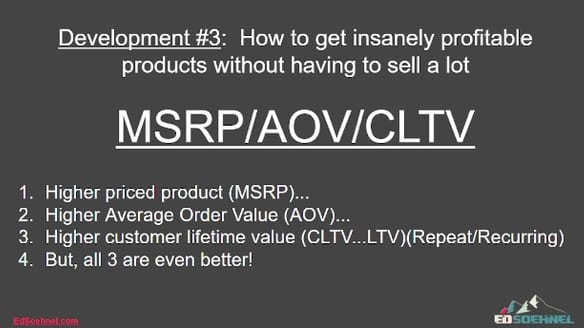
***Development #3: MSRP/AOV/CLTV – How to get insanely profitable products without having to sell a lot***
|
||||
|
||||
[](https://eddiesoehnel.com/wp-content/uploads/2018/08/msrp_1.jpg)
|
||||
|
||||
*When you have higher priced products, or higher average order values (either because the customer buys more of your product or adds other products to the cart when they buy from you), or repeat purchasing that raises your customer lifetime value, then your backend operations become a lot easier to manage because it’s fewer orders, less inventory to manage, fewer customers, with fewer customer service issues, and you can spend more taking care of fewer customers.*
|
||||
|
||||
*Ideal is to get your MSRP or AOV above $100 but below $1000 (any higher and it may require personal selling to close a sale). Minimum should be around $100.*
|
||||
|
||||
*Aim for at least a 30% repurchase rate from new customers. If you cannot get that, it makes it harder because you have to constantly find customers to replace ones you are losing, and that may indicate something wrong with your offering because you cannot keep customers.*
|
||||
|
||||
*I use offering to general mean not just product, but customer service, and anything else about your business where you are touching your customers. For some reason, they are not choosing to buy from you again, and you need to find out why.*
|
||||
|
||||
*Maybe you have products that are priced much less and you cannot hit this range, and that is OK after you have revenue, profits and cash flow, but when starting out, try to get these figures up as much as possible.*
|
||||
|
||||
*You may not be able to do all 3, but do the best you can, or if you cannot do any at all, then go back to product development to come up with a product(s) that can get you in this range.*
|
||||
|
||||
*As you grow, get sales, cash flow and profits, then you might be able to better afford to have lower prices products, but not when you are starting out.*
|
||||
|
||||
[](https://eddiesoehnel.com/wp-content/uploads/2018/08/msrp_2.jpg)
|
||||
|
||||
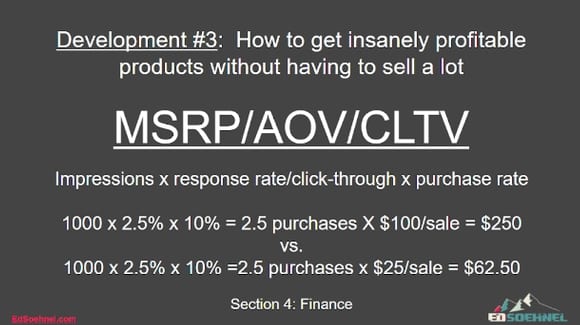
*This simple example demonstrates same front end conversion, but with a lower priced product, revenue dramatically goes down. You will need 4x the customers to get the same revenue.*
|
||||
|
||||
*If you want to understand more about this particular equation and how it fits into context of the money flow in your business, [please see this post](https://eddiesoehnel.com/flow-money-consumer-product-company/) and the download associated with it.*
|
||||
+11
@@ -0,0 +1,11 @@
|
||||
# Market research plan for developing a home outdoor accessories product
|
||||
|
||||
Source: <https://eddiesoehnel.com/market-research-plan-developing-home-outdoor-accessories-product/>
|
||||
|
||||
Tags: market research
|
||||
|
||||
|
||||
|
||||
My market research plan for developing a home outdoor accessories product.
|
||||
|
||||
[YouTube video player 1](https://www.youtube.com/embed/H2u7P5-iqVI?wmode=transparent&autoplay=0)
|
||||
@@ -0,0 +1,17 @@
|
||||
# Product Development
|
||||
|
||||
Source: <https://eddiesoehnel.com/startup-roadmap/product-development/>
|
||||
|
||||
Tags: None listed
|
||||
|
||||
Retrieved from the supplied WordPress backup.
|
||||
|
||||
# Product Development
|
||||
|
||||
### Develop “WOW” products that capture attention, perform competitive research, determine positioning, overcome sales objections, determine value propositions and document risks.
|
||||
|
||||
[Embedded Google document](https://docs.google.com/document/d/1sMpZivL0geuv6xJu50YJRpTsiaA5w3RJzWVyNpqPNCw/pub?embedded=true)
|
||||
|
||||
[Embedded Google document](https://docs.google.com/document/d/1z09AkOZgsuMXOZomXMrtNRY94lYRlgQq2TotObhWaHM/pub?embedded=true)
|
||||
|
||||
## Questions, Feedback?
|
||||
+11
@@ -0,0 +1,11 @@
|
||||
# Research negative sentiment before landing on a brand name
|
||||
|
||||
Source: <https://eddiesoehnel.com/research-negative-sentiment-landing-brand-name/>
|
||||
|
||||
Tags: Branding, keywords, names
|
||||
|
||||

|
||||
|
||||
You may like a product’s potential name, value statements and positioning keywords, but is there any negative sentiment associated with the name or words you are using? Here are some research tools I use to help me.
|
||||
|
||||
[YouTube video player 1](https://www.youtube.com/embed/A90RiPIgyAs?wmode=transparent&autoplay=0)
|
||||
+33
@@ -0,0 +1,33 @@
|
||||
# Securing a name and filing for a federal wordmark for a CPG or consumer product startup
|
||||
|
||||
Source: <https://eddiesoehnel.com/filing-for-a-federal-wordmark-for-a-cpg/>
|
||||
|
||||
Tags: Brand, Legal, USPTO, Wordmark
|
||||
|
||||

|
||||
|
||||
In this post, I will cover some thoughts and details about securing a name or filing for a federal wordmark for a CPG or consumer product startup with the [USPTO](http://www.uspto.gov).
|
||||
|
||||
1. Come up with multiple names to choose from.
|
||||
|
||||
2. [Search the USPTO database](http://tess2.uspto.gov/bin/gate.exe?f=tess&state=4010:5dvcld.1.1) for your chosen names and any variations.
|
||||
|
||||
3. Use the main search engines ([Google](https://www.google.com), [Bing](https://www.bing.com)) with your chose names and variations thereof to see if anyone else might be using and established common law rights to it. Go at least 5 pages deep in each search, if not more. You want to be thorough.
|
||||
|
||||
4. Research the feasibility of obtaining an appropriate URL. This may be the most difficult stage in this process as someone may already own the name you want and the URL and you will need to go about the process of trying to purchase it from them. If you cannot purchase it or cannot afford the price, then you may want to find a different name to use.
|
||||
|
||||
5. If an appropriate URL is available for low-cost or is not taken, then you might want to secure it by purchasing. If it will require a more significant amount, then hold off and consult with a trademark attorney so that they can perform their own searches and give you an opinion of the viability of securing a wordmark for the name.
|
||||
|
||||
4. To prepare the paperwork, review the [International Trademark/Servicemark Classes at USPTO](http://www.uspto.gov/trademarks/notices/international.jsp) to determine where your products/services would be filed. You want to secure as much broad protection as possible, so think strategically about where your company will be in the future with respect to its product/service offerings. If you do not seek wordmark protection under a certain class now and end up offering a product/service in the future for which someone else has staked a claim, then you may not be able to offer your product/service under your chosen wordmark. Additionally, filings give you nationwide protection. If you do not file, then your wordmark is only good for the geographic area in which you sell your products and services. If you try to sell elsewhere where someone else is already using your wordmark, the burden of proof that you were originally intending to use your wordmark in that local is on you. With a federal wordmark, you have greater protection.
|
||||
|
||||
5. If you are not yet offering a product/service, then you will file an application designated as intent to use (ITA), which tells the USPTO that you intend to use the name in the future, but want to secure it now. If you are offering the product/service now, then you can file a use-based application. A ITU filing means more paperwork filings later, so if you can, start offering your product/service now to secure a use-based filing and avoid additional expense later. However, if an ITU is the only way you can do it now, then file anyway to secure rights to your wordmark.
|
||||
|
||||
6. Your attorney may take the text from class descriptions already filed with the USPTO to help construct yours. Since those descriptions were awarded a wordmark, its logical to assume that if you follow the same format, your chances of getting a wordmark may be better.
|
||||
|
||||
7. If you are purchasing the rights to the name from someone else, then I would still consult with your attorney beforehand to determine if your purchasing those rights will actually grant you the ownership and protection you need.
|
||||
|
||||
Once awarded, you need to protect your marks by policing them, using them and making regular filings to maintain the marks:
|
||||
|
||||
- In policing them, you can use services that will search the USPTO monthly for new submissions and send any to you that might infringe on your mark. You can have your attorney receive and review them, but you will be paying for their time. In my opinion, it is best to just have the submissions sent to you and if you need to, you can review with your attorney on a case-by-case basis. Ask your attorney about which service to use. Also make sure you setup [Google Alerts](https://alerts.google.com) using your wordmark so that you can monitor the web for any improper use of your wordmark by someone else.
|
||||
- For use, you simply use your marks as described in your USPTO applications. If you stop using them, then someone could use a competing mark and claim that you abandoned your mark through non-use.
|
||||
- Filings to maintain are performed every 5 years.
|
||||
+23
@@ -0,0 +1,23 @@
|
||||
# Showing customers they have a problem vs. they seeing and experiencing their problem on their own
|
||||
|
||||
Source: <https://eddiesoehnel.com/showing-customers-they-have-a-problem-vs-they-seeing-and-experiencing-their-problem-on-their-own/>
|
||||
|
||||
Tags: consumer products, Marketing, mass marketing, need, outcome, pain, solution
|
||||
|
||||

|
||||
|
||||
I was talking to a company recently about their product, a really nifty little item that I like and am actually using myself. As usual, when I first talk to companies about their products, I immediately begin to think over how to best market and sell their products. I am somewhat obsessed with figuring that out. With this company, their products are sold among a niche market of enthusiasts like me. The question: how to go from niche to mass with these products? Or, how can their products appeal to the masses?
|
||||
|
||||
I’ve talked to a few people I know about the product. The all had the same reaction after my description of the product from the company packaging: “I don’t get it.”
|
||||
|
||||
My next statement is: “Well, think of working with the product like \_\_\_\_(insert a universal brand that almost everyone over the age of 5 knows about), and the product will do \_\_\_\_\_(insert a universal verb that everyone knows)”
|
||||
|
||||
“OK. I get it…so, what do you use it for?”
|
||||
|
||||
My initial analysis of these same reactions from several people is, the way the company describes the product right now is lacking. OK, so that means there may be some modification in the verbal messaging about the products. But, more importantly, there has to be modification such that consumers will immediately understand its purpose, the outcome it provides and/or its benefit.
|
||||
|
||||
But as I’ve thought a bit more, I think the issue is more consumers knowing they have a problem and seeing the solution, from which they go about making a purchase of the solution to solve the problem…versus…customers not knowing they having a problem, which requires some education to realize they have a problem, from which they go about making a purchase of the solution to solve the problem.
|
||||
|
||||
In general, showing customers they have a problem means a longer path to purchase. That means you need more mindshare from consumers who are in general already overwhelmed with where to spend their time and money.
|
||||
|
||||
This is not to say that this product or any other requiring consumer education won’t succeed in mass. But knowing where consumer’s get hung up about products is pretty key to figuring out how to sell to them.
|
||||
+9
@@ -0,0 +1,9 @@
|
||||
# Standing out and capturing attention in your marketing
|
||||
|
||||
Source: <https://eddiesoehnel.com/standing-capturing-attention/>
|
||||
|
||||
Tags: Marketing
|
||||
|
||||

|
||||
|
||||
[YouTube video player 1](https://www.youtube.com/embed/XXOo6gb2UpY?wmode=transparent&autoplay=0)
|
||||
@@ -0,0 +1,49 @@
|
||||
# Survive and thrive with captive customers
|
||||
|
||||
Source: <https://eddiesoehnel.com/survive-and-thrive-with-captive-customers/>
|
||||
|
||||
Tags: captive customers, Food, Online Grocery, retail
|
||||
|
||||

|
||||
|
||||
There is an active military presence in the metro-Denver area of Colorado, which includes relatively frequent fly-overs by F15’s and F16’s. Most of the time, they are not moving that fast and you hear the sound before they pass overhead.
|
||||
|
||||
Sometimes, they are moving really fast, and once-in-a-while, they are flying very low and moving awfully fast. When that happens, these planes are pretty much past you before the sound hits. If you’re an enemy combatant and they were seeking you out, you’d be dead before you hear or see them.
|
||||
|
||||
That’s the way I look at many new startup categories; early entrants prove the market and then larger, more established players swoop in to dominate.
|
||||
|
||||
So, if I were a startup in a new category, what would I do to prevent my eventual demise?
|
||||
|
||||
I would approach this in terms of asking how to get captive customers buying from me and me only.
|
||||
|
||||
**How to get captive customers**
|
||||
|
||||
There are 4 ways that I know of to get captive customers:
|
||||
|
||||
1. You are a natural monopoly. Think utility company;
|
||||
2. You have proprietary technology, processes or patents to protect your position;
|
||||
3. You partner with the industry leader to promote and distribute your products;
|
||||
4. You are the lowest-cost provider;
|
||||
5. You employ a network affect, where a good or service becomes more valuable when more people use it.
|
||||
|
||||
Lets strike #4 from the list right now, because that is a slippery slope for startups and small companies.
|
||||
|
||||
Even if I am the lowest cost provider, that won’t last for long because someone bigger than me will figure out how to be more efficient. And if I position myself as the low-cost leader and develop my brand around that, and can no longer defend that position, customers will leave.
|
||||
|
||||
Well, if my core product is undifferentiated, or maybe it is differentiated, but it’s a difference the customer does not care about or cannot see, where do I differentiate from next?
|
||||
|
||||
Move to the next layer of my product/service offering, which in this case, would be the way the customer interacts with me to get the product. I can think of several:
|
||||
|
||||
1. Selection: I have the best selection of products available;
|
||||
2. Quality: I have the best product quality available;
|
||||
3. Revenue model: I give my customer many options in terms of how they pay (annual subscription, monthly subscription, fee per delivery, etc) so that they can find the option that works best for them;
|
||||
4. Customer service: it’s like Zappos…so darn good that it becomes a strategic element of the marketing.
|
||||
|
||||
These offerings around the core product might differentiate me for a while, until my competitor duplicates them, which is why they really don’t fit in to the 3 ways I listed above (remember I dismissed option #4 from our list), because they can be duplicated. Maybe in combination, they would give me some advantage, but they can be duplicated by competitors.
|
||||
|
||||
Is there another layer in product/s services that I can differentiate from? But, how about the following:
|
||||
|
||||
1. Data. I start adding data around nutrition values for the products which my customers purchase that they can use in consultation with their medical and nutritional-care providers to analyze their diet. If the customer leaves, they can’t take advantage of the data. We know that the natural/organic grocers are beginning to add nutritionists on-site at their locations, so maybe this is a solid trend to capitalize on. Yea, I know, where do I get the data, you ask? I don’t know. I am just offering ideas in this post, not complete and well-thought out solutions.
|
||||
2. Exceed customer expectations in unexpected and pleasing ways. I thank my customers with free product, or send them samples of new products from the category from which they purchase. Or, just send them extra product of what they ordered to thank them.
|
||||
|
||||
With the exception of my data idea, all of the above can be duplicated. The point of this post is really to ask, how do I get captive customers? Maybe in the end for an online grocer, it will be a combination of the above that is executed better than anyone else.
|
||||
+11
@@ -0,0 +1,11 @@
|
||||
# Template for product price and specifications list
|
||||
|
||||
Source: <https://eddiesoehnel.com/template-for-product-price-and-specifications-list/>
|
||||
|
||||
Tags: product specifications
|
||||
|
||||

|
||||
|
||||
My template for product price and specifications list. [Download here](https://docs.google.com/spreadsheets/d/1FhojHPLgp9FKYpSOxH9q4zDedS0iprEJYqMgeOcTR7Y/edit?usp=sharing).
|
||||
|
||||
[Embedded resource](https://docs.google.com/spreadsheets/d/e/2PACX-1vRqQCK1ueqvTV19QbS-iOvy3VIOz4zsgufqy4tWaeST-ETsnyLATCdJsPhwobFB3S0Dl148m0Nl2Qqh/pubhtml?widget=true&headers=false)
|
||||
+11
@@ -0,0 +1,11 @@
|
||||
# Tools for product developers – the hackers – to also become marketers – the hustlers
|
||||
|
||||
Source: <https://eddiesoehnel.com/tools-product-developers-hackers-also-become-marketers-hustlers/>
|
||||
|
||||
Tags: None listed
|
||||
|
||||

|
||||
|
||||
How power to market and sell consumer products is shifting to the hackers. If you’re a hustler – the marketer, which I am – you might want to become a hacker – the product developer – because the world of marketing needs fewer hustlers. Learn more about some of my core marketing tools for hackers to also become hustlers.
|
||||
|
||||
[YouTube video player 1](https://www.youtube.com/embed/2h9lY_1YUtw?wmode=transparent&autoplay=0)
|
||||
+22
@@ -0,0 +1,22 @@
|
||||
# We have a great idea with many different ways to deliver it as a product, so which product do we roll with first?
|
||||
|
||||
Source: <https://eddiesoehnel.com/great-idea-many-different-ways-deliver-product-product-roll-first/>
|
||||
|
||||
Tags: None listed
|
||||
|
||||

|
||||
|
||||
[YouTube video player 1](https://www.youtube.com/embed/IDNzF-0scfc?wmode=transparent&autoplay=0)
|
||||
|
||||
Tips from the video are below.
|
||||
|
||||
Let the market decide through research:
|
||||
|
||||
- What is outcome our customer wants from our product? Where do they want to go with our product? Where do we want to take them? Brainstorm all the different ways in which we can deliver this outcome.
|
||||
- Find out who is our customer – their demographics and psychographics. Which product would they most want to use now?
|
||||
- What offerings are currently working in the marketplace for competing products?
|
||||
- What existing ads, landing pages, copy and pricing is working for competing products?
|
||||
- Where is our customer? Where do they hang out? How can you get in front of them? How do you market to them?
|
||||
- What revenue/business models are working, which are not? What is winning mindshare?
|
||||
|
||||
How will the above change? Modeling what is already working might be a way to start, but we want to make sure we can stay relevant moving forward. So, we must have a plan for evolving our offering based on where the market is going.
|
||||
+33
@@ -0,0 +1,33 @@
|
||||
# What do I need to know if I want to be an egg distributor (especially) in South Jakarta?
|
||||
|
||||
Source: <https://eddiesoehnel.com/need-know-want-egg-distributor-especially-south-jakarta/>
|
||||
|
||||
Tags: COGS, Competition, market research
|
||||
|
||||

|
||||
|
||||
*I have a counter in pasar pd labu and currently thinking to have an egg distribution business.what are the things i should know before hand?*
|
||||
|
||||
*e.g :*
|
||||
|
||||
- *where can i get source of egg? (agent/breeder)*
|
||||
- *what kind of egg do i need to get? (i’ve heard padang egg, blitar egg)*
|
||||
- *how’s the price fluctuation work?*
|
||||
|
||||
This is a [Quora](https://www.quora.com/What-do-I-need-to-know-if-I-want-to-be-an-egg-distributor-especially-in-South-Jakarta) question I was asked and here is my answer.
|
||||
|
||||
I cannot answer your specific questions because they depend on local knowledge about the types of product available to you and the sources.
|
||||
|
||||
From a more general market research standpoint, I would do primary research by visiting other egg resellers in your market area to find out the type of product they carry, how much inventory do they stock, how well does it sell, and how much inventory do they have left over that they are unable to sell.
|
||||
|
||||
Look at how the product is displayed on shelf and if there is any particular signage or packaging. Take note of pricing and price differences between sellers and the seasonality or timing for price fluctuations.
|
||||
|
||||
You are not trying to reinvent everything yourself, but model what others are doing, because at some level, what they do is working, otherwise they would probably not be doing it.
|
||||
|
||||
If your competitors serving your area are very similar to sellers out of your service area, then go visit those out of your service area and ask them questions. Since they do not directly compete with you, they may be willing to give you more insight into the questions above.
|
||||
|
||||
If you can, I would try to specialize in a more unique product that others do not carry. This may give you some competitive advantage, where customers are more captive to you. Then, you stand a better chance of picking up their spending on other products you might carry.
|
||||
|
||||
Costs are always critical to look at, because you want to sell this product profitably. In general, in the U.S., for food products, you want to try and keep your costs of goods sold (the cost of the raw ingredients plus packaging plus transportation to you plus any labor tied to packaging the product) under 40% of your retail price. Your marketing costs and all other operating costs you want to try and keep under 40%, which leaves you with a 20% profit margin. These are just general rules of thumb and will be different by product and market, but that is what we shoot for in selling food products in the U.S.
|
||||
|
||||
Start out small with limited inventory so you can test and get your supply chain figured out. As you see success and get your supply chain and selling processes working, you can slowly increase from there.
|
||||
+17
@@ -0,0 +1,17 @@
|
||||
# What factors should I consider in deciding which product size to first launch?
|
||||
|
||||
Source: <https://eddiesoehnel.com/what-factors-should-i-consider-in-deciding-which-product-size-to-first-launch/>
|
||||
|
||||
Tags: AOV, Average order value, channel, club, direct-to-consumer, DTC, e-commerce, online, packaging, retail
|
||||
|
||||

|
||||
|
||||
This is a [Quora](https://www.quora.com/What-factors-should-I-consider-in-deciding-which-product-size-to-first-launch) question I was asked to answer.
|
||||
|
||||
You are going to generally size based on the competing products already available to consumers. The reason is because that is what consumers expect and in many cases, supply chain, warehousing, e-commerce operations and store shelves are already optimized for the sizing sold.
|
||||
|
||||
If you sell direct to consumer or via other online resellers, you want to try and maximize the order value, ideally above $75 in order to earn sufficient revenue to pay for the e-commerce operations. So you might bundle multiple units of your product together or create a special size that allows you to get that average order value up.
|
||||
|
||||
If you sell through club retailers, your size will be bigger automatically, which might be a special SKU for that channel/retailer or the multiple units sold as one item , since volume is what those retailers look to move.
|
||||
|
||||
So, in general, pick the size that consumers expect, and bundle as needed from there to sell direct-to-consumer, through online and club channels.
|
||||
+23
@@ -0,0 +1,23 @@
|
||||
# What questions should I ask customers when testing the viability of a CPG or consumer product idea?
|
||||
|
||||
Source: <https://eddiesoehnel.com/what-questions-should-i-ask-customers-when-testing-the-viability-of-a-cpg-or-consumer-product-idea/>
|
||||
|
||||
Tags: need, pain, research
|
||||
|
||||

|
||||
|
||||
*What questions should I ask customers when testing the viability of a CPG or consumer product idea?*
|
||||
|
||||
This is a [Quora question](https://www.quora.com/Lean-Startups/What-questions-should-I-ask-customers-when-testing-the-viability-of-product-idea). My answer is as follows:
|
||||
|
||||
I find that asking people directly about a product idea does not yield the most informative answers. A better approach is to focus more on the outcome that the idea delivers in the context of what need or pain the potential customer is experiencing.
|
||||
|
||||
Consider the following approach and questions:
|
||||
|
||||
1. Scene or situation: focus on the moment of frustration. What is going on? What is the user about to attempt?
|
||||
2. Desired Outcome. What is the user trying to accomplish? Why is this important?
|
||||
3. Attempted approach. Without the new product, how does the user go about the task?
|
||||
4. Interfering Factors. What goes wrong? How and why does it go wrong?
|
||||
5. Economic Consequences. So what? What is the impact of the user failing to accomplish the task productively?
|
||||
|
||||
Outcomes can satisfy benefits across different spectrums – financial, emotional, physical, and spiritual – so be aware of that when qualifying answers/data in your research.
|
||||
+21
@@ -0,0 +1,21 @@
|
||||
# Why you should ditch customer surveys and what to do instead to get product feedback
|
||||
|
||||
Source: <https://eddiesoehnel.com/ditch-customer-surveys-instead/>
|
||||
|
||||
Tags: customer surveys, neuromarketing
|
||||
|
||||

|
||||
|
||||
I am not a big fan of surveys, for the following reasons:
|
||||
|
||||
1. Customers don’t want to say what they really feel because it may reveal their deep biases that they are reluctant to share with anyone;
|
||||
2. They don’t want to be seen as wrong;
|
||||
3. They don’t want to be seen as ill-informed;
|
||||
4. Customers don’t want to hurt your feelings;
|
||||
5. What customer’s think can change depending upon their emotional state and what else is going on in their lives;
|
||||
6. Customer’s don’t really know what they want and change their minds easily;
|
||||
7. Customers don’t think about your product like you do, so really cannot offer effective feedback
|
||||
|
||||
What I pay attention to is what consumer’s are buying in my category, passive voice research in forums and online groups about products in my category, and whether or not customers are repurchasing my product. The latter is the biggest indicator for me.
|
||||
|
||||
Neuromarketing has recently come on my radar and may offer some very insightful ways to gauge consumer sentiment about what they are seeing, in addition to solving some of the issues I mentioned above associated with surveys.
|
||||
Reference in new issue
Block a user